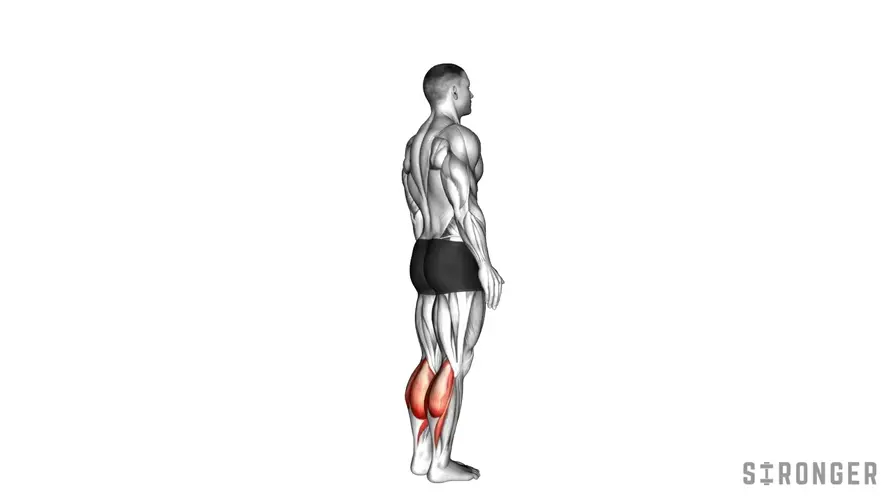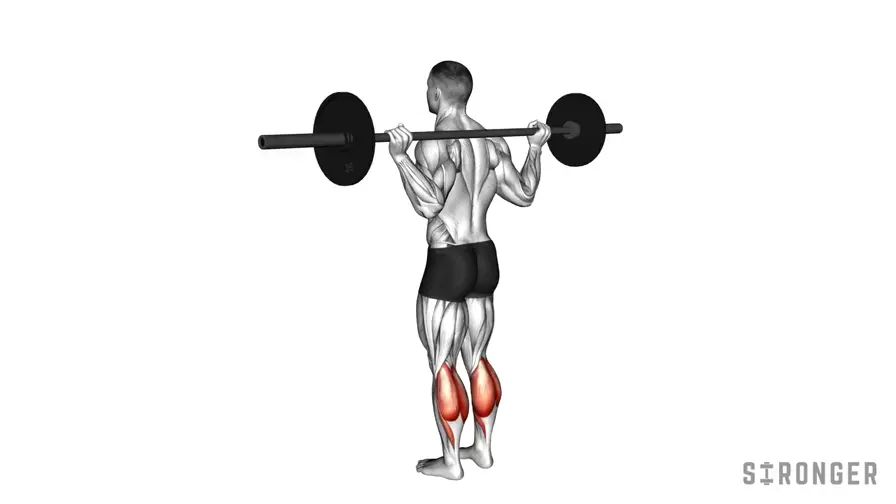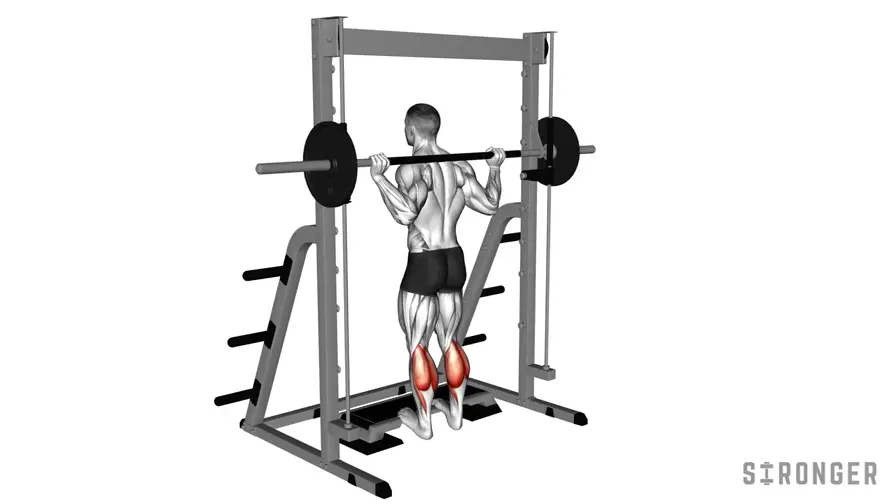

Bodyweight Elevated Calf Raise
Category
isolationDifficulty
beginner
Equipment
bodyweight
Force Type
push
How to Perform the Bodyweight Elevated Calf Raise
- Stand on the edge of a step, platform, or sturdy raised surface with the balls of your feet on the edge and heels hanging off.
- Hold onto a wall or railing for balance if needed, and stand with feet about hip-width apart.
- Lower your heels as far as possible below the platform, feeling a deep stretch through the calves.
- Pause briefly at the bottom stretch position.
- Push through the balls of your feet to rise up as high as possible onto your toes, squeezing the calves hard at the top.
- Hold the peak contraction for 1-2 seconds, then slowly lower back to the stretched position and repeat.
Common Mistakes to Avoid
Bouncing at the bottom of the movement
Pause at the bottom and use a controlled, deliberate press to rise up; bouncing reduces muscle engagement and risks Achilles tendon injury.
Not using the full range of motion
Lower your heels as far as possible below the platform and rise as high as possible on your toes for maximum calf development.
Bending the knees during the movement
Keep your legs straight to fully target the gastrocnemius; bending shifts emphasis to the soleus.
Muscles Worked
Benefits
- ✓The elevated position allows a full stretch that flat-ground raises cannot provide.
- ✓Builds calf size and strength with no equipment other than a step.
- ✓Improves ankle mobility and Achilles tendon resilience.
Pro Tips
- ●Perform single-leg variations for increased difficulty when two legs becomes too easy.
- ●The calves respond well to high reps and slow tempos; try 3-second eccentrics.
- ●Point toes straight ahead for overall calf development, slightly inward for lateral head, or slightly outward for medial head emphasis.
Variations
Recommended Sets & Reps
Strength
4-5 sets of 8-10 reps (use single-leg for difficulty)
Hypertrophy
3-4 sets of 12-20 reps
Endurance
2-3 sets of 25-35 reps
Track Your Bodyweight Elevated Calf Raise in Stronger
Log your sets, watch your bodyweight elevated calf raise progress over time, and see how it feeds your Strength Score. Join 2,000,000+ lifters on iOS and Android.
Start tracking free