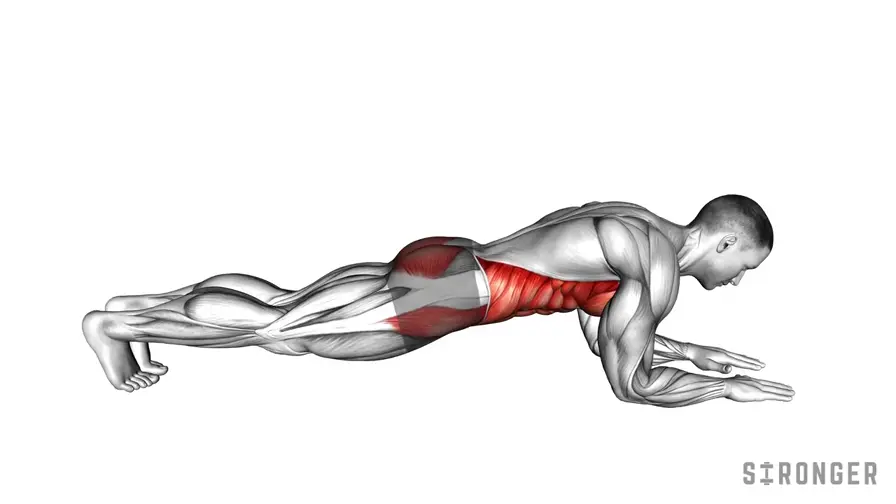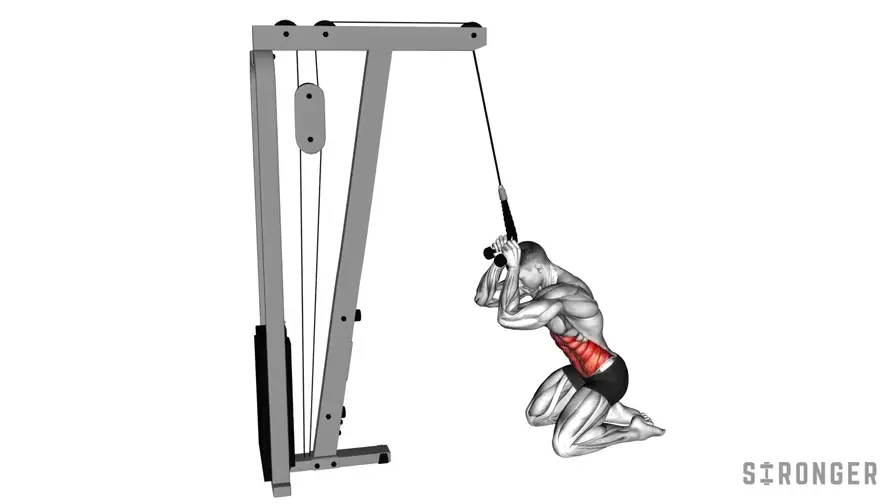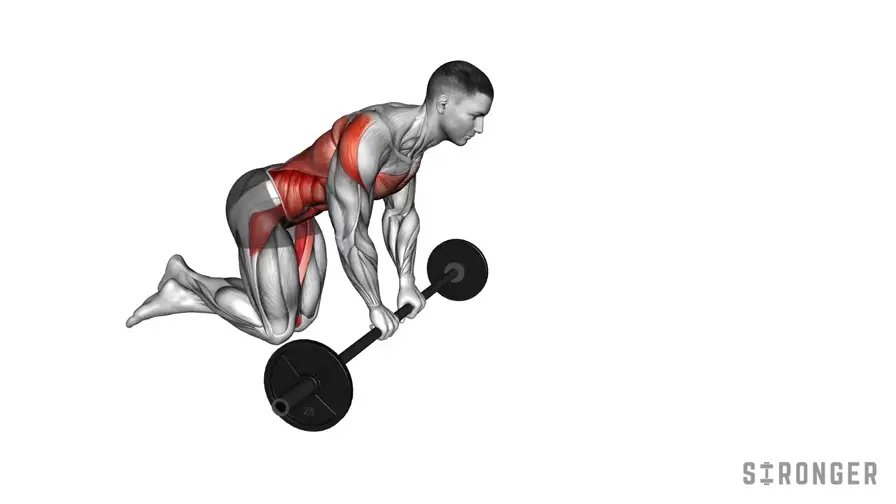

Decline Sit Up
Category
isolationDifficulty
intermediate
Equipment
bench
Force Type
pull
How to Perform the Decline Sit Up
- Secure your feet under the foot pads of a decline bench and lie back with your back flat against the pad.
- Cross your arms over your chest or place your hands lightly behind your ears without pulling on your neck.
- Engage your core and curl your torso upward by flexing at the waist, lifting your upper back off the bench first.
- Continue rising until your torso is roughly perpendicular to the floor or you feel a full contraction in your abs.
- Slowly lower yourself back down under control, maintaining tension in your abdominals throughout.
- Lightly touch your upper back to the bench and immediately begin the next repetition.
Common Mistakes to Avoid
Using momentum to swing up
Perform the movement slowly and under control, focusing on the abdominal contraction.
Pulling on the neck with the hands
Keep your hands lightly touching your head or crossed over your chest; let your abs do the work.
Setting the decline too steep too soon
Start with a moderate decline angle and increase gradually as your core strength improves.
Muscles Worked
Benefits
- ✓Provides greater resistance than flat sit ups due to the increased range of motion.
- ✓Effectively targets the entire rectus abdominis for visible abdominal development.
- ✓Adjustable difficulty by changing the bench angle.
Pro Tips
- ●Exhale as you curl up and inhale as you lower back down to maximize core engagement.
- ●Add a pause at the top of the movement and squeeze your abs for 1-2 seconds.
- ●Hold a weight plate against your chest to add resistance as you get stronger.
Variations
Recommended Sets & Reps
Strength
4-5 sets of 3-5 reps at 80-90% 1RM
Hypertrophy
3-4 sets of 8-12 reps at 65-75% 1RM
Endurance
2-3 sets of 15-20 reps at 50-60% 1RM
Track Your Decline Sit Up in Stronger
Log your sets, watch your decline sit up progress over time, and see how it feeds your Strength Score. Join 2,000,000+ lifters on iOS and Android.
Start tracking free