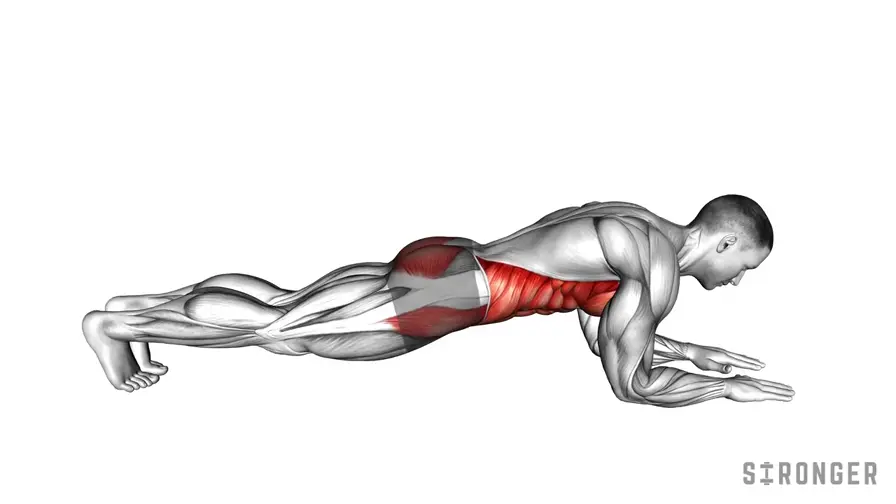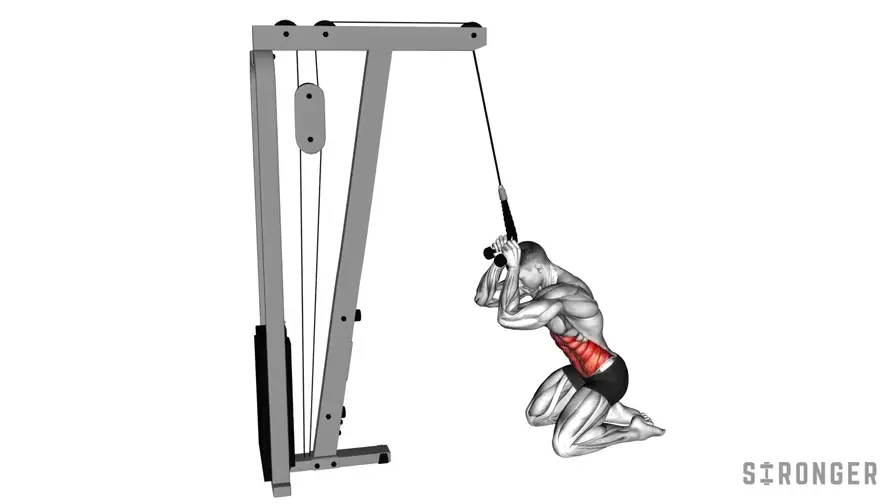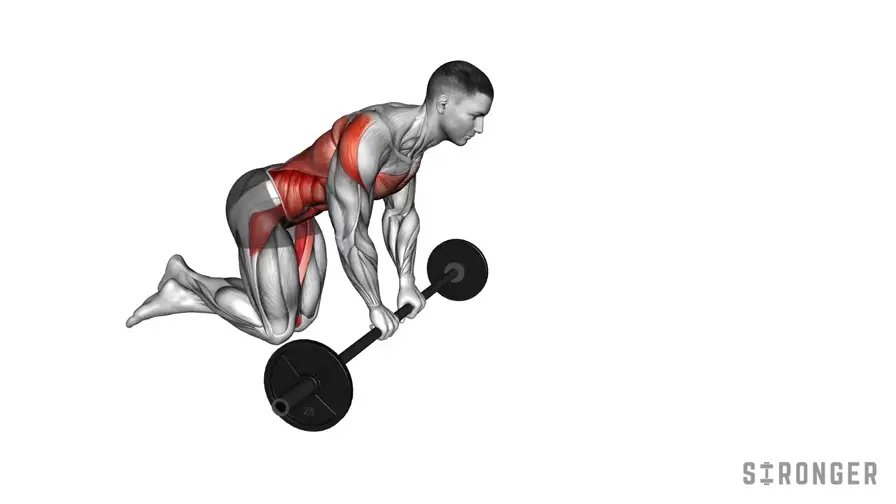

Hanging Knee Raise
Category
isolationDifficulty
intermediate
Equipment
pull-up bar
Force Type
pull
How to Perform the Hanging Knee Raise
- Grip a pull-up bar with an overhand grip slightly wider than shoulder width and hang with your arms fully extended.
- Engage your core and slightly depress your shoulder blades to create a stable hanging position.
- Initiate the movement by contracting your lower abs to raise your knees toward your chest.
- Continue lifting until your thighs are at or above parallel to the floor, curling your pelvis slightly upward at the top.
- Hold the top position for a brief moment, squeezing your abs hard.
- Slowly lower your legs back to the starting hanging position under control, avoiding any swinging.
- Reset and eliminate any body swing before performing the next rep.
Common Mistakes to Avoid
Swinging the body to generate momentum
Perform each rep from a dead hang with no swing. If you need to, pause between reps to eliminate momentum.
Only lifting the knees without curling the pelvis
Focus on posterior pelvic tilt at the top — curl your pelvis toward your ribcage to fully engage the abs rather than just the hip flexors.
Dropping the legs down quickly
Lower your legs slowly over 2-3 seconds to maximize the eccentric loading on the abs.
Muscles Worked
Benefits
- ✓Effectively targets the lower portion of the rectus abdominis.
- ✓Develops grip strength and shoulder stability as secondary benefits.
- ✓Provides a natural progression toward hanging leg raises and toes-to-bar.
Pro Tips
- ●Use ab straps if grip strength is a limiting factor to ensure you can fully fatigue the abs.
- ●To increase difficulty, straighten your legs or add a slight pause at the top.
- ●Focus on curling your pelvis up rather than simply lifting your knees — this is the key to ab activation.
Variations
Recommended Sets & Reps
Strength
4-5 sets of 8-10 reps (bodyweight or weighted)
Hypertrophy
3-4 sets of 12-15 reps (bodyweight)
Endurance
2-3 sets of 20-25 reps (bodyweight)
Track Your Hanging Knee Raise in Stronger
Log your sets, watch your hanging knee raise progress over time, and see how it feeds your Strength Score. Join 2,000,000+ lifters on iOS and Android.
Start tracking free