

3 Day Workout Split: The Best Routines for Busy Lifters
What Is a 3 Day Workout Split?
A 3 day workout split is any resistance training programme that has you lifting weights three times per week. Three sessions a week is enough to train every major muscle at least twice, and for many lifters it is all they need.
Training three days per week gives you the best of both worlds: enough stimulus to drive muscle growth and enough recovery time to actually benefit from that stimulus. Research consistently shows that training a muscle group at least twice per week produces superior hypertrophy compared to once per week, and most well-designed 3-day splits achieve exactly that [1].
The three most effective 3-day approaches are:
- Full Body — every muscle group trained every session
- Push Pull Legs — one push day, one pull day, one leg day
- Upper / Lower / Full Body — a hybrid that balances frequency and volume
Each has distinct advantages depending on your experience level, goals, and preferences.
Who Should Use a 3-Day Split?
A 3-day split is ideal if you:
- Can commit to the gym 3 times per week but not more
- Are a beginner building your first year of training habits
- Have a busy schedule with work, family, or other commitments
- Want an effective programme without living in the gym
- Are recovering from a training break and easing back in
If you can train 4+ days and want more volume, consider an upper lower split (4 days) or push pull legs (5–6 days). But do not underestimate what consistent 3-day training can achieve — many strong, well-built lifters train just three days per week.
Option 1: Full Body Split (3 Days)
The full body split trains every major muscle group in each session. This is the highest-frequency approach — each muscle gets stimulated three times per week.
Weekly Schedule
| Day | Session |
|---|---|
| Monday | Full Body A |
| Wednesday | Full Body B |
| Friday | Full Body C |
Why It Works
Full body training hits every muscle three times a week, which spreads your weekly volume across more sessions and gives beginners three chances a week to practise the main compound lifts.
Sample Full Body Programme
Day A — Squat Focus:
| Exercise | Sets | Reps |
|---|---|---|
| Barbell Back Squat | 4 | 6–8 |
| Barbell Bench Press | 3 | 8–10 |
| Barbell Row | 3 | 8–10 |
| Dumbbell Lateral Raise | 3 | 12–15 |
| Barbell Curl | 2 | 10–12 |
| Tricep Pushdown | 2 | 10–12 |
Day B — Bench Focus:
| Exercise | Sets | Reps |
|---|---|---|
| Barbell Bench Press | 4 | 6–8 |
| Romanian Deadlift | 3 | 8–10 |
| Lat Pulldown | 3 | 8–10 |
| Leg Press | 3 | 10–12 |
| Face Pull | 3 | 15–20 |
| Hammer Curl | 2 | 10–12 |
Day C — Deadlift Focus:
| Exercise | Sets | Reps |
|---|---|---|
| Conventional Deadlift | 4 | 5–6 |
| Overhead Press | 3 | 8–10 |
| Cable Row | 3 | 10–12 |
| Bulgarian Split Squat | 3 | 10/leg |
| Incline Dumbbell Press | 3 | 10–12 |
| Calf Raise | 3 | 15–20 |
Best For
- Complete beginners (first 6–12 months)
- Lifters prioritising strength on the big compound lifts
- Anyone following a 5x5 workout programme
Ready to Get Stronger?
Join 2,000,000+ lifters tracking their workouts with Stronger. Available on iOS and Android.
Start tracking freeOption 2: Push Pull Legs (3 Days)
Running push pull legs over 3 days means one push session, one pull session, and one leg session per week. Each session can have higher volume since muscles are only trained once per week.
Weekly Schedule
| Day | Session | Muscles |
|---|---|---|
| Monday | Push | Chest, shoulders, triceps |
| Wednesday | Pull | Back, biceps, rear delts |
| Friday | Legs | Quads, hamstrings, glutes, calves |
Why It Works
The 3-day PPL allows you to concentrate all your volume for a muscle group into a single session. This means more exercise variety per session and the ability to use higher per-session volume. The trade-off is lower frequency — each muscle is only hit once per week.
Sample 3-Day PPL Programme
Push Day:
| Exercise | Sets | Reps |
|---|---|---|
| Barbell Bench Press | 4 | 6–8 |
| Incline Dumbbell Press | 3 | 8–10 |
| Seated Overhead Press | 3 | 8–10 |
| Cable Flye | 3 | 12–15 |
| Lateral Raise | 3 | 12–15 |
| Tricep Pushdown | 3 | 10–12 |
| Overhead Tricep Extension | 2 | 12–15 |
Pull Day:
| Exercise | Sets | Reps |
|---|---|---|
| Barbell Row | 4 | 6–8 |
| Lat Pulldown | 3 | 8–10 |
| Cable Row | 3 | 10–12 |
| Face Pull | 3 | 15–20 |
| Barbell Curl | 3 | 8–10 |
| Incline Dumbbell Curl | 2 | 10–12 |
| Reverse Flye | 2 | 12–15 |
Leg Day:
| Exercise | Sets | Reps |
|---|---|---|
| Barbell Back Squat | 4 | 6–8 |
| Romanian Deadlift | 3 | 8–10 |
| Leg Press | 3 | 10–12 |
| Walking Lunge | 3 | 10/leg |
| Leg Curl | 3 | 10–12 |
| Standing Calf Raise | 4 | 12–15 |
Best For
- Intermediate lifters who enjoy body-part-focused training
- Those transitioning from a higher-frequency programme who need more recovery
- Lifters who want dedicated sessions for each movement pattern
Option 3: Upper / Lower / Full Body (3 Days)
This hybrid approach combines the frequency benefits of full body with the focused volume of split training. You perform one upper body session, one lower body session, and one full body session per week.
Weekly Schedule
| Day | Session |
|---|---|
| Monday | Upper Body |
| Wednesday | Lower Body |
| Friday | Full Body |
Why It Works
This split ensures every muscle group is trained at least twice per week — once in the dedicated session and once in the full body session. The full body day uses lighter weights and moderate volume to provide a second growth stimulus without excessive fatigue. It is an underrated approach that provides a good balance of volume, frequency, and recovery.
Sample Upper / Lower / Full Programme
Upper Body Day:
| Exercise | Sets | Reps |
|---|---|---|
| Barbell Bench Press | 4 | 6–8 |
| Barbell Row | 4 | 6–8 |
| Overhead Press | 3 | 8–10 |
| Lat Pulldown | 3 | 10–12 |
| Lateral Raise | 3 | 12–15 |
| Barbell Curl | 2 | 10–12 |
| Tricep Pushdown | 2 | 10–12 |
Lower Body Day:
| Exercise | Sets | Reps |
|---|---|---|
| Barbell Back Squat | 4 | 6–8 |
| Romanian Deadlift | 4 | 8–10 |
| Leg Press | 3 | 10–12 |
| Leg Curl | 3 | 10–12 |
| Bulgarian Split Squat | 3 | 10/leg |
| Standing Calf Raise | 4 | 12–15 |
Full Body Day:
| Exercise | Sets | Reps |
|---|---|---|
| Conventional Deadlift | 3 | 5–6 |
| Incline Dumbbell Press | 3 | 8–10 |
| Cable Row | 3 | 10–12 |
| Leg Extension | 3 | 12–15 |
| Dumbbell Lateral Raise | 2 | 12–15 |
| Hammer Curl | 2 | 10–12 |
| Leg Curl | 2 | 12–15 |
Best For
- Intermediate lifters who want twice-per-week frequency in only 3 sessions
- Lifters transitioning from full body to split training
- Anyone who wants focused upper/lower days plus a lighter full-body session
How to Choose the Right 3-Day Split
| Factor | Full Body | PPL (3-Day) | Upper/Lower/Full |
|---|---|---|---|
| Frequency per muscle | 3×/week | 1×/week | 2×/week |
| Volume per session | Lower | Higher | Moderate |
| Best experience level | Beginner | Intermediate | Intermediate |
| Session length | 50–65 min | 60–75 min | 55–70 min |
| Exercise variety | Lower | Higher | Moderate |
| Recovery demand | Moderate | Lower | Moderate |
If you are a beginner: Start with full body. The high frequency helps you learn compound movements quickly, and beginners do not need high per-session volume to grow.
If you want focused sessions: Choose PPL. Each day has a clear theme and allows for more exercise variety within each movement pattern.
If you want the best of both: Upper/Lower/Full gives you the twice-per-week frequency that research supports while keeping session volume manageable [3].
Progressive Overload on a 3-Day Split
No matter which split you choose, progressive overload is what drives results. Here is how to apply it on a 3-day schedule:
Double Progression Method
- Choose a rep range for each exercise (e.g. 8–10 reps)
- Start at the bottom of the range (8 reps) with a challenging weight
- Add reps each session until you hit the top of the range (10 reps) for all sets
- Increase the weight by the smallest increment available and drop back to 8 reps
Example Progression
| Session | Bench Press |
|---|---|
| Week 1 | 80 kg × 4×8 |
| Week 2 | 80 kg × 4×9 |
| Week 3 | 80 kg × 4×10 |
| Week 4 | 82.5 kg × 4×8 |
This approach works regardless of the split you choose. The key is tracking every session and ensuring you are improving over time. Using a workout tracker app like Stronger makes this automatic — you can see exactly what you lifted last time and push for one more rep or a small weight increase.
Tips for Maximising Your 3-Day Split
Do Not Skip Sessions
Three sessions per week gives you room to hit every muscle twice. Treat them as non-negotiable appointments. If you must miss a day, make it up the next day rather than skipping entirely.
Prioritise Compound Movements
Every session should start with 1–2 heavy compound lifts: squat, bench press, deadlift, overhead press, or row. These exercises recruit the most muscle mass and provide the strongest strength and hypertrophy stimulus per unit of time [4].
Keep Sessions Under 75 Minutes
With 3 sessions per week, each session should be focused and efficient. Warm up in 5–10 minutes, perform your planned exercises with appropriate rest periods, and get out. Marathon sessions with excessive volume are counterproductive when you are only training three days.
Eat and Sleep for Recovery
Your muscles grow between sessions, not during them. Aim for 1.6–2.2 g protein per kg bodyweight [5], eat at maintenance or a slight surplus if building muscle, and sleep 7–9 hours per night. Recovery is especially important when training frequency is lower — each session matters more.
Add Cardio on Off Days
With four rest days per week, you have ample opportunity for cardio without interfering with recovery. 2–3 sessions of 20–30 minutes of low-to-moderate intensity cardio (walking, cycling, swimming) improves cardiovascular health and can aid recovery by promoting blood flow.
Frequently Asked Questions
Can I build muscle with only 3 days a week?
Yes. Research shows that total weekly volume is the primary driver of hypertrophy, not training frequency alone [2]. A well-structured 3-day programme with adequate volume (10–20 sets per muscle group per week) produces significant muscle growth. Many natural lifters have built impressive physiques training just three days per week.
Is a 3-day split enough for beginners?
Three days is ideal for beginners. New lifters respond strongly to training stimuli and do not need the high volume that advanced lifters require. A 3-day full body programme provides frequent practice of compound movements and sufficient stimulus for rapid progress.
Should I do the same workout every session?
Not necessarily. Varying exercise selection across sessions (as shown in the full body example with Days A, B, and C) provides different stimuli and prevents staleness. However, you should keep your core compound lifts consistent so you can track progression on them.
Can I do a 3-day split while cutting?
Absolutely. A 3-day split is actually well suited for cutting because the lower frequency provides more recovery days — important when you are in a caloric deficit. Maintain your training intensity (weight on the bar) and accept that volume may need to decrease slightly as energy drops.
How do I add a 4th day if I want to train more?
The easiest upgrade is to transition to a 4-day upper lower split or a 4-day push pull legs rotation. Both provide higher frequency and more total weekly volume while maintaining balanced programming.
Summary
A 3-day workout split is one of the most practical and effective training approaches available. Whether you choose full body, PPL, or an upper/lower/full hybrid, consistent training with progressive overload will deliver results.
Key takeaways:
- Full body is best for beginners — maximum frequency, minimum complexity
- 3-day PPL gives focused sessions but only hits each muscle once per week
- Upper/Lower/Full provides twice-per-week frequency in just three sessions
- Start each session with compound lifts and keep workouts under 75 minutes
- Track every session and apply progressive overload — this is what drives results
- Eat enough protein and sleep 7–9 hours for optimal recovery
Log your workouts and track your progress across every muscle group with Stronger.
Ready to Get Stronger?
Join 2,000,000+ lifters tracking their workouts with Stronger. Available on iOS and Android.
Start tracking freeSources
- Schoenfeld, B. J., Ogborn, D., & Krieger, J. W. (2016). Effects of Resistance Training Frequency on Measures of Muscle Hypertrophy: A Systematic Review and Meta-Analysis. Sports Medicine, 46(11), 1689–1697.
- Schoenfeld, B. J., Grgic, J., & Krieger, J. (2019). How Many Times per Week Should a Muscle Be Trained to Maximize Muscle Hypertrophy? A Systematic Review and Meta-Analysis of Studies Examining the Effects of Resistance Training Frequency. Journal of Sports Sciences, 37(11), 1286–1295.
- Schoenfeld, B. J., & Grgic, J. (2018). Evidence-Based Guidelines for Resistance Training Volume to Maximize Muscle Hypertrophy. Strength and Conditioning Journal, 40(4), 107–112.
- Gentil, P., et al. (2017). A Review of the Acute Effects and Long-Term Adaptations of Single- and Multi-Joint Exercises during Resistance Training. Sports Medicine, 47(5), 843–855.
- Morton, R. W., et al. (2018). A systematic review, meta-analysis and meta-regression of the effect of protein supplementation on resistance training-induced gains in muscle mass and strength in healthy adults. British Journal of Sports Medicine, 52(6), 376–384.
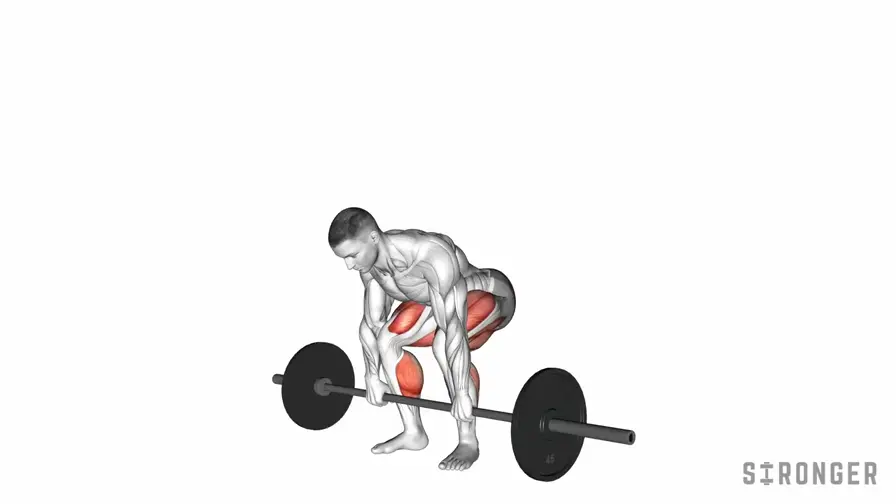
Exercises in this guide
Stronger Editorial Team
Certified strength & conditioning specialists with 10+ years of coaching experience
The Stronger editorial team produces evidence-based training content for lifters of all levels.
Ready to Get Stronger?
Join 2,000,000+ lifters tracking their workouts with Stronger. Available on iOS and Android.
Start tracking free