

Full Body Workout: The Complete Guide for Building Muscle and Strength
What Is a Full Body Workout?
A full body workout trains every major muscle group in a single session. Instead of dedicating separate days to chest, back, or legs, you hit everything — upper body, lower body, and core — every time you train.
Full body training is the oldest form of structured resistance training, and it remains one of the most effective. Legendary strength athletes from Reg Park to Mark Rippetoe have built their programming around full body sessions, and modern research supports training each muscle group at least twice per week, which full body sessions make easy [1].
A typical full body programme has you training 3 days per week on non-consecutive days (Monday/Wednesday/Friday), giving you 48–72 hours of recovery between sessions. Each session includes compound lifts that recruit multiple muscle groups, ensuring comprehensive stimulation in a time-efficient package.
Who Should Use a Full Body Workout?
Full body training is an excellent choice for:
- Beginners (0–12 months of training experience) who need to learn compound movements
- Busy lifters who can only train 2–3 days per week
- Athletes who need to balance strength training with sport practice
- Older lifters who benefit from frequent, moderate-volume sessions
- Advanced lifters using strategic full-body sessions for specific goals
Full body is especially effective for beginners because it provides the highest possible training frequency per muscle group. A beginner squatting three times per week will develop technique and strength far faster than one squatting once per week.
The Science Behind Full Body Training
Full body training works because of two key physiological principles:
Muscle Protein Synthesis Duration
When you train a muscle, muscle protein synthesis (MPS) — the process of building new muscle tissue — is elevated for approximately 24–48 hours [2]. After that, rates return to baseline even if you are sore. Training that muscle again 48–72 hours later triggers another MPS spike, resulting in more total growth signalling per week.
Frequency and Hypertrophy
A meta-analysis by Schoenfeld et al. (2016) found that training a muscle group at least twice per week produced significantly greater hypertrophy than training it once per week [1]. Full body training on a 3-day schedule provides three growth stimuli per muscle per week — even more than the recommended minimum.
Full Body Workout Schedule Options
3-Day Full Body (Classic)
The most popular and well-tested schedule. Train on non-consecutive days with at least one rest day between sessions.
| Day | Session |
|---|---|
| Monday | Full Body A |
| Tuesday | Off |
| Wednesday | Full Body B |
| Thursday | Off |
| Friday | Full Body C |
| Saturday | Off |
| Sunday | Off |
This provides 3× weekly frequency for every muscle group with ample recovery between sessions.
4-Day Full Body
For intermediate lifters who want more total weekly volume while maintaining full-body frequency.
| Day | Session |
|---|---|
| Monday | Full Body A |
| Tuesday | Full Body B |
| Wednesday | Off |
| Thursday | Full Body C |
| Friday | Full Body D |
| Saturday | Off |
| Sunday | Off |
Back-to-back sessions require careful exercise selection to manage fatigue. The first day of each pair should emphasise different movement patterns than the second.
Sample Full Body Workout Plans
3-Day Beginner Programme
Designed for lifters in their first 6–12 months. Focuses on the foundational compound movements with linear progression.
Day A:
| Exercise | Sets | Reps |
|---|---|---|
| Barbell Back Squat | 3 | 5 |
| Barbell Bench Press | 3 | 5 |
| Barbell Row | 3 | 5 |
| Dumbbell Lateral Raise | 2 | 12–15 |
| Plank | 2 | 30–45 sec |
Day B:
| Exercise | Sets | Reps |
|---|---|---|
| Barbell Back Squat | 3 | 5 |
| Overhead Press | 3 | 5 |
| Deadlift | 1 | 5 |
| Lat Pulldown | 3 | 8–10 |
| Barbell Curl | 2 | 10–12 |
Day C:
| Exercise | Sets | Reps |
|---|---|---|
| Barbell Back Squat | 3 | 5 |
| Barbell Bench Press | 3 | 5 |
| Barbell Row | 3 | 5 |
| Leg Curl | 2 | 10–12 |
| Tricep Pushdown | 2 | 10–12 |
Beginners should add 1.25–2.5 kg to upper body lifts and 2.5–5 kg to lower body lifts each session. This linear progression is the same principle behind the 5x5 programme.
Ready to Get Stronger?
Join 2,000,000+ lifters tracking their workouts with Stronger. Available on iOS and Android.
Start tracking free3-Day Intermediate Programme
For lifters with 6–18 months of experience who need more volume and exercise variety than a beginner programme provides.
Day A — Squat Focus:
| Exercise | Sets | Reps |
|---|---|---|
| Barbell Back Squat | 4 | 6–8 |
| Barbell Bench Press | 3 | 8–10 |
| Barbell Row | 3 | 8–10 |
| Dumbbell Lateral Raise | 3 | 12–15 |
| Barbell Curl | 2 | 10–12 |
| Tricep Pushdown | 2 | 10–12 |
| Standing Calf Raise | 3 | 12–15 |
Day B — Bench Focus:
| Exercise | Sets | Reps |
|---|---|---|
| Barbell Bench Press | 4 | 6–8 |
| Romanian Deadlift | 3 | 8–10 |
| Lat Pulldown | 3 | 10–12 |
| Leg Press | 3 | 10–12 |
| Face Pull | 3 | 15–20 |
| Hammer Curl | 2 | 10–12 |
| Incline Dumbbell Press | 2 | 10–12 |
Day C — Deadlift Focus:
| Exercise | Sets | Reps |
|---|---|---|
| Conventional Deadlift | 4 | 5–6 |
| Overhead Press | 3 | 8–10 |
| Cable Row | 3 | 10–12 |
| Bulgarian Split Squat | 3 | 10/leg |
| Cable Flye | 3 | 12–15 |
| Incline Dumbbell Curl | 2 | 10–12 |
| Leg Curl | 2 | 10–12 |
Each session has a different primary lift, ensuring balanced strength development. Secondary and accessory exercises vary to prevent monotony and ensure all muscle groups receive adequate stimulation.
4-Day Advanced Programme
For experienced lifters who want higher weekly volume while maintaining full-body training.
Day A — Heavy Upper Emphasis:
| Exercise | Sets | Reps |
|---|---|---|
| Barbell Bench Press | 4 | 4–6 |
| Weighted Pull-Up | 4 | 4–6 |
| Barbell Back Squat | 3 | 8–10 |
| Dumbbell Lateral Raise | 3 | 12–15 |
| Barbell Curl | 2 | 8–10 |
Day B — Heavy Lower Emphasis:
| Exercise | Sets | Reps |
|---|---|---|
| Barbell Back Squat | 4 | 4–6 |
| Conventional Deadlift | 3 | 4–6 |
| Incline Dumbbell Press | 3 | 8–10 |
| Cable Row | 3 | 10–12 |
| Standing Calf Raise | 3 | 10–12 |
Day C — Hypertrophy Upper Emphasis:
| Exercise | Sets | Reps |
|---|---|---|
| Dumbbell Bench Press | 3 | 10–12 |
| Chest-Supported Row | 3 | 10–12 |
| Overhead Press | 3 | 8–10 |
| Bulgarian Split Squat | 3 | 10/leg |
| Cable Flye | 3 | 12–15 |
| Face Pull | 2 | 15–20 |
Day D — Hypertrophy Lower Emphasis:
| Exercise | Sets | Reps |
|---|---|---|
| Front Squat | 3 | 8–10 |
| Romanian Deadlift | 3 | 10–12 |
| Incline Barbell Press | 3 | 8–10 |
| Lat Pulldown | 3 | 10–12 |
| Leg Extension | 3 | 12–15 |
| Lying Leg Curl | 3 | 12–15 |
| Seated Calf Raise | 3 | 15–20 |
Full Body vs Split Training
How does full body compare to other popular training approaches?
| Factor | Full Body (3 days) | Upper Lower (4 days) | PPL (6 days) | Bro Split (5 days) |
|---|---|---|---|---|
| Frequency | 3×/week per muscle | 2×/week | 2×/week | 1×/week |
| Weekly volume potential | Moderate | Moderate–High | High | High |
| Session length | 50–65 min | 60–75 min | 55–70 min | 60–80 min |
| Days required | 3 | 4 | 6 | 5 |
| Best for | Beginners, busy lifters | Intermediates | Advanced, high volume | Advanced bodybuilders |
| Recovery demand | Moderate per session | Moderate | Lower per session, higher total | High per session |
Full body wins on time efficiency and frequency. For lifters with limited gym days, it provides more growth stimuli per week than any split-based approach. The trade-off is lower per-session volume — you cannot do 5 chest exercises when you also need to train back, legs, shoulders, and arms.
Progressive Overload for Full Body Training
Progressive overload on a full-body programme follows the same principles as any other split:
For Beginners (Linear Progression)
Add weight every session on your main lifts:
| Lift | Increment per Session |
|---|---|
| Squat | +2.5–5 kg |
| Deadlift | +2.5–5 kg |
| Bench Press | +1.25–2.5 kg |
| Overhead Press | +1.25–2.5 kg |
| Row | +1.25–2.5 kg |
This is the same linear model used in 5x5 programmes. Beginners can sustain this rate for 3–6 months.
For Intermediates (Double Progression)
Switch to adding reps before adding weight:
- Start at the bottom of your rep range (e.g. 6 reps)
- Add reps each session until you reach the top (e.g. 8 reps) for all sets
- Increase weight and drop back to 6 reps
Track every session so you know exactly what to beat. Stronger shows your previous workout data for every exercise and tracks your overall Strength Score.
Tips for Effective Full Body Training
Exercise Selection Matters
Choose exercises that provide the most stimulus per unit of time. Compound lifts — squat, bench, deadlift, row, overhead press — should form 60–70% of your programme. Reserve isolation work for weak points, not as primary exercises.
Rotate Your Primary Lifts
Do not squat heavy every session. Rotate the emphasis:
- Day A: Heavy squat, moderate bench
- Day B: Heavy bench, moderate deadlift
- Day C: Heavy deadlift, moderate squat
This manages fatigue while still training each lift frequently.
Control Session Volume
Full body sessions should contain 5–8 exercises (15–25 total sets). More than that and session quality deteriorates — the last exercises get performed with accumulated fatigue and reduced effort.
Warm Up Thoroughly
With multiple compound lifts per session, a proper warm-up is critical. Spend 5 minutes on general warm-up (light cardio), then 2–3 ramping sets before each heavy compound lift.
Manage Fatigue Across the Week
Your Wednesday session may feel harder than Monday because you are still recovering from the first session. This is normal — adjust expectations and focus on completing your prescribed work rather than hitting PRs every session.
Frequently Asked Questions
Is full body training good for building muscle?
Yes. Full body training produces comparable strength and muscle gains to split training when total weekly volume is matched [3]. The higher frequency (3× vs 1–2× per week) does not appear to add extra growth on its own, but it makes it easier to spread quality volume across the week.
Can advanced lifters do full body workouts?
Absolutely. Many elite strength athletes use full body training. The key for advanced lifters is managing volume and intensity carefully — higher training ages require more total volume, which means either longer sessions or more weekly sessions (4-day full body).
How many exercises per full body workout?
Aim for 5–8 exercises per session. Start with 2–3 compound movements, then add 2–4 accessory/isolation exercises. This provides comprehensive stimulation without excessive fatigue.
Should I do the same exercises every session?
No. Use 2–3 different sessions (A/B or A/B/C) that vary exercise selection while keeping the same movement patterns. This prevents overuse injuries and provides different stimuli for growth.
Full body or PPL for beginners?
Full body is better for beginners. The higher frequency per muscle group accelerates skill acquisition on compound lifts, and beginners do not need the volume that a PPL split provides. Transition to PPL or upper lower once you outgrow linear full-body progression.
Summary
Full body training is the most time-efficient and frequency-optimal approach for building muscle and strength. It is the best starting point for beginners and remains effective for lifters at every level.
Key takeaways:
- Full body workouts train every muscle group every session — 3× per week frequency
- Best for beginners, busy lifters, and anyone training 3 days per week
- Start with 5–8 exercises per session, emphasising compound lifts
- Use linear progression as a beginner, double progression as an intermediate
- Rotate primary lift emphasis across sessions to manage fatigue
- Track every workout for progressive overload
Log your full body workouts with Stronger and track your strength gains across all 12 muscle groups.
Ready to Get Stronger?
Join 2,000,000+ lifters tracking their workouts with Stronger. Available on iOS and Android.
Start tracking freeSources
- Schoenfeld, B. J., Ogborn, D., & Krieger, J. W. (2016). Effects of Resistance Training Frequency on Measures of Muscle Hypertrophy: A Systematic Review and Meta-Analysis. Sports Medicine, 46(11), 1689–1697.
- Damas, F., et al. (2015). A Review of Resistance Training-Induced Changes in Skeletal Muscle Protein Synthesis and Their Contribution to Hypertrophy. Sports Medicine, 45(6), 801–807.
- Ramos-Campo, D. J., et al. (2024). Efficacy of Split Versus Full-Body Resistance Training on Strength and Muscle Growth: A Systematic Review With Meta-analysis. Journal of Strength and Conditioning Research, 38(7), 1330–1340.
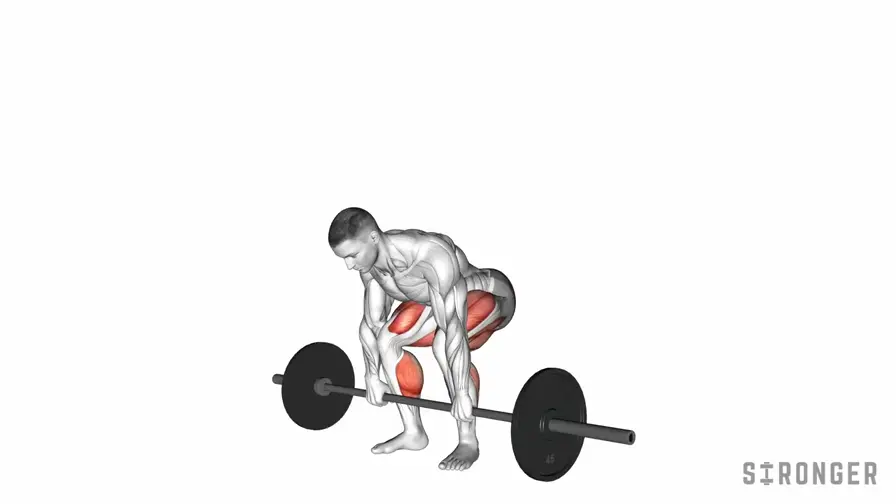
Exercises in this guide
Stronger Editorial Team
Certified strength & conditioning specialists with 10+ years of coaching experience
The Stronger editorial team produces evidence-based training content for lifters of all levels.
Ready to Get Stronger?
Join 2,000,000+ lifters tracking their workouts with Stronger. Available on iOS and Android.
Start tracking free