

Upper Lower Split: The Complete Guide to the 4-Day Programme
What Is the Upper Lower Split?
The upper lower split divides your training into two session types: upper body days (chest, back, shoulders, arms) and lower body days (quads, hamstrings, glutes, calves). You alternate between the two across four weekly sessions, training each muscle group twice per week.
This straightforward approach has been a staple of strength and bodybuilding programmes for decades — and for good reason. It hits the research-supported sweet spot of twice-per-week frequency while keeping the weekly commitment to just four sessions [1].
The upper lower split is the ideal middle ground between full-body training (which can feel rushed at higher volumes) and push pull legs (which requires 5–6 days for optimal frequency).
Who Should Use an Upper Lower Split?
The upper lower split is an excellent choice if you:
- Can train 4 days per week consistently
- Are an intermediate lifter (6+ months of training experience)
- Want twice-per-week frequency without training 5–6 days
- Prefer balanced training with adequate volume per session
- Need rest days between training days for recovery
The split also works well for advanced lifters during maintenance phases or periods where life demands make 5–6 day training impractical.
The Optimal Upper Lower Schedule
The standard setup alternates sessions with at least one rest day between training days:
| Day | Session |
|---|---|
| Monday | Upper Body A |
| Tuesday | Lower Body A |
| Wednesday | Off |
| Thursday | Upper Body B |
| Friday | Lower Body B |
| Saturday | Off |
| Sunday | Off |
The A/B distinction means you vary exercise selection across the two sessions. Upper A might emphasise horizontal pressing (bench) while Upper B emphasises vertical pressing (overhead press). This prevents staleness and ensures balanced development.
Alternative Schedule
Some lifters prefer a stacked schedule with a mid-week break:
| Day | Session |
|---|---|
| Monday | Upper A |
| Tuesday | Lower A |
| Wednesday | Off |
| Thursday | Off |
| Friday | Upper B |
| Saturday | Lower B |
| Sunday | Off |
This provides more recovery between sessions but clusters training days together. Choose whichever fits your schedule better — both are effective.
Sample Upper Lower Workout Plan
Here is a complete 4-day programme with exercise selection, sets, and reps designed for intermediate lifters focused on hypertrophy.
Upper Body A — Horizontal Emphasis
| Exercise | Sets | Reps |
|---|---|---|
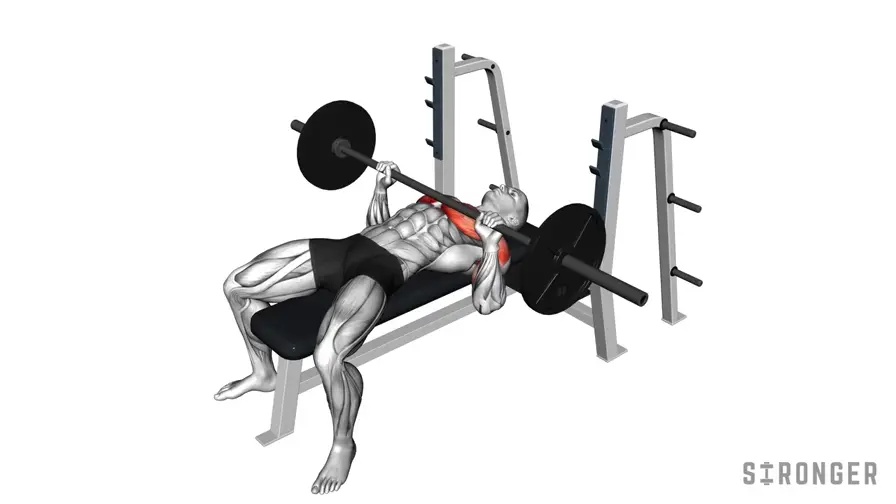
| Barbell Bench Press | 4 | 6–8 |
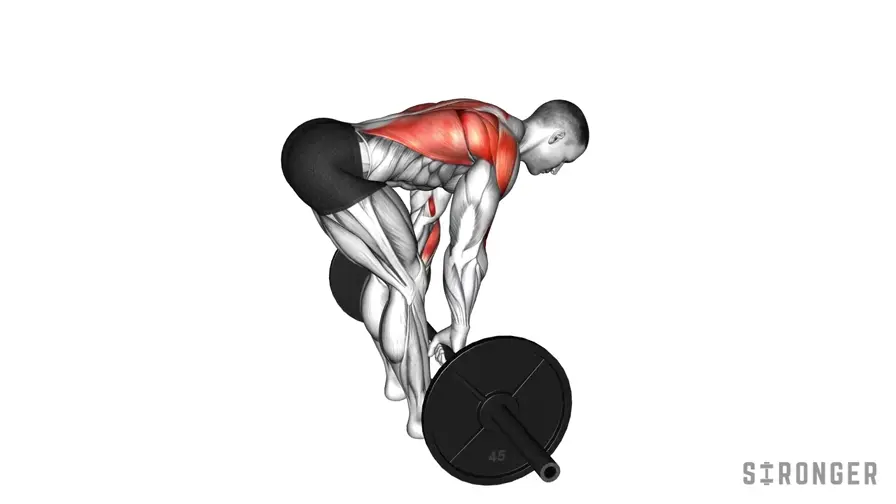
| Barbell Row | 4 | 6–8 |
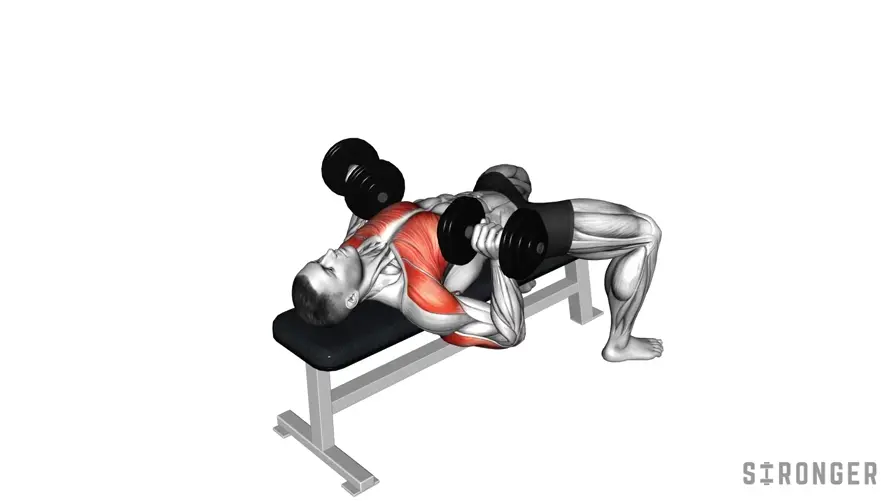
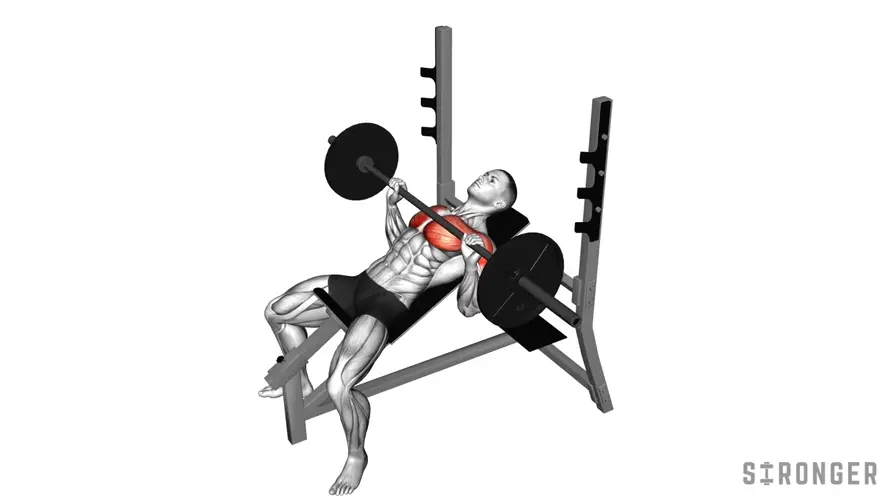
| Incline Dumbbell Press | 3 | 8–10 |
| Lat Pulldown | 3 | 10–12 |
| Lateral Raise | 3 | 12–15 |
| Barbell Curl | 3 | 8–10 |
| Tricep Pushdown | 3 | 10–12 |
| Face Pull | 3 | 15–20 |
Upper Body B — Vertical Emphasis
| Exercise | Sets | Reps |
|---|---|---|
| Overhead Press | 4 | 6–8 |
| Weighted Pull-Up | 4 | 6–8 |
| Cable Flye | 3 | 12–15 |
| Chest-Supported Row | 3 | 10–12 |
| Cable Lateral Raise | 3 | 12–15 |
| Incline Dumbbell Curl | 3 | 10–12 |
| Overhead Tricep Extension | 3 | 10–12 |
| Face Pull | 3 | 15–20 |
Lower Body A — Squat Focus
| Exercise | Sets | Reps |
|---|---|---|
| Barbell Back Squat | 4 | 6–8 |
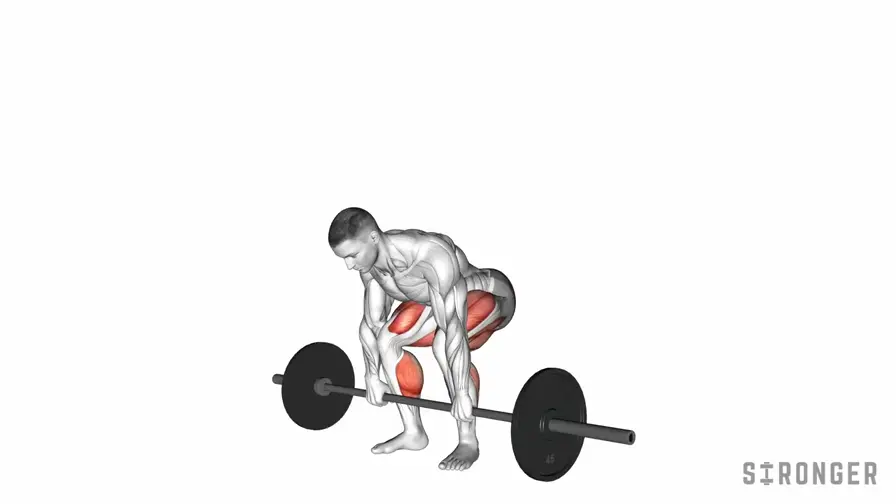
| Romanian Deadlift | 3 | 8–10 |
| Leg Press | 3 | 10–12 |
| Leg Curl | 3 | 10–12 |
| Walking Lunge | 3 | 10/leg |
| Standing Calf Raise | 4 | 12–15 |
Lower Body B — Hip-Hinge Focus
| Exercise | Sets | Reps |
|---|---|---|
| Conventional Deadlift | 4 | 5–6 |
| Bulgarian Split Squat | 3 | 8–10/leg |
| Leg Extension | 3 | 12–15 |
| Lying Leg Curl | 3 | 10–12 |
| Hip Thrust | 3 | 10–12 |
| Seated Calf Raise | 4 | 15–20 |
Ready to Get Stronger?
Join 2,000,000+ lifters tracking their workouts with Stronger. Available on iOS and Android.
Start tracking freeExercise Selection Principles
Upper Body Sessions
Every upper session should include:
- One horizontal press (bench press, dumbbell press)
- One horizontal pull (barbell row, cable row)
- One vertical press (overhead press) or vertical pull (pull-up, lat pulldown)
- One isolation for shoulders (lateral raise)
- One bicep exercise and one tricep exercise
By alternating emphasis (horizontal in Session A, vertical in Session B), you get balanced development across pushing and pulling patterns.
Lower Body Sessions
Every lower session should include:
- One squat pattern (back squat, front squat, split squat)
- One hip-hinge pattern (deadlift, Romanian deadlift)
- One quad-dominant accessory (leg press, leg extension, lunges)
- One hamstring-dominant accessory (leg curl, Nordic curl)
- Calves (standing or seated calf raise)
Alternating squat-focused and deadlift-focused days ensures both anterior and posterior chain get priority attention.
Volume Guidelines
For hypertrophy, aim for these weekly set targets per muscle group [2]:
| Muscle Group | Weekly Sets | Per Session (÷2) |
|---|---|---|
| Chest | 10–16 | 5–8 |
| Back | 12–18 | 6–9 |
| Shoulders (side delts) | 8–12 | 4–6 |
| Biceps | 6–10 | 3–5 |
| Triceps | 6–10 | 3–5 |
| Quads | 10–16 | 5–8 |
| Hamstrings | 8–12 | 4–6 |
| Glutes | 6–10 | 3–5 |
| Calves | 8–12 | 4–6 |
Start at the lower end of each range and add 1–2 sets per muscle group every 2–3 weeks if you are recovering well. Growth rises with volume but with diminishing returns, so add sets when progress stalls rather than by default [3].
Progressive Overload on an Upper Lower Split
Progressive overload is what separates effective training from going through the motions. Here is how to apply it across your 4 sessions:
Double Progression
Pick a rep range for each exercise. Start at the bottom. Add reps each session until you reach the top, then add weight.
Example — Barbell Bench Press (target: 6–8 reps):
| Session | Weight | Reps (across 4 sets) |
|---|---|---|
| Upper A, Week 1 | 85 kg | 6, 6, 6, 6 |
| Upper A, Week 2 | 85 kg | 7, 7, 7, 6 |
| Upper A, Week 3 | 85 kg | 8, 8, 8, 8 |
| Upper A, Week 4 | 87.5 kg | 6, 6, 6, 5 |
Volume Progression
When double progression stalls, add an extra set:
- Week 1–4: 3 sets of incline press
- Week 5–8: 4 sets of incline press
This increases weekly stimulus without requiring heavier loads.
Log Everything
Track every set, every rep, every weight. Without a training log, you are guessing. Apps like Stronger make this seamless — you see exactly what you did last session and know what to beat this time.
Upper Lower vs Other Splits
| Split | Days/Week | Frequency | Best For |
|---|---|---|---|
| Upper Lower | 4 | 2×/week | Intermediate lifters with 4 training days |
| Push Pull Legs | 3–6 | 1–2×/week | Flexible scheduling, higher volume |
| Full Body | 3 | 3×/week | Beginners, minimal time |
| 3-Day Split | 3 | 1–2×/week | Busy schedules |
| 5-Day Split | 5 | 1–2×/week | Advanced lifters wanting more volume |
The upper lower split is the most time-efficient way to achieve twice-per-week frequency. If you can only train 4 days, it is almost certainly the best option.
Tips for Success
Superset Upper Body Exercises
Pair a pressing movement with a pulling movement to save time:
- Bench press superset with barbell row
- Overhead press superset with lat pulldown
- Curls superset with tricep pushdowns
This can cut your session time by 10–15 minutes without reducing training quality, since the opposing muscles recover while the other works.
Do Not Neglect Rear Delts and Hamstrings
These are the most commonly underdeveloped muscle groups. Include face pulls or reverse flyes in every upper session, and direct hamstring work (leg curls, Nordic curls) in every lower session.
Warm Up Properly
Start each session with 5 minutes of light cardio and 2–3 warm-up sets of your first compound exercise. Ramping up gradually improves performance and reduces injury risk.
Schedule Your Hardest Day First
If squats are your most demanding lift, train legs on the first day after a rest day when you are most recovered. Do not place your hardest session at the end of the week when fatigue has accumulated.
Frequently Asked Questions
Is upper lower good for beginners?
Upper lower works for beginners, but a 3-day full body programme is typically more appropriate for the first 6 months. Beginners benefit from practising compound movements three times per week. Once you outgrow linear full-body progression, upper lower is an excellent next step.
Can I do upper lower 3 days a week?
You can, but you will alternate and each muscle group will only be trained 1.5 times per week on average. A better 3-day option would be a dedicated 3-day split or full body programme.
How long should each session take?
Upper body sessions typically take 60–75 minutes. Lower body sessions are slightly shorter at 50–65 minutes since there are fewer muscle groups to cover. If you use supersets, you can reduce this by 10–15 minutes.
Should I train abs on an upper lower split?
You can add 2–3 sets of direct ab work at the end of your sessions, alternating between upper and lower days. However, heavy compound lifts (squats, deadlifts, overhead press) already provide significant core stimulus. Direct ab work is optional, not essential.
Upper lower vs push pull legs — which is better?
Neither is objectively better. Upper lower is more efficient (4 days vs 5–6), while PPL allows for more total volume and exercise variety. If you can train 4 days reliably, upper lower is the pragmatic choice. If you can train 5–6 days and want maximum muscle growth, PPL wins.
Summary
The upper lower split is the most efficient 4-day training programme for building muscle. It provides twice-per-week frequency for every muscle group, balances pushing and pulling volume, and leaves three rest days for recovery.
Key takeaways:
- Train upper body twice (A/B sessions) and lower body twice (A/B sessions) per week
- Alternate exercise emphasis between sessions — horizontal vs vertical, squat vs hinge
- Start with 10–16 sets per major muscle group per week and increase gradually
- Use double progression to drive consistent gains
- Track every session — a workout log is essential for progressive overload
- Superset opposing movements to save time without sacrificing quality
Track your upper lower split and measure your progress across every muscle group with Stronger. Check where your lifts stack up with the Strength Score calculator.
Ready to Get Stronger?
Join 2,000,000+ lifters tracking their workouts with Stronger. Available on iOS and Android.
Start tracking freeSources
- Schoenfeld, B. J., Ogborn, D., & Krieger, J. W. (2016). Effects of Resistance Training Frequency on Measures of Muscle Hypertrophy: A Systematic Review and Meta-Analysis. Sports Medicine, 46(11), 1689–1697.
- Schoenfeld, B. J., & Grgic, J. (2018). Evidence-Based Guidelines for Resistance Training Volume to Maximize Muscle Hypertrophy. Strength and Conditioning Journal, 40(4), 107–112.
- Pelland, J. C., et al. (2026). The Resistance Training Dose Response: Meta-Regressions Exploring the Effects of Weekly Volume and Frequency on Muscle Hypertrophy and Strength Gains. Sports Medicine, 56(2), 481–505.
Exercises in this guide
Stronger Editorial Team
Certified strength & conditioning specialists with 10+ years of coaching experience
The Stronger editorial team produces evidence-based training content for lifters of all levels.
Ready to Get Stronger?
Join 2,000,000+ lifters tracking their workouts with Stronger. Available on iOS and Android.
Start tracking free