
How Long to Rest Between Sets for Muscle & Strength
Why Rest Periods Matter More Than You Think
How long you rest between sets is one of the most important variables in your training programme -- and one of the most commonly mismanaged. Rest too little and you cannot maintain the loads and rep quality needed to drive adaptation. Rest too long and you lose the metabolic stress that contributes to muscle growth, while also turning a 60-minute workout into a 2-hour marathon.
The optimal rest period depends entirely on your training goal. Strength, hypertrophy (muscle growth), and muscular endurance each demand different recovery times between sets, and getting this wrong can significantly limit your progress.
This guide breaks down exactly how long to rest between sets based on your goals, what the research says, and how to apply these principles to your own training.
The Science of Rest Periods
When you perform a set of resistance exercise, three things happen that determine how long you need to recover:
1. ATP-Phosphocreatine Depletion
Your muscles use adenosine triphosphate (ATP) and phosphocreatine (PCr) as immediate fuel for short, intense efforts. A heavy set of 5 reps depletes these stores substantially. It takes approximately 3-5 minutes to fully restore ATP and PCr levels [1]. This is why heavy, low-rep strength training requires longer rest periods.
2. Metabolic Byproduct Accumulation
During moderate-to-high rep sets, hydrogen ions and other metabolic byproducts accumulate in the working muscles, creating the "burn" sensation. These metabolites contribute to muscular fatigue but also serve as a signal for muscle growth. Shorter rest periods maintain higher levels of metabolic stress [2].
3. Neural Recovery
Heavy lifting fatigues the central nervous system (CNS), reducing your ability to recruit motor units and produce maximal force. Neural recovery takes longer than muscular recovery, which is why you cannot simply shorten rest periods on heavy compound lifts without seeing a significant performance drop.
Rest Periods by Training Goal
Strength: 3-5 Minutes
When your primary goal is building maximal strength, longer rest periods are essential. Research consistently shows that resting 3-5 minutes between sets of heavy compound exercises allows near-complete recovery of ATP-PCr stores and neural function, enabling you to maintain high loads across multiple sets [1].
Why it works: Strength is about maximal force production. You need full recovery to lift heavy weights with good form. If you cut rest to 90 seconds on your barbell squat working sets at 85% 1RM, you will see a significant decline in reps per set -- and reduced training quality means reduced strength gains.
Practical guidelines for strength training:
| Exercise Type | Rest Period | Example |
|---|---|---|
| Heavy compound lifts (squat, deadlift, bench) | 3-5 minutes | Barbell squat 5x3 at 85% |
| Moderate compound lifts | 2-3 minutes | Barbell row 4x6 at 75% |
| Accessory lifts | 1-2 minutes | Tricep pushdown 3x10 |
A study by Schoenfeld et al. (2016) found that resting 3 minutes between sets produced greater strength gains than resting 1 minute [3]. The 3-minute group increased their bench press 1RM by 12.7% and squat 1RM by 15.2%, while the 1-minute group improved their squat by 7.6% with no significant change in bench press. Total training volume was not equated: with the same sets and reps prescribed, the longer-rest group lifted more total load, which likely explains part of the difference.
Hypertrophy (Muscle Growth): 1.5-3 Minutes
For muscle growth, the picture is more nuanced than traditional recommendations suggest. The old advice was 60-90 seconds for hypertrophy, but more recent research indicates that slightly longer rest periods (2-3 minutes) may actually produce superior muscle growth because they allow you to maintain higher training volumes [3].
Why it works: Muscle growth is primarily driven by mechanical tension (how much weight you lift) and training volume (sets x reps x weight). While shorter rest periods create more metabolic stress, they also force you to reduce loads on subsequent sets, which decreases total volume. A moderate rest period of 1.5-3 minutes balances metabolic stress with volume maintenance.
Practical guidelines for hypertrophy:
| Exercise Type | Rest Period | Example |
|---|---|---|
| Compound lifts | 2-3 minutes | Incline bench press 4x8 |
| Isolation lifts (large muscles) | 1.5-2 minutes | Leg extension 3x12 |
| Isolation lifts (small muscles) | 60-90 seconds | Lateral raise 3x15 |
The key insight: Do not sacrifice load for the sake of shorter rest periods when training for hypertrophy. If you need 2.5 minutes to perform your next set with the same weight and good form, take 2.5 minutes. The extra volume you maintain will more than compensate for the slightly reduced metabolic stress.
Muscular Endurance: 30-90 Seconds
If your goal is muscular endurance -- the ability to perform many reps without fatiguing -- short rest periods are appropriate. This type of training deliberately challenges your muscles' ability to function under fatigue and clear metabolic byproducts.
Practical guidelines for endurance:
| Exercise Type | Rest Period | Example |
|---|---|---|
| Circuit training | 30-60 seconds | Push-ups 3x20 |
| High-rep sets | 60-90 seconds | Goblet squat 3x15-20 |
| Supersets | 0-30 seconds between exercises | Barbell curl + skull crushers |
Note that muscular endurance training is less effective for building maximal strength or muscle size. If your primary goal is getting stronger or bigger, use the longer rest periods outlined above.
Ready to Get Stronger?
Join 2,000,000+ lifters tracking their workouts with Stronger. Available on iOS and Android.
Start tracking freeRest Periods for Different Exercises
Not all exercises require the same rest periods, even within the same workout. The more muscle mass an exercise involves and the heavier the load, the more recovery it demands.
Heavy Barbell Compounds: 3-5 Minutes
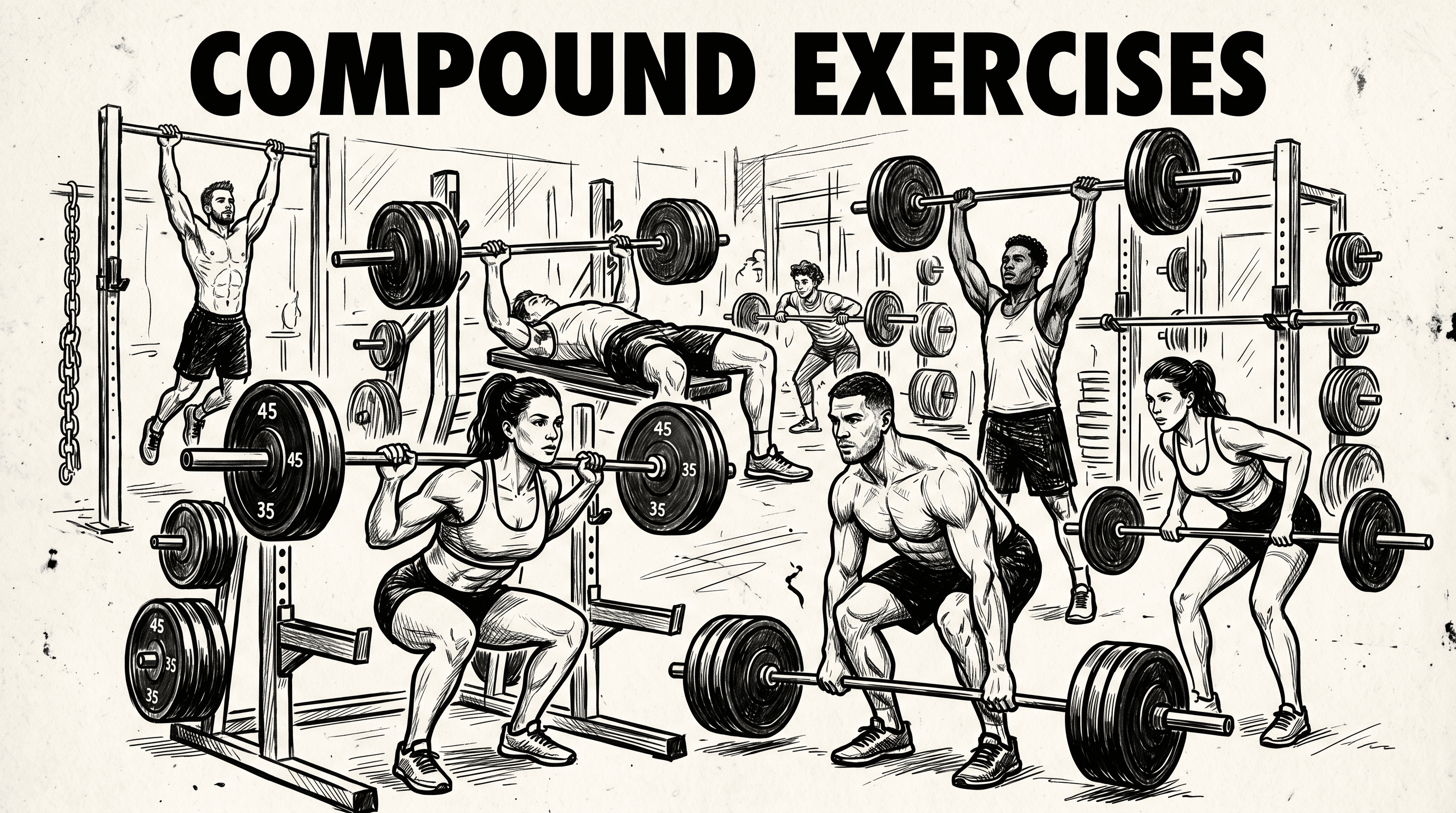
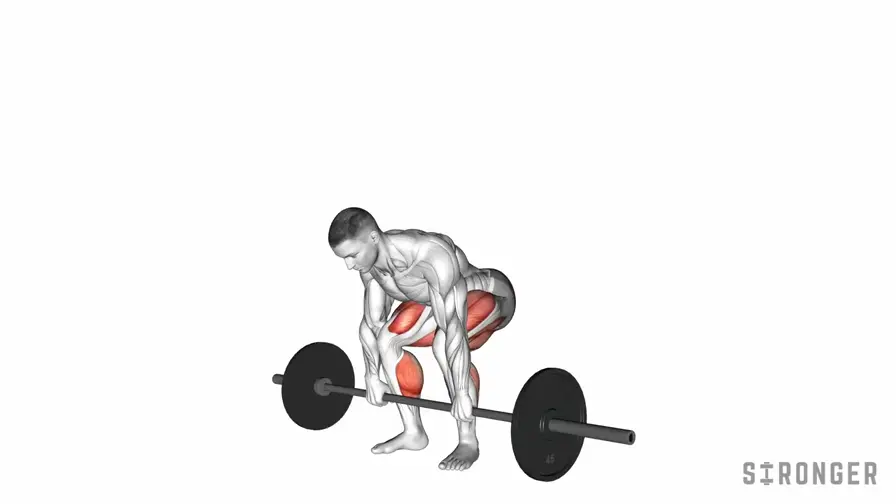
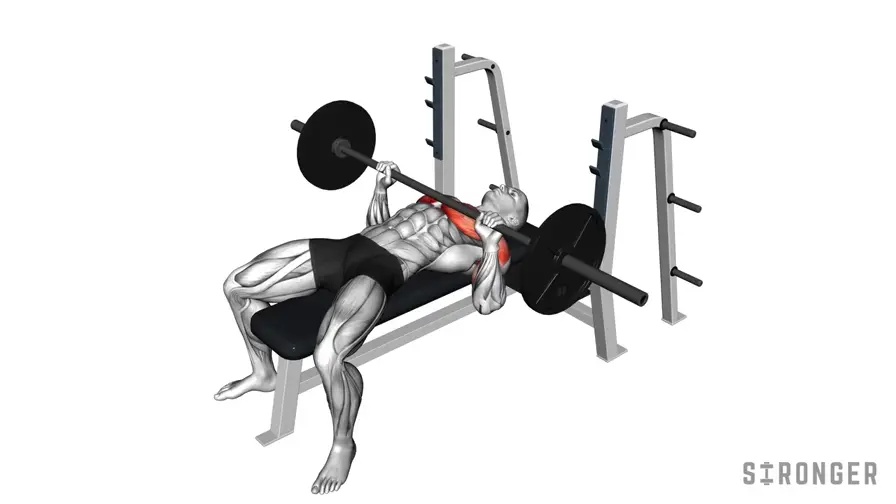
The conventional deadlift, barbell squat, bench press, and overhead press are the most demanding exercises in any programme. These lifts recruit massive amounts of muscle, load the spine heavily, and tax the central nervous system. They require the longest rest periods.
If you are following a strength-focused programme like a 5x5 programme, resting 3-5 minutes between your working sets of the main lifts is not laziness -- it is a requirement for performance.
Moderate Compound Movements: 2-3 Minutes
Exercises like dumbbell rows, dips, pull-ups, Romanian deadlifts, and hip thrusts are still compound movements but are typically performed with lighter loads or less overall systemic fatigue. Rest 2-3 minutes between sets.
Isolation Exercises: 60-120 Seconds
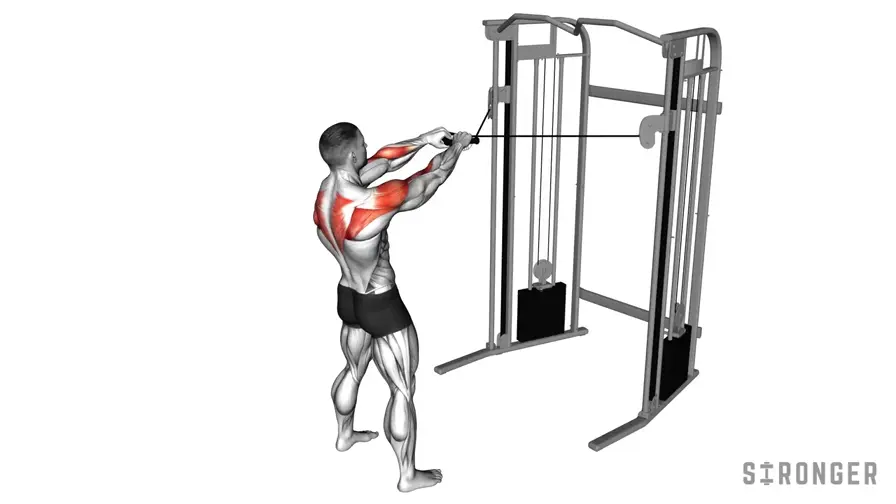
Single-joint movements like barbell curls, lateral raises, leg curls, and face pulls involve smaller muscle groups and lighter loads. They recover faster and do not tax the CNS significantly. Rest 60-120 seconds.
Core Exercises: 60-90 Seconds
Exercises like planks, hanging leg raises, and cable crunches are typically performed with bodyweight or light loads. Rest 60-90 seconds between sets.
Autoregulation: Adjusting Rest Periods in Real Time
Fixed rest periods are a good starting point, but the best approach is to autoregulate based on how you feel. Two signals indicate you are ready for the next set:
1. Breathing Returns to Normal
After a hard set, your breathing rate and heart rate will be elevated. When your breathing returns close to baseline, your cardiovascular system has recovered enough to perform another quality set.
2. You Feel Mentally Ready
Heavy lifting requires focus and aggression. If you still feel mentally scattered or fatigued from the previous set, you are not ready. Wait until you feel confident you can execute the next set with full effort and proper form.
Practical Autoregulation Method
Set a minimum rest period based on your goal (e.g., 2 minutes for hypertrophy work), then add time as needed based on the signals above. For heavy compounds, your minimum should be 3 minutes, and you should feel free to take 4-5 minutes if the previous set was particularly demanding.
Using a workout tracker app with a built-in rest timer helps ensure you are resting long enough while preventing you from resting excessively. Stronger includes a configurable rest timer that alerts you when your rest period is complete.
Common Mistakes With Rest Periods
1. Resting Too Little on Heavy Compounds
This is the most common mistake, especially among gym-goers who feel guilty about sitting between sets. If you are performing heavy squats or deadlifts with 1-2 minutes of rest, you are leaving strength on the table. The research consistently favours longer rest periods for strength gains on compound lifts [1][3].
2. Resting Too Long on Isolation Work
On the other end of the spectrum, taking 5 minutes between sets of lateral raises is unnecessary. Smaller muscle groups recover quickly, and excessive rest on isolation movements turns an efficient workout into an unnecessarily long session.
3. Using the Same Rest Period for Everything
A one-size-fits-all rest period ignores the physiological differences between exercises. Your barbell squat and your face pulls do not need the same recovery time. Scale rest periods to the exercise demands.
4. Not Tracking Rest Periods at All
If you are not timing your rest, you have no idea whether you are resting 90 seconds or 4 minutes. Perception of time during exercise is notoriously unreliable. Use a timer.
How Rest Periods Affect Workout Duration
One practical consideration is total workout time. Here is how different rest strategies affect the duration of a workout with the same total volume:
Example workout: 5 exercises, 4 sets each (20 total sets), each set lasting approximately 30 seconds.
| Rest Period | Total Rest Time | Estimated Workout Duration |
|---|---|---|
| 60 seconds | 19 minutes | ~30 minutes |
| 90 seconds | 28.5 minutes | ~40 minutes |
| 2 minutes | 38 minutes | ~50 minutes |
| 3 minutes | 57 minutes | ~70 minutes |
| 5 minutes | 95 minutes | ~105 minutes |
If time is limited, you can use strategies like supersets (pairing non-competing exercises, such as bench press and barbell row) to maintain adequate rest for each muscle group while reducing total workout time.
Frequently Asked Questions
Does rest period length affect muscle growth?
Yes, but not in the way most people think. The traditional view was that shorter rest periods (60-90 seconds) are better for hypertrophy because they increase metabolic stress and growth hormone release. However, more recent research suggests that rest periods of 2-3 minutes produce equal or superior hypertrophy because they allow you to maintain higher training volumes [3][4]. The metabolic stress from short rests may contribute to muscle growth, but it does not outweigh the negative impact of reduced volume from premature fatigue.
Should I rest longer as I get stronger?
Generally, yes. As the loads you lift increase, each set becomes more systemically fatiguing and depletes more ATP-PCr stores. A beginner squatting 60 kg may need only 2 minutes to recover between sets, while an intermediate lifter squatting 140 kg may need 4 minutes for the same quality of performance. Scale rest periods to match the intensity of effort, not just a fixed timer.
Can I scroll my phone between sets?
Technically yes, but be mindful of two things. First, phone use often causes you to lose track of time and rest longer than intended. Second, it can break your mental focus and warm-up status. If you use your phone to log your sets in a tracking app like Stronger, that is productive use of rest time. Aimless scrolling is not.
What about rest between exercises?
When transitioning from one exercise to another, you are typically setting up equipment, changing weights, or moving to a different station. This naturally takes 2-3 minutes. There is no need for additional rest beyond what the setup requires, as the change of movement pattern provides sufficient neural recovery even if the muscles overlap.
Is it true that shorter rest periods burn more fat?
Shorter rest periods do increase total caloric expenditure slightly during a workout by maintaining an elevated heart rate. However, the difference is negligible compared to overall dietary habits. Rest period selection should be based on your training goal (strength, hypertrophy, or endurance), not calorie burning. If fat loss is your goal, manage it through nutrition and add dedicated cardio rather than compromising your strength training with artificially short rest periods.
Summary
Rest period selection is a critical training variable that directly impacts your results. Get it right, and you maximise the effectiveness of every set. Get it wrong, and you leave strength and muscle growth on the table.
Key takeaways:
- Rest 3-5 minutes between heavy compound lifts for strength
- Rest 1.5-3 minutes between sets for hypertrophy (muscle growth)
- Rest 30-90 seconds for muscular endurance work
- Scale rest periods to the exercise -- heavy squats need more recovery than lateral raises
- Autoregulate by monitoring your breathing and mental readiness
- Use a rest timer to ensure consistency -- perception of time is unreliable during exercise
- Do not sacrifice load or rep quality for the sake of shorter rest periods
Track your rest periods alongside your sets and reps. Over time, you will develop an intuition for how much rest each exercise needs, but consistent logging keeps you accountable and helps you identify patterns in your performance.
Ready to Get Stronger?
Join 2,000,000+ lifters tracking their workouts with Stronger. Available on iOS and Android.
Start tracking freeSources
- de Salles, B. F., et al. (2009). Rest interval between sets in strength training. Sports Medicine, 39(9), 765-777.
- Schoenfeld, B. J. (2010). The mechanisms of muscle hypertrophy and their application to resistance training. Journal of Strength and Conditioning Research, 24(10), 2857-2872.
- Schoenfeld, B. J., et al. (2016). Longer Interset Rest Periods Enhance Muscle Strength and Hypertrophy in Resistance-Trained Men. Journal of Strength and Conditioning Research, 30(7), 1805-1812.
- Grgic, J., et al. (2017). The effects of short versus long inter-set rest intervals in resistance training on measures of muscle hypertrophy: A systematic review. European Journal of Sport Science, 17(8), 983-993.
Exercises in this guide
Stronger Editorial Team
Certified strength & conditioning specialists with 10+ years of coaching experience
The Stronger editorial team produces evidence-based training content for lifters of all levels.
Ready to Get Stronger?
Join 2,000,000+ lifters tracking their workouts with Stronger. Available on iOS and Android.
Start tracking free