
Rep Ranges for Muscle Growth, Strength & Endurance
The Rep Range Continuum: Why Reps Matter
The number of repetitions you perform per set is one of the most powerful variables in your training programme. It determines whether your body adapts primarily for strength, muscle growth, or endurance. Get it right and you accelerate your progress. Get it wrong and you spend months training hard with disappointing results.
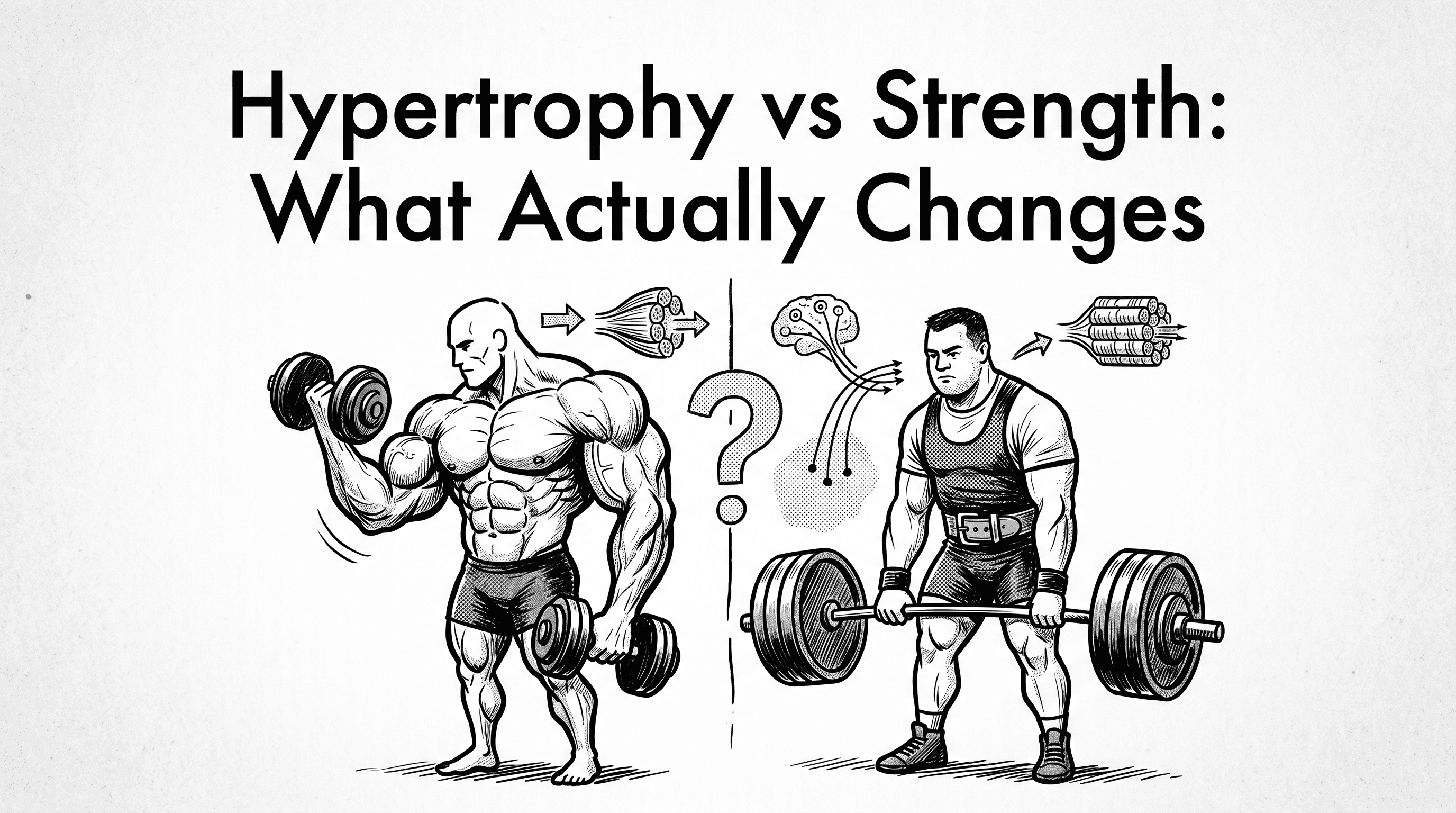
The relationship between reps, load, and adaptation is often called the rep range continuum. At one end, heavy loads for low reps build maximal strength. At the other end, light loads for high reps develop muscular endurance. In between lies the range most associated with muscle hypertrophy (growth).
Understanding this continuum -- and, critically, understanding that it is a continuum rather than three rigid boxes -- is essential for designing an effective training programme. This guide explains what each rep range does, what the research says, and how to use all of them in your training.
The Three Rep Range Zones
Strength: 1-5 Reps (85-100% 1RM)
Training with heavy loads for 1-5 reps per set is the most effective way to build maximal strength -- the ability to produce as much force as possible in a single effort.
How it works: Heavy loads force your nervous system to recruit the largest motor units (the ones connected to the most and largest muscle fibres) and fire them at high rates. With consistent heavy training, your nervous system becomes more efficient at this process, allowing you to produce more force without necessarily adding muscle mass [1].
This is why powerlifters and strength athletes spend significant time training with loads above 80% of their one-rep max (1RM). Neural adaptations are the dominant driver of strength in this rep range.
Best exercises for the 1-5 rep range:
- Barbell squat -- the foundation of lower body strength
- Conventional deadlift -- the heaviest lift for most people
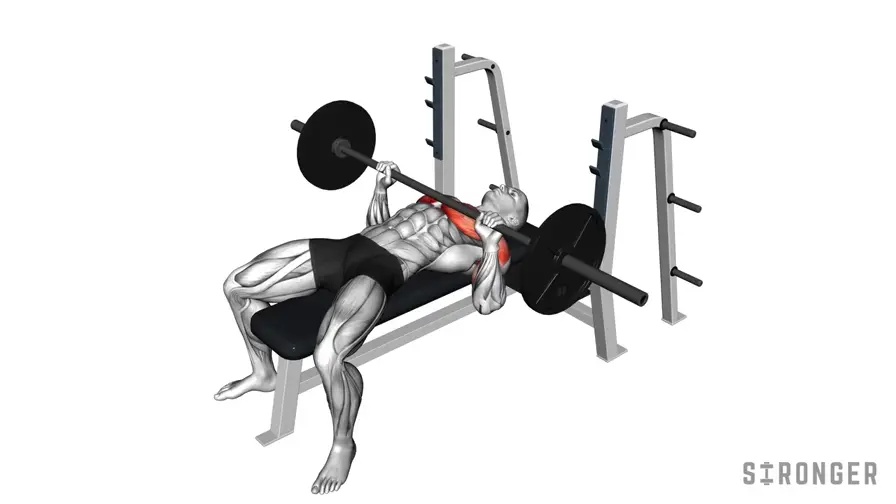
- Barbell bench press -- the standard upper body strength measure
- Overhead press -- strict pressing power
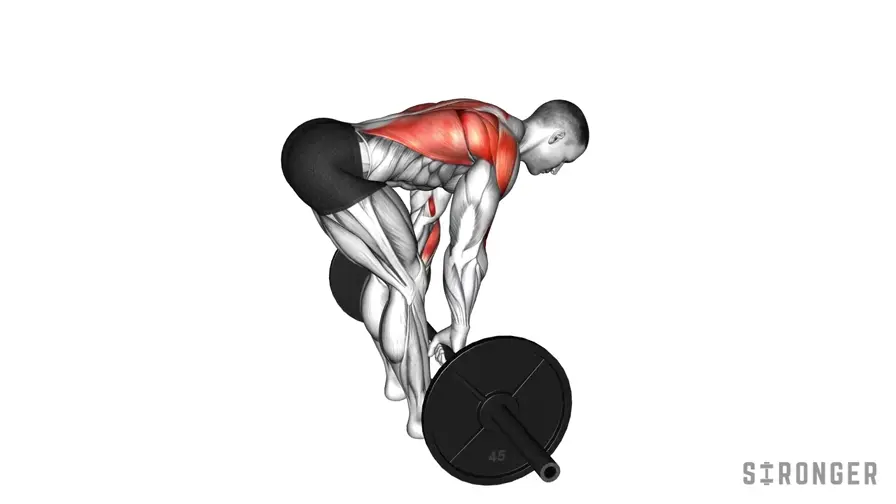
- Barbell row -- heavy pulling to balance pressing
Practical application:
| Sets | Reps | Load | Rest |
|---|---|---|---|
| 4-6 | 1-3 | 90-100% 1RM | 3-5 minutes |
| 3-5 | 4-5 | 85-90% 1RM | 3-5 minutes |
Who should prioritise this range: Powerlifters, strength athletes, anyone whose primary goal is lifting heavier weights.
Hypertrophy: 6-12 Reps (65-80% 1RM)
The 6-12 rep range has traditionally been called the "hypertrophy zone" because it produces the greatest muscle growth for most lifters. While this is somewhat oversimplified (muscle can grow in any rep range), there are valid reasons why this range is optimal for building muscle.
How it works: Moderate loads in the 6-12 rep range create a potent combination of three key hypertrophy drivers:
- Mechanical tension: The load is still heavy enough to place significant mechanical stress on the muscle fibres.
- Metabolic stress: Sets of 8-12 reps generate substantial metabolite accumulation (the "pump"), which contributes to hypertrophy signalling.
- Volume accumulation: This rep range allows you to accumulate high total training volume (sets x reps x weight) without the joint stress and CNS fatigue of very heavy training [2].
Best exercises for the 6-12 rep range:
- Incline barbell bench press -- 4x8-10 for upper chest development
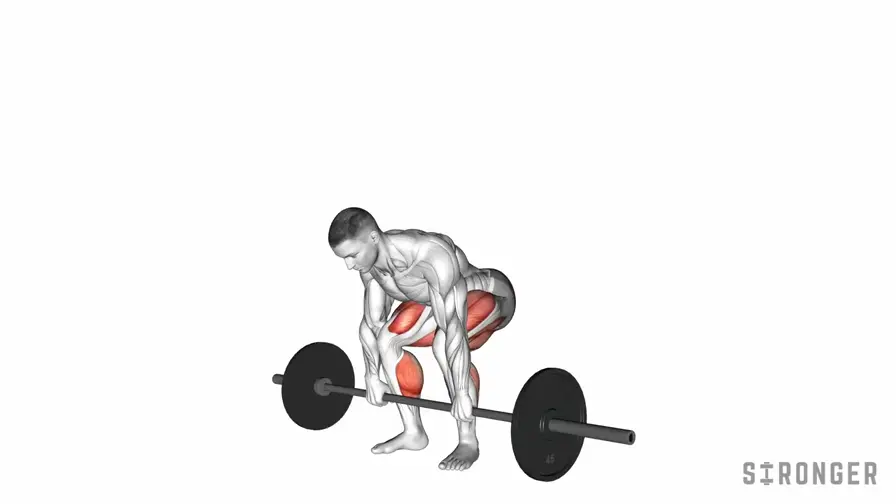
- Romanian deadlift -- 3x8-10 for hamstring and glute growth
- Dumbbell row -- 3x8-12 for lat thickness
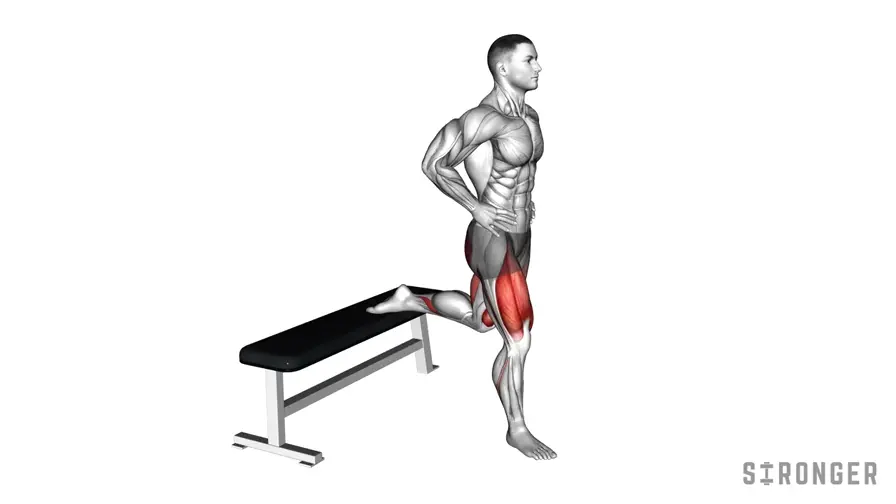
- Bulgarian split squat -- 3x10-12 for unilateral leg development
- Hip thrust -- 3x10-12 for glute hypertrophy
Practical application:
| Sets | Reps | Load | Rest |
|---|---|---|---|
| 3-4 | 6-8 | 75-80% 1RM | 2-3 minutes |
| 3-4 | 8-12 | 65-75% 1RM | 1.5-2.5 minutes |
Who should prioritise this range: Bodybuilders, anyone whose primary goal is aesthetics and muscle size, and general fitness enthusiasts.
Endurance: 15+ Reps (Below 60% 1RM)
High-rep training with lighter loads develops muscular endurance -- the ability to sustain repeated contractions over time without fatiguing.
How it works: High-rep sets challenge your muscles' oxidative capacity and their ability to clear metabolic byproducts. They improve capillary density (blood flow to muscles), mitochondrial function, and the fatigue resistance of slow-twitch muscle fibres.
This rep range can build muscle about as well as moderate reps when sets are taken close to failure, because the largest motor units are recruited as fatigue builds [3]. It is simply more uncomfortable and time-consuming than the 6-12 range, so most lifters use it as a supplement rather than their main hypertrophy work.
Best exercises for the 15+ rep range:
- Lateral raise -- 3x15-20 for shoulder endurance and pump
- Face pull -- 3x15-20 for rear delt health
- Leg extension -- 3x15-20 for quad finishing work
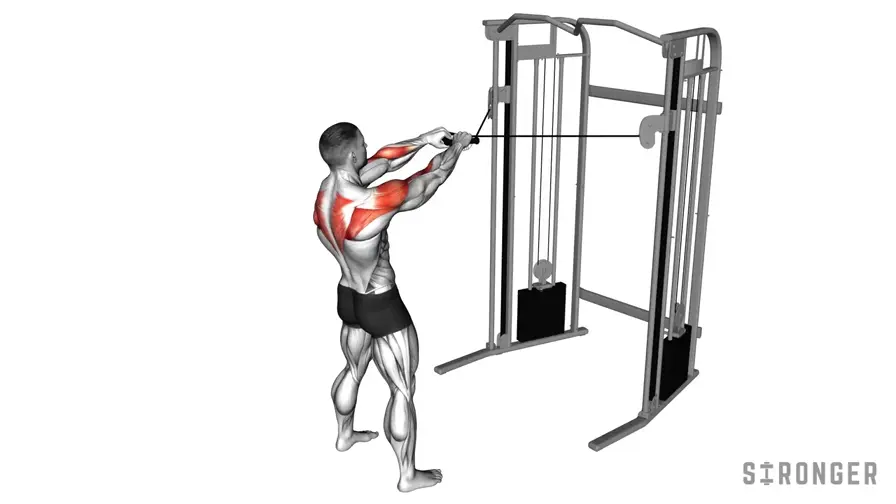
- Cable fly -- 3x15 for chest isolation
- Calf raise -- 4x15-20 for calf development
Practical application:
| Sets | Reps | Load | Rest |
|---|---|---|---|
| 2-3 | 15-20 | 50-60% 1RM | 60-90 seconds |
| 2-3 | 20-30 | 30-50% 1RM | 30-60 seconds |
Who should prioritise this range: Endurance athletes, those in rehabilitation, and as supplementary work for all lifters.
Ready to Get Stronger?
Join 2,000,000+ lifters tracking their workouts with Stronger. Available on iOS and Android.
Start tracking freeWhat the Research Really Says
Muscle Growth Can Occur in Any Rep Range
One of the most important findings in recent exercise science is that muscle hypertrophy can occur across a wide spectrum of rep ranges, provided sets are taken close to muscular failure. A landmark meta-analysis by Schoenfeld et al. (2017) found that both low-load (high-rep) and high-load (low-rep) training produced similar muscle growth when all sets were taken to muscular failure [3].
This does not mean rep ranges do not matter. It means that the rigid "hypertrophy only happens between 6-12 reps" model is too simplistic. In practice:
- Low reps (1-5) build the most strength but produce somewhat less hypertrophy per set than moderate reps, primarily because fewer total reps are performed per set.
- Moderate reps (6-12) are the most time-efficient for hypertrophy because they balance load, volume, and fatigue effectively.
- High reps (15+) can build muscle if taken near failure, but the discomfort and cardiovascular limitation of high-rep sets make this impractical as a primary training strategy.
Strength Is More Rep-Range Specific
While muscle growth is relatively rep-range flexible, strength is highly specific to the loads you train with. To get better at lifting heavy, you need to practise lifting heavy. A 2017 meta-analysis found that training with heavier loads (above 60% 1RM) produced greater maximal strength gains than training with lighter loads, even though hypertrophy was similar [3].
This has a clear practical implication: if you want to be strong, some of your training must be heavy, regardless of your hypertrophy goals.
How to Use All Rep Ranges in Your Training
The most effective training programmes do not stick to a single rep range. They use all three zones strategically across the training week. This approach is called undulating periodisation. A 2022 meta-analysis found that periodised programmes produced slightly greater strength gains than non-periodised ones, though muscle growth was similar and undulating models were not clearly better than linear ones [4].
The Daily Undulating Model
Vary your rep ranges across training days:
| Day | Focus | Main Lifts | Accessories |
|---|---|---|---|
| Monday | Strength | Squat 5x3, Bench Press 5x3 | Lat Pulldown 3x8, Face Pull 3x15 |
| Wednesday | Hypertrophy | Romanian Deadlift 4x8, Dumbbell Bench Press 4x10 | Lateral Raise 3x15, Leg Curl 3x12 |
| Friday | Strength | Deadlift 5x3, Overhead Press 5x3 | Pull-Up 3x8, Cable Crunch 3x12 |
The Block Model
Dedicate training blocks to different rep ranges:
- Weeks 1-4 (Accumulation): All main lifts at 4x8-10 (hypertrophy focus)
- Weeks 5-8 (Intensification): All main lifts at 5x4-5 (strength focus)
- Week 9 (Deload): All main lifts at 3x5 at 60% (recovery)
- Repeat with slightly higher weights
The Within-Workout Model
Use different rep ranges for different exercises within the same session:
- Main compound lift: 4x4 at 85% (strength)
- Secondary compound lift: 3x8 at 72% (hypertrophy)
- Accessory isolation work: 3x12-15 at 60% (endurance/pump)
This is the most common approach used in proven programmes like the push pull legs split, the upper lower split, and 4-day workout splits.
Rep Ranges for Specific Body Parts
Different muscle groups may respond better to different rep ranges due to their fibre type composition and biomechanics.
Lower Body
Quads: Respond well to a mix of heavy (5-8 reps) and moderate (10-15 reps) work. The barbell squat is most effective in the 3-8 rep range, while leg extensions work well at 10-15 reps.
Hamstrings: Respond well to moderate reps (8-12). The Romanian deadlift at 3x8-10 is a staple.
Glutes: Respond well to moderate-to-high reps (8-15). Hip thrusts and Bulgarian split squats at 3x10-12 are highly effective.
Calves: Notoriously stubborn muscles with a high proportion of slow-twitch fibres. Higher reps (12-20) with controlled tempo tend to work best. Calf raises at 4x15-20 with a pause at the bottom are recommended.
Upper Body
Chest: Responds well to moderate reps (6-12). The bench press at 4x6-8 for strength and dumbbell fly at 3x12 for isolation is a classic combination.
Back: Benefits from a mix of heavy rows (5-8 reps) and higher-rep pulldowns (10-15 reps). Barbell rows at 4x6 and lat pulldowns at 3x12 cover both ends.
Shoulders: The medial and rear delts respond particularly well to higher reps (12-20). The overhead press should stay in the 5-8 range for strength, while lateral raises and face pulls benefit from 15-20 reps.
Arms: Biceps and triceps grow well across all rep ranges, but respond particularly well to moderate reps (8-12) with strict form. Barbell curls at 3x10 and skull crushers at 3x10 are standard.
Progressive Overload Across Rep Ranges
Progressive overload is the fundamental driver of all training adaptations, regardless of rep range. Here is how to apply it:
The Double Progression Method
This is the simplest and most effective method for most lifters:
- Choose a rep range (e.g., 8-12 reps)
- Perform your sets at a given weight
- When you can complete all sets at the top of the range (12 reps), increase the weight by the smallest increment available
- The increased weight will drop your reps back toward the bottom of the range (8 reps)
- Work back up to 12 reps, then increase weight again
Example with dumbbell bench press:
| Week | Weight | Set 1 | Set 2 | Set 3 | Action |
|---|---|---|---|---|---|
| 1 | 30 kg | 10 | 9 | 8 | Keep weight |
| 2 | 30 kg | 11 | 10 | 9 | Keep weight |
| 3 | 30 kg | 12 | 12 | 11 | Keep weight |
| 4 | 30 kg | 12 | 12 | 12 | Increase to 32.5 kg |
| 5 | 32.5 kg | 9 | 8 | 8 | Keep weight |
This method provides clear, objective progression criteria and works for any rep range. Using a workout tracker app makes this process seamless -- you can see exactly what you lifted last session and know immediately whether you are ready to add weight.
Frequently Asked Questions
What is the single best rep range for building muscle?
If you could only pick one rep range, 6-10 reps would be the most efficient choice for muscle growth. It is heavy enough to recruit high-threshold motor units, produces significant metabolic stress, and allows high total volume without excessive joint stress or CNS fatigue. However, the best results come from training across multiple rep ranges over time [3].
Should beginners use the same rep ranges as advanced lifters?
Beginners should start with moderate rep ranges (5-8 reps on compounds, 8-12 on accessories) and focus on learning proper form with manageable loads. Very heavy singles and doubles (1-3 reps) are unnecessary and potentially risky for novices. As technique becomes second nature, gradually introduce heavier work in the 1-5 rep range on main lifts. A 5x5 programme is an excellent starting point that introduces appropriate loading.
How close to failure should each set be?
For strength (1-5 reps), keep 1-2 reps in reserve (RIR) on working sets. Going to absolute failure on heavy compound lifts increases injury risk and CNS fatigue without additional strength benefit. For hypertrophy (6-12 reps), training within 1-3 RIR on most sets is optimal. Research shows hypertrophy tends to decrease as sets are stopped further from failure [5]. For endurance (15+), going to or near failure is appropriate.
Can I build muscle with just bodyweight exercises?
Yes, especially as a beginner. Push-ups, pull-ups, and dips can build significant muscle when performed with sufficient volume and taken close to failure. The challenge is progressive overload -- once you can easily do 20+ reps, the stimulus shifts toward endurance rather than hypertrophy. Adding external resistance (weighted vest, resistance bands, barbell exercises) becomes necessary for continued muscle growth.
How many total reps per muscle group per week?
Research tends to count hard sets rather than total reps. A commonly cited guideline is 10-20 hard sets per muscle group per week for hypertrophy, which adds up to very different rep totals depending on your rep range. For strength, many lifters do fewer total reps because the loads are heavier and recovery demands are greater. These are starting points -- adjust based on your recovery capacity, training experience, and individual response.
Summary
Rep ranges are a powerful tool for directing your training adaptations. Understanding the continuum -- and knowing when to apply each zone -- separates effective programming from random exercise.
Key takeaways:
- 1-5 reps with heavy loads build maximal strength through neural adaptations
- 6-12 reps with moderate loads are the most efficient zone for muscle hypertrophy
- 15+ reps with lighter loads develop muscular endurance
- Muscle growth can occur in any rep range when training near failure, but 6-12 is most time-efficient
- Strength is highly specific to the loads you train with -- heavy training is essential for maximal strength
- The best programmes use all three rep ranges strategically through undulating periodisation
- Use the double progression method to systematically increase weight within your chosen rep range
- Track your sets, reps, and weights to ensure progressive overload is actually happening
Do not overthink it. Pick a proven programme, train across multiple rep ranges, push yourself close to failure on most sets, and add weight whenever you can. Track everything, and let the data guide your decisions.
Ready to Get Stronger?
Join 2,000,000+ lifters tracking their workouts with Stronger. Available on iOS and Android.
Start tracking freeSources
- Schoenfeld, B. J. (2010). The Mechanisms of Muscle Hypertrophy and Their Application to Resistance Training. Journal of Strength and Conditioning Research, 24(10), 2857-2872.
- Wernbom, M., Augustsson, J., & Thomee, R. (2007). The influence of frequency, intensity, volume and mode of strength training on whole muscle cross-sectional area in humans. Sports Medicine, 37(3), 225-264.
- Schoenfeld, B. J., et al. (2017). Strength and Hypertrophy Adaptations Between Low- vs. High-Load Resistance Training: A Systematic Review and Meta-analysis. Journal of Strength and Conditioning Research, 31(12), 3508-3523.
- Moesgaard, L., Beck, M. M., Christiansen, L., Aagaard, P., & Lundbye-Jensen, J. (2022). Effects of Periodization on Strength and Muscle Hypertrophy in Volume-Equated Resistance Training Programs: A Systematic Review and Meta-analysis. Sports Medicine, 52(7), 1647-1666.
- Robinson, Z. P., et al. (2024). Exploring the Dose-Response Relationship Between Estimated Resistance Training Proximity to Failure, Strength Gain, and Muscle Hypertrophy: A Series of Meta-Regressions. Sports Medicine, 54(9), 2209-2231.
Exercises in this guide
Stronger Editorial Team
Certified strength & conditioning specialists with 10+ years of coaching experience
The Stronger editorial team produces evidence-based training content for lifters of all levels.
Ready to Get Stronger?
Join 2,000,000+ lifters tracking their workouts with Stronger. Available on iOS and Android.
Start tracking free