
Glute Bridge vs Hip Thrust: Which Builds Glutes?
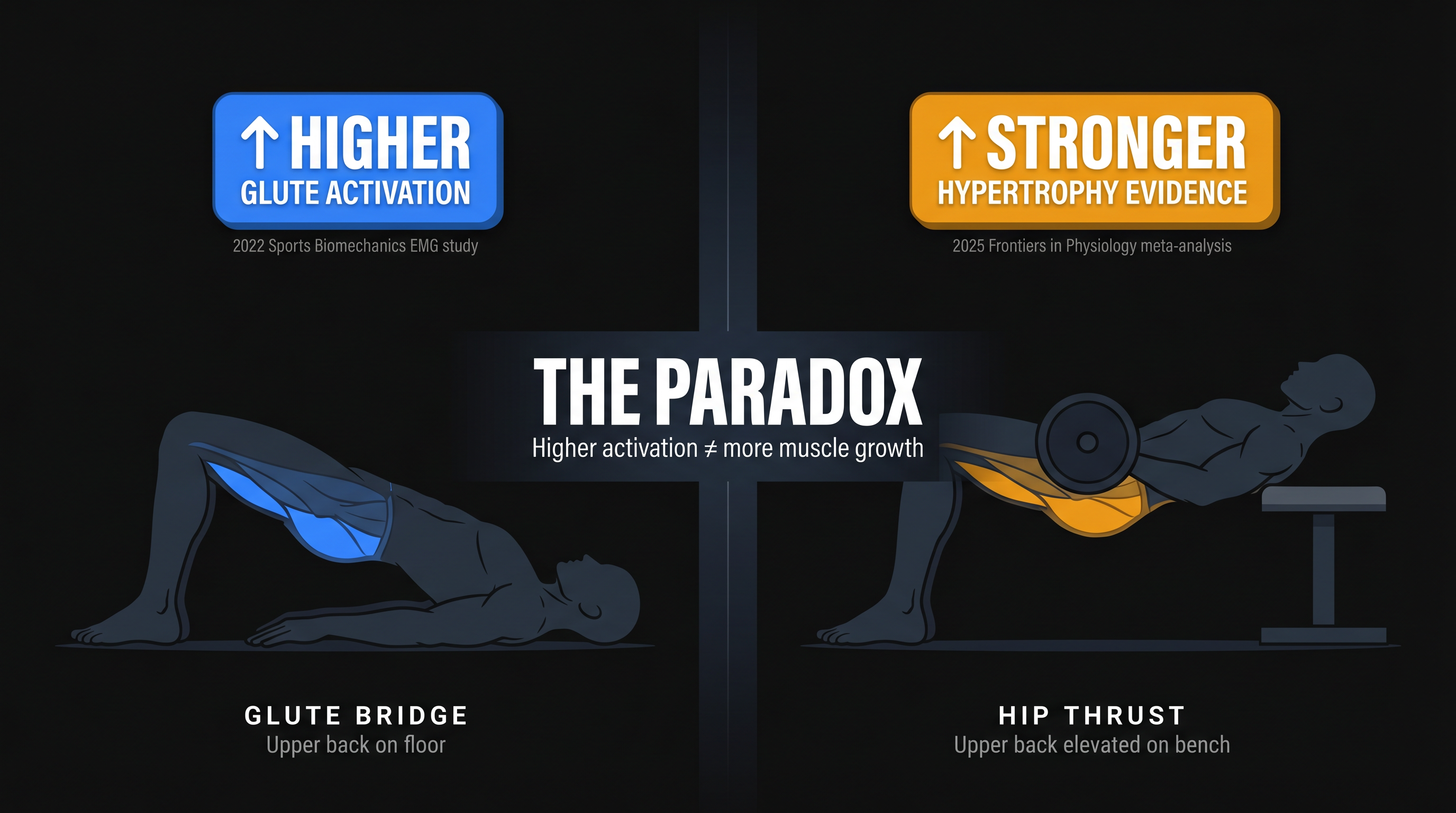
Most articles on this topic give you the "it depends" answer and call it a day. Here's a more honest take: for most lifters, the hip thrust is the better main glute lift — but a 2022 study in Sports Biomechanics found that glute bridges actually produce higher gluteus maximus activation. Both things are true at the same time, and that tension is exactly what this post unpacks.
By the time you finish reading, you'll know what the research actually says about each exercise, when to use which one, how to execute both correctly, and how to build a program that gets your glutes responding to both. We've built Stronger around helping lifters answer exactly these kinds of questions — not with guesswork, but with data and progressive overload you can track and verify.
Hip Thrust vs Glute Bridge: The Short Answer
For most lifters trying to grow their glutes, use the hip thrust as your primary glute lift and use the glute bridge as a secondary lift, accessory, warm-up, finisher, or substitute when the hip thrust setup doesn't work for your body or equipment.
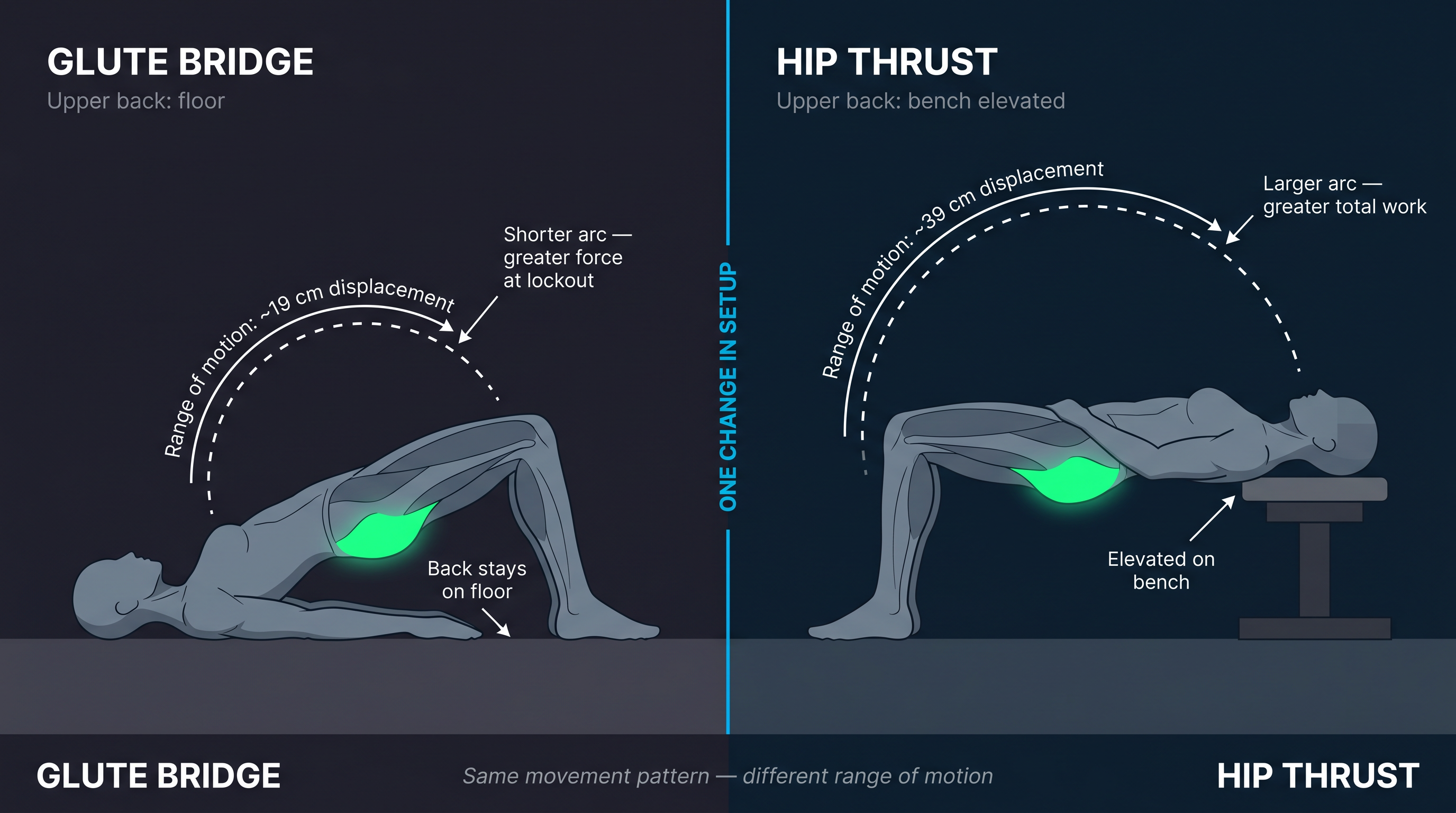
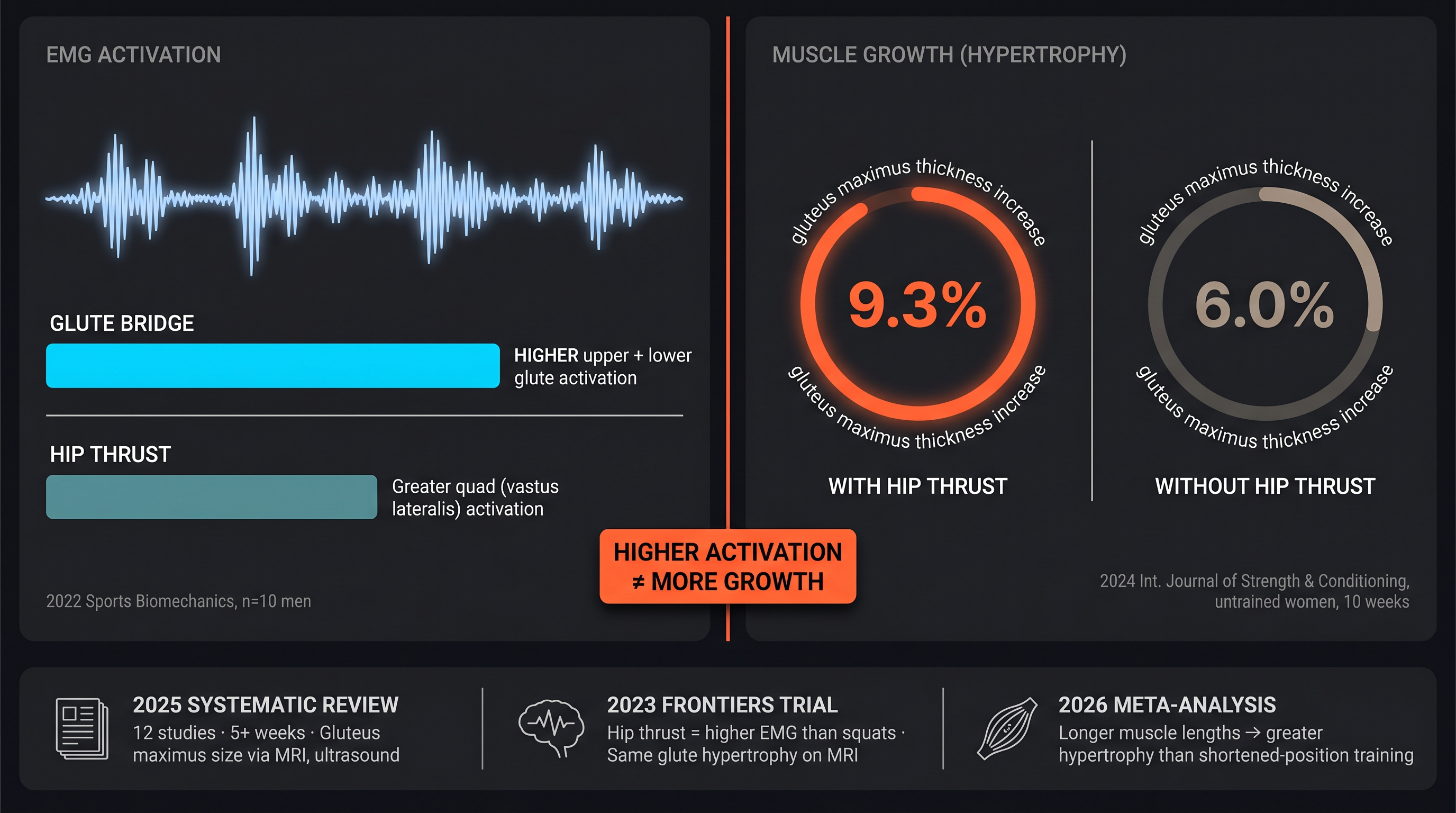
That does not mean glute bridges are inferior. A 2022 Sports Biomechanics study (electromyography — measuring the electrical activity of muscle fibers during movement) found that the barbell glute bridge produced significantly higher gluteus maximus activation than the barbell hip thrust in a small sample of men. Meanwhile, a 2024 biomechanical comparison found that the hip thrust involved far greater total displacement — about 39 centimeters versus 19 centimeters, and greater impulse through a longer range of motion.
Neither finding alone tells you which exercise will grow your glutes more over six months of training. What we do know is this:
The hip thrust wins as the main lift because it's easier to load progressively, covers a larger range of motion, and has more direct hypertrophy research behind it. The glute bridge earns its place because it's simpler, more accessible, and emphasizes hip lockout in a unique way — it's not just a beginner substitute.
If you're after maximum glute growth, the real answer isn't "hip thrust versus glute bridge." It's progressive overload, hard sets, consistent weekly volume, and smart exercise pairing. The specific exercises are the vehicle. Let's make sure you're choosing the right ones.
Hip Thrust vs Glute Bridge: Key Differences
At their core, both exercises are the same movement: hip extension against resistance. The key difference is where your upper back rests.
In a glute bridge, your upper back stays on the floor. You bend your knees, plant your feet, and drive your hips upward until your torso and thighs form a straight line. In a hip thrust, your upper back is elevated on a bench or box. That elevation lets your hips travel through a longer arc, typically creating more range of motion and making heavy loading more manageable over time.
A 2024 biomechanical study described the two movements as "almost identical except for the support surface" — but that small setup change meaningfully alters the force profile and total work done. In our hip thrust exercise guide and barbell glute bridge guide on Stronger, both movements cue the same fundamentals: drive through the heels, reach full hip extension at the top, hold briefly, and avoid turning the lockout into a lower-back arch.
| Factor | Hip Thrust | Glute Bridge |
|---|---|---|
| Upper-back position | Elevated on bench or box | On the floor |
| Range of motion | Usually larger | Usually smaller |
| Loading potential | Generally easier to load heavy | Loadable, but setup can be more limiting |
| Main training role | Primary glute hypertrophy lift | Accessory, beginner lift, finisher, warm-up, or substitute |
| Strength emphasis | Better through a larger hip-extension range | Higher force closer to hip lockout |
| Setup difficulty | More awkward; needs bench or box | Simpler; floor-based |
| Best for | Intermediate lifters, heavy progression, glute-focused programming | Beginners, home gyms, lower setup friction, lockout work, pump work |
Understanding these differences matters because it changes how you program each movement — not which one is "better." Browse the full glutes exercise library in Stronger to see every variation available for your training.
Which Grows More Muscle: Hip Thrust or Glute Bridge?
Here's where most comparisons fall apart: they cite one study and declare a winner. The honest answer is that both movements have genuine hypertrophy support, the hip thrust has more of it, and no long-term head-to-head trial has directly compared them for glute growth. Let's look at what we actually have.
Do hip thrusts build more muscle? Here's the evidence
A 2025 systematic review and meta-analysis in Frontiers in Physiology analyzed 12 resistance-training studies lasting at least five weeks, measuring gluteus maximus size through ultrasound, MRI, muscle thickness, or cross-sectional area. The conclusion: single exercises like the barbell hip thrust should be prioritized when the goal is gluteus maximus hypertrophy.
The same review acknowledged that squats, leg presses, kneeling hip extensions, and mixed programs all grow glutes — but the hip thrust had the most direct and consistent hypertrophy evidence among single exercises.
A 2024 study in the International Journal of Strength and Conditioning strengthened that case. Untrained young women trained leg press and stiff-leg deadlift for 10 weeks; one group added the barbell hip thrust to their program. The hip-thrust group improved gluteus maximus thickness by 9.3% versus 6.0% in the group without it — a measurable difference from adding one dedicated hip-extension movement.
Do glute bridges activate glutes more than hip thrusts?
The 2022 Sports Biomechanics EMG study complicates the "hip thrust always wins" narrative. It found that the barbell glute bridge produced significantly higher upper and lower gluteus maximus activation than the barbell hip thrust — while the hip thrust produced greater vastus lateralis (outer quad) activation.
Before you take that as proof that bridges are better, here's the catch the authors themselves flagged: the study measured activation, not long-term hypertrophy. It also had a small sample of 10 men, and the authors concluded that future research is needed to determine which movement produces greater glute growth over time.
Why feeling your glutes work doesn't mean more growth
This is one of the most practically important points in this whole comparison. A 2023 Frontiers in Physiology trial put it plainly: nine weeks of hip thrust training produced higher acute glute EMG readings than squats, but both groups showed similar gluteus maximus and gluteus medius hypertrophy on MRI.
The exercise that makes you "feel" your glutes working harder isn't automatically the one that will grow them more. Surface EMG did not reliably predict hypertrophy at the individual level.
Growth depends on whether you can train the movement hard, recover from it, repeat it consistently, and progressively overload it over time. Feeling is useful feedback, but it's not the whole answer.
Why your glute program needs more than just hip thrusts
Hip thrusts and glute bridges work the glutes through a fairly short range, and neither loads them in a deep stretch the way squats, lunges, and Romanian deadlifts do. That's still valuable, but it shouldn't be your entire glute program.
A 2026 systematic review and meta-analysis found that resistance training at longer muscle lengths produced greater hypertrophy than training at shorter muscle lengths across the included evidence. The glutes are loaded through a longer, more stretched range during exercises like Romanian deadlifts, deep squats, Bulgarian split squats, and lunges — movements where the hips are flexed, not extended.
Our own hip thrust guide on Stronger makes this explicit: hip thrusts are a powerful tool, but they work best as part of a program that also includes a hinge or squat pattern that loads the glutes through a deeper stretch.
When to Use Hip Thrusts Over Glute Bridges
1. When your goal is maximum glute growth
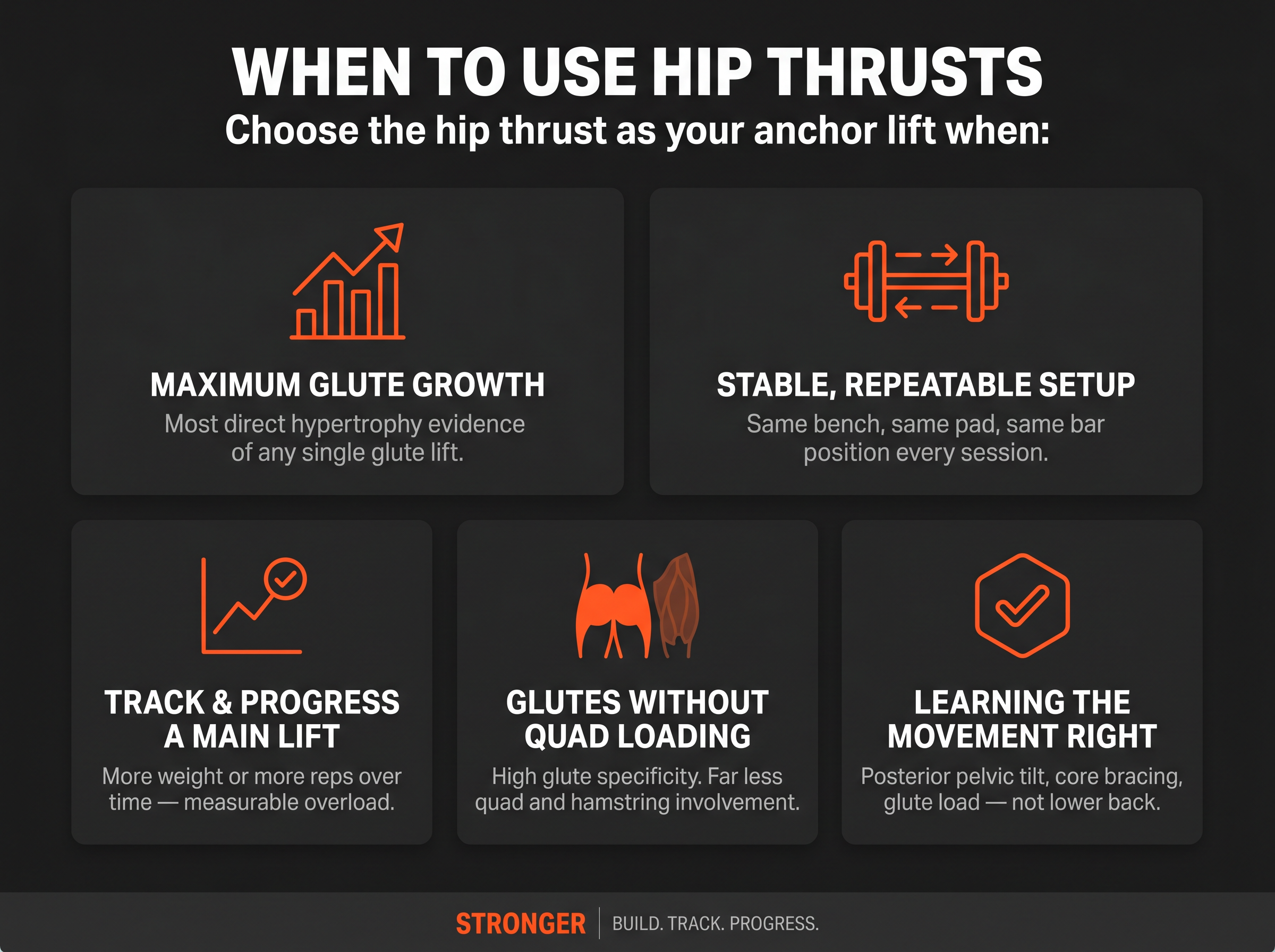
Use hip thrusts when glute growth is the training priority. If you're building your glute training around one primary movement, the hip thrust is usually the right anchor. It has the most direct hypertrophy evidence, it's easy to progressively load and standardize, and a 2025 systematic review directly recommends it for gluteus maximus hypertrophy.
2. When you have a stable, repeatable setup
Use hip thrusts when your setup is consistent and repeatable. Hip thrusts are only effective when the setup is dialed in. A bench that slides, a bar that rolls, or a torso position that shifts from rep to rep removes the controllability that makes hip thrusts excellent for tracking. Once the setup is consistent — same bench, same pad, same bar position — the hip thrust becomes one of the most reliable progression lifts in a glute program.
3. When you need a main lift you can track and progress
Use hip thrusts when you need a primary lift you can clearly track over time. A good hypertrophy program needs at least a few lifts where you can clearly track progress. Hip thrusts fit this perfectly: same setup, same rep target, same pause at the top, more weight or reps over time. That's what progressive overload looks like in practice.
4. When you want glutes without heavy quad loading
Use hip thrusts when you want glute work without significant quad loading. Hip thrusts are highly glute-specific compared to compound lower-body movements. The 2023 Frontiers trial found similar glute growth between hip thrusts and squats, but thigh hypertrophy strongly favored squats. If your goal is glute development without accidentally turning every session into a leg day, hip thrusts give you that emphasis with far less quad and hamstring loading.
5. When you're ready to learn the movement properly
Use hip thrusts when you're committed to learning the movement properly. Hip thrusts reward attention. Once you learn to create a hard posterior pelvic tilt at the top, brace your abs through the set, and load the glute rather than the lumbar spine, the exercise becomes one of the most productive tools available. That learning curve is worth the investment.
Ready to Get Stronger?
Join 2,000,000+ lifters tracking their workouts with Stronger. Available on iOS and Android.


When to Use Glute Bridges Over Hip Thrusts
1. When you're a beginner learning hip extension
Use glute bridges when you're building the movement pattern from scratch. The floor setup removes one variable. Instead of coordinating your upper back on a bench while loading a bar and controlling your hips, you can focus entirely on the movement pattern itself: brace, tuck the pelvis slightly, drive the hips up, squeeze the glutes, lower under control. Once you've mastered that pattern, adding the bench elevation of a hip thrust is a small and natural step.
2. When you train at home or have limited equipment
Use glute bridges when equipment or space is limited. No bench? Not a problem. Glute bridges can be loaded with bodyweight, a dumbbell, a barbell, resistance bands, a sandbag, or a single-leg variation. The floor is all the setup you need, which makes bridges one of the most accessible glute exercises available.
3. When hip thrusts are chronically uncomfortable
Use glute bridges when hip thrust setup is chronically uncomfortable. Some lifters find hip thrusts chronically uncomfortable — the bar position on the hip crease, the bench edge on their upper back, or a lower-back sensation they can't resolve despite good technique cues. If that's you and you've genuinely worked on the setup, a loaded glute bridge may let you train the same fundamental hip-extension pattern without the setup becoming the obstacle.
4. When you want a lockout finisher or pump work
Use glute bridges when targeting the hip lockout position specifically. The 2024 biomechanical study found that glute bridges allow higher force closer to hip lockout, while hip thrusts produced greater displacement and impulse across the full range. That makes bridges particularly useful at the end of a session: high-rep sets with a long pause at the top, a KAS glute bridge variation that maximizes the lockout squeeze, band tension, or single-leg variations to target the finish position specifically.
5. When bridges load your glutes better than thrusts
Use glute bridges when they consistently load the right muscle better for your body. This alone doesn't make glute bridges superior for growth — as we covered, EMG doesn't reliably predict hypertrophy. But if hip thrusts consistently become quad-dominant, hamstring-dominant, or lower-back-dominant for you despite good coaching and setup adjustments, while glute bridges reliably load the glutes with clean form and real tension, bridges may be the more productive choice for your current body and setup.
How to Do Hip Thrusts for Glute Growth
How to set up for hip thrusts
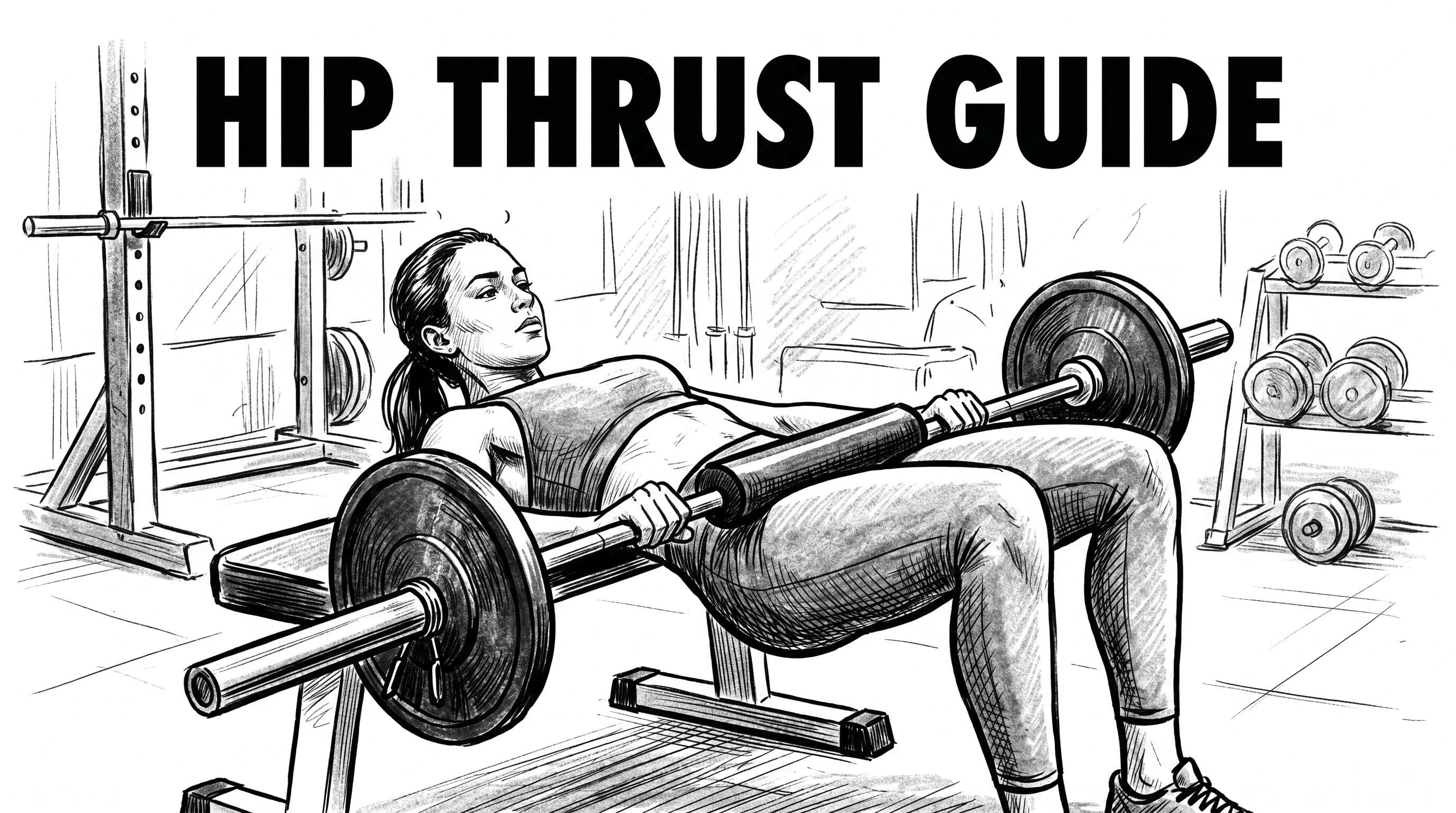
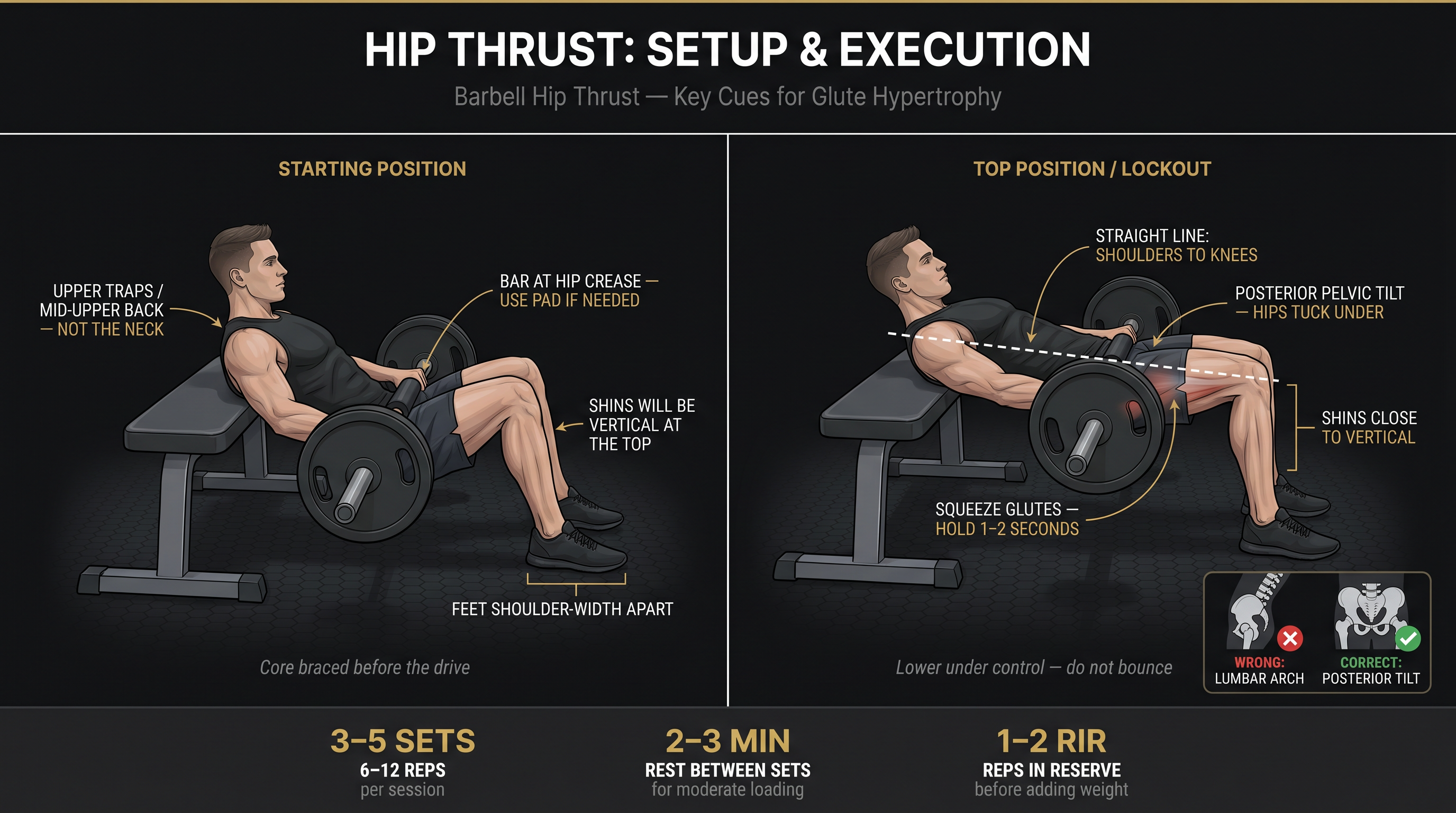
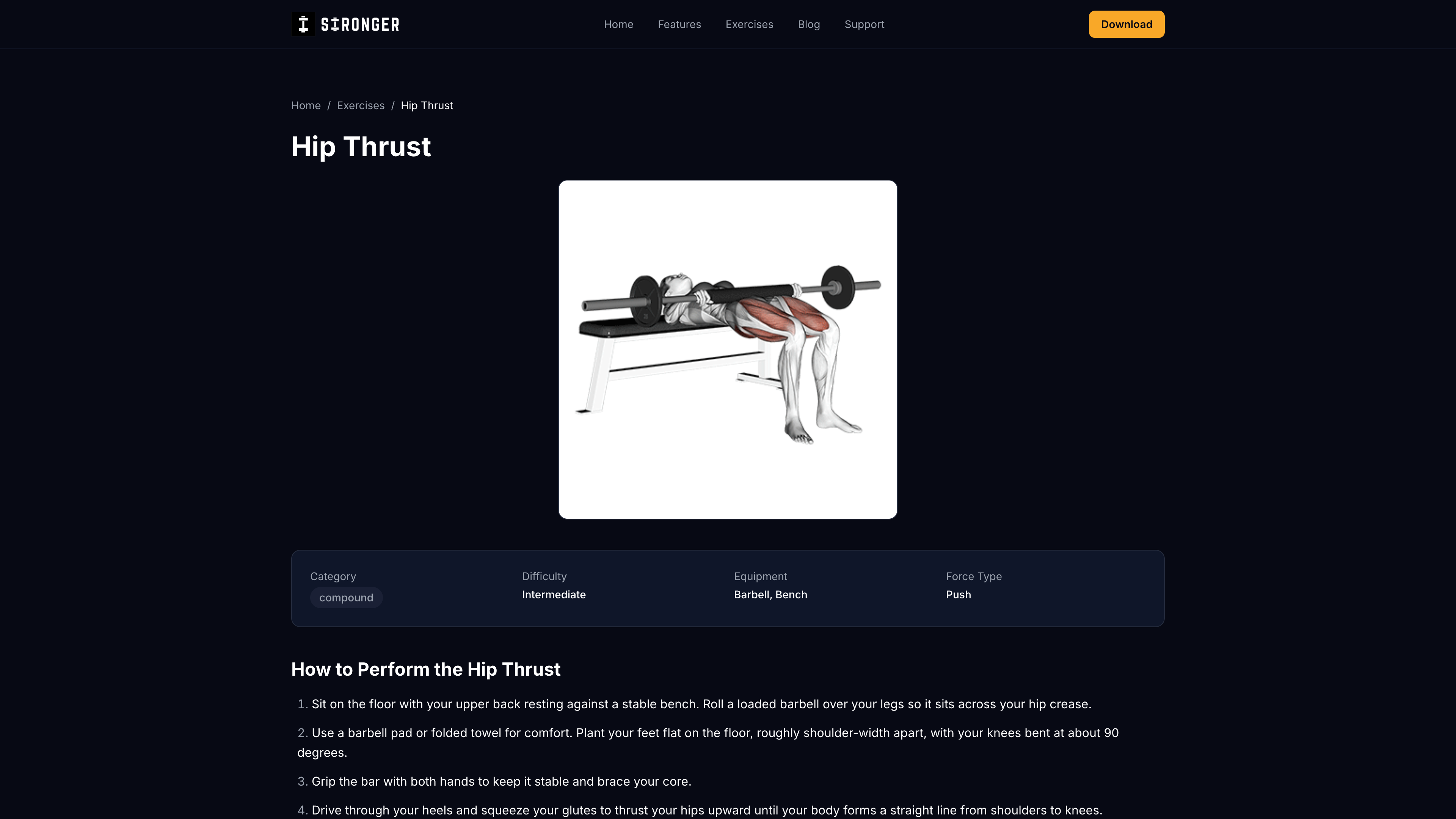
Sit on the floor with your upper back resting against a flat bench. The edge of the bench should contact your upper traps or mid-upper back — not your neck. Roll the barbell over your legs and position it across the hip crease, just below your hip bones. Use a barbell pad or foam wrap if the bare bar is uncomfortable.
Plant your feet roughly shoulder-width apart. At the top of each rep, your shins should be close to vertical. If your feet are too close to your body, expect to feel more quad involvement. If your feet are too far out, you may feel more hamstrings. Adjust until the glutes are clearly doing the work.
Hip thrust form: step-by-step technique
Brace your core, drive through the entire foot, and lift your hips until your torso forms a straight line from your shoulders to your knees. At the top, squeeze the glutes hard and create a slight posterior pelvic tilt — your hips tuck under rather than your lower back arching upward. Hold for one to two seconds. Lower under control and repeat.
Our hip thrust exercise guide on Stronger reinforces the same cues: drive through the heels, reach full hip extension, hold the top briefly, and never turn the lockout into a lumbar extension. If a barbell isn't available, a dumbbell hip thrust works the same pattern with less setup friction.
Best rep ranges for hip thrust hypertrophy
- 3–5 sets of 6–12 reps for your primary hip thrust work
- 2–3 minutes rest between heavy sets
- A consistent pause at the top of every rep
Our exercise guidance on Stronger lists hip thrust hypertrophy work at 3–4 sets of 8–12 reps, with about 2–3 minutes rest for moderate compound movements at this intensity.
How to progress hip thrusts over time
When you can complete all sets at the top of your rep range with clean form and about one to two reps still left in the tank (reps in reserve — how many more reps you could have done before form broke down), add weight. If form deteriorates, stay at the current load and fix the execution before chasing numbers.
How to Do Glute Bridges for Glute Growth
How to set up for glute bridges
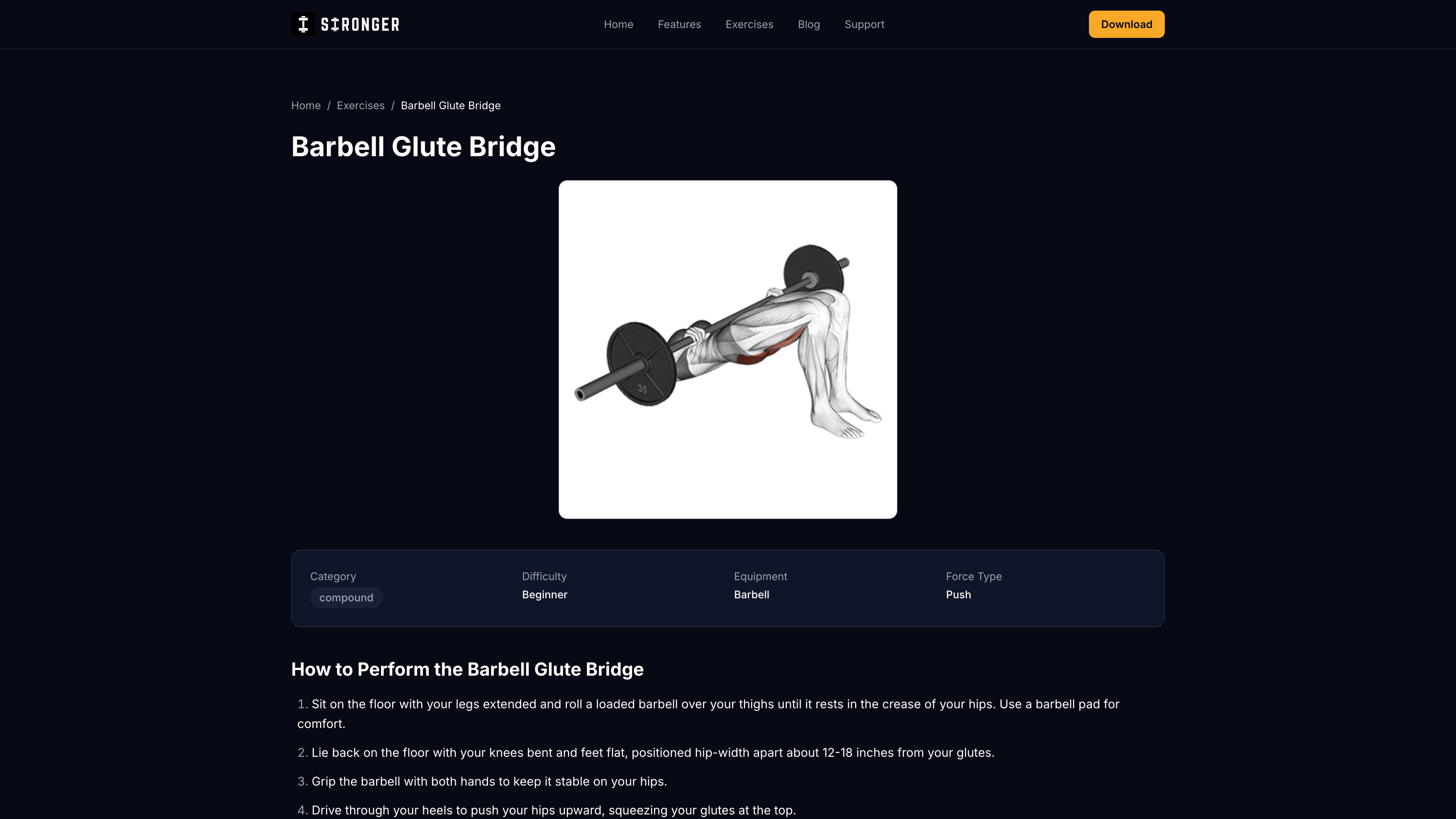
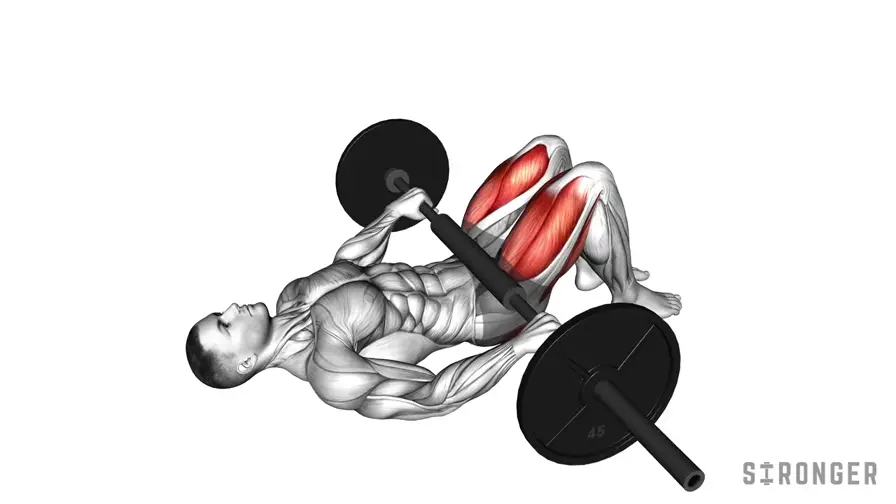
Lie on your back with your knees bent and feet flat on the floor. Your feet should be roughly 12 to 18 inches from your glutes — adjust until your shins are close to vertical when your hips are fully extended at the top. If you're using a barbell, position it across the hip crease and hold it in place with both hands during the set.
Glute bridge form: step-by-step technique
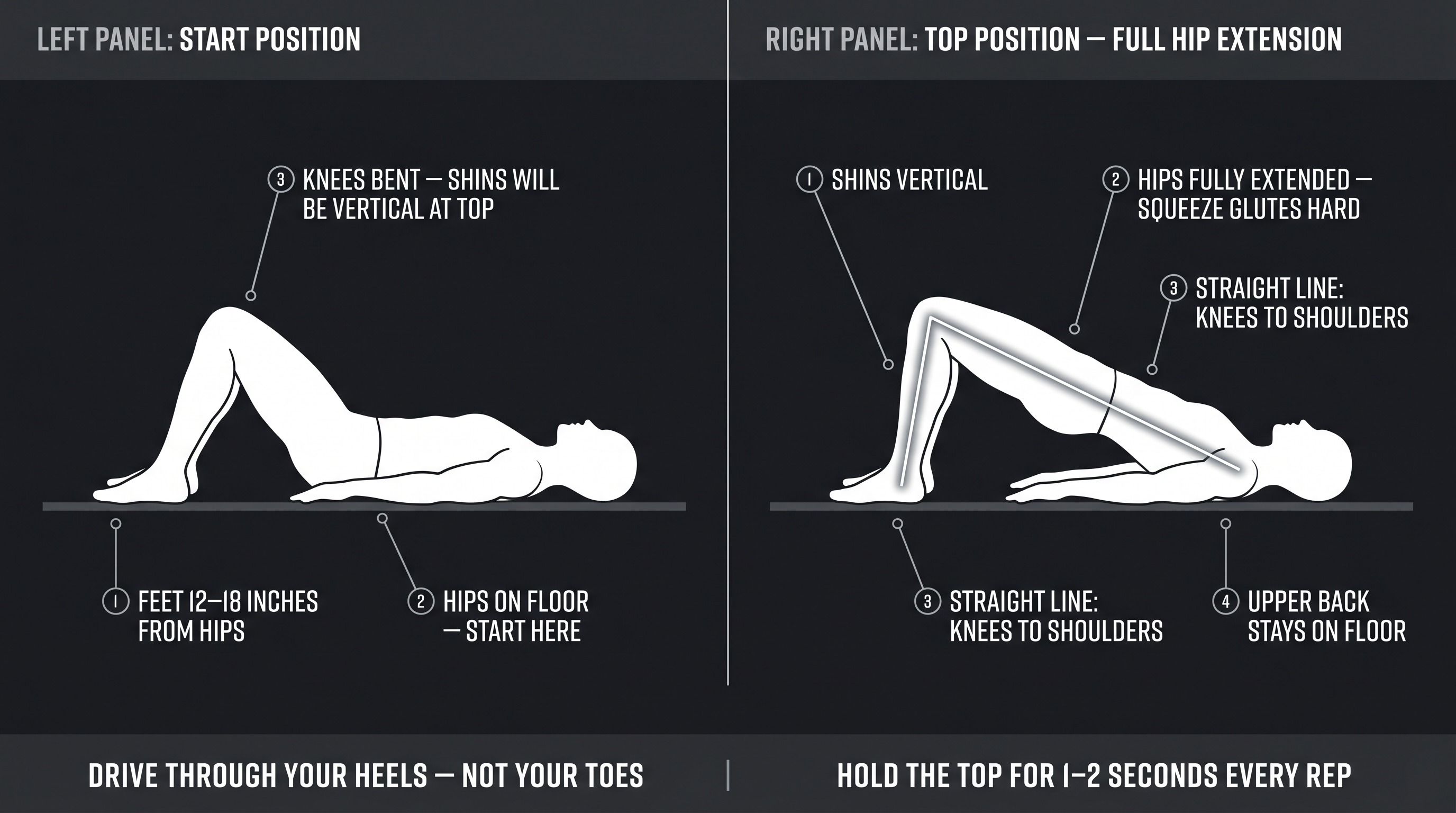
Brace your core, drive through your heels, and lift your hips until your body forms a straight line from your knees to your shoulders. Squeeze the glutes hard at the top and hold for one to two seconds. Lower with control — don't bounce off the floor between reps.
Our barbell glute bridge guide on Stronger emphasizes the same points: feet positioned so shins are vertical at the top, drive through the heels, reach full hip extension, hold briefly, and avoid hyperextending the lower back.
Best rep ranges for glute bridge hypertrophy
- 3–4 sets of 10–15 reps as a loaded accessory
- 2–3 sets of 15–25 reps as a high-rep finisher
- A one-to-two-second glute squeeze at the top of every rep
Our barbell glute bridge guide on Stronger lists hypertrophy work at 3–4 sets of 10–15 reps and endurance/pump work at 2–3 sets of 15–25 reps.
How to progress glute bridges over time
Don't progress by rushing the reps or shortening the hold. Progress by adding reps at the same load, adding weight while maintaining the same top position, increasing the pause duration, slowing the tempo, or advancing to a harder variation like a single-leg glute bridge — all while keeping clean execution and real hip extension at the top.
Sample Weekly Glute Programs Using Hip Thrusts and Bridges
The best approach for most lifters isn't to pick one exercise and abandon the other — it's to give each one a specific job in a well-structured program.
The 2026 ACSM resistance training guideline update recommends training major muscle groups at least twice per week, with hypertrophy requiring roughly 10 sets per muscle group as a practical target. That recommendation synthesized 137 systematic reviews covering more than 30,000 participants.
For glute growth specifically, aim for 8–12 direct glute-focused sets per week to start. Adjust based on how your body responds: if soreness and performance are stable, gradually add. If recovery suffers or technique degrades, pull back.
A 2024 Sports Medicine meta-regression found that hypertrophy improved as sets were performed closer to failure. For glute training, aim to finish most working sets with 0–3 reps in reserve — close enough to failure that the stimulus is genuine, but not so close that form breaks down on heavy hip thrusts.
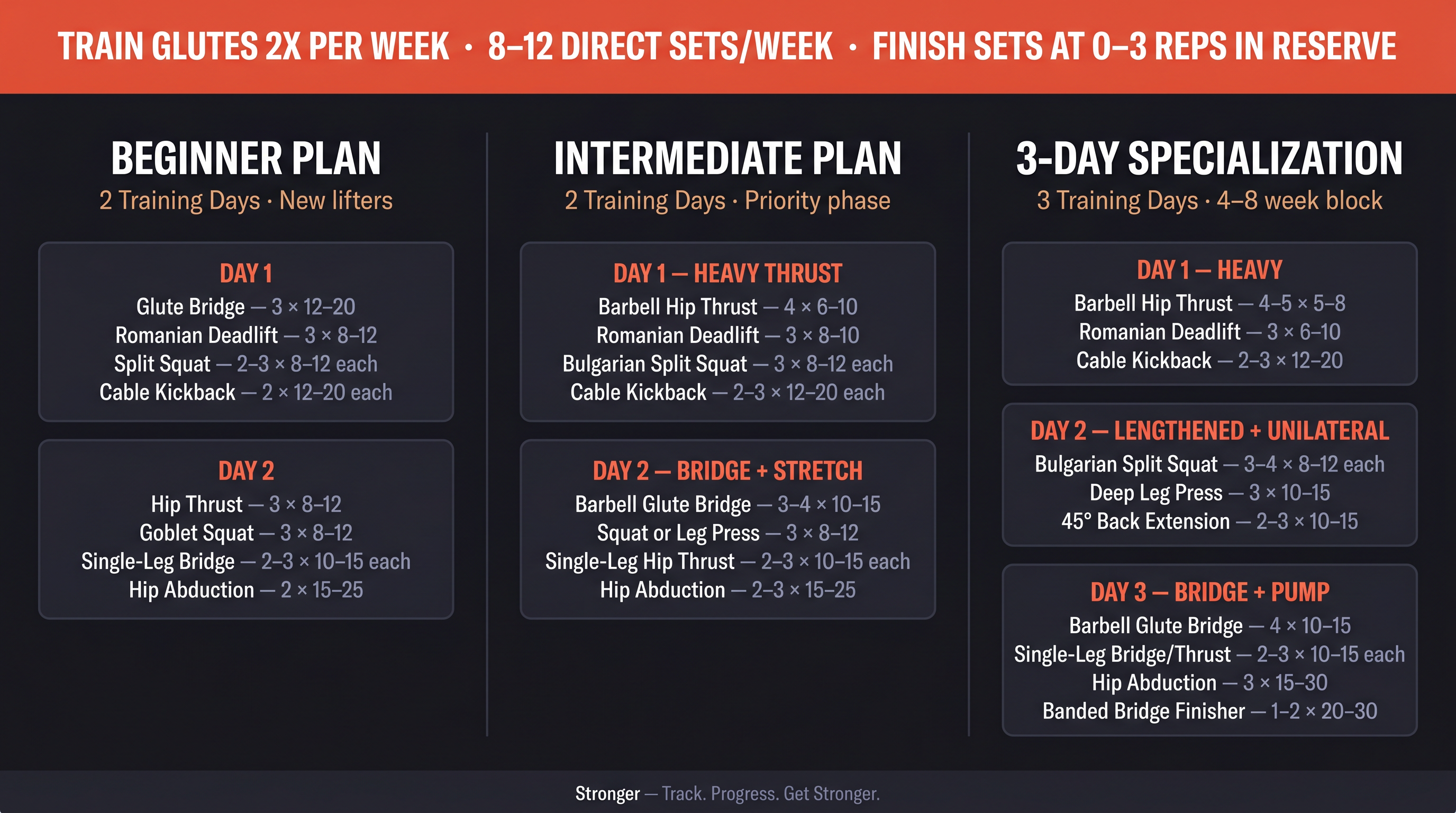
Option 1: Beginner Glute Training Plan
Best for: New to training or still learning to feel your glutes working.
Day 1
| Exercise | Sets | Reps |
|---|---|---|
| Bodyweight or dumbbell glute bridge | 3 | 12–20 |
| Romanian deadlift | 3 | 8–12 |
| Split squat | 2–3 | 8–12 each side |
| Cable or band kickback | 2 | 12–20 each side |
Day 2
| Exercise | Sets | Reps |
|---|---|---|
| Hip thrust or machine hip thrust | 3 | 8–12 |
| Goblet squat or leg press | 3 | 8–12 |
| Single-leg glute bridge | 2–3 | 10–15 each side |
| Hip abduction variation | 2 | 15–25 |
Focus on clean reps, controlled lowering, and consistent progression. Don't rush into heavy loading before you can keep your ribs down, pelvis controlled, and glutes doing the work on every single rep.
Option 2: Intermediate Glute Growth Program
Best for: Already training consistently and want glutes to be a priority.
Day 1 — Heavy thrust focus
| Exercise | Sets | Reps | Notes |
|---|---|---|---|
| Barbell hip thrust | 4 | 6–10 | Pause every rep |
| Romanian deadlift | 3 | 8–10 | Deep stretch, neutral spine |
| Bulgarian split squat | 3 | 8–12 each side | Slight forward torso lean |
| Cable glute kickback | 2–3 | 12–20 each side | Control the top |
Day 2 — Bridge + lengthened glute focus
| Exercise | Sets | Reps | Notes |
|---|---|---|---|
| Barbell glute bridge | 3–4 | 10–15 | Hard top squeeze |
| Squat or leg press | 3 | 8–12 | Glute-friendly depth |
| Single-leg hip thrust | 2–3 | 10–15 each side | Control rotation |
| Hip abduction | 2–3 | 15–25 | Smooth reps |
This gives you a heavy thrust pattern, a bridge pattern, a hinge, a squat or press pattern, unilateral work, and targeted accessory volume. Our barbell RDL guide on Stronger describes the RDL as a hinge that trains the hamstrings and glutes through a deep stretch — exactly the lengthened-position complement these plans are built around.
Option 3: Three-Day Glute Specialization Program
Best for: A 4–8 week block when glutes are your main lower-body priority.
Day 1 — Heavy
| Exercise | Sets | Reps |
|---|---|---|
| Barbell hip thrust | 4–5 | 5–8 |
| Romanian deadlift | 3 | 6–10 |
| Cable kickback | 2–3 | 12–20 |
Day 2 — Lengthened + unilateral
| Exercise | Sets | Reps |
|---|---|---|
| Bulgarian split squat | 3–4 | 8–12 each side |
| Deep leg press | 3 | 10–15 |
| 45-degree back extension, glute bias | 2–3 | 10–15 |
Day 3 — Bridge + pump
| Exercise | Sets | Reps |
|---|---|---|
| Barbell glute bridge | 4 | 10–15 |
| Single-leg glute bridge or hip thrust | 2–3 | 10–15 each side |
| Hip abduction | 3 | 15–30 |
| Optional banded bridge finisher | 1–2 | 20–30 |
Keep this as a specialization phase, not your permanent training structure. If lower back, hip, or hamstring fatigue builds up, reduce volume before piling on more exercises.
Glute Training Mistakes That Stall Progress
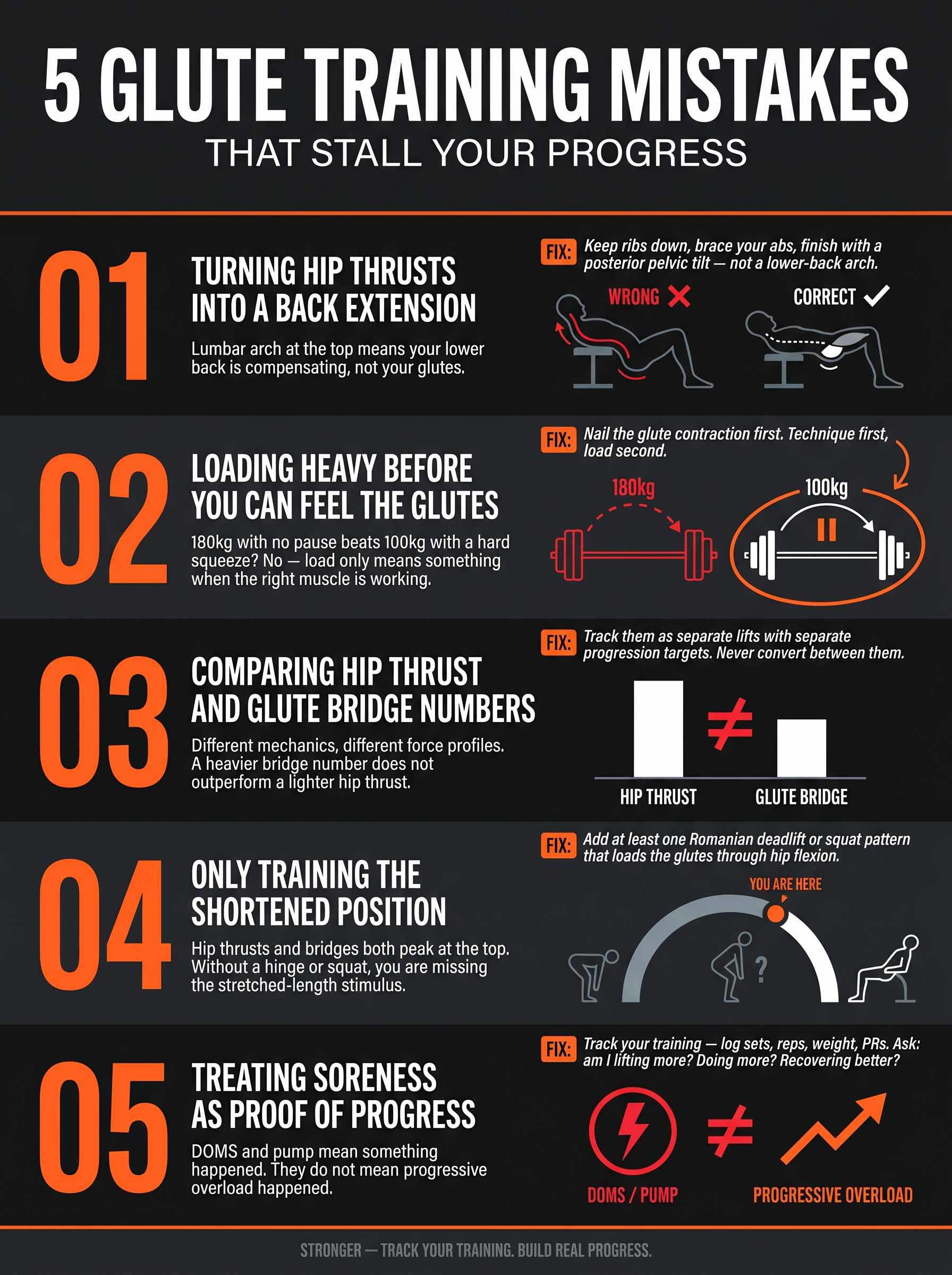
Mistake 1: Turning hip thrusts into a back extension
At the top of both exercises, the goal is hip extension — your torso and thighs forming a straight line. It's not lumbar extension. If every rep finishes with a lower-back arch, you're likely compensating for hips that aren't moving through their full range, and the lower back is picking up the slack.
Fix: Keep your ribs down, brace your abs throughout the set, and use a posterior pelvic tilt (think "tuck your hips under slightly") at the top position.
Mistake 2: Loading heavy before you can feel the glutes
A 180 kg hip thrust done with half range of motion, no pause, and no glute contraction at the top is less productive for glute growth than a 100 kg hip thrust with consistent depth, a deliberate pause, and actual tension in the target muscle. Load matters — but only when the right muscle is still doing the work.
Fix: Dial in the glute contraction and hold at the top before chasing heavier weight. Technique first, load second.
Mistake 3: Comparing hip thrust and glute bridge numbers
These are different exercises. The 2024 biomechanical study found major differences in displacement, impulse, and force profile between the two movements. A heavier glute bridge number doesn't mean it's a more effective stimulus than a lighter hip thrust, because the mechanics are fundamentally different.
Fix: Track them as separate lifts, with separate progression targets. Don't convert between them.
Mistake 4: Skipping stretched-position glute work
Hip thrusts and glute bridges are excellent glute exercises, but they don't load the glutes through a deep stretch. If your entire glute program is built around thrusts and bridges, you're missing a significant part of the stimulus.
Fix: Pair them with at least one hinge or squat pattern that challenges the glutes when the hips are in flexion.
Mistake 5: Treating soreness as proof of progress
Post-workout soreness and a muscle pump are useful signals that something happened during a session. They are not the same as progressive overload. The question is not "did this feel hard?" It's "am I lifting more, doing more sets, recovering better, and building more muscle over time?"
Fix: Track your training. Inside Stronger, you can log sets, reps, weight, PRs, training history, strength curves, and muscle-group volume — then actually see whether your glute training is progressing instead of just feeling difficult.
Ready to Get Stronger?
Join 2,000,000+ lifters tracking their workouts with Stronger. Available on iOS and Android.
Why You Feel Hip Thrusts or Glute Bridges in the Wrong Place
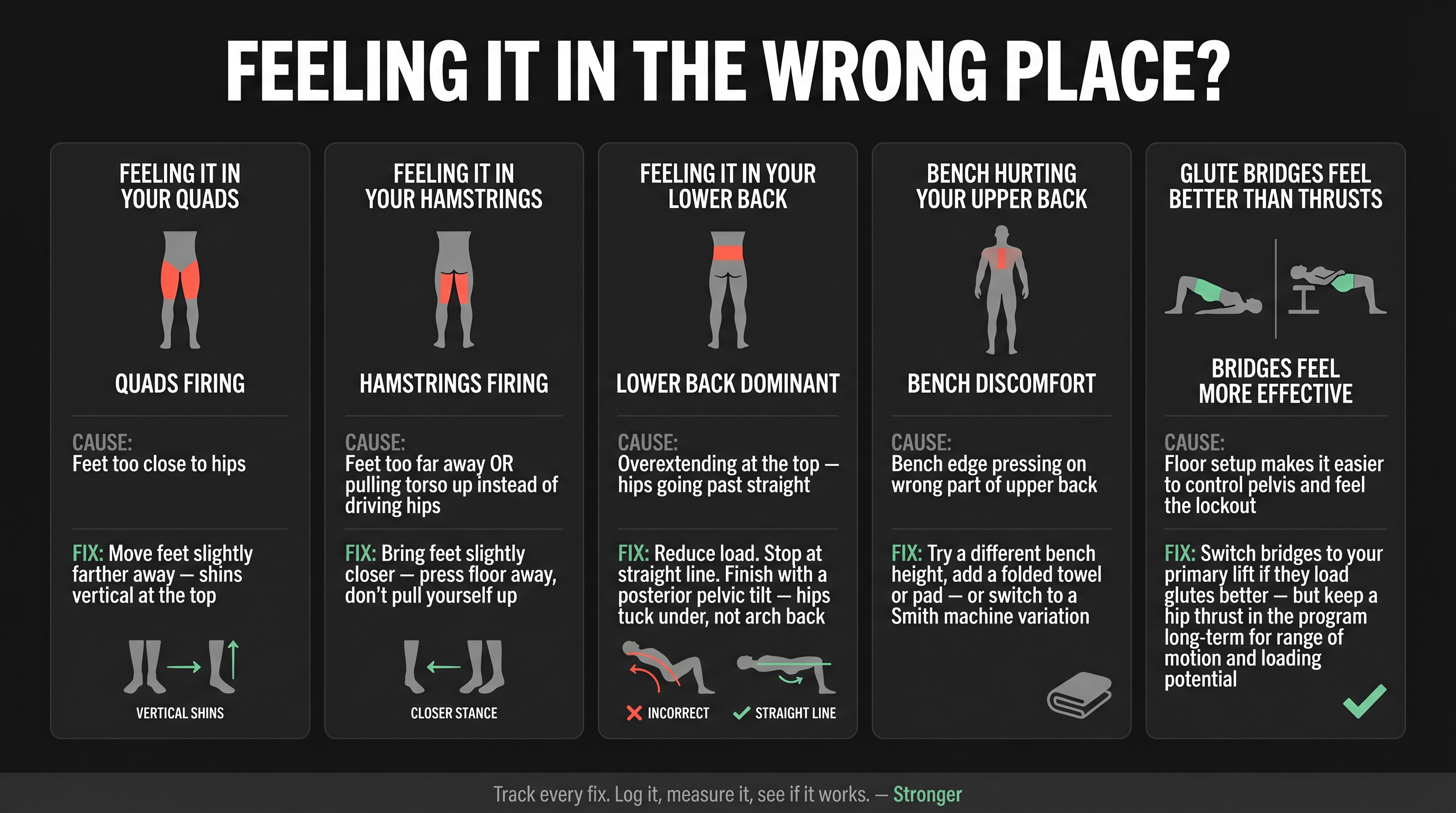
Why do I feel hip thrusts in my quads?
Your feet are probably too close to your hips. Move them slightly farther away from your body until your shins are close to vertical when your hips are at the top. Also check that you're driving through the whole foot — not just pushing off your toes.
Why do I feel hip thrusts in my hamstrings?
Your feet may be too far away, or you may be pulling your torso up rather than driving the hips upward. Bring your feet slightly closer and focus on the sensation of pressing the floor away beneath you rather than pulling yourself up.
Why do I feel hip thrusts in my lower back?
You're likely overextending at the top. Reduce the load, stop the rep when your torso reaches a straight line, and deliberately finish with a posterior pelvic tilt rather than a lower-back arch. If reducing load doesn't help, check that your bench height allows full hip extension without your torso pitched at an uncomfortable angle.
The bench is hurting my upper back during hip thrusts
Try a different bench height, use a folded gym towel or bench pad, or use a Smith machine hip thrust variation that allows a slightly different bar path. If setup discomfort is consistently an obstacle, a loaded glute bridge may be a better primary choice for your training until you find a setup that works.
Glute bridges feel better than hip thrusts: should I switch?
Possibly yes. If bridges give you cleaner glute tension and better measurable progression, they can absolutely be your primary hip-extension movement. That said, if maximum glute growth is the goal, consider keeping some form of hip thrust in your program once your setup is dialed in — the larger range of motion and longer direct hypertrophy track record make it worth the investment in setup troubleshooting.
Build and Track Your Glute Training With Stronger
Knowing which exercise to do is only half the work. The other half is tracking whether that exercise is actually doing its job.
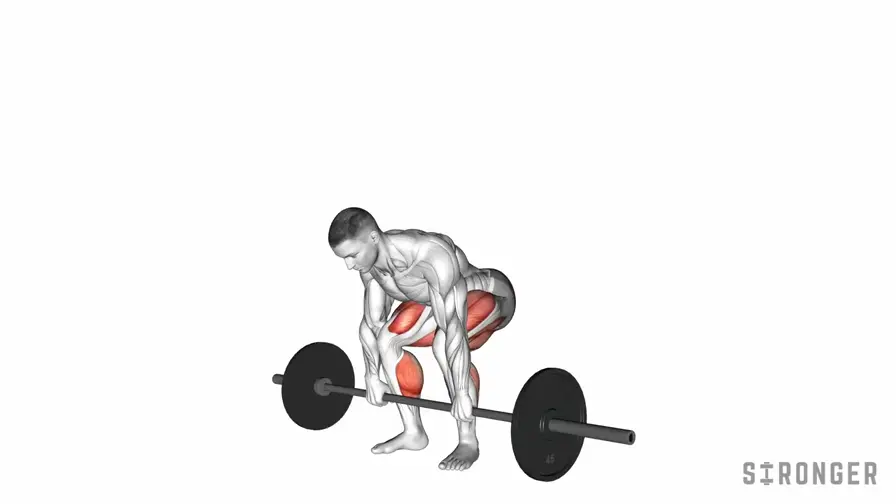
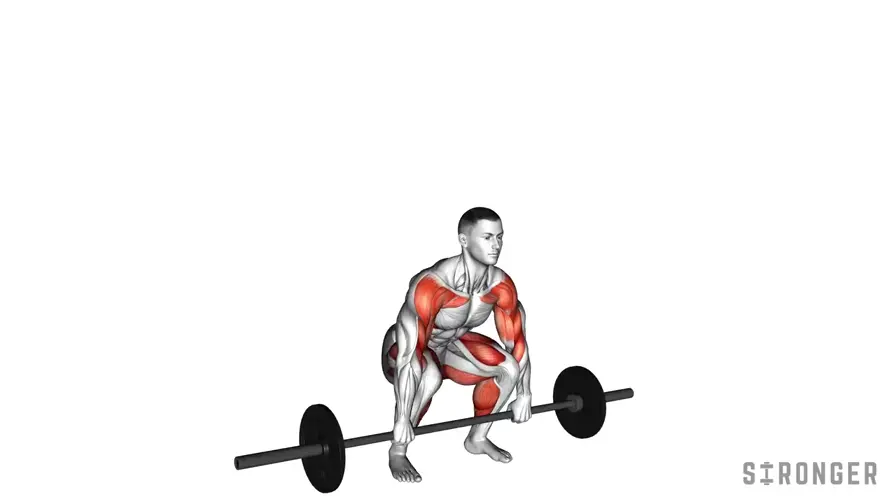
Stronger is built for exactly this kind of training. Our exercise library includes full guides for hip thrusts, barbell glute bridges, Romanian deadlifts, cable glute kickbacks, and 400+ other exercises — each with muscle targeting maps, execution cues, and set/rep guidance built in. You don't have to guess how to build a complete glute program; the information is right there in your pocket.
When you log a session in Stronger, you're not just recording what happened. You're building a training history that shows you your PRs across every exercise and rep range, strength curves per exercise, muscle-group volume per week, and RPE logging per set so you can track how close to failure each set actually was.
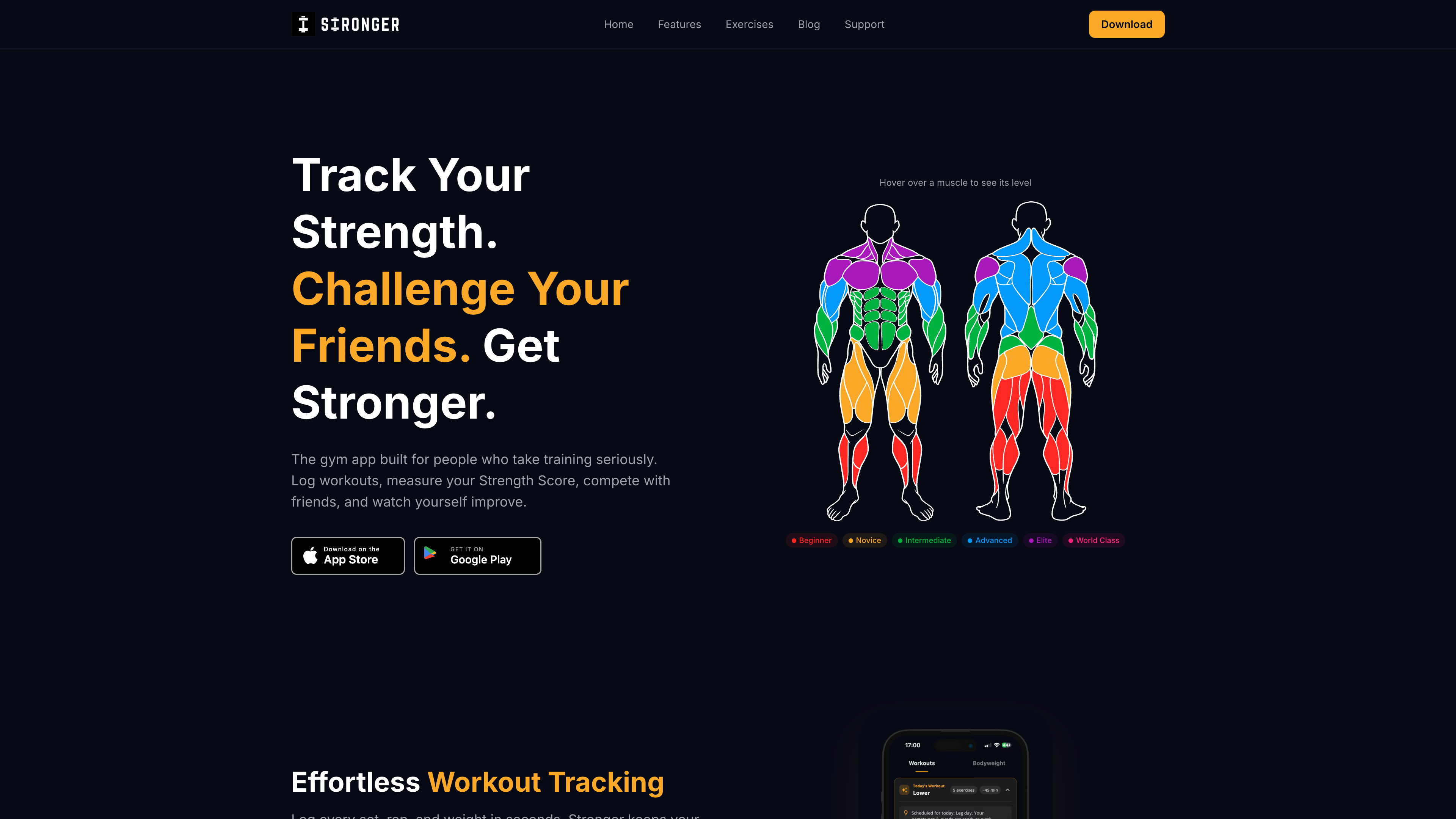
One of the most common ways lifters stall their glute progress is by switching exercises, changing the setup, or shortening the range of motion — and then wondering why they haven't gotten stronger. With Stronger, you can log hip thrusts and glute bridges as separate exercises, track each independently, and immediately see when a change in setup or variation disrupted your progression.
Our Strength Score system tracks your overall strength across major lifts and muscle groups, adjusts for bodyweight and training history, and shows you how you compare against global standards. It turns the question "am I actually getting stronger?" from a guess into a number you can watch move over time.
Ready to start tracking your glute progress? Download Stronger and log your first hip thrust or glute bridge session today. The 7-day free trial gives you full access to our analytics, exercise library, and Strength Score from day one.
Glute Bridge vs Hip Thrust: Final Verdict
If you want the most direct, evidence-based answer:
Use hip thrusts as your primary glute-growth lift. Use glute bridges as a secondary lift, accessory, or substitute. Pair both with at least one exercise that loads the glutes through a more stretched position. Track your progression.
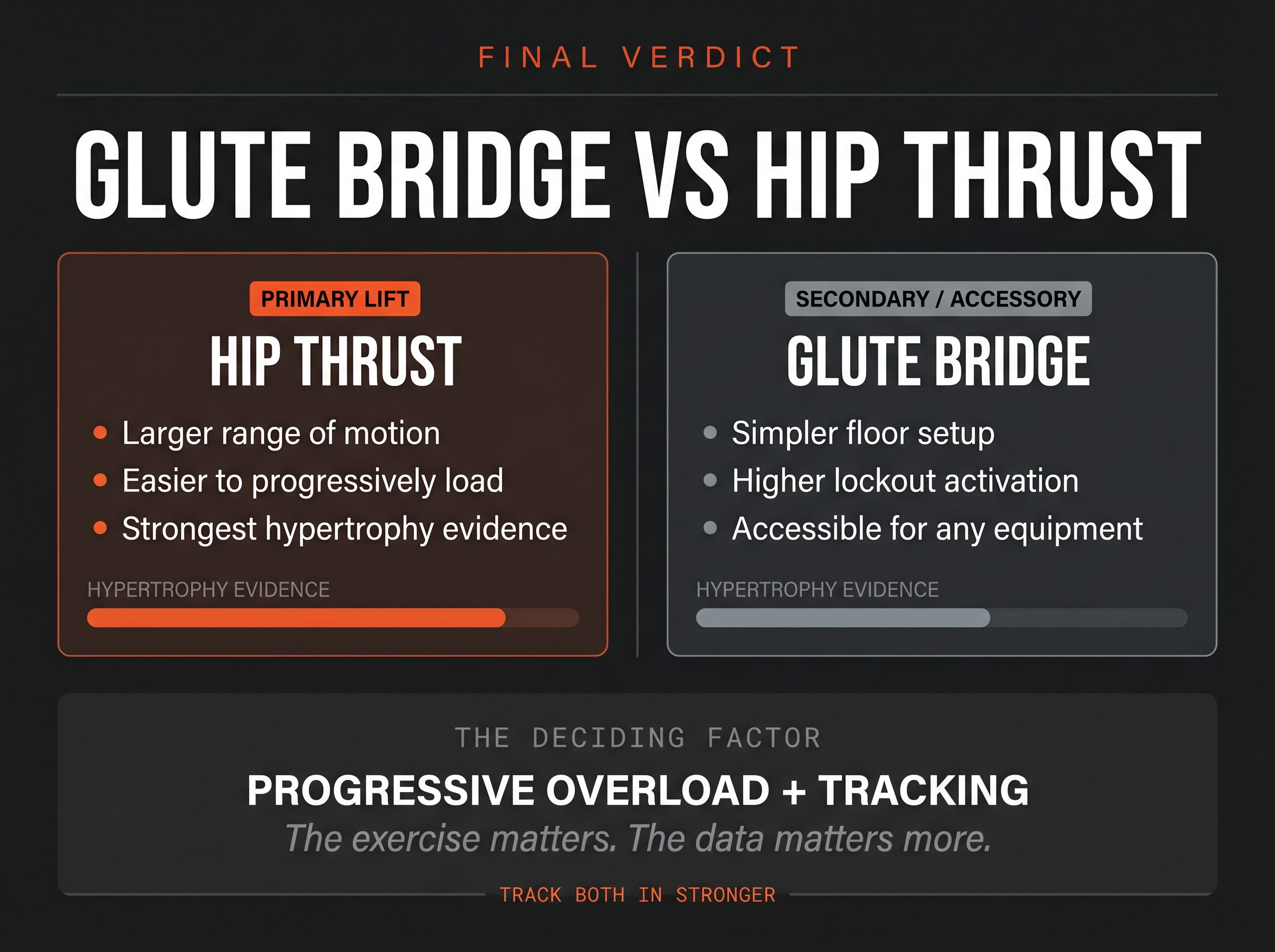
The hip thrust wins as the main lift not because bridges are bad, but because it's easier to load progressively, trains through a larger range of motion, and has stronger direct hypertrophy evidence behind it. The glute bridge earns its place because it's simpler, more accessible, emphasizes hip lockout in a unique way, and can be just as effective when loaded and progressed consistently.
The lifters who build the best glutes are not the ones who found the "perfect" exercise — they're the ones who executed a small set of well-chosen movements, took their sets close to failure, and kept adding to what they could do week after week. The exercise selection matters. The tracking matters more.
Start training. Stronger will help you make sure you're actually getting somewhere.
Glute Bridge vs Hip Thrust: FAQ
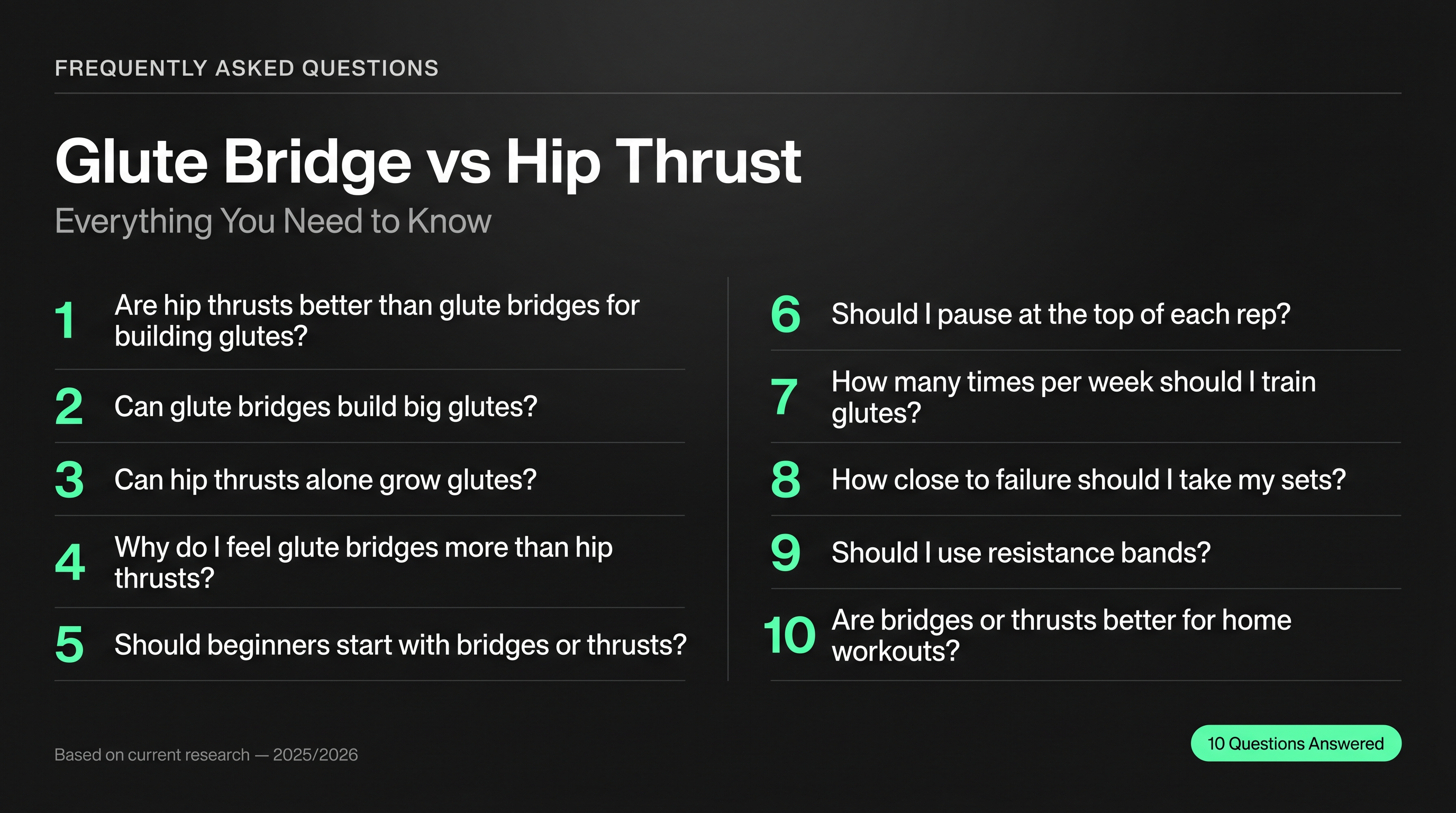
Are hip thrusts better than glute bridges for building glutes?
For most lifters, yes — as a primary glute-building lift. Hip thrusts are easier to progressively overload, train through a larger range of motion, and have stronger direct hypertrophy evidence behind them. A 2025 systematic review specifically recommended the barbell hip thrust for gluteus maximus hypertrophy. That said, a 2022 EMG study found higher gluteus maximus activation in the barbell glute bridge than in the hip thrust, which complicates the "always use hip thrusts" answer. For most lifters, hip thrusts make the better primary lift — but both belong in a complete program. Check out our full hip thrust variations guide for a deeper look at the options.
Can glute bridges build big glutes?
Yes. Glute bridges can build significant glute size if you load them consistently, train close enough to failure, progress over time, and use good form with a genuine hip-extension lockout. They're especially effective for beginners still learning the movement pattern, lifters training at home, and as high-rep finishers that target the lockout squeeze. A bodyweight glute bridge is a great place to start before moving to loaded variations.
Can hip thrusts alone grow glutes?
Hip thrusts can build the glutes meaningfully, but they shouldn't be your only glute exercise. The 2026 meta-analysis on muscle length and hypertrophy found that training at longer muscle lengths produced greater hypertrophy than shorter-length training. Hip thrusts don't take the glutes into a deep stretch. For complete glute development, pair them with Romanian deadlifts, squats, split squats, or lunges that challenge the glutes through a deeper range.
Why do I feel glute bridges more than hip thrusts?
The floor setup may make it easier to control your pelvis and focus on the lockout. A 2024 biomechanical study found that glute bridges allow higher force closer to hip lockout than hip thrusts. Feeling the bridge more is a valid reason to prioritize it — but pair that feeling with actual measurable progression to confirm the exercise is producing the stimulus you think it is. If you want to maximize that lockout squeeze, try the KAS glute bridge variation.
Should beginners start with glute bridges or hip thrusts?
Most beginners should start with glute bridges. The floor setup removes the coordination challenge of positioning your upper back on a bench, letting you focus entirely on driving the hips up, squeezing the glutes, and lowering under control. Start with a bodyweight glute bridge, then add load once the pattern is clean. Once you can execute a clean, loaded bridge, transitioning to hip thrusts is straightforward.
Should I pause at the top of hip thrusts and glute bridges?
Yes. A one-to-two-second pause at the top of each rep helps you confirm you're reaching genuine hip extension rather than a partial lockout, reduces momentum, and creates more time under tension in the muscle's shortened position. Our hip thrust guide and glute bridge guide in Stronger both cue a brief hold at the top.
How many times per week should I train glutes?
At least twice per week. The 2026 ACSM resistance-training guideline update recommends training major muscle groups a minimum of twice weekly and notes that hypertrophy typically requires higher volume — around 10 sets per muscle group as a practical starting target. For most intermediate lifters, 8–12 direct glute-focused sets per week split across two sessions is a solid place to start. See our guide on how long to rest between sets to optimize your training density.
How close to failure should I take my glute sets?
Aim for most working sets to finish with 0–3 reps in reserve (meaning you could have done 0–3 more reps before form failed). A 2024 meta-regression found that muscle hypertrophy improved as resistance training sets were performed closer to failure. You don't need to train to absolute failure every set — but genuinely hard sets are what produce the hypertrophic stimulus. Our rep ranges guide breaks down how to match intensity to your specific training goals.
Should I use resistance bands with hip thrusts or glute bridges?
Bands can add useful tension and cue abduction, but they're not mandatory. A looped band around the knees during bridges can increase glute activation and make the exercise feel more targeted. That said, your priority should always be progressive loading, clean reps, and consistent weekly volume — not accessory modifiers.
Are glute bridges or hip thrusts better for home workouts?
Glute bridges are the better home workout option. They only require floor space and whatever weight you have available — a dumbbell glute bridge, a barbell, bands, or just bodyweight. Hip thrusts can be done at home if you have a sturdy bench or box and enough bar weight, but the setup is more involved. For most home training, bridges are the practical default.
Exercises in this guide
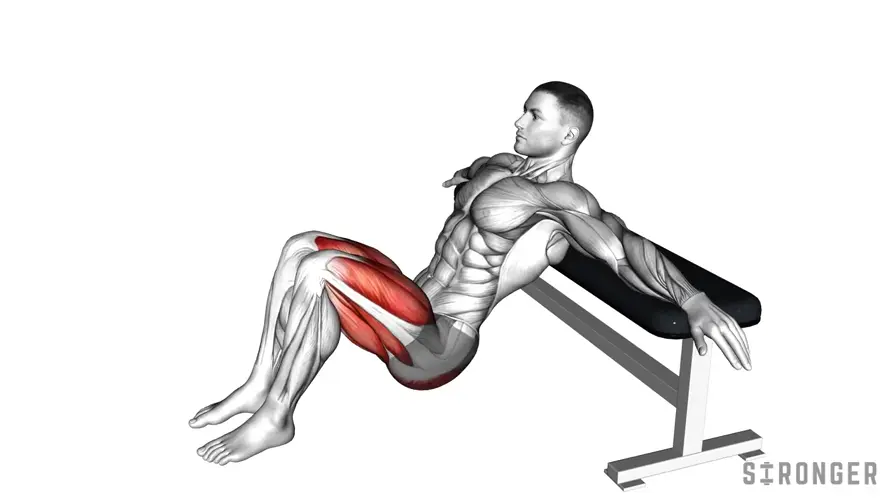
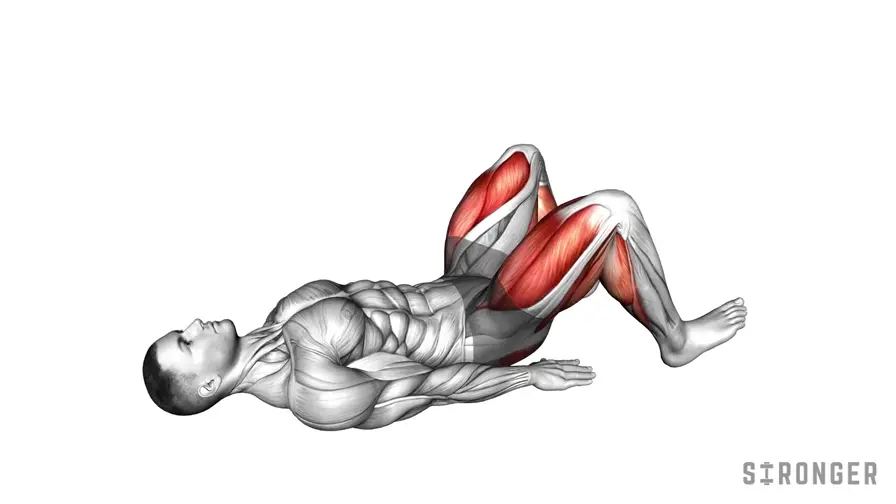
Stronger Editorial Team
Certified strength & conditioning specialists with 10+ years of coaching experience
The Stronger editorial team produces evidence-based training content for lifters of all levels.
Ready to Get Stronger?
Join 2,000,000+ lifters tracking their workouts with Stronger. Available on iOS and Android.