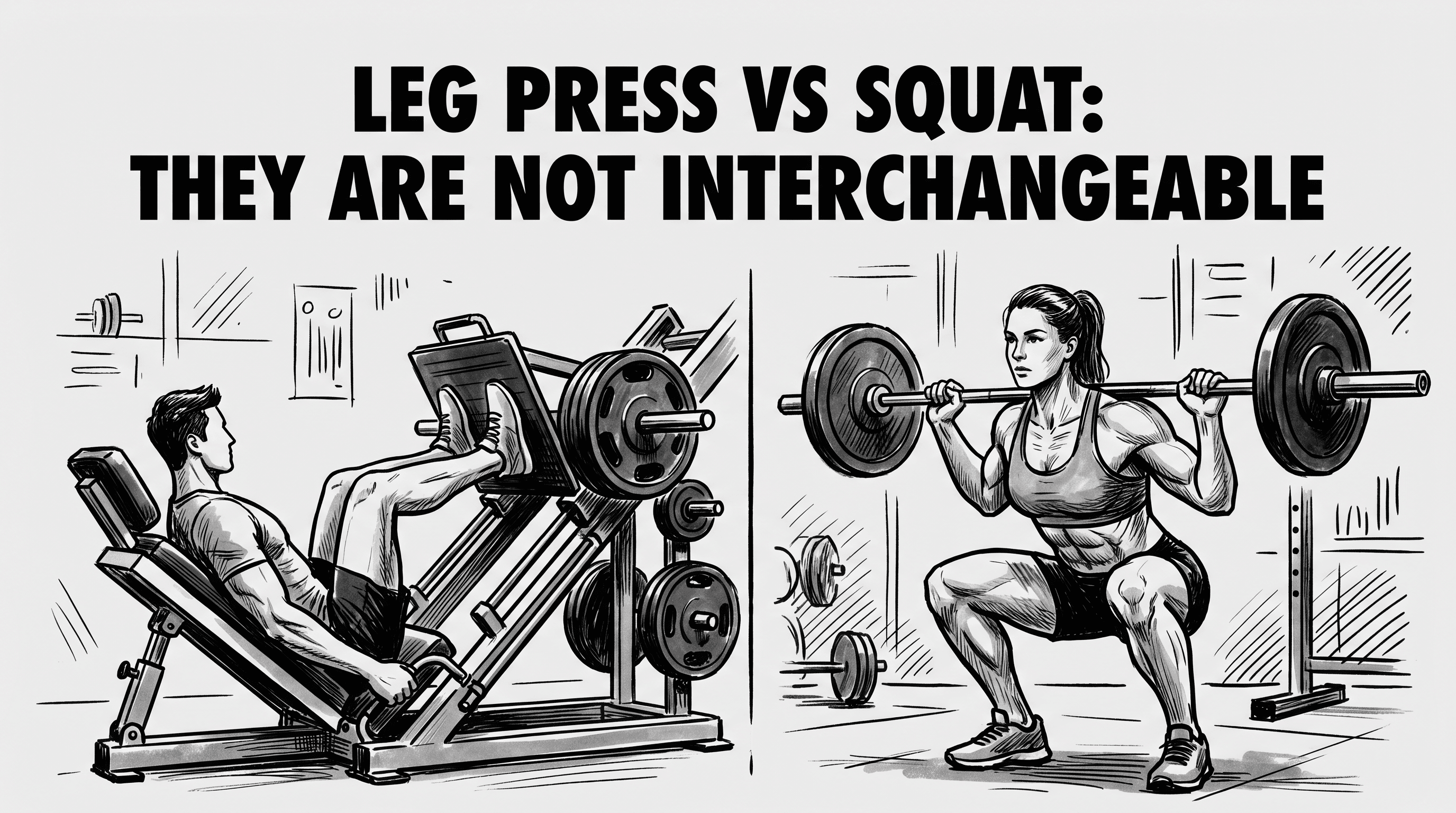

Hack Squat vs Leg Press: Which Builds More Muscle?
The hack squat and the leg press look like cousins. Both involve bending and extending the knees and hips against a machine. Both appear in the same corner of the gym, both are programmed for legs, and both attract lifters who want quad mass without loading a barbell. So the question comes up constantly: which one is actually better?
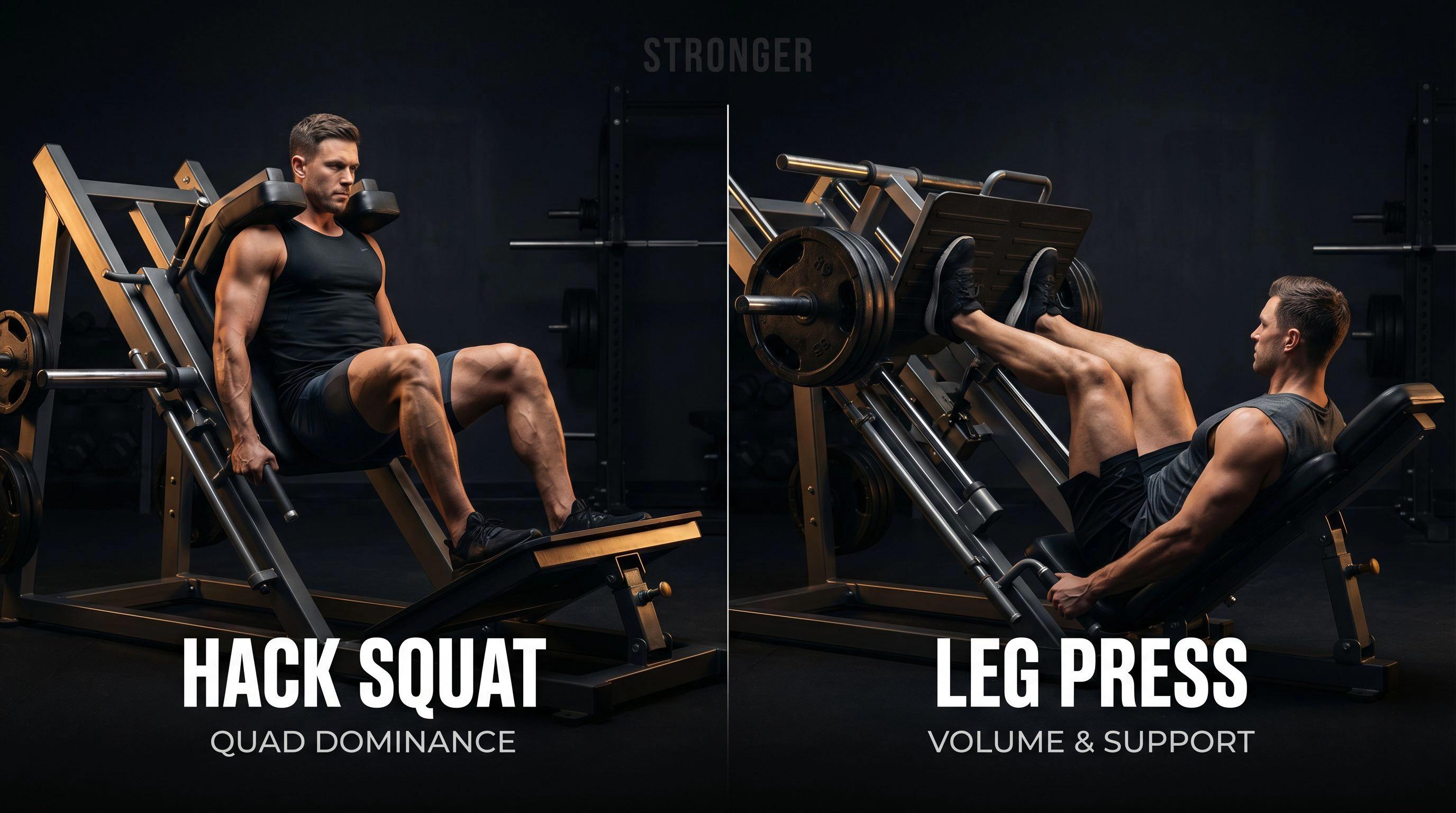
Here's the honest answer: they are not interchangeable. They feel different because the resistance is organized differently, and that mechanical difference has real consequences for which muscles get the most tension. For quad growth specifically, the hack squat usually has the edge. For heavy supported volume with easier foot-placement adjustments, the leg press often wins. For most lifters who take their training seriously, the best answer is to use both — and to know why, so you can set each one up correctly.
In our exercise library at Stronger, we classify both as compound push movements. The hack squat is listed as a machine-based movement with quads as the primary target and glutes, hamstrings, and calves as secondary. The leg press targets quads and glutes primarily, with hamstrings secondary. Both are in thousands of programs our users log every week. By the end of this breakdown, you'll know exactly which to prioritize for your goal — and how to set each one up to get the most out of it.
Hack Squat vs Leg Press: Side-by-Side Comparison
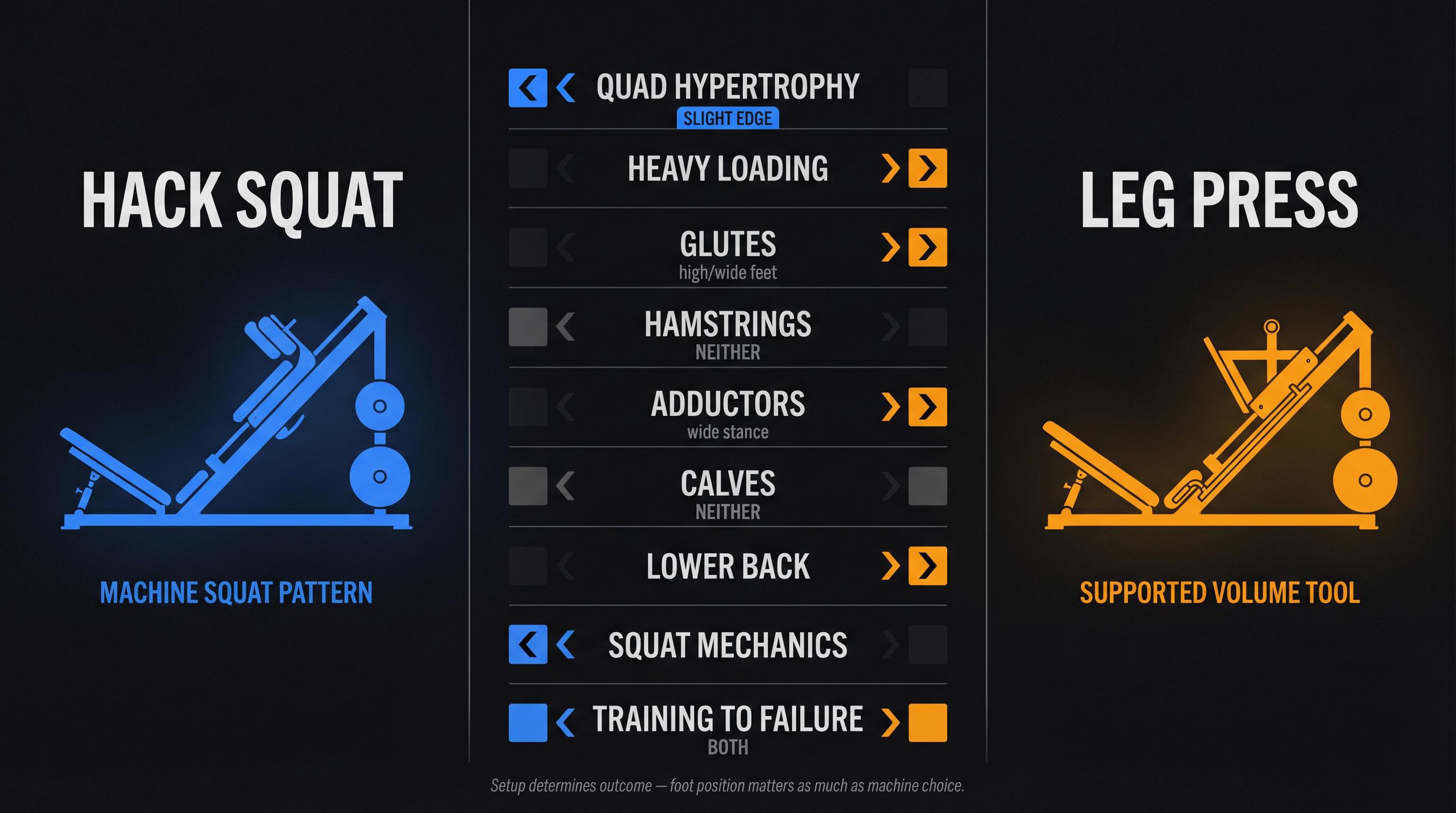
Before we get into the why, here's the at-a-glance version for lifters who want to skip ahead to their goal:
| Goal | Better pick | Why |
|---|---|---|
| Quad hypertrophy | Hack squat, slight edge | More squat-like, easier to bias knee travel, strong quad tension through deep flexion |
| Heavy machine loading | Leg press | More supported, usually easier to load heavily and recover from |
| Glutes | Leg press with high/wide feet, or high/wide hack squat | High foot placement can increase hip-extensor emphasis; glute response depends heavily on range of motion and machine setup |
| Hamstrings | Neither as a primary lift | Hamstrings assist, but leg curls and hip hinges are better direct options |
| Adductors | Wide stance or adduction-biased leg press | Wider stances and added hip adduction can shift more work to the medial thigh |
| Calves | Neither, unless using a calf-raise variation | Calves assist/stabilize; use dedicated calf raises for growth |
| Lower-back friendliness | Leg press | Back is more supported and there is no shoulder-loaded sled |
| Learning squat mechanics | Hack squat | Closer to a squat pattern than the seated leg press |
| Training close to failure safely | Both | Both are machine-based with safety stops, but machine design matters |
The table gives you the verdict. The rest of this article tells you why — and, more importantly, how to set each machine up to actually get those results.
Why Hack Squat and Leg Press Feel Different
The reason these machines create such different sensations comes down to where the resistance sits and what your joints have to manage because of it.
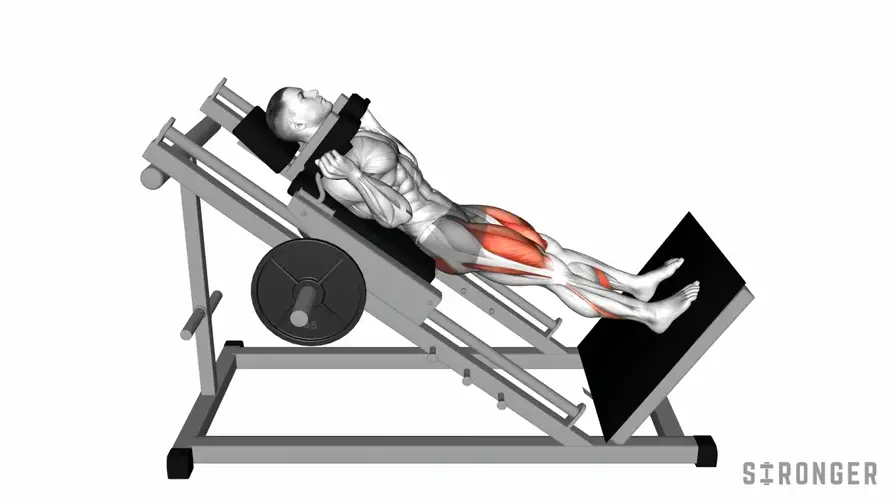
In a hack squat, your body moves on a fixed sled while your back and shoulders are supported by pads. You stand on a platform and descend through a squat-like pattern: knees bend, hips flex, torso stays pressed against the pad, then you drive back up. The load is distributed through the sled pads, but because your body is moving through space, the movement requires your quads to manage significant knee flexion demand.
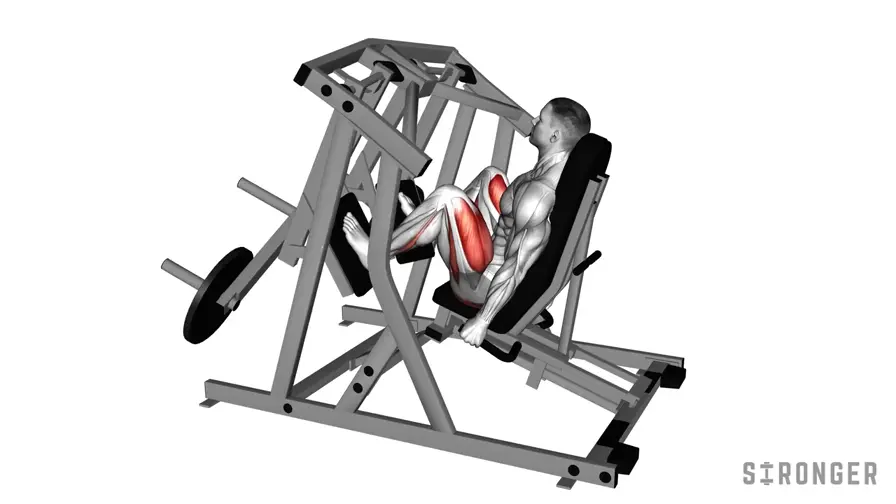
In a leg press, your torso stays mostly fixed while your legs push a platform away. Your back is supported by the seat. The load does not sit on your shoulders. This setup lets many lifters use more total weight and accumulate more leg volume without the same trunk fatigue — which is why lifters often find they can push closer to failure on leg press with less systemic cost.
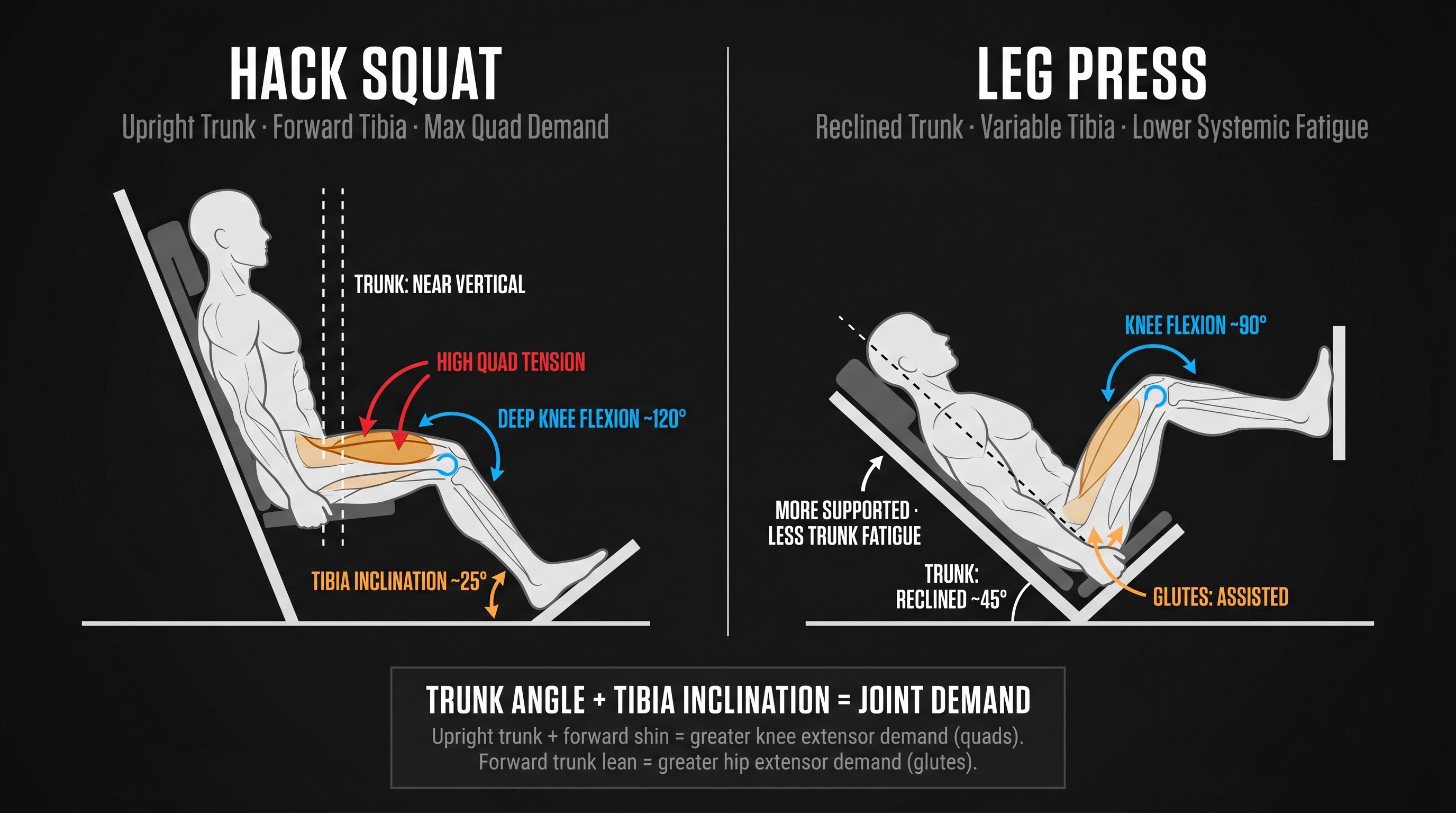
The biomechanical difference that explains the quad bias comes from a simple relationship between trunk angle and joint demand. A 2024 squat biomechanics review explains that a more upright trunk combined with greater forward tibia inclination — how far your shin tilts forward — increases knee extensor demand. When the trunk stays upright and the shin angles forward, the quads have to work harder to control and reverse that knee flexion. A well-setup hack squat creates exactly that condition: the torso stays supported and braced against the pad while the knees bend deeply, placing enormous demand on the quadriceps. (IJSPT)
That same review notes that more forward trunk lean shifts demand toward the hip extensors — the glutes. This is exactly why a high/wide foot placement on either machine, which encourages more hip flexion and a slight forward lean, can shift more emphasis toward the gluteus maximus.
Understanding this mechanical logic means you can make deliberate setup decisions instead of just hoping the machine hits the right muscle. The next several sections go through each muscle group specifically.
Hack Squat vs Leg Press for Quads: Which Builds More?
The quads are the primary target on both machines. They include four heads:
- Vastus lateralis — outer quad
- Vastus medialis — inner/teardrop region
- Vastus intermedius — deep quad muscle underneath the rectus femoris
- Rectus femoris — front quad muscle that crosses both the hip and the knee
Browse our full list of quadriceps exercises if you want to see how hack squats and leg presses fit into a broader lower-body program.
Why the hack squat has a quad advantage
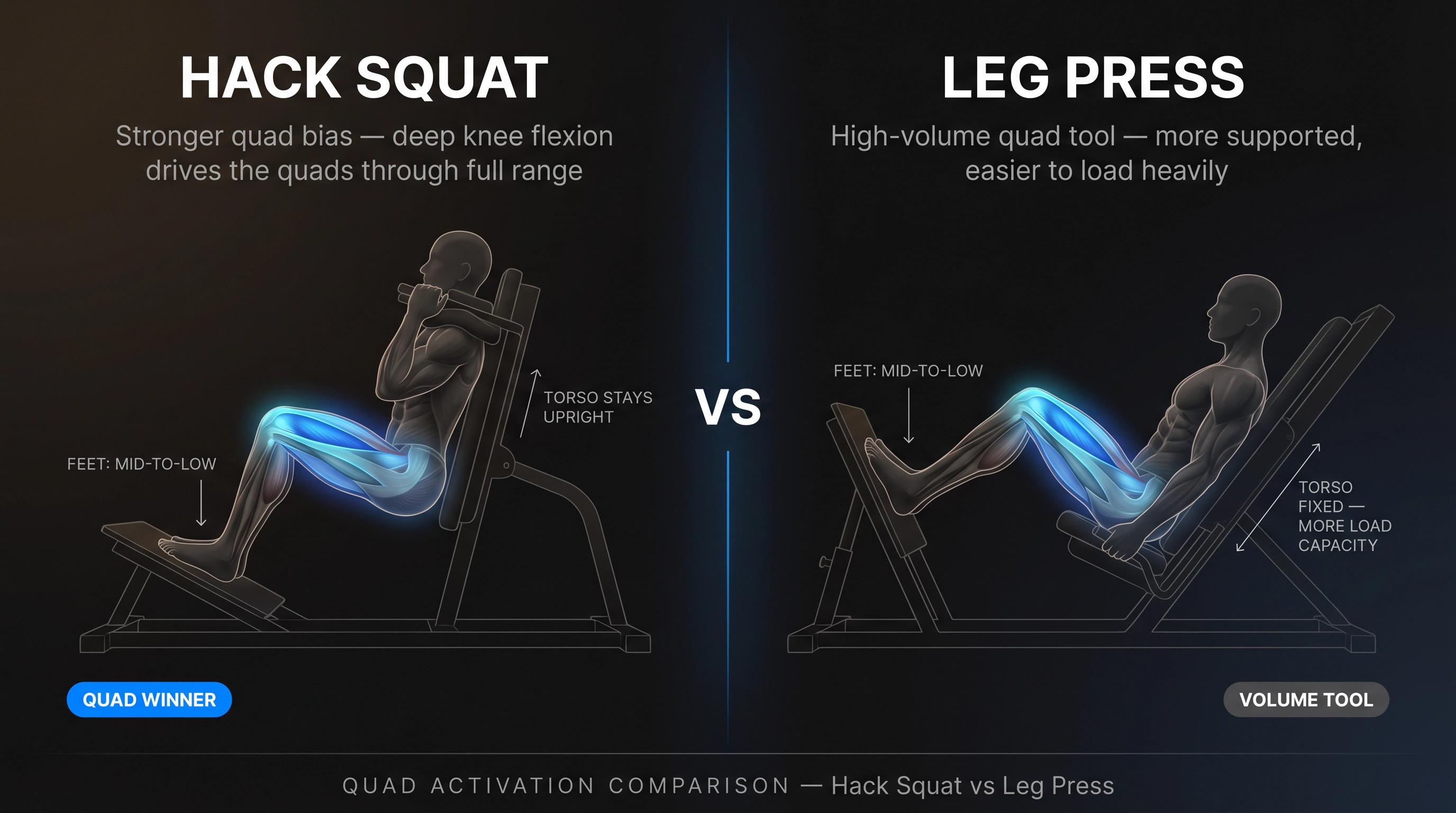
The hack squat tends to produce a more obvious quad stimulus because the setup keeps the torso upright, encourages deep knee bend, and drives the quad through a squat-like pattern. Our hack squat guide recommends descending until the thighs reach at least parallel or slightly below, keeping the back pressed into the pad, and stopping just short of full lockout at the top to maintain tension. The combination of deep knee flexion and constant tension through the top of the range is what makes this machine feel so directly quad-focused.
To bias quads on the hack squat:
- Place your feet mid-to-low on the platform
- Use a shoulder-width or slightly narrower stance
- Let the knees travel forward naturally while keeping the heels down
- Descend to at least parallel if your knees, hips, and ankles tolerate it
- Stop just short of full lockout at the top
A lower foot position generally increases knee bend and quad demand. But do not place the feet so low that the heels lift or the knees feel jammed against the platform.
Rep range: 6–12 reps for heavy hypertrophy work, or 12–20 reps for high-volume quad work.
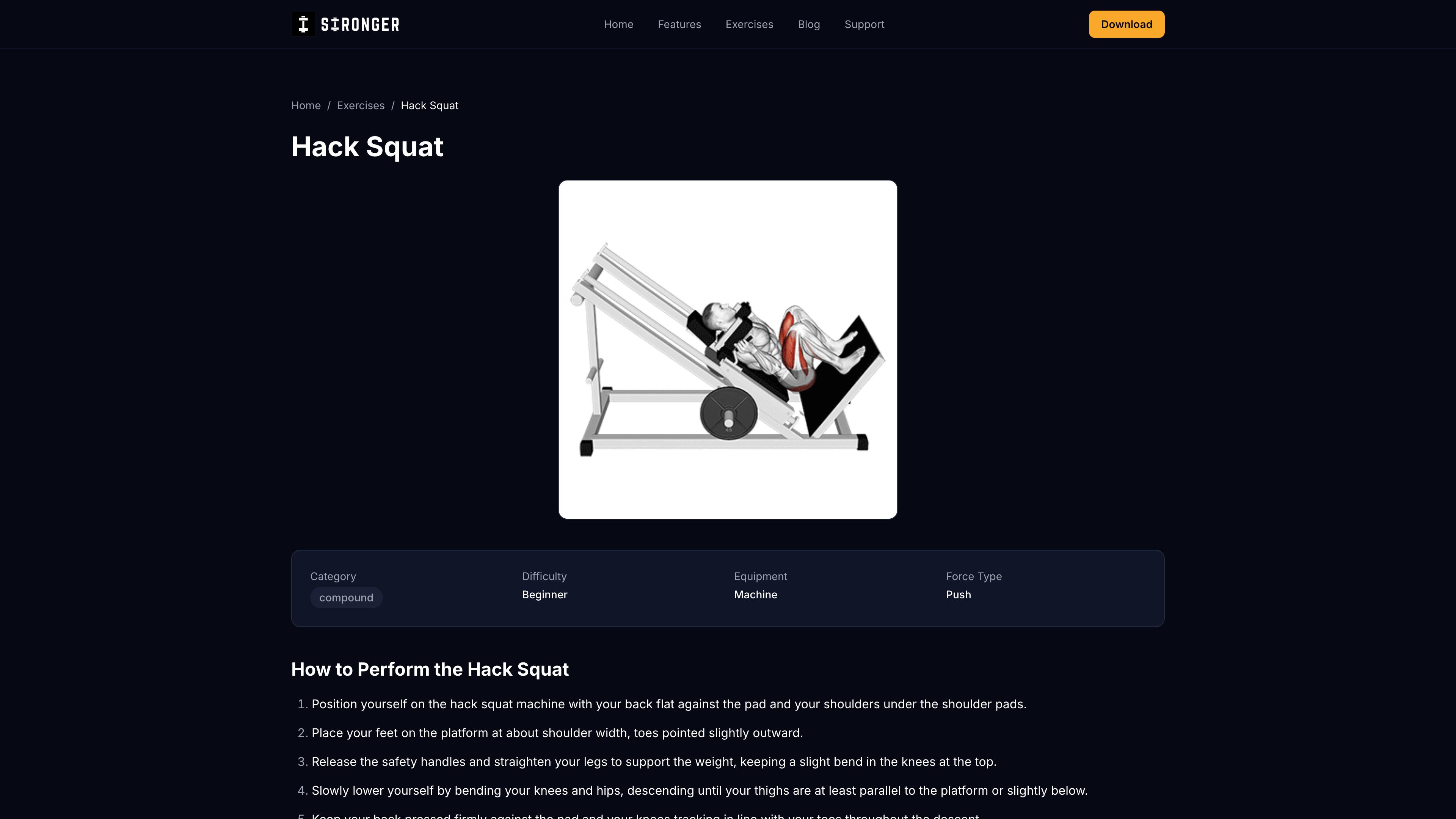
The setup cues above are the same ones you'll find on Stronger's exercise page — which includes the full instruction list, muscle targeting map, and movement category data.
How the leg press builds quads
The leg press is also a serious quad exercise — this is not a case where one machine wins easily. A 2020 systematic review of leg press EMG research found that the vastus medialis and vastus lateralis showed the greatest activation during the leg press, followed closely by the rectus femoris. The same review noted that quad activity tends to be high around roughly 90 degrees of knee flexion and decreases as the knees approach full extension. This is why depth matters: shallow reps miss the part of the range where quad activation peaks. (ResearchGate)
To bias quads on the leg press:
- Place your feet middle-to-low on the platform
- Use a shoulder-width or slightly narrow stance
- Lower until you reach a deep but controlled knee bend — at least 90 degrees, deeper if the pelvis stays down
- Stop before your lower back rounds off the pad
- Do not lock out hard at the top
Our leg press guide gives the same practical safety cue: descend to about 90 degrees or until the lower back starts to round, then press back up without fully locking the knees.
Rep range: 10–20 reps, with occasional heavier sets of 6–10 reps.
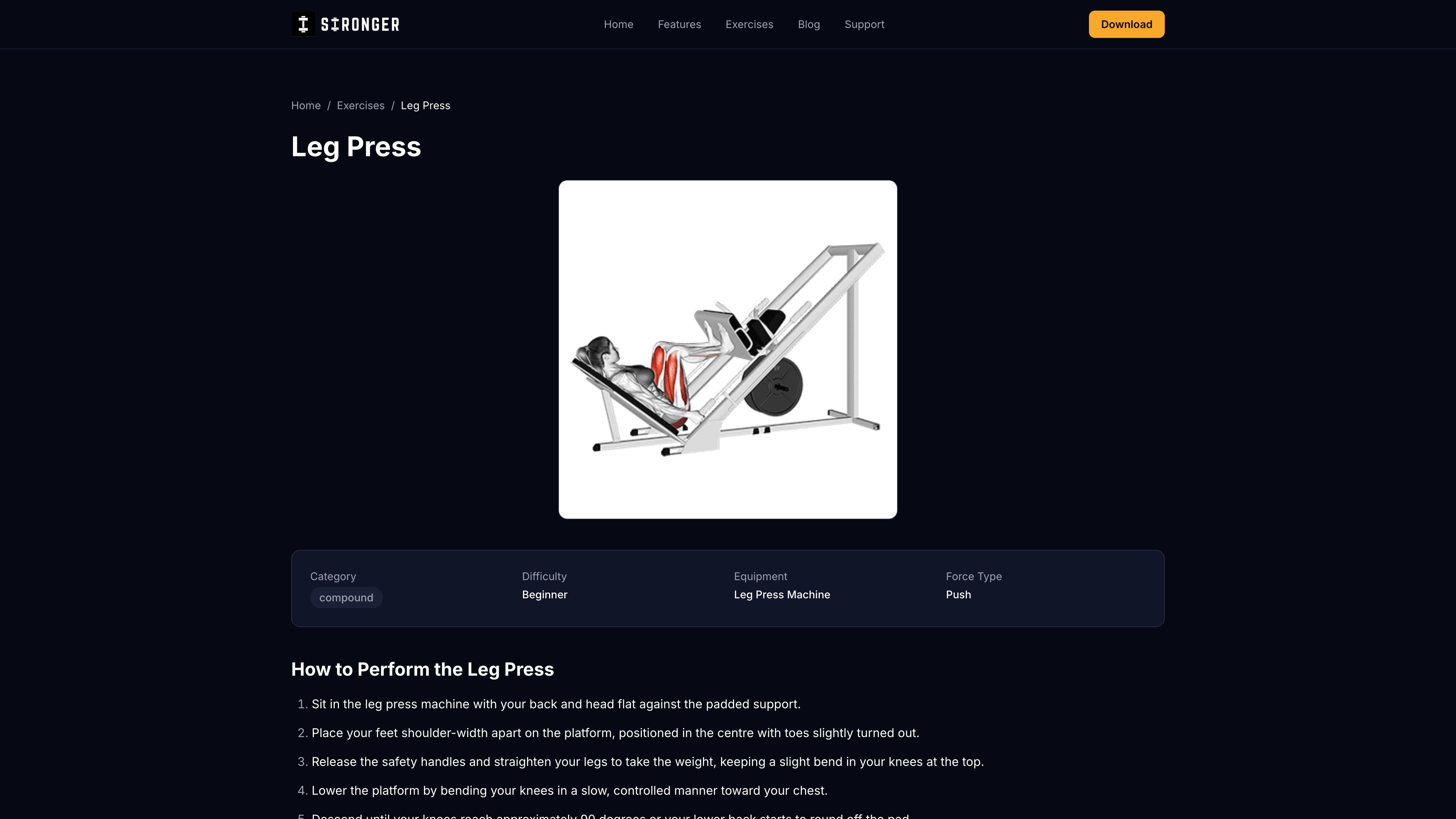
The same setup cues and muscle targeting information appear on Stronger's leg press exercise page, alongside the movement animation and technical classification.
Quad verdict: which machine wins
Winner: Hack squat for most lifters, leg press close behind.
Choose the hack squat if you want the most direct quad-biased machine squat pattern. Choose the leg press if you want high-volume quad work that is easier to recover from and more forgiving to load heavily over time. For maximum quad development, most serious lifters will benefit from using both — hack squat as the primary quad stimulus, leg press as the volume accumulation tool.
Quads are the headliner on both machines. But the other muscles in your legs tell a more interesting story.
VMO and the Teardrop Muscle: Does Foot Position Actually Help?
Many lifters ask which machine is better for the VMO — the vastus medialis oblique, the teardrop-shaped muscle on the inside of the knee. The honest answer is less exciting than the gym myths suggest: both machines can train the vastus medialis well, but foot angle is not a magic VMO activation switch.
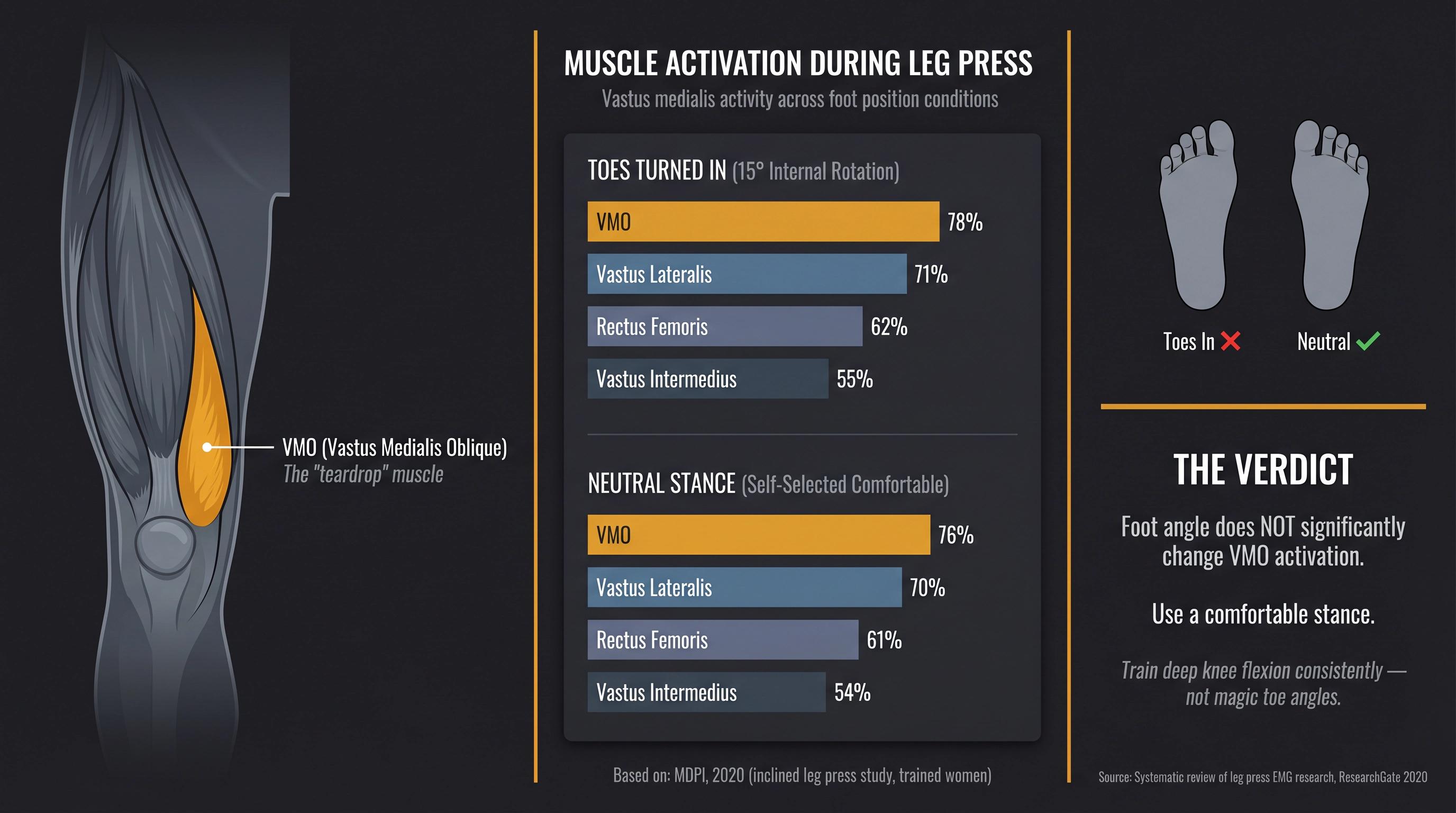
A 2020 study on the inclined leg press in trained women found that the vastus medialis oblique showed the greatest activation among the muscles measured — ahead of the rectus femoris, vastus lateralis, and gluteus medius. But the same study found similar activation patterns across different foot rotation and stance-width conditions. The authors recommended using a self-selected comfortable stance for performance rather than trying to optimize toe angle for VMO recruitment. The sample was small, so treat this as useful but not definitive. (MDPI)
The broader 2020 systematic review of leg press research reached a similar conclusion: the evidence on kinematic modifications like stance width, foot height, and foot rotation is still not fully established. (ResearchGate)
So the gym-floor belief that turning your toes in will spike VMO activation is not well supported by the available data. The better approach is to train deep knee flexion with a comfortable stance and consistent progressive overload on whichever machine you prefer.
VMO verdict: Tie. Use the machine that lets you train deep knee flexion with control, no knee pain, and consistent progress. Do not build your entire leg setup around finding the magic toe angle.
What about the quad muscle that most programs underestimate — the one that bridges both the hip and the knee?
Rectus Femoris: Why Both Machines Miss This Quad Head
The rectus femoris is different from the other three quad heads because it crosses both the hip and the knee. It extends the knee, but it also flexes the hip. In compound movements where both joints move simultaneously through a large range, the rectus femoris tends to be shortened at the hip while it tries to lengthen at the knee — which limits how fully it gets trained.
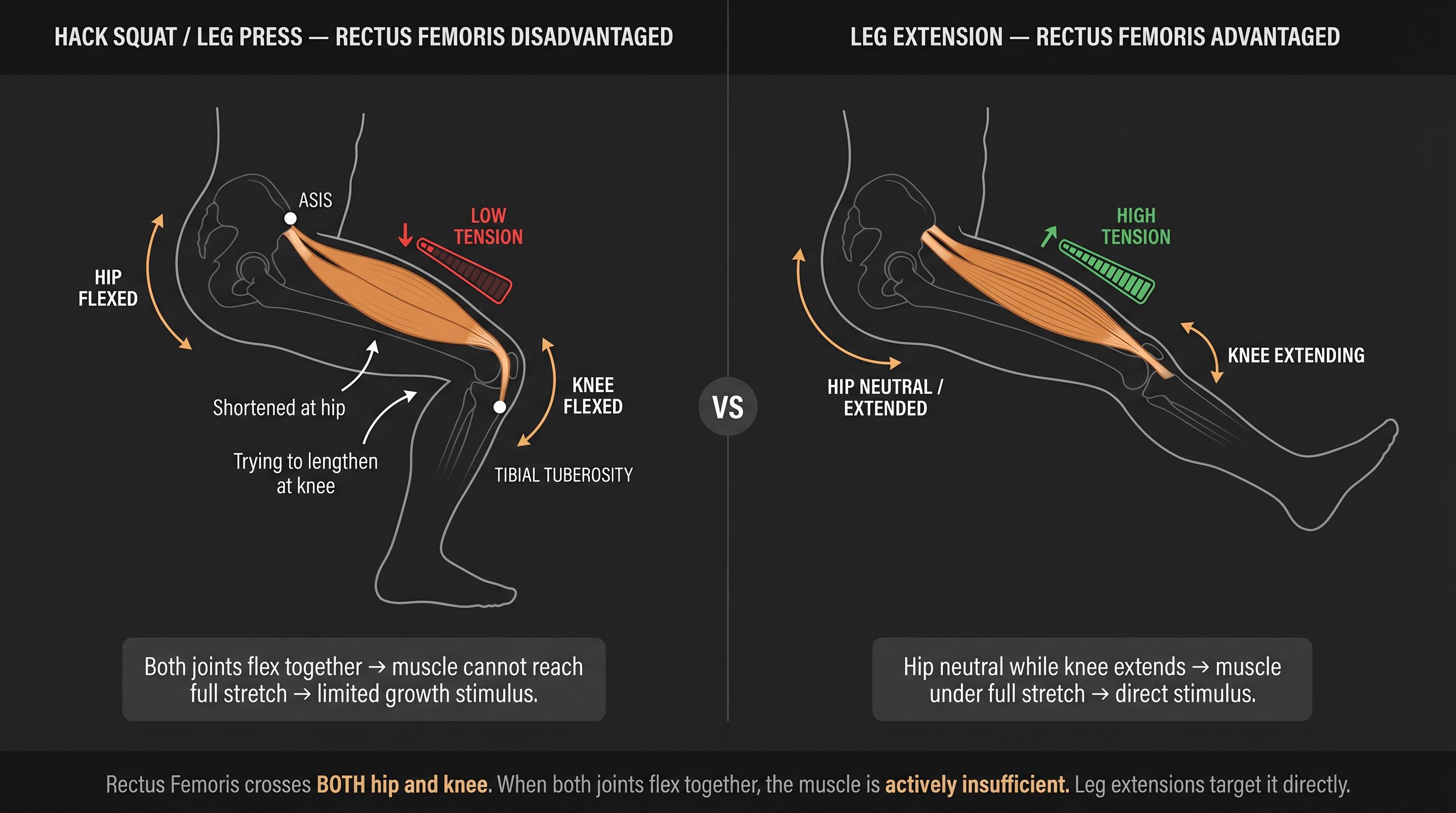
The leg press still recruits the rectus femoris. The 2020 systematic review found it follows closely behind the vastus medialis and vastus lateralis in activation during leg press variations. But if the rectus femoris is a specific development target, leg extensions — especially performed with a controlled eccentric and a full terminal squeeze — are usually the more direct option. (ResearchGate)
The hack squat has a similar limitation: the hip and knee flex together, so the rectus femoris is still under some of the same tension disadvantage.
Rectus femoris verdict: Tie, with leg extensions as the better direct accessory. Use hack squats and leg presses for overall quad mass. Add leg extensions if you want more focused rectus femoris work and terminal knee extension stimulus.
Now let's get to the muscle most comparison articles skip — the glutes.
Hack Squat vs Leg Press for Glutes: Which Is Better?
The gluteus maximus extends the hip. Any squatting or pressing pattern that loads hip extension deeply enough will involve the glutes — but setup matters enormously here, and most lifters use setup that underserves them.
How to target glutes on the leg press
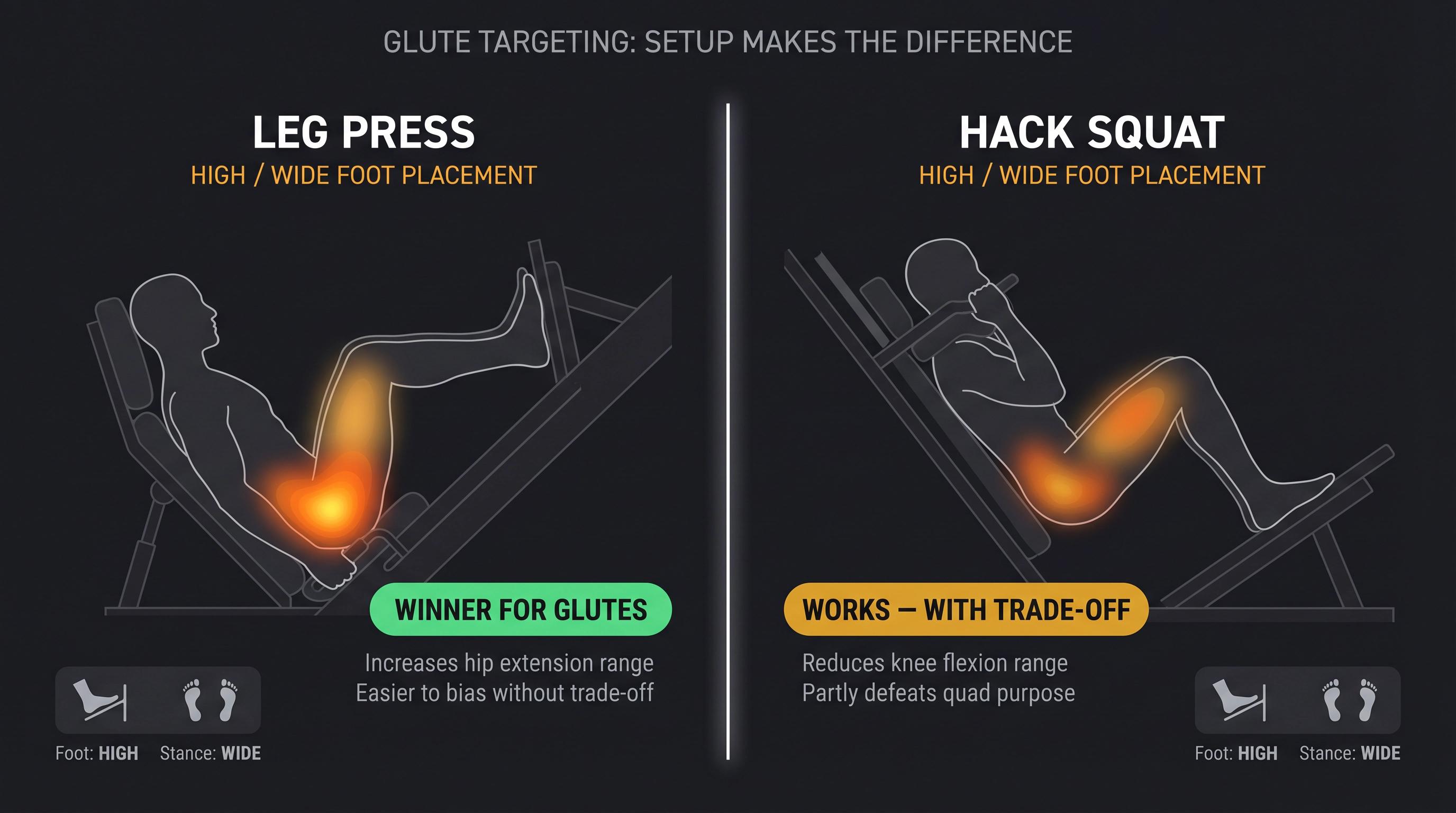
The leg press becomes genuinely glute-biased when you place your feet higher on the platform, use a slightly wider stance, and allow more hip flexion at the bottom without letting the pelvis roll off the pad. This increases the hip extension component of the press, which is exactly where the glutes do most of their work.
A 2025 systematic review and meta-analysis on gluteus maximus hypertrophy found that leg press exercises primarily target the knee and hip extensors, including the quadriceps and gluteus maximus. It also found evidence suggesting that a higher foot position on the platform may enhance gluteus maximus targeting, though results vary by machine, range of motion, and how glute activation was measured. That same review found that resistance training produced a moderate effect on gluteus maximus hypertrophy across included studies, and that several different exercise types can produce meaningful glute growth — there's no single best movement. (Frontiers)
How to target glutes on the hack squat
The hack squat can also train the glutes when used with enough hip flexion and range of motion. However, standard hack squat technique — mid-foot placement, shoulder-width stance — tends to feel more quad-dominant because the torso is supported upright. Moving the feet higher and wider on the platform shifts more emphasis toward the glutes and adductors.
Our hack squat exercise page gives the same practical cue: higher foot placement shifts emphasis toward glutes and hamstrings, while mid-platform positioning emphasizes the quadriceps.
Glute verdict: leg press vs hack squat
Winner: Leg press, if set up high/wide and taken through a full, controlled range.
The leg press is usually easier to bias toward glutes without disrupting the mechanical logic of the movement. On the hack squat, going too high with the feet can reduce the knee flexion that makes the movement useful for quads in the first place — so the trade-off is real.
For pure glute growth, dedicated movements like hip thrusts, Romanian deadlifts, split squats, and cable kickbacks are still the primary tools. But between these two machines, the leg press, properly set up, is the more flexible glute builder.
Browse our full collection of glute exercises to see which movements pair well with the leg press in a glute-focused program.
Glutes are getting their moment. What about the muscles on the back of your legs?
Ready to Get Stronger?
Join 2,000,000+ lifters tracking their workouts with Stronger. Available on iOS and Android.


Hamstrings: Why Neither Machine Is Enough
The hamstrings extend the hip and flex the knee. In both hack squats and leg presses, the hamstrings assist — but they are not typically the limiting factor because the movement is fundamentally a knee-and-hip extension press, not a hamstring-dominant pull.
The 2020 leg press systematic review found that biceps femoris and gastrocnemius medialis activity tended to increase as the knee moved toward full extension. But this activity pattern is more about the hamstrings helping control the final range than them being the primary loaded muscle. The movement is still driven by the quads and glutes. (ResearchGate)
For the hack squat, the situation is similar — or slightly worse. A 2019 squat variation EMG study found that semitendinosus and erector spinae activity were significantly lower during the hack squat than in other squat variations tested. This makes sense mechanically: the hack squat's back support reduces the postural demand on the posterior chain. The hamstrings assist, but they are not meaningfully challenged. (ResearchGate)
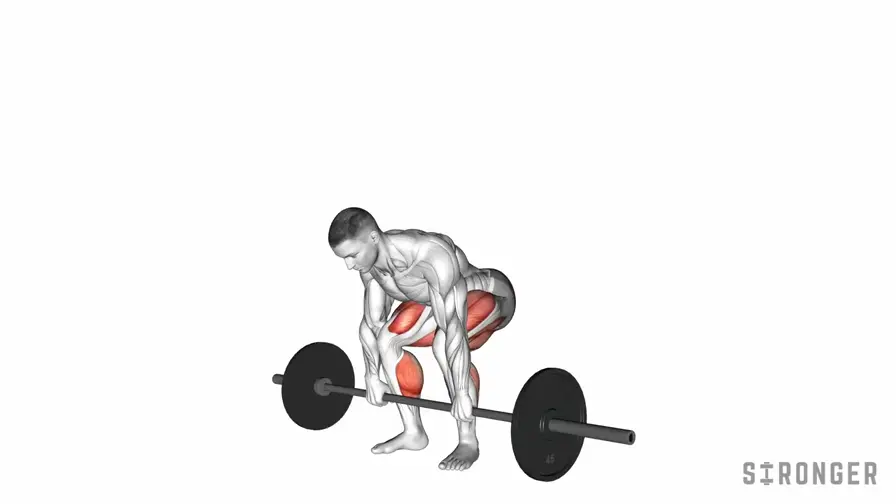
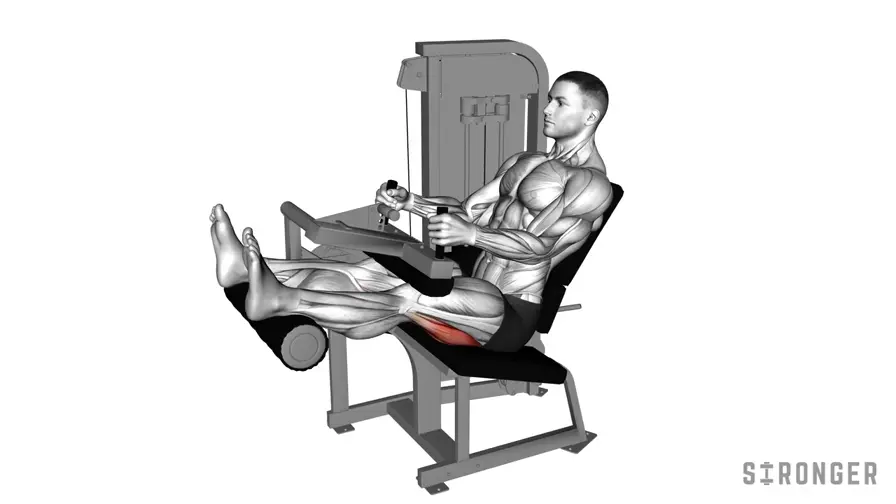
The practical implication is emphatic: if you only program hack squats and leg presses on your leg day, your hamstrings are getting a fraction of the development they need. This is not a minor point. Many lifters feel like they've done a complete leg session, but they've actually done a complete quad and partial glute session. The hamstrings need dedicated knee-flexion work (leg curls) and hip-extension work (Romanian deadlifts, good mornings, glute-ham raises).
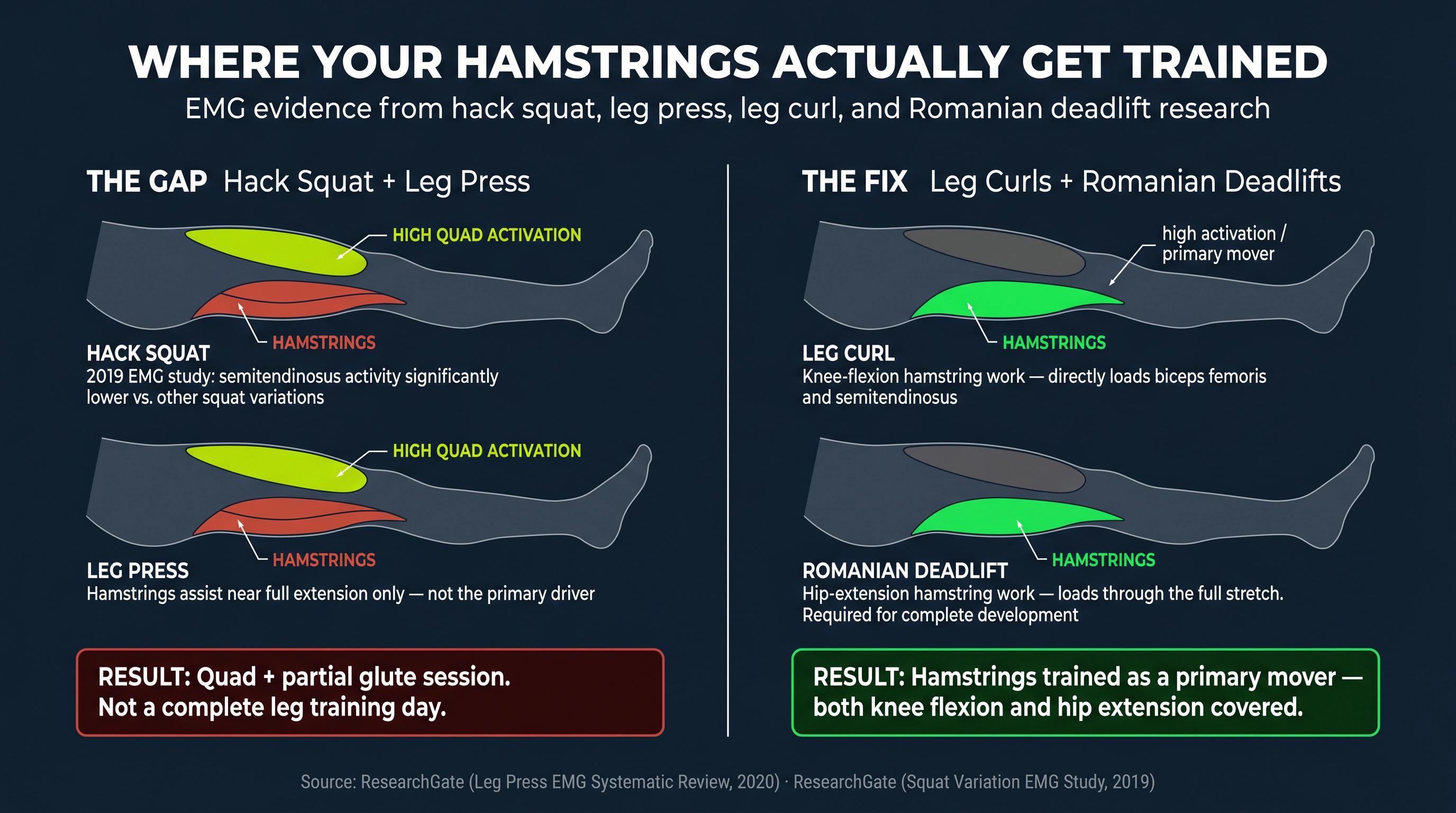
Hamstring verdict: Neither machine is adequate for hamstrings. Leg press has a very slight practical edge with high foot placement, but neither replaces leg curls or hip hinges. For the best hamstring exercises to add alongside your machine pressing work, browse our full hamstring exercise library.
Adductors are next — and stance width starts to matter a lot here.
Adductors and Inner Thigh: How Stance Width Changes Everything
The adductors are the inner-thigh muscles. The most important one for lifting is adductor magnus, which can contribute meaningfully to hip extension, especially in deeper hip-flexion positions.
The 2024 squat biomechanics review found that wider squat stances may increase gluteus maximus and hip adductor activity during the ascent phase. The same review also noted that foot rotation alone does not appear to meaningfully change quadriceps, hamstrings, or gastrocnemius activation in squat variations — confirming the theme from the VMO section above. (IJSPT)
On the leg press specifically, the 2020 systematic review reported that adding hip adduction resistance — like squeezing a small ball between the knees — increased adductor longus activity in the studies reviewed. This is a useful tweak if inner-thigh development is a specific goal. (ResearchGate)
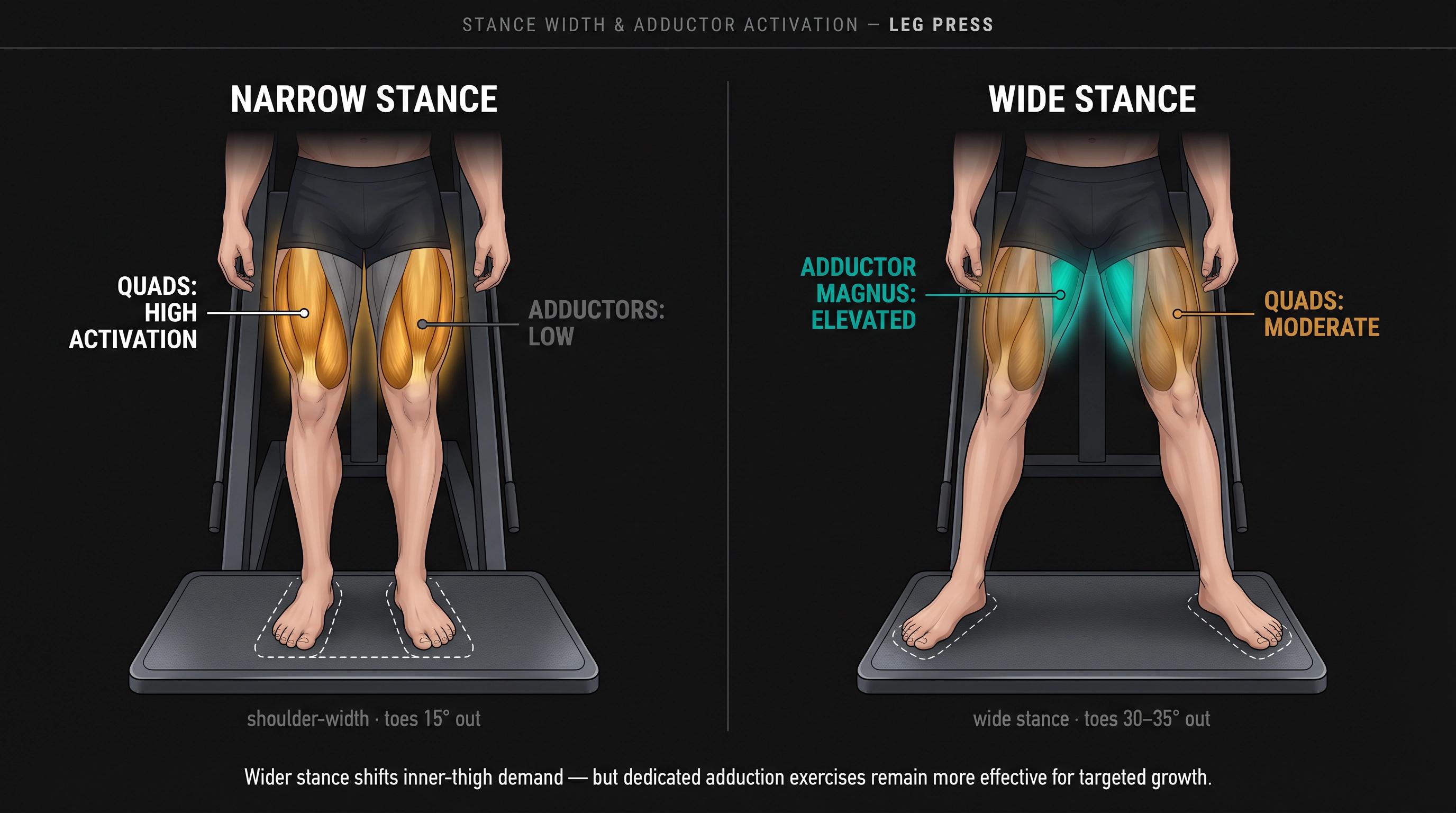
Adductor verdict: Depends on setup. Use a wider stance on either machine for more inner-thigh involvement. If adductors are a genuine weak point, dedicated adduction work — cable hip adductions, machine adductors — will be more effective than relying on stance adjustments alone.
Calves are next — and this is a quick one.
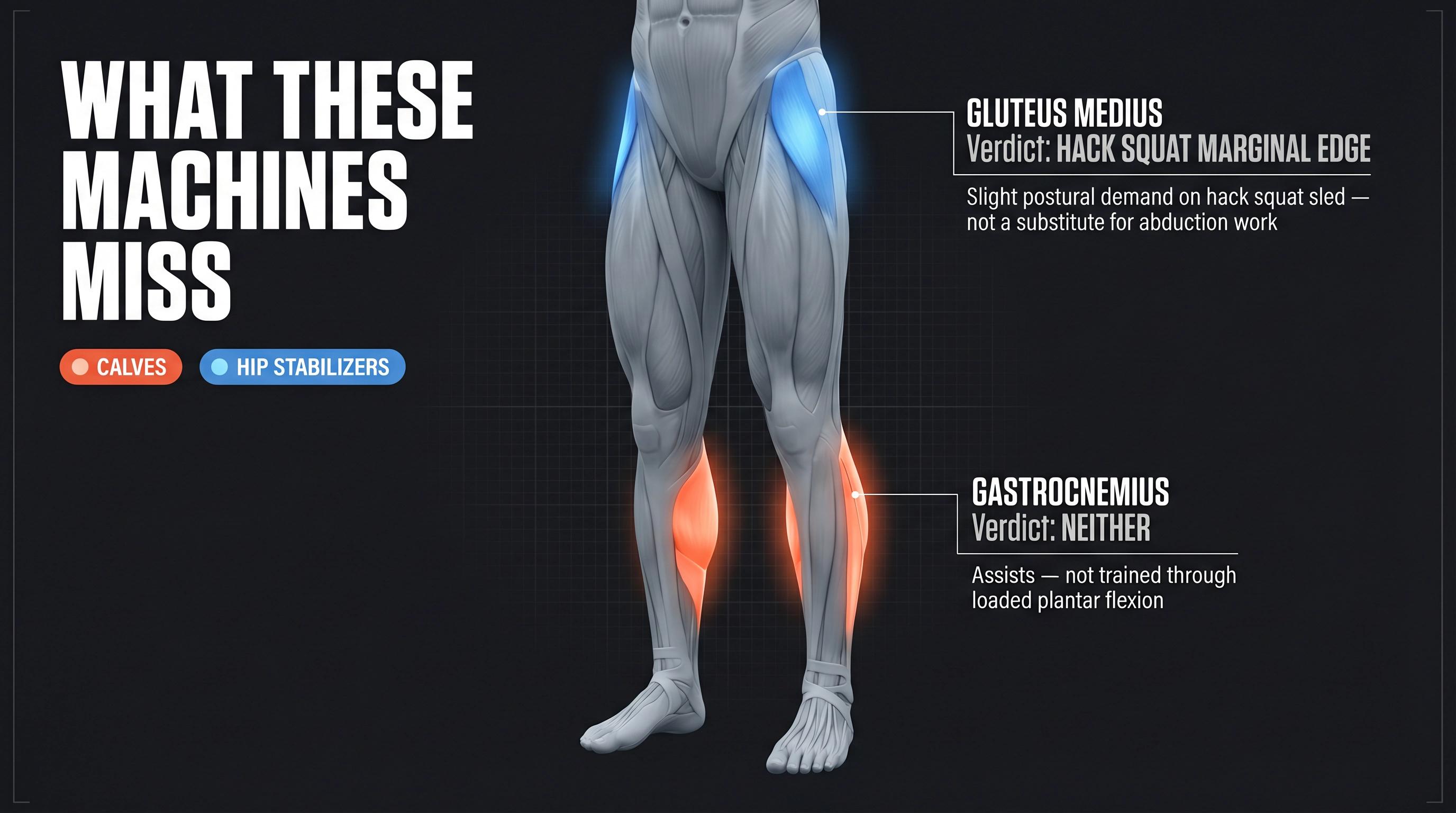
Calves and Hip Stabilizers: What These Machines Miss
Calves: what the research shows
The calves, especially the gastrocnemius, assist during both movements. The 2020 systematic review found that gastrocnemius medialis activity increased as the knee moved toward extension on the leg press. But this is assisting muscle activity — the calves are not being trained through loaded plantar flexion. Neither machine resembles a calf raise. (ResearchGate)
Calf verdict: Neither. For calf development, use standing calf raises, seated calf raises, leg press calf raises, or hack squat calf raises — all of which are movements in our exercise library.
Hip stabilizers: which machine works them more
The smaller glute muscles help control the hip and pelvis during movement. They matter for knee tracking and stability. But neither the hack squat nor the leg press is a hip-abduction exercise.
The 2020 inclined leg press study measured gluteus medius activation and found it ranked well below the quad muscles. (MDPI)
Hip stabilizer verdict: Hack squat has a marginal edge over leg press because the body rides the sled and requires slightly more postural control. But neither is a substitute for cable hip abductions, lateral band walks, machine abductions, or single-leg work if hip stabilizers are a weak point.
One more supporting section — and then we get into the practical setup guides.
Core Activation: Hack Squat vs Leg Press Compared
The leg press is the more supported movement. Your back is against the pad, the load is not on your shoulders, and the main task is controlling the pelvis and ribcage while pressing through the feet. For lifters managing lower-back issues or wanting to spare trunk fatigue while still hitting legs hard, the leg press is usually the better choice.
The hack squat requires more whole-body bracing. Your body rides the sled, and your shoulders and back interface with the machine. But don't overestimate this demand either: a Journal of Strength and Conditioning Research paper comparing back squats and hack squats found that back squats produced greater trunk muscle activation than hack squats, even though hack squat loads were higher in absolute terms. The hack squat's back support does reduce trunk demand compared to a free barbell squat.
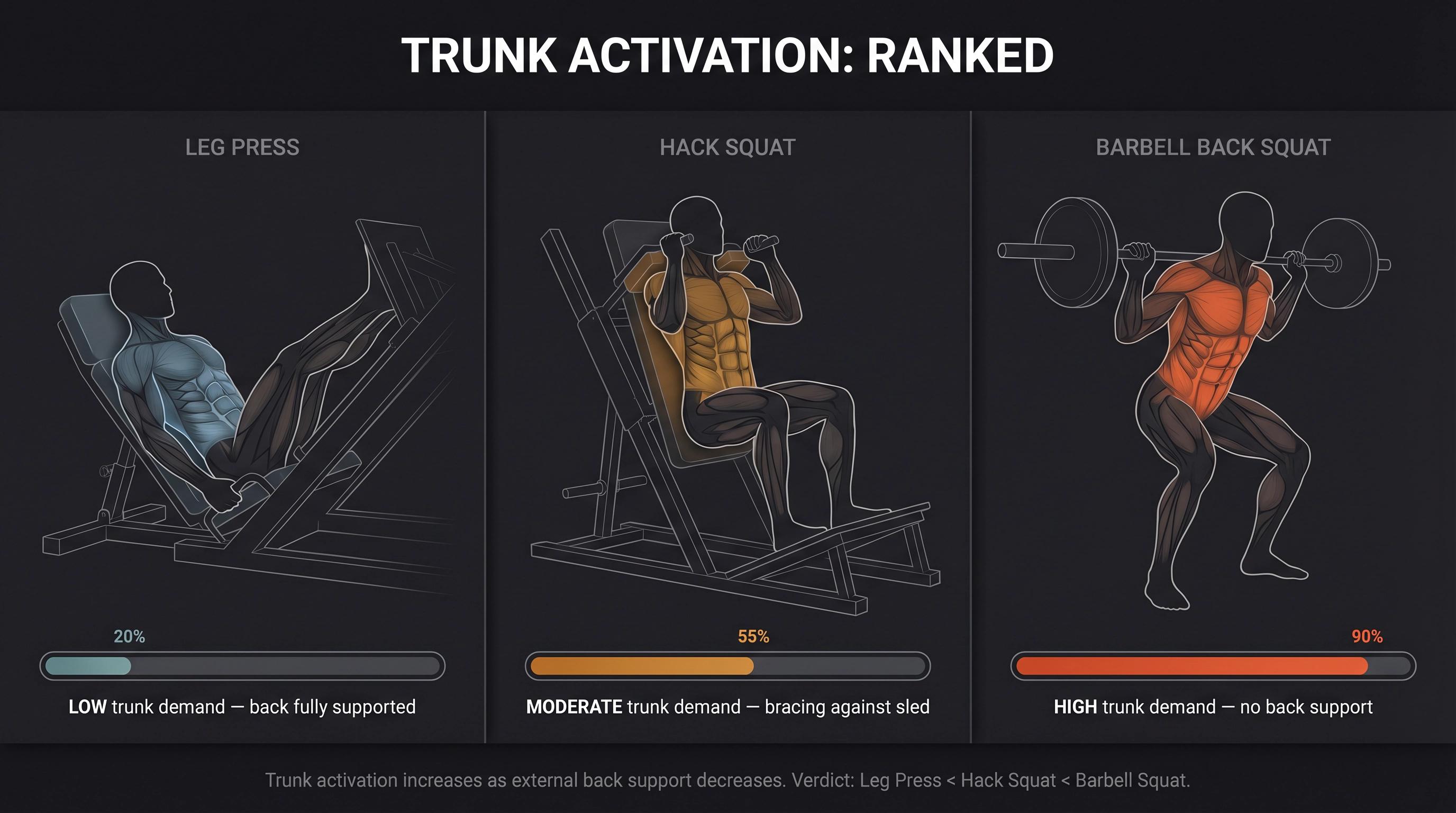
Core and erectors verdict: Hack squat over leg press, but barbell squat over hack squat.
Use the leg press when you want to reduce trunk fatigue and isolate leg drive. Use the hack squat when you want a more squat-like machine movement without the full trunk demand of a free squat. Use barbell squats when trunk activation is part of the goal — our complete squat form guide covers the setup in detail.
Now you understand the full muscle picture. Time to translate it into practical setup.
How to Set Up Hack Squat and Leg Press for Any Goal
These are the four setups that give you deliberate control over which muscle gets the most work. Pick the one that matches your goal and stick with it for at least 4–6 weeks before you evaluate whether it's working.
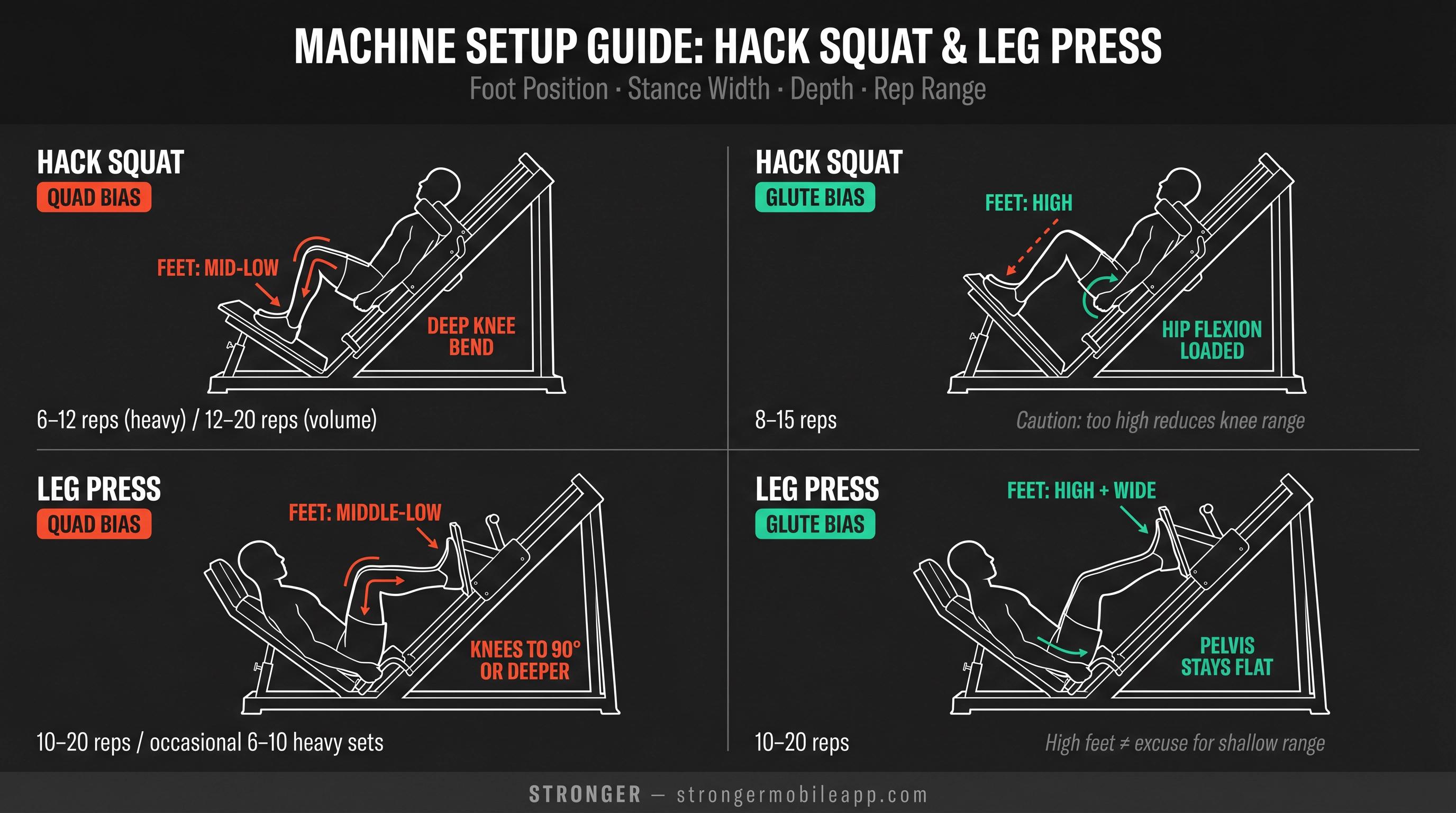
How to set up a quad-biased hack squat
Use this when quad growth is the priority.
- Feet: mid-to-low on platform
- Stance: shoulder-width or slightly narrower
- Toes: slightly turned out
- Depth: as deep as you can control without heel lift or knee pain
- Tempo: 2–3 seconds down, smooth drive up
- Lockout: stop just short
Rep range: 6–12 reps for heavy hypertrophy, or 12–20 reps for brutal quad volume.
How to set up a glute-biased hack squat
Use this when you want the hack squat to feel like less of a pure quad exercise.
- Feet: higher on platform
- Stance: shoulder-width to wide
- Depth: deep hip flexion without losing pelvic control
- Cue: drive through the midfoot, not just the toes
- Caution: feet too high reduces knee flexion range, which partly defeats the purpose
Rep range: 8–15 reps.
How to set up a quad-biased leg press
Use this when the leg press is your main quad accessory.
- Feet: middle-to-low on platform
- Stance: shoulder-width or slightly narrow
- Depth: knees to 90 degrees or deeper if the pelvis stays down
- Cue: bend the knees into depth, do not shorten the range to add more weight
- Lockout: avoid a hard knee snap at the top
Rep range: 10–20 reps, with occasional heavier sets of 6–10 reps.
How to set up a glute-biased leg press
Use this when you want more hip-extension emphasis from the leg press.
- Feet: higher on platform
- Stance: shoulder-width to wide
- Depth: deep enough to load the glutes, but stop before the low back rounds
- Cue: keep the pelvis glued to the pad throughout
- Caution: do not let high feet become an excuse for shallow range
Rep range: 10–20 reps.
Want to track exactly which setup you're using and see how your volume is distributed across muscle groups? Stronger lets you note your stance and foot height, log RPE per set, and shows your total weekly volume by muscle group, so you can see in real time whether your quads or glutes are actually getting more work.
Hack Squat or Leg Press: Which to Choose for Your Goal
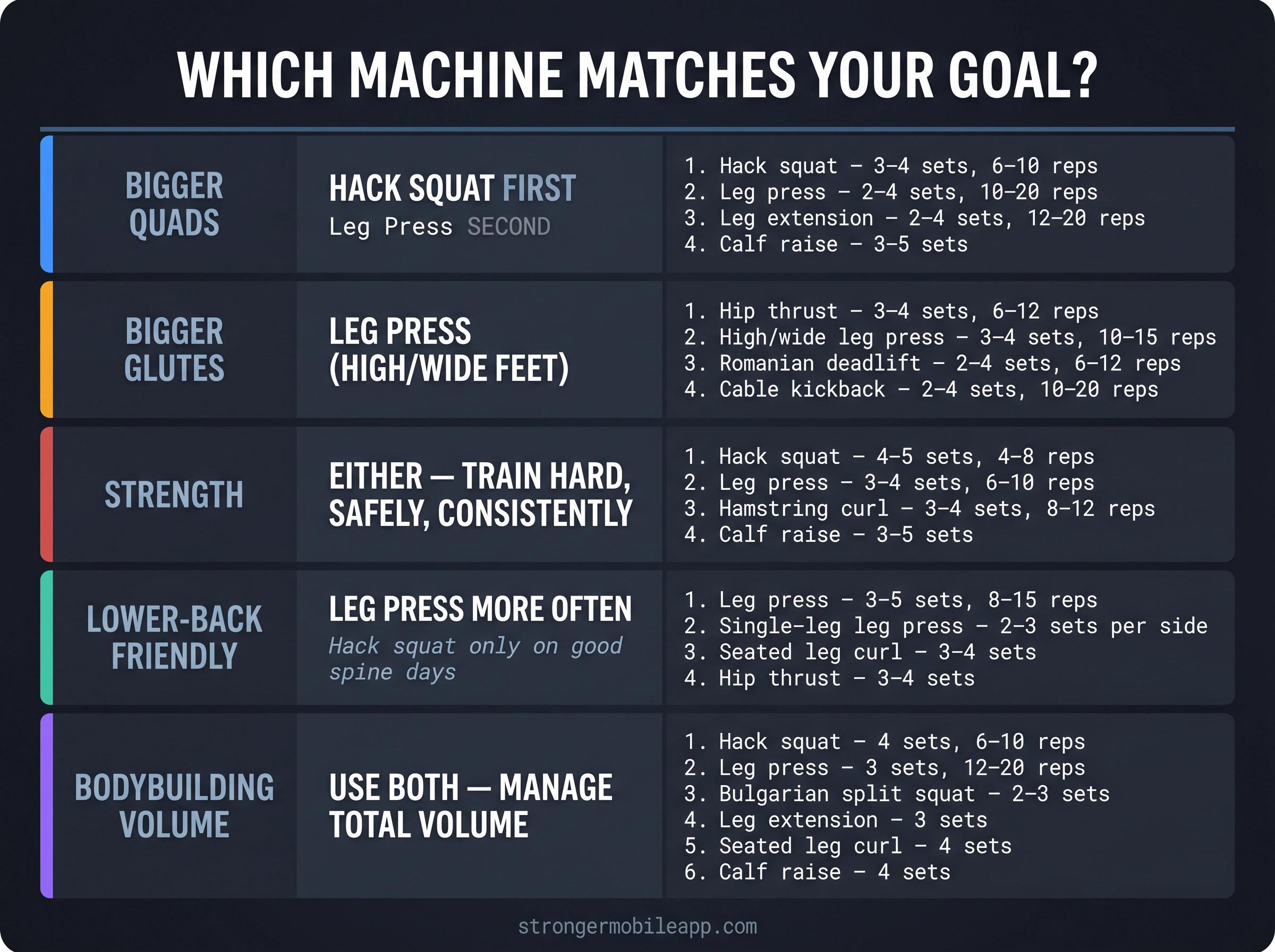
If your goal is bigger quads
Use the hack squat first and the leg press second.
Example session order:
- Hack squat — 3–4 sets of 6–10 reps
- Leg press — 2–4 sets of 10–20 reps
- Leg extension — 2–4 sets of 12–20 reps
- Standing calf raise — 3–5 sets of 8–20 reps
This gives you a heavy squat-pattern quad stimulus from the hack squat, then additional stable volume from the leg press, then direct terminal knee-extension work from the leg extension.
If your goal is bigger glutes
Use the leg press as a secondary glute builder — not as your primary glute movement. Glutes respond best to movements that load them at peak hip extension with heavy resistance. Hip thrusts, RDLs, and split squats do this better than any pressing machine.
Example session order:
- Hip thrust — 3–4 sets of 6–12 reps
- High/wide leg press — 3–4 sets of 10–15 reps
- Romanian deadlift — 2–4 sets of 6–12 reps
- Cable kickback or back extension — 2–4 sets of 10–20 reps
The 2025 gluteus maximus hypertrophy review found that several exercise types can produce meaningful glute growth, and that exercise selection should match the lifter's specific setup, range of motion, and machine availability. (Frontiers)
If your goal is strength
Use the machine that lets you train hard, safely, and consistently. For many lifters, this means the leg press for heavier absolute loading and the hack squat for the squat-pattern strength transfer.
Example session order:
- Hack squat — 4–5 sets of 4–8 reps
- Leg press — 3–4 sets of 6–10 reps
- Hamstring curl — 3–4 sets of 8–12 reps
- Calf raise — 3–5 sets of 8–15 reps
The ACSM's 2026 resistance training guidelines recommend tailoring load and volume to specific goals, with heavier loads for strength and higher weekly volume for hypertrophy. The same update emphasizes consistency and training major muscle groups at least twice weekly over chasing overly complex programming. (ACSM)
If your goal is lower-back-friendly leg training
Use the leg press more often, and reserve the hack squat for days when the spine, hips, and knees feel good.
Example session order:
- Leg press — 3–5 sets of 8–15 reps
- Single-leg leg press — 2–3 sets of 10–15 per side
- Seated leg curl — 3–4 sets of 10–15 reps
- Hip thrust — 3–4 sets of 8–12 reps
- Calf raise — 3–5 sets
This is not medical advice. If you have pain, a disc injury, hip symptoms, or knee pathology, get individualized guidance from a qualified clinician before choosing any loading program.
If your goal is bodybuilding-style leg volume
Use both machines and manage the overlap. The risk here is total volume load becoming too high — especially if the knees are already accumulating irritation.
Example quad-focused leg day:
- Hack squat — 4 sets of 6–10 reps
- Leg press — 3 sets of 12–20 reps
- Bulgarian split squat — 2–3 sets of 8–12 per leg
- Leg extension — 3 sets of 12–20 reps
- Seated leg curl — 4 sets of 8–15 reps
- Calf raise — 4 sets of 10–20 reps
The goal is productive tension and progressive overload — not collecting exercises. If knee irritation is building, drop one of the pressing machines for a training block.
Setup is one side of the equation. Programming parameters are the other.
Hack Squat and Leg Press Programming: Sets, Reps, and Progression
Hack squat and leg press for hypertrophy: sets and reps
Most lifters should target:
- Hack squat: 3–4 sets of 6–12 reps
- Leg press: 3–5 sets of 8–20 reps
- Effort level: stop around 0–3 reps in reserve (RIR) — or the equivalent on the RPE scale — on most working sets
- Rest: 90 seconds to 3 minutes between hard sets
- Progression: add reps first, then load
ACSM's 2026 update suggests around 10 sets per muscle group per week as a broad hypertrophy volume target, while emphasizing that individual response varies significantly. A 2024 Bayesian meta-analysis on rest intervals found that hypertrophy can occur across many rest lengths, but noted a small benefit to resting longer than 60 seconds — likely because longer rests help preserve total volume across the session. (ACSM)(Frontiers)
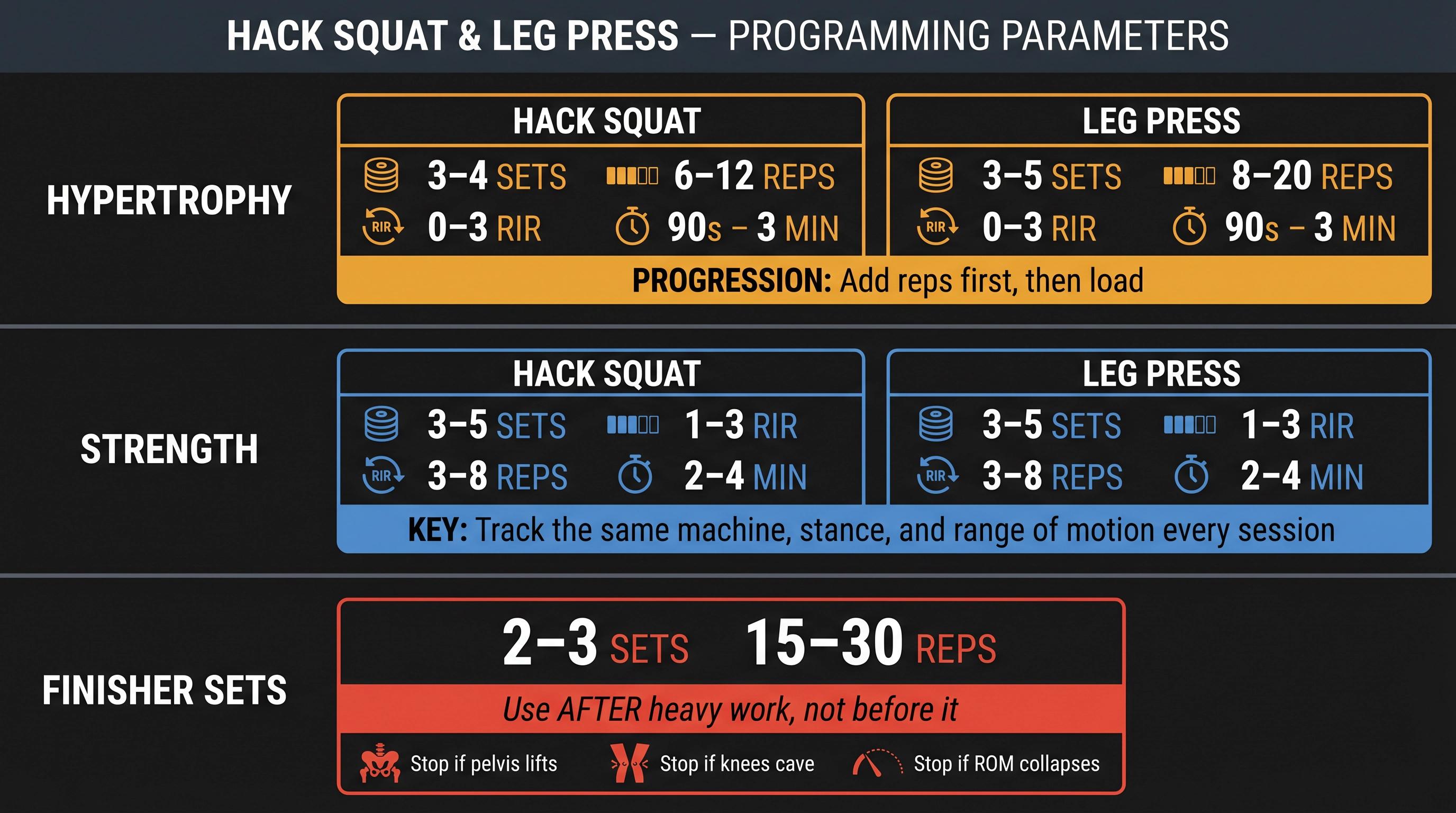
Hack squat and leg press for strength: sets and reps
- Sets/reps: 3–5 sets of 3–8 reps
- Rest: 2–4 minutes between sets
- Effort: 1–3 reps in reserve most of the time
- Key discipline: avoid grinding reps that change your position
- Critical note: track the same machine, stance, and range of motion across sessions
Machine strength does not transfer automatically across equipment brands. A 400 lb leg press on one machine is not the same as 400 lb on another — sled angle, friction, starting depth, platform design, and seat angle all change the stimulus. This is one reason why logging the specific machine matters.
High-rep finisher sets: guidelines
- Use 2–3 sets of 15–30 reps
- Keep form strict — stop if the pelvis lifts, knees cave, or range of motion collapses
- Use these after your heavy work, not before it
Now that you have the numbers — here are the mistakes that waste them.
Ready to Get Stronger?
Join 2,000,000+ lifters tracking their workouts with Stronger. Available on iOS and Android.
Six Hack Squat and Leg Press Mistakes to Avoid
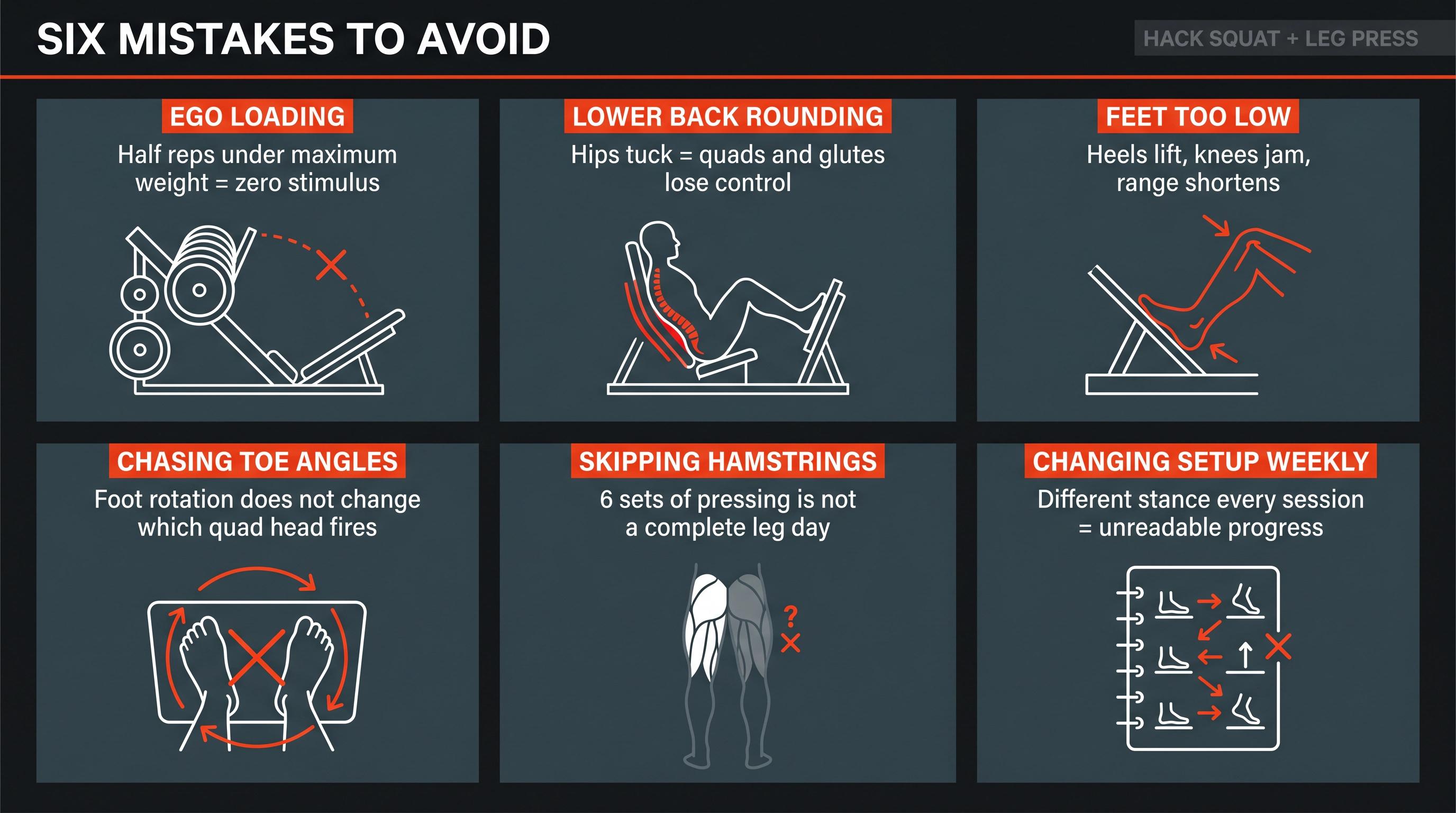
1. Turning every leg press into an ego lift
The leg press lets you load more weight than almost any other machine in the gym. That is its advantage — but load is only useful if you control it through a meaningful range of motion. Half reps with hips pinned under a huge sled are not the same stimulus as controlled deep reps with a weight you can actually manage. The range matters as much as the number on the weight stack.
2. Letting your lower back round on the leg press
When the hips tuck under and the lower back lifts off the pad at the bottom, you have gone deeper than your current hip mobility and machine setup allow. Our leg press guide recommends stopping the descent the moment the lower back begins to round. This is not a flexibility judgment — it is a safety and effectiveness cue. A rounded lower back at the bottom means the glutes and quads are no longer controlling the load.
3. Placing feet too low on the hack squat
A lower foot position increases knee flexion and quad demand — up to a point. When the feet go too low, the heels lift, the knees feel jammed against the sled, and the range of motion actually shortens. Use the lowest position that still lets you keep your full foot planted and descend through a complete range.
4. Chasing VMO activation with extreme toe angles
Foot rotation is overrated for changing which quad head activates. The 2020 leg press study found similar muscle activation patterns across different stance and foot-rotation conditions. The broader systematic review found the evidence for kinematic tweaks is still not compelling. (MDPI) Don't sacrifice comfort or control trying to optimize toe angles — use consistent technique and progressive overload instead.
5. Using both machines but skipping hamstring isolation
Hack squats and leg presses can make a leg session feel thorough, but they do not adequately train the hamstrings. This is one of the most common programming gaps we see — lifters who do 6 sets of quad-dominant pressing and think their hamstrings are covered because they felt a burn at the bottom. Add leg curls for knee-flexion hamstring work and RDLs or hip hinges for hip-extension hamstring work.
6. Changing stance every workout
Progress is hard to track when the exercise keeps changing. If you change foot height, stance width, depth, and machine each session, your training log becomes uninterpretable. Pick a standard setup for 4–8 weeks, progress it consistently, then evaluate and adjust. Consistency in setup is how you know the weight increase means something.
Consistency only works if you're tracking the right variables. Here's how to do that.
Track Hack Squats and Leg Presses in Stronger
These machines vary significantly between gyms and even between brands of the same machine. A 400 lb leg press on one platform is not the same as 400 lb on another. This is not a trivia point — it is the reason why tracking machine type, stance, and range of motion matters as much as tracking the weight.
Here's the tracking setup we recommend for both exercises in Stronger:
- Log the machine type in exercise notes if your gym has more than one version
- Record your stance — low/mid/high foot placement, narrow/shoulder/wide
- Track your range of motion — parallel, below parallel, 90-degree knee bend, or machine stop
- Log RPE or reps in reserve on your top sets
- Check your weekly volume by muscle group, not just your biggest set
That last point matters more than most lifters realize. It is easy to feel like you had a great leg day when you really had a great quad day — or vice versa. Stronger's analytics show you your total weekly volume broken down by muscle group. If your quad volume is double your hamstring volume week after week, the app will show you that imbalance before it becomes a problem.
Beyond volume tracking, here is what Stronger gives you specifically for these exercises:
PR detection. Every time you set a new personal record on the hack squat or leg press — whether that is a new weight at a given rep count, or more reps at the same weight — the app flags it automatically. This is how you know the progression is real and not just a "felt harder today" impression.
Strength curves. For the hack squat and leg press specifically, the strength curve view shows whether you are getting stronger over time at the exercise level. This is how you confirm that setup consistency is translating into actual progress — not just more plates on a sled that happens to be slightly different from last month's machine.
Muscle group volume analytics. Our analytics show weekly volume by muscle group, which lets you see whether your quads, glutes, and hamstrings are balanced across the week — not just within a single session. This is the exact data you need to decide whether to prioritize hack squats, leg presses, or add more dedicated hamstring work in a given training block.
Exercise library with instructions. Both the hack squat and leg press are in our 400+ exercise library with instructions, muscle targeting maps, and setup cues — useful for reviewing technique without hunting for a YouTube video.
Adaptive routines. If you use one of our AI-generated or adaptive routines, the programming logic already accounts for how hack squats and leg presses complement each other across a training week. The routine adjusts weights, sets, and reps based on your performance history.
Strength Score. Our proprietary Strength Score tracks your overall strength across major muscle groups, adjusted for bodyweight and gender. It is the fastest way to see whether your lower-body training as a whole is progressing — not just whether you added five pounds to your leg press this week.
If you are serious about your leg training, systematic tracking is what separates guessing from knowing. Download Stronger and start tracking your hack squats and leg presses with the setup that actually tells you whether you're progressing.
The features page shows exactly what serious leg-day tracking looks like in practice — Strength Score across all major muscle groups, the muscle-group breakdown heatmap, and workout tracking with per-set PRs automatically flagged.
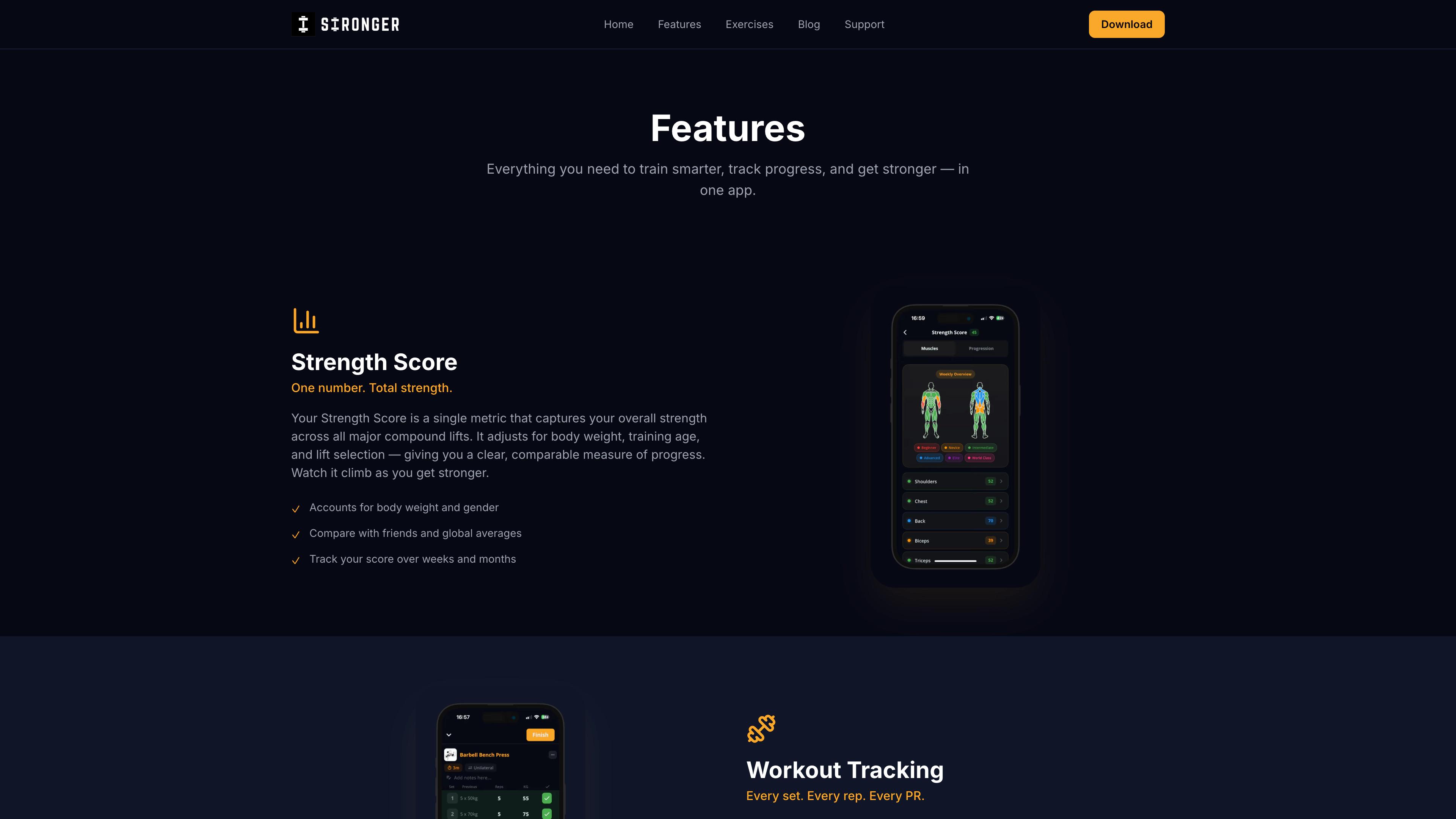
Stronger's homepage positions the app as a tool for lifters who take training seriously — the muscle group visualization directly below the headline shows how the Strength Score system maps to every major lift, including the quads and glutes you're building with these machines.
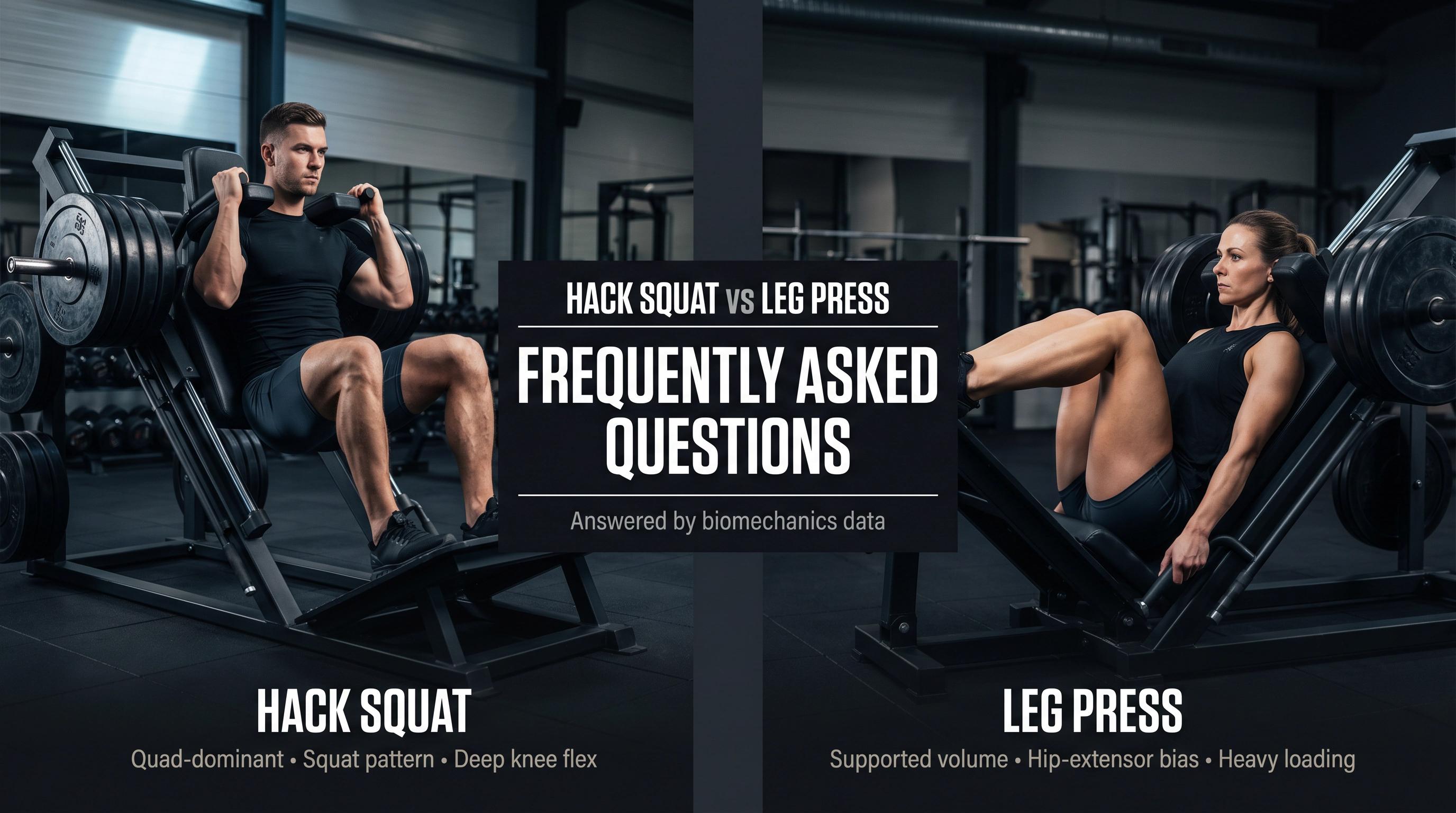
Hack Squat vs Leg Press: Frequently Asked Questions
Is the hack squat better than the leg press?
For quad-focused training, the hack squat often has a slight edge because the squat-like pattern creates more direct knee-extensor demand. For heavy supported volume with easier setup, the leg press often wins. For overall leg growth, both are excellent — and most serious lifters benefit from programming both rather than choosing one permanently.
Is the leg press enough for a complete leg workout?
Not by itself. The leg press covers substantial quad and glute volume, but you still need dedicated hamstring work and usually calf work. Add leg curls for knee-flexion hamstring stimulus, Romanian deadlifts or hip hinges for hip-extension hamstring work, and calf raises for lower-leg development.
Is the hack squat enough for hamstrings?
No. The hamstrings assist during the hack squat but are not the primary loaded muscle. A 2019 EMG study found that hamstring activation during the hack squat was significantly lower than during other squat variations tested. (ResearchGate) Program leg curls and hip hinges in addition to your hack squat work.
Which is better for glutes — hack squat or leg press?
A high/wide leg press setup is usually easier to bias toward the gluteus maximus. A hack squat with a higher foot placement can also hit the glutes, but it tends to remain more quad-dominant for most lifters. For serious glute development, hip thrusts and Romanian deadlifts are more effective as primary movements, with the leg press serving as a useful secondary glute exercise.
Which is better for the knees: hack squat or leg press?
It depends on anatomy, machine design, load, stance, and range of motion. The hack squat creates more obvious knee flexion demand, which is excellent for quads but can be uncomfortable for some individuals. The leg press can feel easier on the knees for some lifters, but low foot placement and excessive depth can still create irritation. Neither machine is inherently dangerous — both can be irritating if programmed with poor setup or excessive load.
Which is better for the lower back: hack squat or leg press?
The leg press is more back-supported in general because the load is not on the shoulders and the back rests against a pad. However, rounding the lower back at the bottom of the leg press can still create discomfort. Keep the pelvis down and stop the descent before the lumbar spine loses position.
Can I do hack squats and leg presses in the same workout?
Yes. A good order is hack squat first, leg press second. Use the hack squat for heavier, more demanding quad-biased work, then use the leg press for higher-rep volume after the heavy work is done. Both are compound pressing movements, so total volume management matters — don't pile on maximum sets of both if your knees are already accumulating fatigue.
Should beginners start with hack squats or leg presses?
Most beginners should start with the leg press. It is simpler to learn, more stable, and easier to adjust weight and range of motion. The hack squat is also beginner-friendly, but the movement pattern can feel more intense on the knees and quads while the body is still learning to brace correctly.
Why can I leg press so much more weight than I hack squat?
The leg press is more mechanically supported — the load path, sled angle, and seat position make it easier to move larger absolute loads. Machine angles also vary between brands. A leg press number is not directly comparable to a hack squat number, a squat number, or a deadlift number. Don't read too much into the gap.
What if my gym only has one of these machines?
Use what you have. If you only have a leg press, vary your stance and rep ranges to cover quad and glute emphasis across different sessions. If you only have a hack squat, pair it consistently with hamstring curls and hip hinges to round out your lower-body training. Either machine, programmed intelligently with the right accessories, can support serious leg development.
How do I know if my leg training is actually progressing?
The most reliable signal is consistent progressive overload on the same machine with the same setup. If the weight increases, or the rep count increases at the same weight, on the same machine, same stance, same depth — that is real progress. Tracking this in Stronger makes it visible across weeks and months, including volume by muscle group and automatic PR detection.
How often should I train legs with these machines?
The ACSM's 2026 resistance training guidelines recommend training major muscle groups at least twice per week for hypertrophy. Training legs two to three sessions per week with appropriate volume per session is a reasonable target for most lifters using these machines. Recovery capacity, total training age, and programming structure all influence the exact number.
Hack Squat vs Leg Press: Final Verdict
The hack squat and leg press are not competing for the same role in your program. They complement each other.
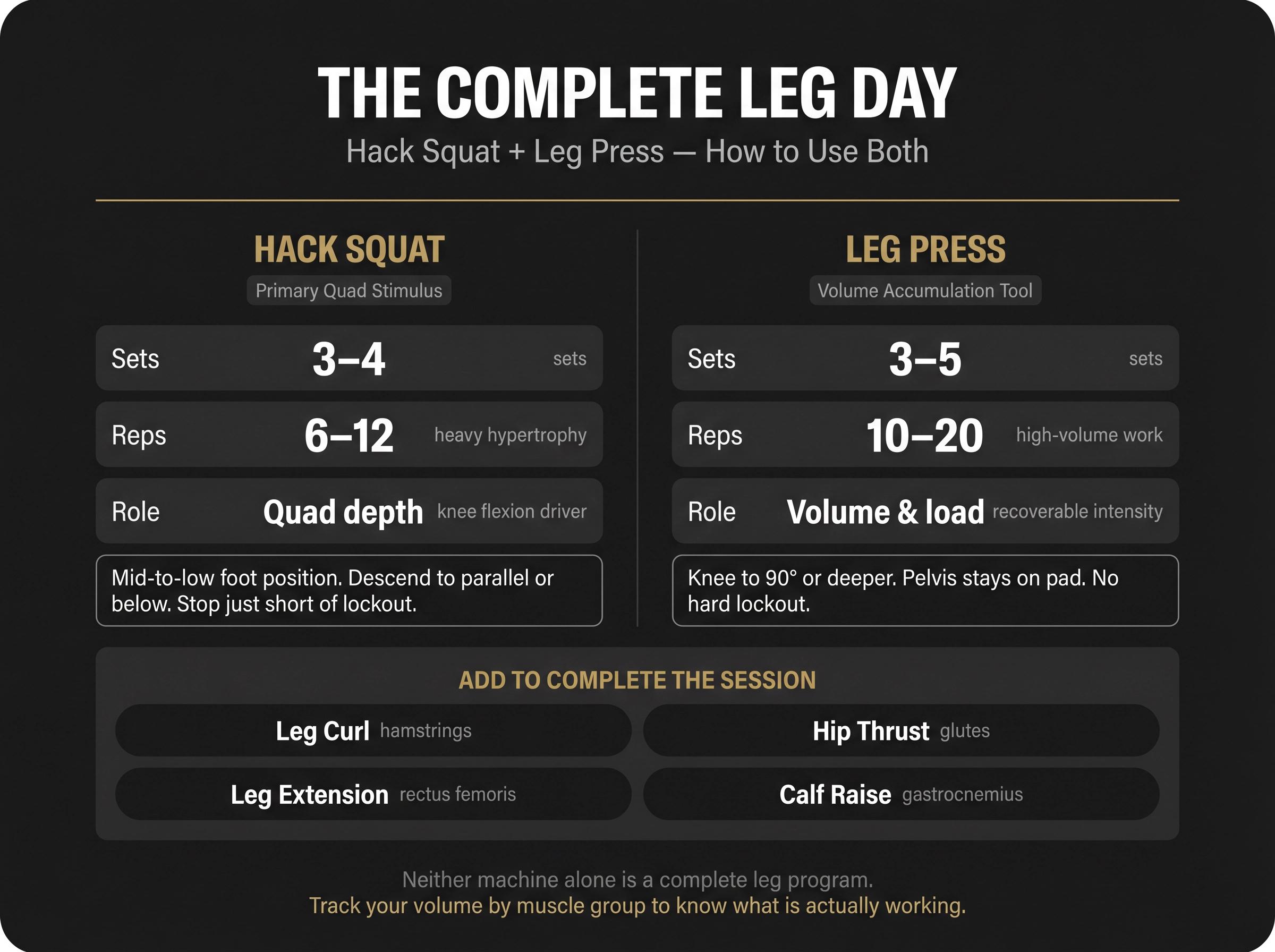
Choose the hack squat when you want a quad-focused, squat-pattern machine movement that loads the quads through deep knee flexion without requiring a barbell.
Choose the leg press when you want stable, high-volume lower-body work with back support, more flexibility in foot placement, and the ability to load heavily without the same systemic fatigue.
Use both if you're serious about leg development. The best programs for quad and glute growth typically include a hack squat as the primary quad stimulus, a leg press as the volume accumulation tool, and dedicated hamstring work alongside both.
Our take at Stronger: the biggest programming error with these machines is not choosing the wrong one — it is treating either of them as a complete leg program on their own. Use them for what they do well. Add leg curls for hamstrings, hip thrusts or RDLs for glutes if that's the priority, and calf raises for the lower leg. Then track all of it systematically so you know what is actually working.
The exercise that builds the most muscle is not the one with the best debate answer. It is the one you perform with solid technique, enough depth, enough effort, and enough consistent progressive overload to keep improving over months.
Track your hack squats and leg presses in Stronger — volume by muscle group, automatic PR detection, strength curves, and adaptive programming included.
Sources and Data Currency
Key sources used:
- American College of Sports Medicine, March 17, 2026: updated resistance training guidelines, including consistency, twice-weekly major muscle training, goal-specific loading, and hypertrophy volume guidance. (ACSM)
- Martín-Fuentes, Oliva-Lozano & Muyor, International Journal of Environmental Research and Public Health, published June 27, 2020: systematic review of leg press EMG and variants. Older than 2024, but still one of the most directly relevant reviews for leg press muscle activation. (ResearchGate)
- Krause Neto, Krause & Gama, Frontiers in Physiology, published April 10, 2025: systematic review and meta-analysis on gluteus maximus hypertrophy, including discussion of leg press setup and glute growth. (Frontiers)
- Straub et al., International Journal of Sports Physical Therapy, 2024: biomechanical review of squat variables including trunk position, tibia inclination, stance width, depth, and muscle/joint demand. (IJSPT)
- Clark, Lambert & Hunter, Journal of Strength and Conditioning Research, final article 2019 / published ahead of print 2017: trunk activation comparison between back squat and hack squat.
- Singer et al., Frontiers in Sports and Active Living, 2024: systematic review and Bayesian meta-analysis on inter-set rest intervals and hypertrophy. (Frontiers)
- Stronger exercise library and features pages, 2026: internal references for hack squat, leg press, tracking, Strength Score, exercise instructions, and analytics. (Stronger)
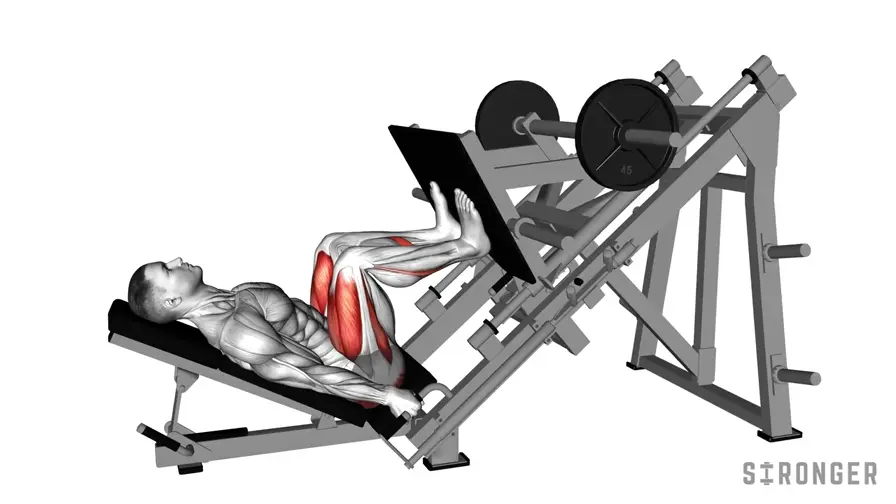
Exercises in this guide
Stronger Editorial Team
Certified strength & conditioning specialists with 10+ years of coaching experience
The Stronger editorial team produces evidence-based training content for lifters of all levels.
Ready to Get Stronger?
Join 2,000,000+ lifters tracking their workouts with Stronger. Available on iOS and Android.