
Hip Thrust Guide: All Variations for Maximum Glute Growth
If your glute plan starts and ends with "do hip thrusts because Instagram said so," you are working with half the picture.
Hip thrusts are one of the best glute exercises we have. A 2025 systematic review specifically highlighted the barbell hip thrust as a priority movement when the goal is gluteus maximus growth. But they are not magically superior to every squat, deadlift, and split squat variation out there, and they are not enough on their own if you want complete glute development.
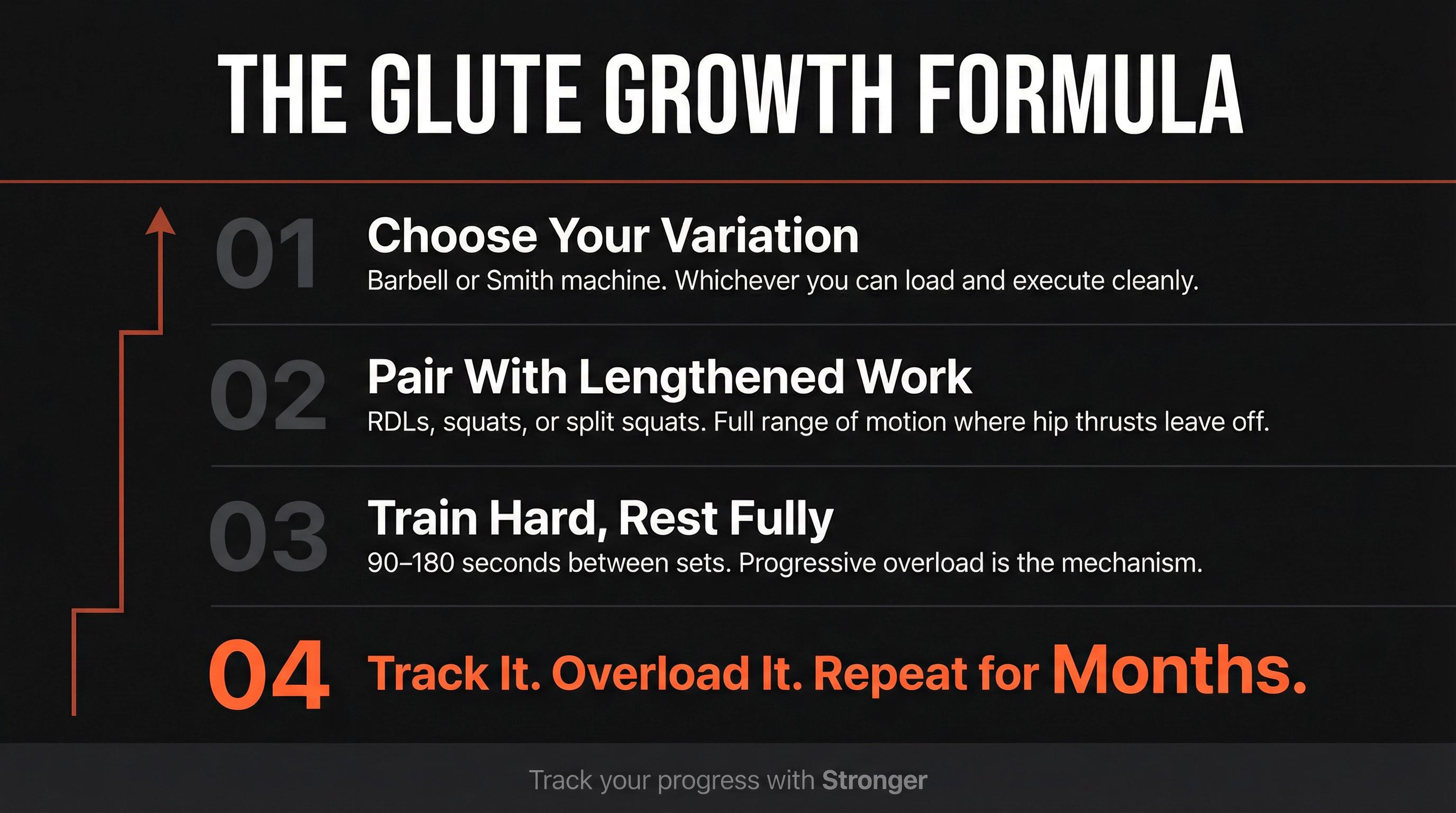
The smarter approach is straightforward: pick a hip thrust variation you can progressively overload with clean technique, pair it with at least one lengthened-position glute movement like an RDL or squat, and in many cases add a unilateral or abduction exercise. That combination is how you actually chase maximum glute growth, not just a bigger hip thrust number.
We built Stronger around this kind of training. Our exercise library includes step-by-step guides for every hip thrust and glute bridge variation in this article, complete with muscle targeting maps, form cues, and equipment filters. This guide pulls together the research, the programming, and the practical execution so you can stop guessing and start growing.
Here is what you will walk away with: which hip thrust variation actually fits your situation, how to perform each one correctly, what the science says about why they work, how to program them for maximum results, and the common mistakes that quietly kill glute growth.
What do hip thrusts actually train (and what do they miss)?
Your glutes are not a single muscle. The gluteus maximus is the largest and most superficial of the three glute muscles, and it provides most of the visual size of the butt. Its primary jobs are hip extension and external rotation. The gluteus medius and minimus sit laterally and deeper, contributing to hip abduction and pelvic stability. You can explore all three in our complete glutes exercise guide.
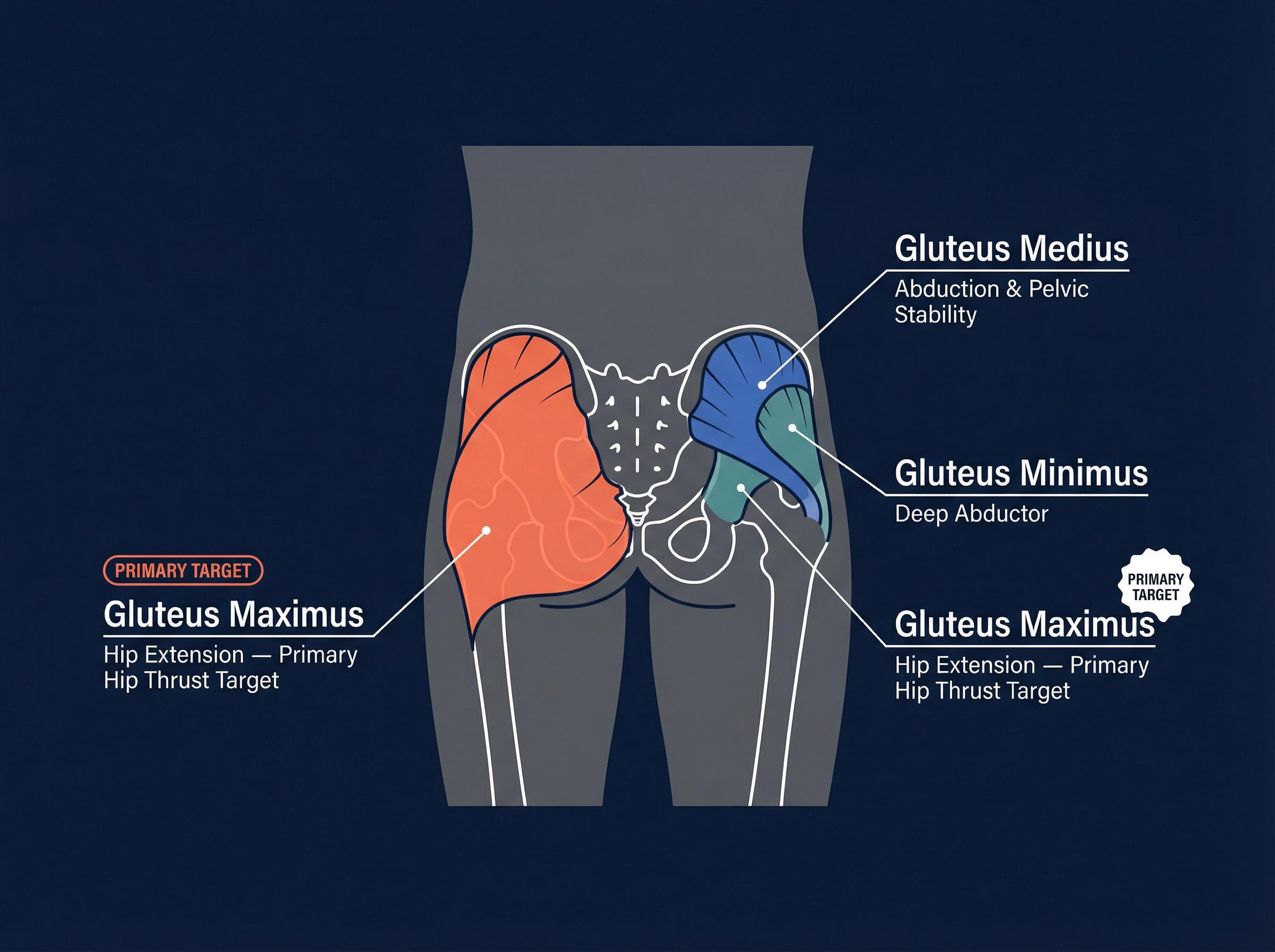
That anatomy matters because the hip thrust is fundamentally a hip extension exercise. In our exercise library, we list the hip thrust with glutes as the primary muscle and hamstrings and quadriceps as secondary contributors. It is a highly glute-focused lift, but it is not a complete glute solution. If you want the fuller upper-outer glute look that most people are chasing, you need more than hip thrusts alone.
Here is a useful reality check: when people say they want "upper glutes," they usually mean some combination of upper gluteus maximus plus gluteus medius and minimus. Hip thrusts can contribute, but because the movement is primarily a loaded hip extension pattern, they are biased toward glute max rather than hitting every glute region equally.
That is not a weakness. It is just the truth about what this exercise does best. And once you know what hip thrusts specialize in, you can build a program that fills the gaps instead of hoping one movement covers everything.
What does the research say about hip thrusts and glute growth?
Most people justify hip thrusts with a vague "they have the best glute activation." That claim is incomplete and, in some cases, misleading. Here is what the research actually shows.
A 2025 systematic review on gluteus maximus hypertrophy found a moderate overall hypertrophy effect from resistance training and concluded that single exercises like the barbell hip thrust should be prioritized when the specific goal is glute max growth. The same review noted that full or parallel back squats, leg press, and kneeling hip extensions can also increase glute max size.
The takeaway: hip thrusts are excellent, but they are not the only exercise that works.
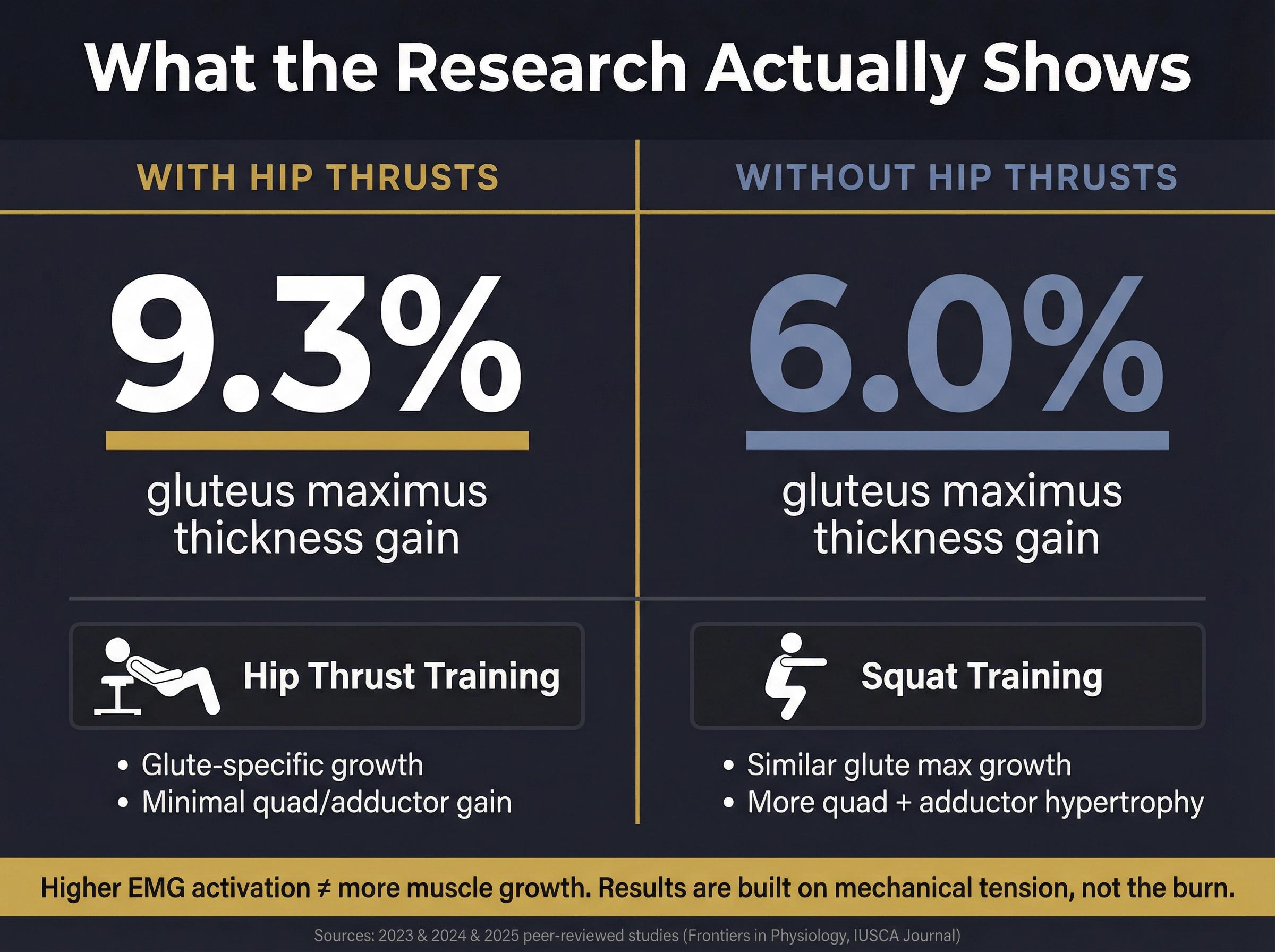
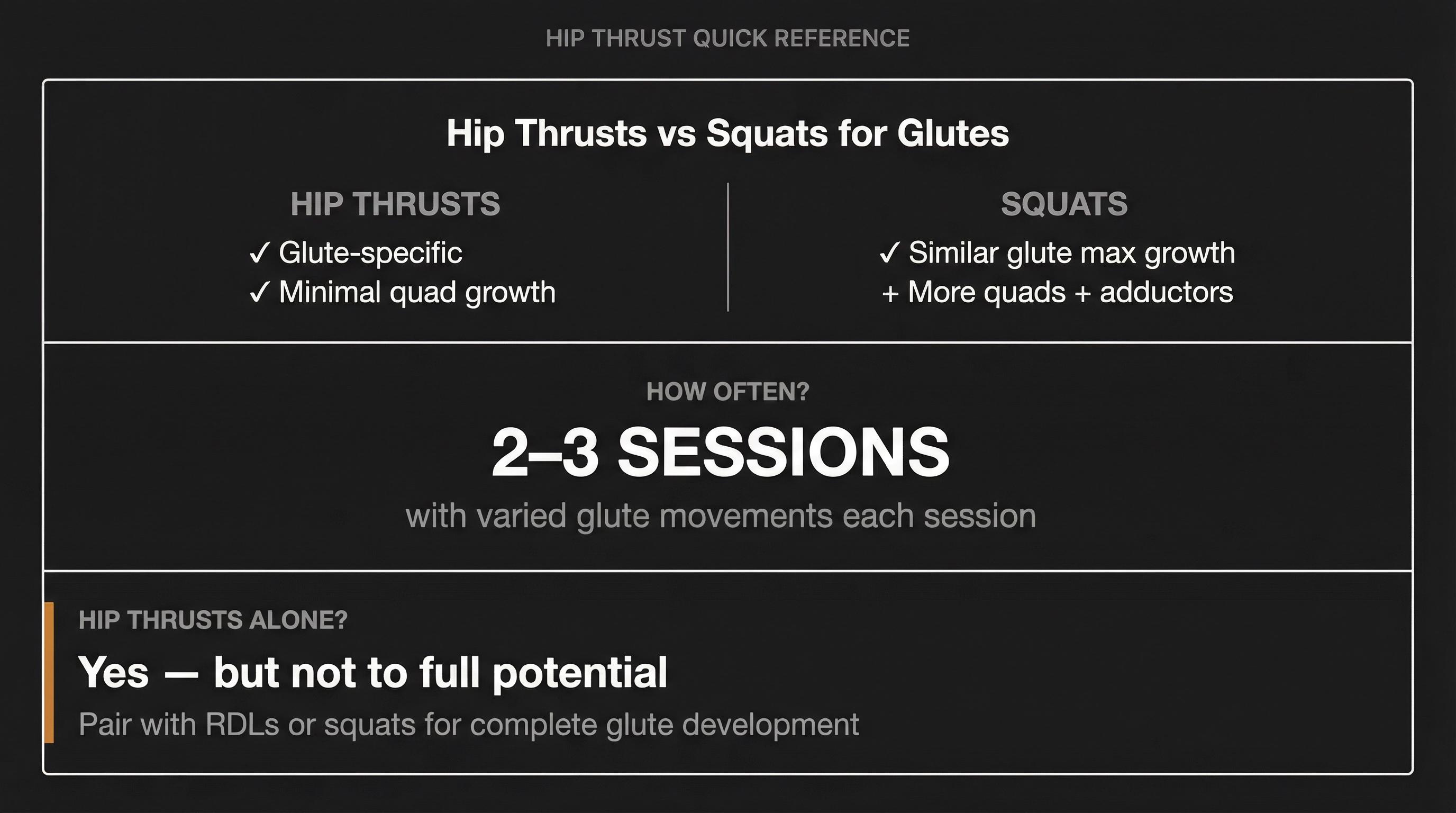
The best head-to-head comparison we have comes from a 2023 trial comparing hip thrust training with back squat training over 9 weeks in novice lifters. Upper, middle, and lower gluteus maximus hypertrophy was similar between groups. Squats produced more quadriceps and adductor growth, while hip thrusts were more glute-specific with minimal non-glute thigh hypertrophy.
That matters. If you want total lower-body growth, squats pull ahead. If you want a glute-biased result without extra thigh size, hip thrusts become especially attractive. For a deeper breakdown on squat technique, see our complete squat guide.
A 2024 study adds another piece. Untrained young women who trained leg press plus stiff-leg deadlift plus barbell hip thrust for 10 weeks gained more gluteus maximus thickness than the group doing only leg press plus stiff-leg deadlift, with reported increases of 9.3% versus 6.0%. Hip thrusts work not just as a standalone lift, but as part of a complete glute program.
Why hip thrusts are effective for building glutes
Muscle growth is driven primarily by mechanical tension. Not by the burn, not by the pump, and not by screenshots of EMG graphs posted by influencers. A 2026 review in the Journal of Sport and Health Science confirmed that mechanical tension is the primary and essential driver of resistance-training-induced hypertrophy. Ideas like cell swelling and short-term hormone spikes do not have strong causal support.
Mechanical tension is the force your muscles generate against resistance. When you push a heavy barbell through hip extension during a hip thrust, your glutes are producing substantial mechanical tension. That is the signal that tells your body to build more muscle.
That is why hip thrusts work: they let you load hip extension directly, with high local demand on the glutes, in a position most lifters can tolerate well. A 2021 biomechanical analysis found that the barbell hip thrust created greater extensor demand at the hip joint than at the knee or pelvic-trunk joints.
But it also found something that most internet explanations miss: hip extensor moments were not constant through the whole rep. They diminished throughout the lifting phase. So the popular "constant tension all the way through" pitch is too simplistic. Hip thrusts work because they create high glute demand, not because they break the laws of physics.
Does high muscle activation mean more glute growth?
Higher acute muscle activation does not automatically mean more muscle growth. In the 2023 squat-versus-hip-thrust study, the hip thrust produced higher acute glute surface electromyography (sEMG, the measurement you see in those "muscle activation" charts), but that did not translate into greater glute growth over time. Both groups grew similar glute max.
The lesson: pick exercises based on long-term results and repeatable progression, not just on what creates the biggest burn or the prettiest activation chart.
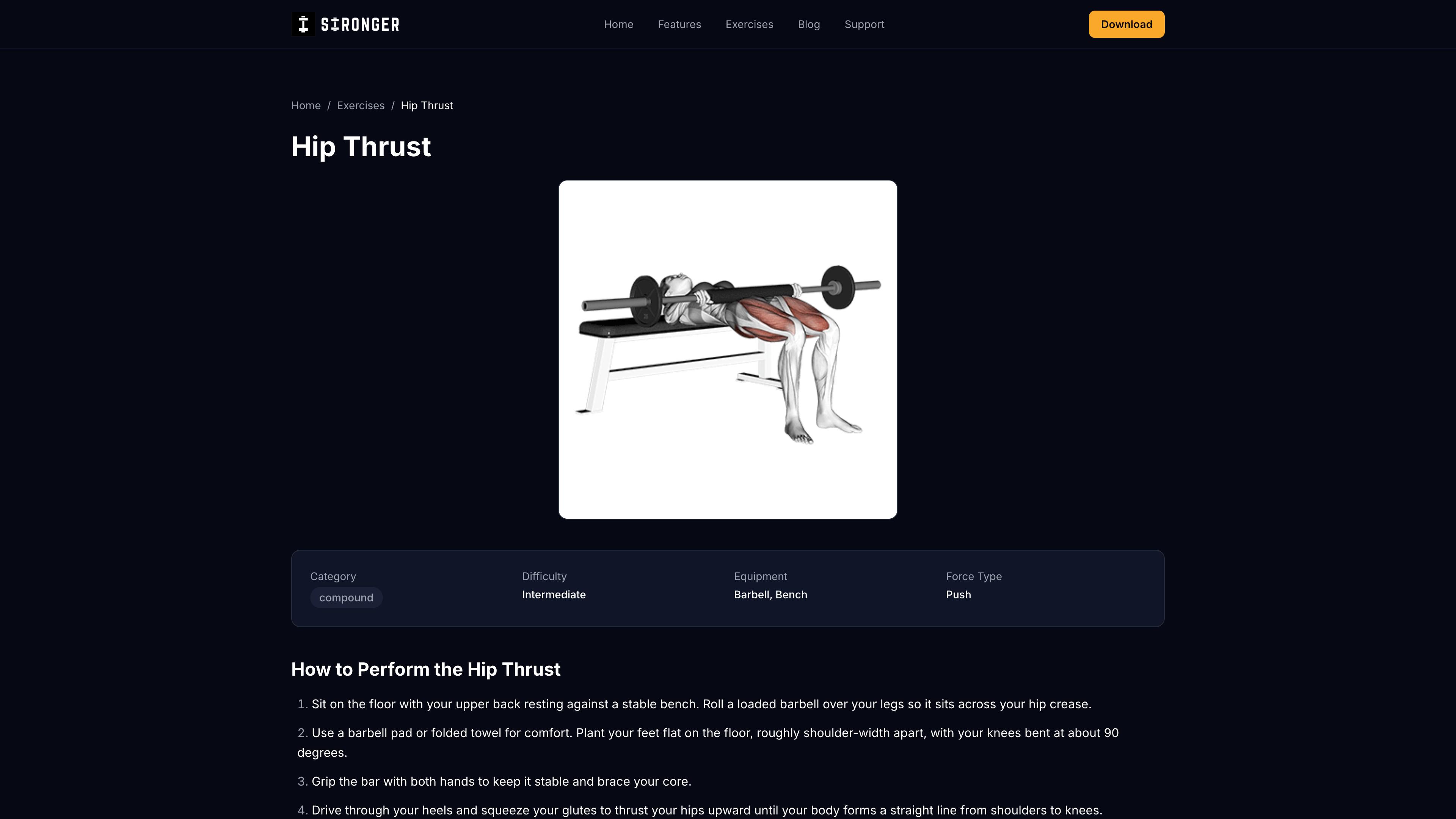
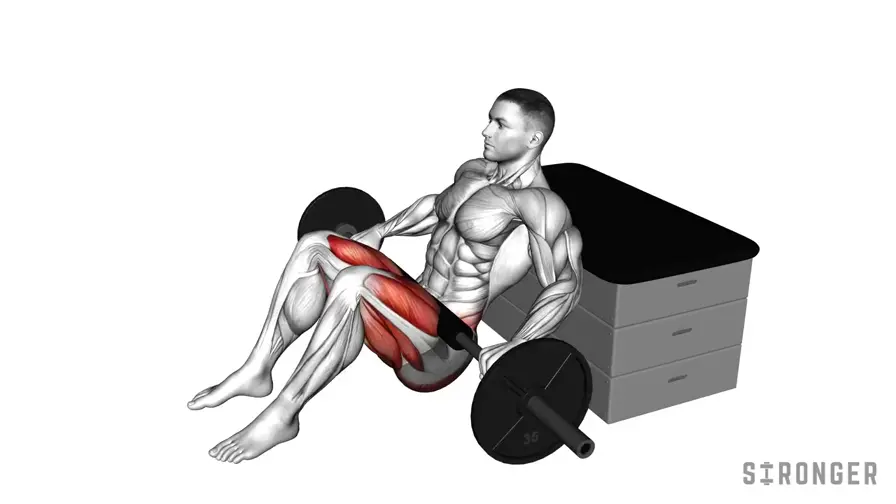
How to perform a barbell hip thrust with correct form
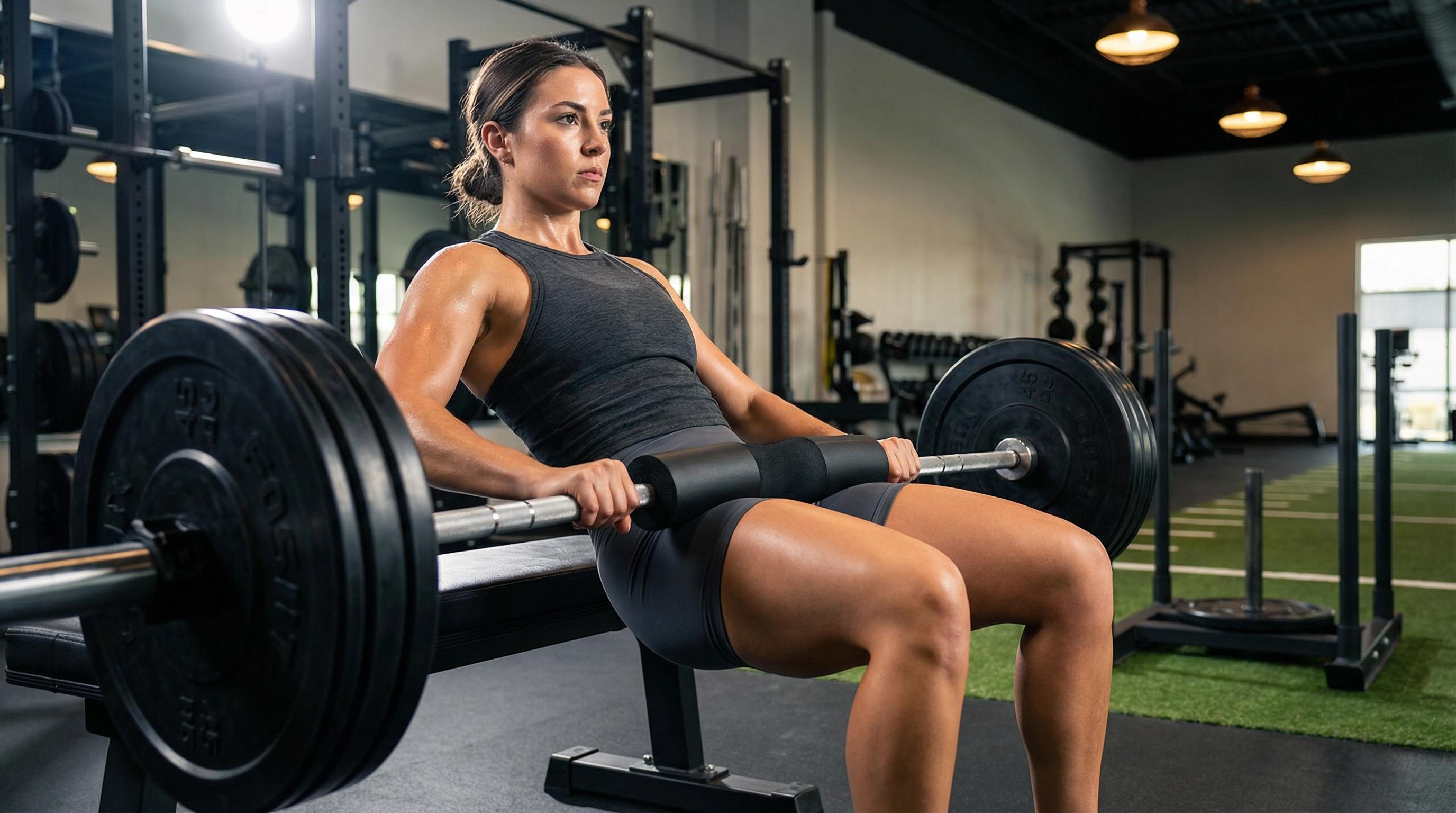
Before you pick a variation, you need to nail the basic pattern. Here is the setup that works:
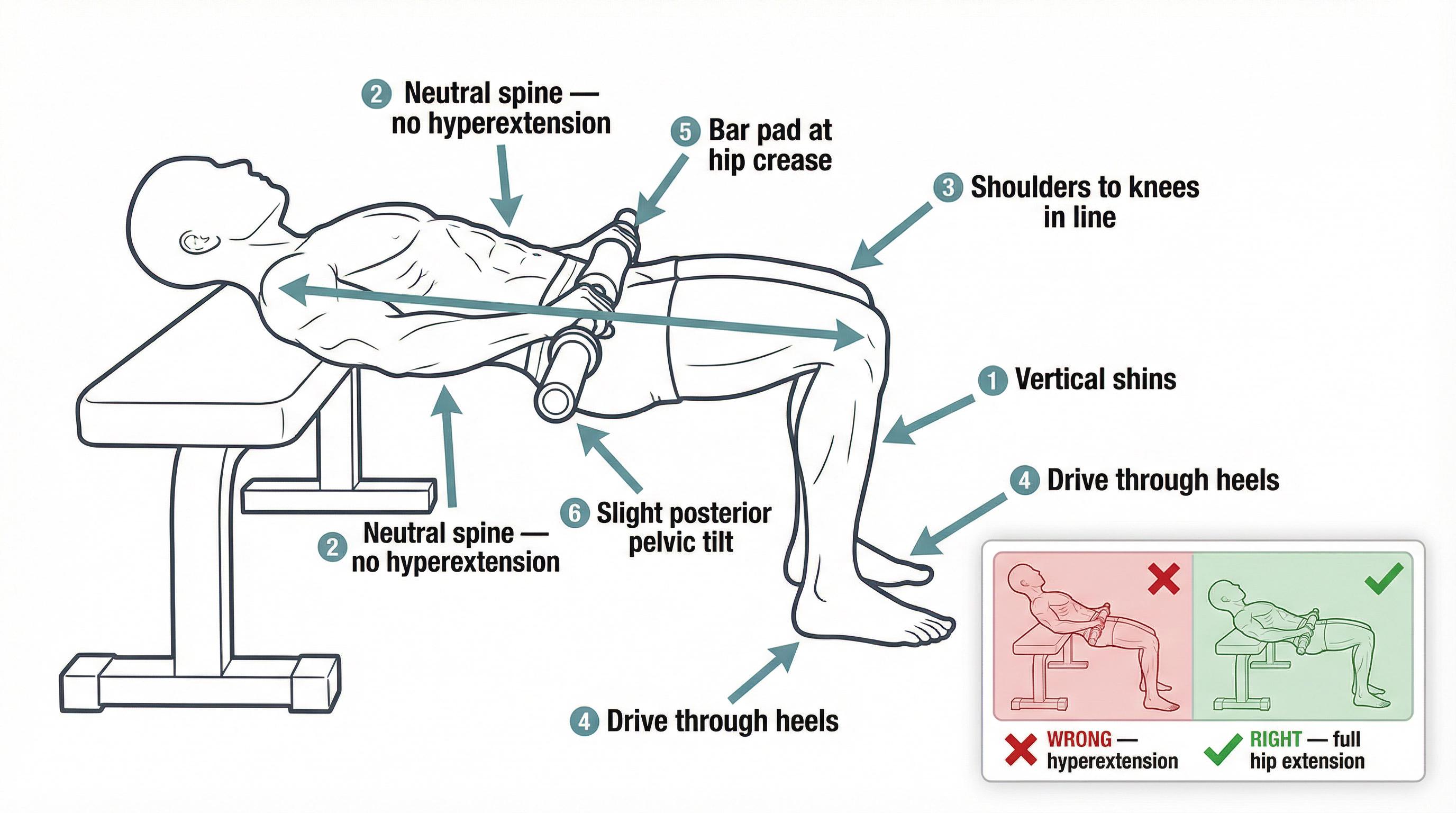
- Sit on the floor with your upper back against a stable bench. The barbell should rest across your hip crease.
- Use a bar pad or folded towel to cushion your hips.
- Plant your feet flat on the floor, roughly shoulder-width apart, with knees bent at about 90 degrees.
- Brace your core and keep a slight chin tuck. Looking at the ceiling usually leads to neck strain and back arching.
- Drive through your heels and lift until your body forms a straight line from shoulders to knees.
- At the top, aim for vertical shins, your torso parallel to the floor, and a slight posterior pelvic tilt (think: tucking your tailbone under slightly).
- Hold the top for 1 to 2 seconds, then lower under control.
(Stronger)
Two cues matter more than almost everything else.
Do not chase extra height by arching your lower back. Full hip extension is not the same thing as spinal hyperextension. When you see someone cranking their hips as high as possible with their ribs flaring and their back bowing, they have passed the point of useful glute contraction and are just compressing their spine. Stop when your hips are fully extended and your glutes are squeezed hard.
Pay attention to foot placement. Feet too far away and the movement shifts toward hamstrings. Too close and it feels cramped and quad-dominant. Our hip thrust, dumbbell hip thrust, and Smith machine hip thrust exercise pages all cue vertical shins at the top. It is one of the easiest ways to clean up the movement fast.
If you mostly feel your hamstrings, your feet are probably too far out, or you are losing pelvic position at the bottom.
If you mostly feel your lower back, you are likely reaching for extra height instead of driving through the hips. Fix the setup before you swap the exercise.
Ready to Get Stronger?
Join 2,000,000+ lifters tracking their workouts with Stronger. Available on iOS and Android.
Start tracking freeHip thrust variations: every type worth doing
There are endless hip thrust variations floating around social media. Most do not deserve their own workout plan. These are the ones that actually earn a spot in your program.
Barbell hip thrust
The standard. The reference point. The 2025 glute hypertrophy review specifically highlighted the barbell hip thrust as a priority option when the goal is glute max growth. If you want a proven default backed by the most research, this is it.
In our exercise library, we walk through the full setup, cues, and common mistakes. The barbell hip thrust lets you load heavy, track progress easily, and has the deepest body of evidence behind it.
The realistic downside is not theoretical but practical. Balancing the bar, padding the hips, finding the right bench height, and getting into position can be annoying enough that some lifters train the exercise less intensely than they should. If setup friction is making you dread the exercise, the next variation might genuinely be better for you.
Smith machine hip thrust
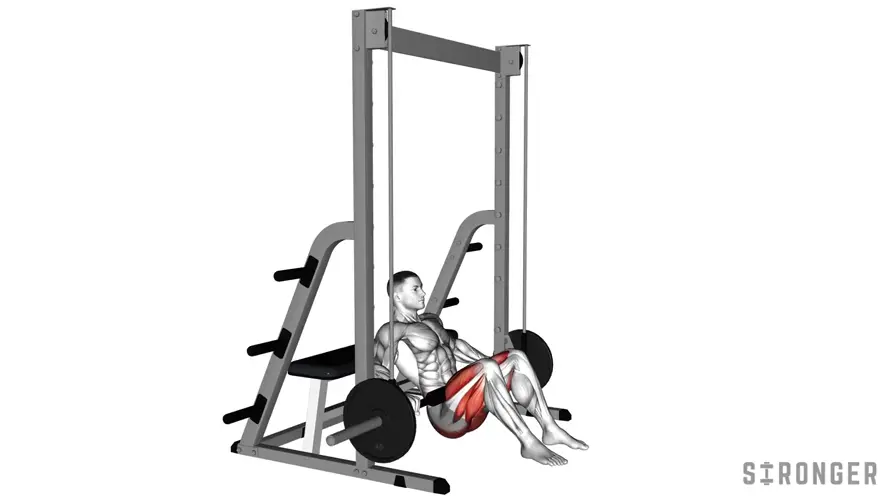
For many commercial-gym lifters, this is the most practical variation. Our Smith machine hip thrust page breaks down the key advantages: more stability, significantly easier setup, simple reracking between sets, and a cleaner platform for advanced techniques like drop sets.
If a Smith machine lets you get into position faster, maintain cleaner reps, and push closer to failure safely, it is not a compromise. It is a better tool for your goals. A dedicated hip thrust machine works the same way. If your gym has one and it is stable, comfortable, and easy to progress on, use it.
Maximum glute growth comes from high-quality hard sets performed consistently over months, not from winning a purity contest about free weights versus machines.
Dumbbell hip thrust
The best on-ramp for beginners and one of the most practical home-gym options. Our dumbbell hip thrust page describes exactly how it should be used: an easier setup, a great way to learn the hip extension pattern, and a clean progression path before moving to a barbell.
It is also useful for lighter high-rep work when a full barbell setup feels excessive. Sometimes you want 3 sets of 15 without spending five minutes loading plates.
The limitation is straightforward. Eventually, the dumbbell gets awkward to position across your hips, even when your glutes could handle more weight. When you hit that ceiling, graduate to a barbell, Smith machine, or machine version rather than pretending the dumbbell is still your best hypertrophy tool.
Barbell glute bridge
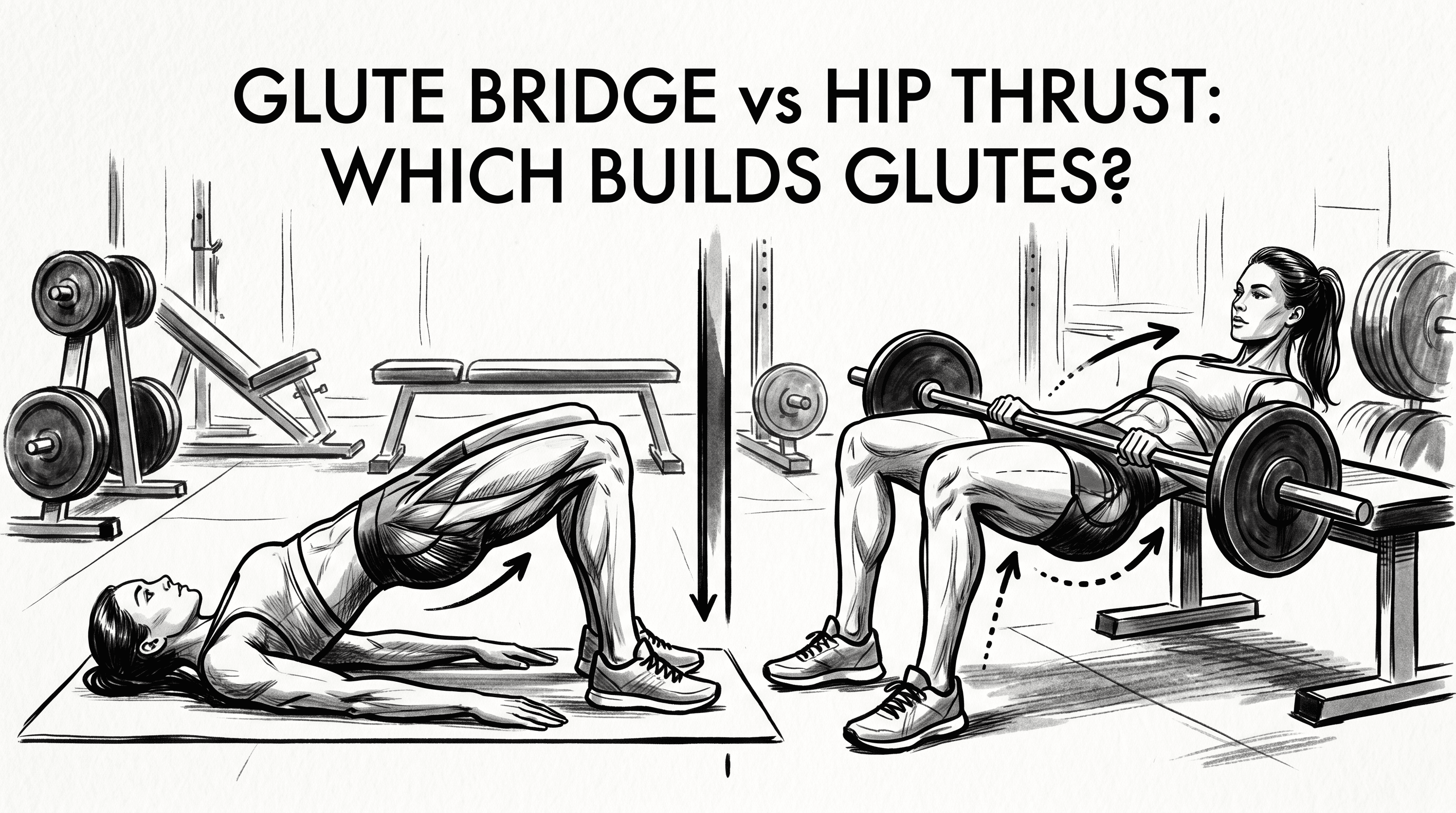
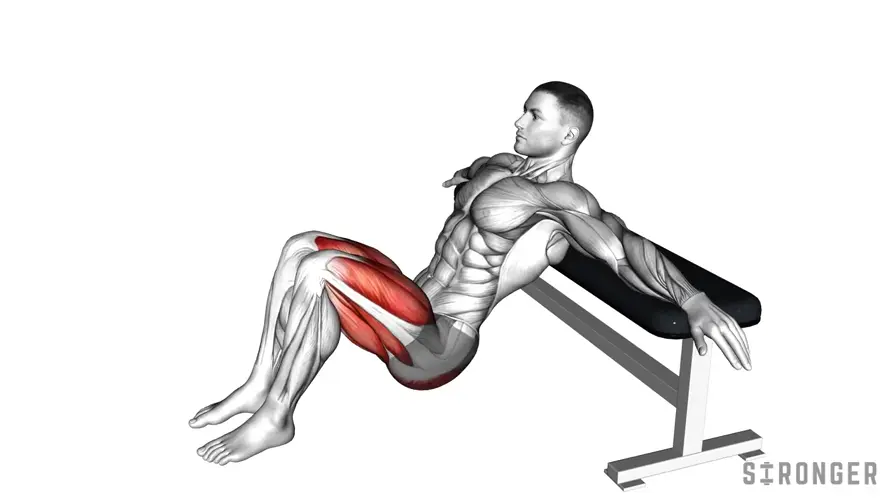
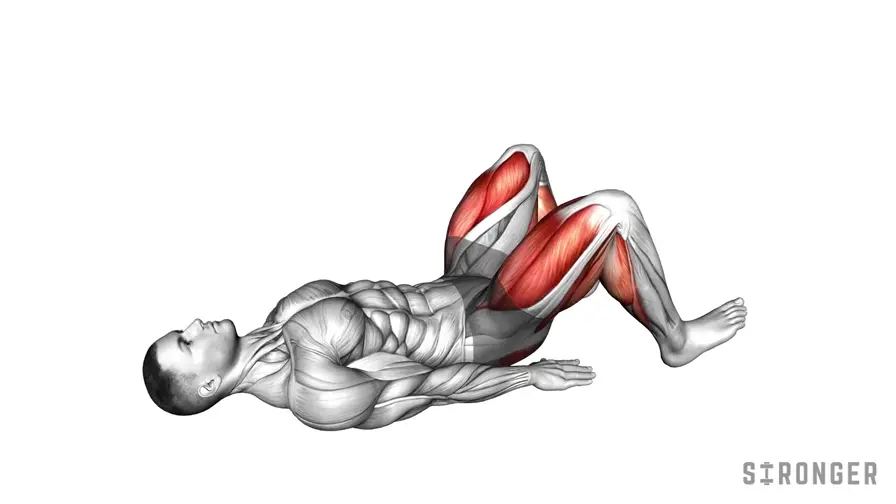
The barbell glute bridge looks like a hip thrust, but your upper back stays on the floor instead of on a bench. That removes the bench setup entirely and reduces the range of motion. If the hip thrust irritates your shoulders, you are tired of wrestling with bench height, or you just want a simpler glute exercise, the glute bridge is a legitimate substitute. Our glute bridge page positions it as beginner-friendly while still being loadable for experienced lifters.
A 2024 biomechanics comparison found that the hip thrust produced greater displacement and impulse than the glute bridge, while the glute bridge allowed higher force application close to lockout. In plain terms: the hip thrust gives you more total range and work per rep, while the glute bridge gives you a simpler, more lockout-focused variation. Neither is fake. They solve slightly different problems.
KAS glute bridge
The KAS glute bridge is the top-third, shortened-position version of the hip thrust or bridge. You stay in the zone of peak glute contraction, using a deliberately short range and keeping constant tension on the glutes. Our KAS glute bridge page describes it as brutal accessory work, and that is exactly how you should treat it.
Do not make the common mistake of turning this accessory into your entire glute plan. A 2023 systematic review found that full or longer range of motion tends to slightly favor outcomes like muscle size, and more recent evidence suggests that training at longer muscle lengths may be superior for hypertrophy, though the data is still evolving.
Use KAS bridges after your main hip thrust or glute bridge work, not in place of it. They are a finisher, not a foundation. You can also try the dumbbell KAS glute bridge if a barbell feels excessive for this accessory.
Single-leg hip thrust
If you have noticeable left-right strength differences, trouble keeping your pelvis level during bilateral thrusts, or you want a challenging unilateral glute exercise without needing a barbell, the single-leg hip thrust delivers. Our single-leg hip thrust page emphasizes level hips, heel drive, and controlled reps, which matters because most people do this variation poorly by chasing height instead of maintaining control.
It is not just a rehab exercise. A 2023 modeling study reported that peak gluteus maximus force was among the highest during the split squat, single-leg RDL, and single-leg hip thrust. That does not prove single-leg thrusts are the best hypertrophy variation, but it confirms they deserve serious respect as a real glute-building option. For another strong unilateral alternative, try the single-leg bodyweight glute bridge.
Bodyweight glute bridge and bodyweight hip thrust
These are your learning tools, warm-up movements, and high-rep finishers. Our bodyweight glute bridge page positions it exactly right: no equipment needed, beginner-friendly, easy to perform anywhere, and a sensible starting point before harder progressions. We also recommend starting with bodyweight glute bridges before jumping straight into barbell hip thrusts on our hip thrust page.
Do not dismiss them because they look easy. For beginners who cannot yet coordinate pelvic position, rib position, and heel drive simultaneously, bodyweight work is often the fastest path to learning how a proper glute contraction should actually feel. Master the pattern, then load it.
Banded hip thrusts and banded bridges
Bands are optional, not magical.
A 2023 study comparing band-resisted and non-banded barbell hip thrusts and glute bridges found that adding a band increased upper glute max sEMG in some conditions, but it did not clearly improve gluteus medius activity the way many people assume. In fact, the non-banded barbell glute bridge unexpectedly produced greater glute medius activity than the banded version in that study.
Use the band if it helps you cue your knees out, improves how the movement feels, or gives you a useful burnout option. Do not use it because someone told you it automatically turns hip thrusts into the perfect upper-glute exercise. That claim does not hold up to scrutiny. For dedicated lateral-glute work, a cable hip abduction or hip abductor machine is a more targeted choice.
Advanced hip thrust techniques: B-stance, paused reps, and 1.5 reps
Paused reps, 1.5 reps, constant-tension reps, B-stance hip thrusts (where one foot is slightly ahead of the other, shifting more demand to the front leg), and frog pumps can all be effective programming tools.
But treat them as exactly that: tools. Not secret superior exercises. The moment a variation makes loading awkward, shrinks the range of motion to almost nothing, or makes progression hard to track, it probably belongs after your main thrust variation as an accessory, not in its place. Full or longer ranges of motion tend to hold a small edge for muscle growth, and evidence is building that longer-muscle-length work may matter even more for hypertrophy.
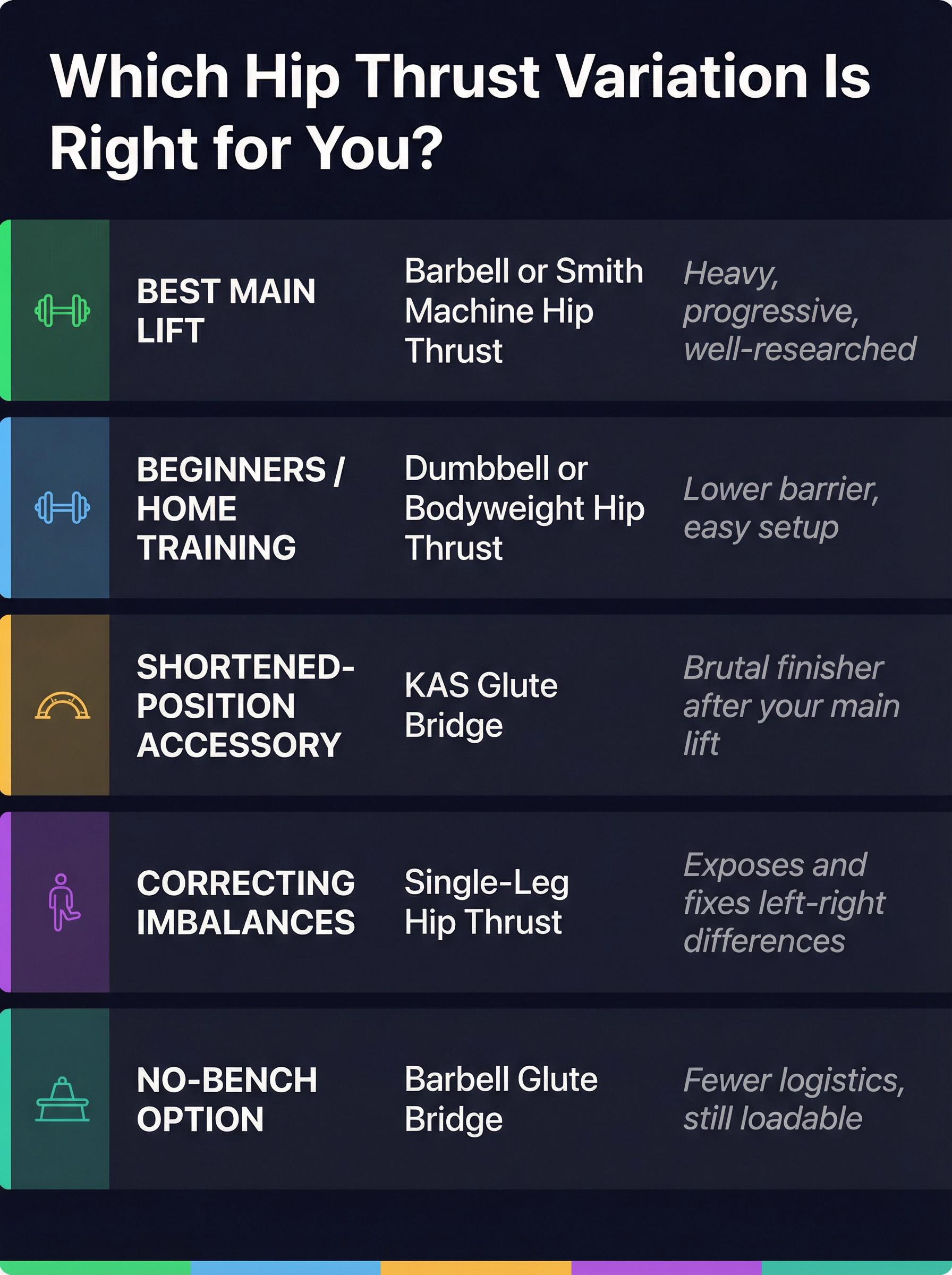
Which hip thrust variation should you choose?
If you want a simple framework, use this:
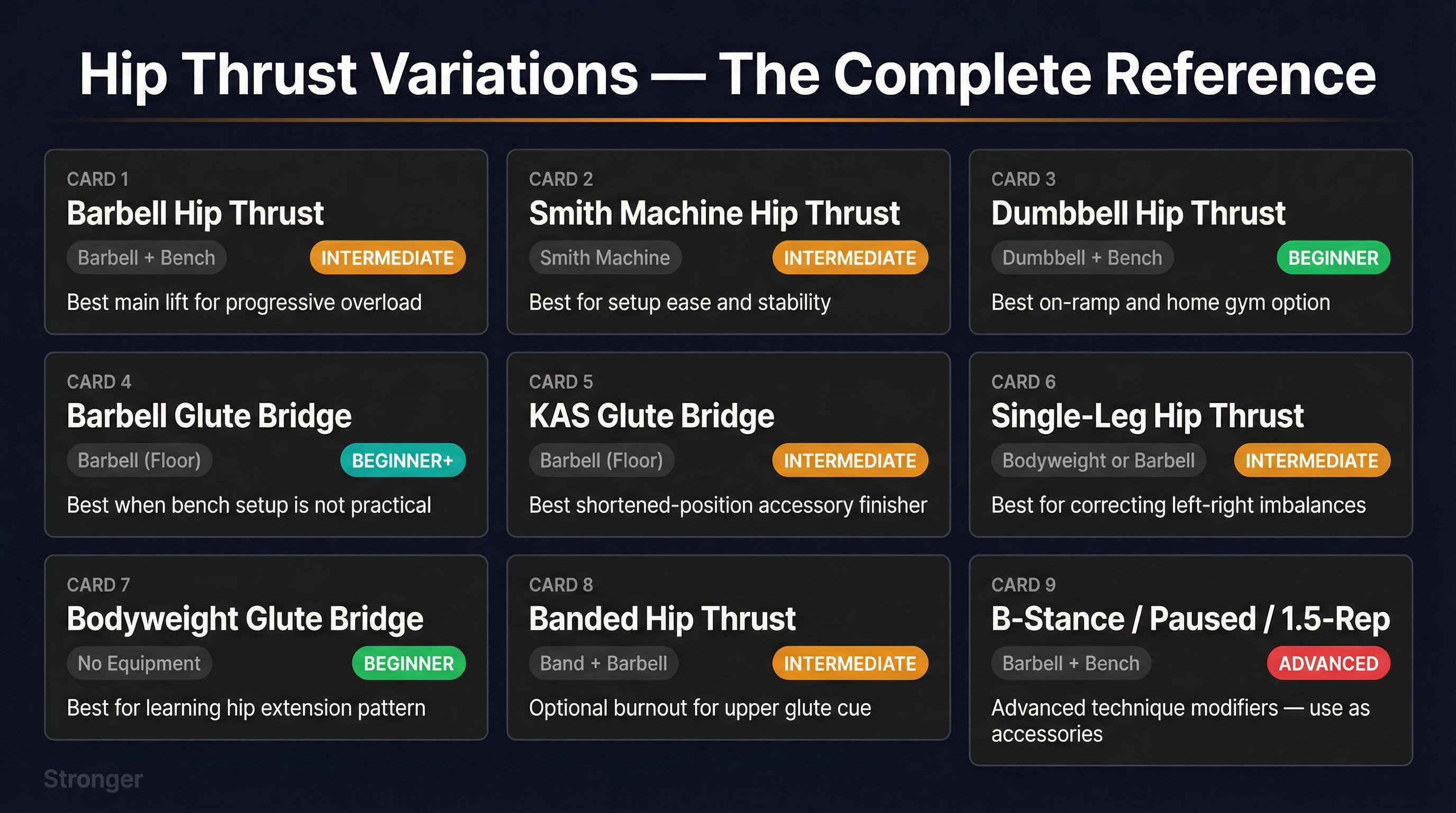
- Best overall main lift: Barbell hip thrust or Smith machine hip thrust. Heavy, progressive, well-researched.
- Best for beginners or home training: Dumbbell hip thrust, bodyweight hip thrust, or bodyweight glute bridge. Lower barrier, easier setup, perfect for learning the movement.
- Best shortened-position accessory: KAS glute bridge. Brutal finisher, pairs well with a main thrust variation.
- Best for correcting imbalances: Single-leg hip thrust. Exposes and fixes left-right differences.
- Best simple substitute when bench setup is annoying: Barbell glute bridge. Fewer logistics, still loadable.
(Stronger)
The wrong question is "Which variation is objectively the best?" The better question is "Which variation lets me train my glutes hardest, cleanest, and most consistently over the next six months?"
That is the one that grows your glutes.
How to program hip thrusts for maximum glute growth
Picking the right variation is step one. Programming it intelligently is where the growth actually happens.
How to structure your hip thrust programming
Use hip thrusts as your glute-specific pillar, then pair them with at least one lengthened-position glute exercise and, in many cases, a unilateral or lateral-stability movement. The 2023 squat-versus-hip-thrust data and the 2024 additive study both point in the same direction: combinations beat single exercises for maximum glute development.
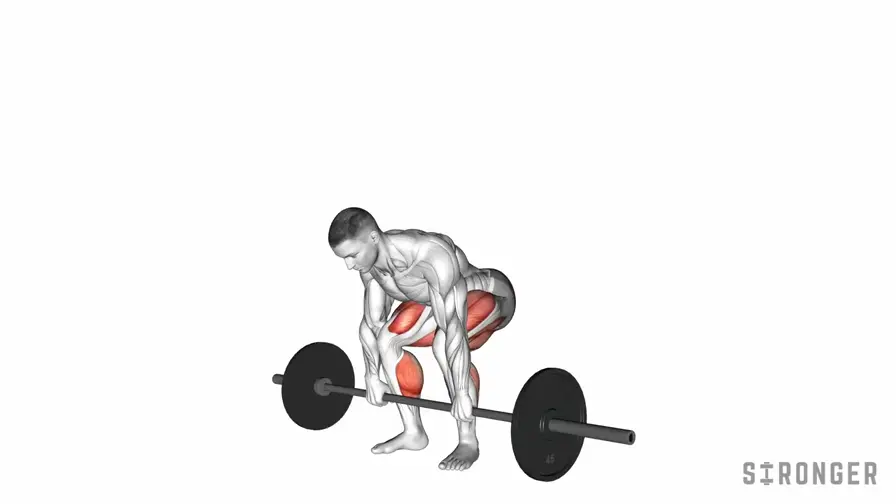
Why? Hip thrusts are highly glute-specific, but the strongest current evidence also suggests that longer-muscle-length training may offer an edge for hypertrophy. And directly, adding hip thrusts to other glute work has been shown to improve outcomes. Maximum glute growth is built with combinations, not with one sacred lift. A Romanian deadlift or stiff-leg deadlift pairs especially well because they load the glutes at long muscle lengths where hip thrusts do not.
How many reps should you do for hip thrusts?
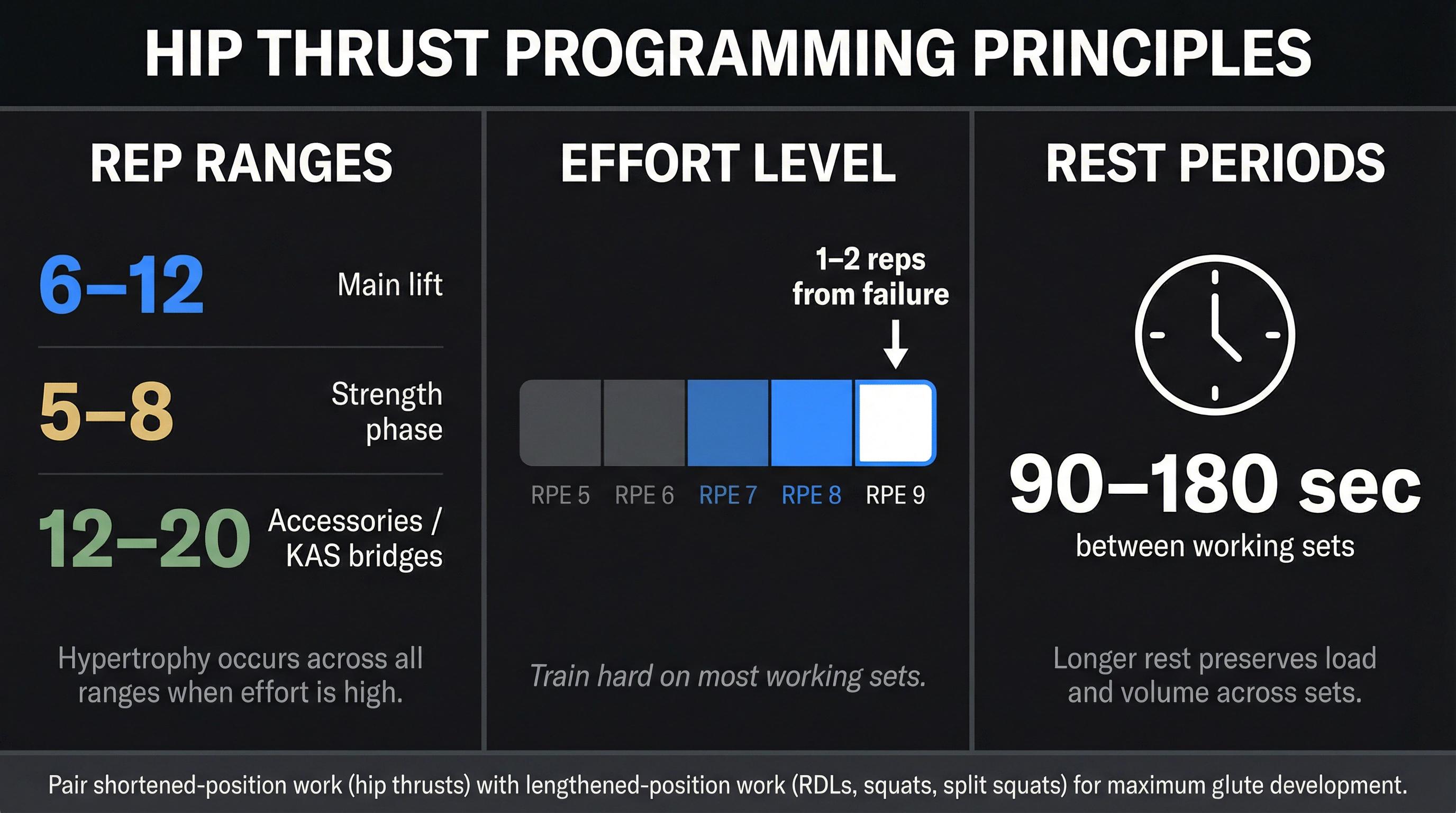
Do not get trapped in dogma. A 2021 meta-analysis found that hypertrophy can be achieved across a broad range of loads, while heavier loads are more specific to strength gains. For a detailed breakdown of how different rep ranges affect your training outcomes, check out our rep ranges guide. In practice:
- 6 to 12 reps is the most convenient sweet spot for your main hip thrust variation
- 5 to 8 reps works well for strength-focused phases or when you want to load heavy
- 12 to 20 reps is effective for accessory work, KAS bridges, or when effort is high and technique stays clean
All of these ranges build muscle when you train hard enough. The key variable is not the rep range itself but whether you are actually challenging the muscle.
How hard should you train on hip thrusts?
Hard. You do not need true failure on every set, but you should be close on most working sets. Research on proximity to failure shows that hypertrophy is similar whether you go to absolute failure or stop 1 to 2 reps short, and a 2024 study in trained lifters confirmed this. In real life, your hard hip thrust sets should feel genuinely difficult. If you can hold a conversation during your working sets, you are not close enough. For the science behind why this approach works, see our guide on how to get stronger.
How long should you rest between hip thrust sets?
Stop rushing through your sets. A 2024 systematic review on rest intervals found a small hypertrophic benefit to resting more than 60 seconds, likely because longer rest preserves your ability to maintain load and volume across sets. The review did not find meaningful additional hypertrophy differences once rest exceeded about 90 seconds.
Practically, 90 to 180 seconds between working sets of hip thrusts works well. Go longer if you need it to keep your reps and load up. Cutting rest to 30 seconds to "feel the burn" is trading productive tension for metabolic stress that does not drive growth nearly as effectively. We wrote a full guide on rest periods for muscle and strength if you want the deeper breakdown.
Sample hip thrust program for glute growth
Workout A (hip thrust emphasis)
| Exercise | Sets x Reps |
|---|---|
| Smith machine or barbell hip thrust | 4 x 6-10 |
| Barbell RDL or stiff-leg deadlift | 3 x 8-10 |
| Cable glute kickback or abduction accessory | 3 x 12-20 |
Workout B (variety emphasis)
| Exercise | Sets x Reps |
|---|---|
| Barbell glute bridge or KAS glute bridge | 3 x 10-15 |
| Bulgarian split squat, step-up, or deep squat | 3-4 x 8-12 |
| Single-leg hip thrust | 2-3 x 10-15 per side |
This template covers shortened-position glute work (hip thrusts, bridges), lengthened-position glute work (RDLs, squats, split squats), and unilateral stability (single-leg thrusts, split squats). Run both sessions once or twice per week depending on your recovery and total training volume. If you need help structuring the full week, our guides on the push pull legs split and the upper lower split both show how to fit dedicated glute work into a complete program.
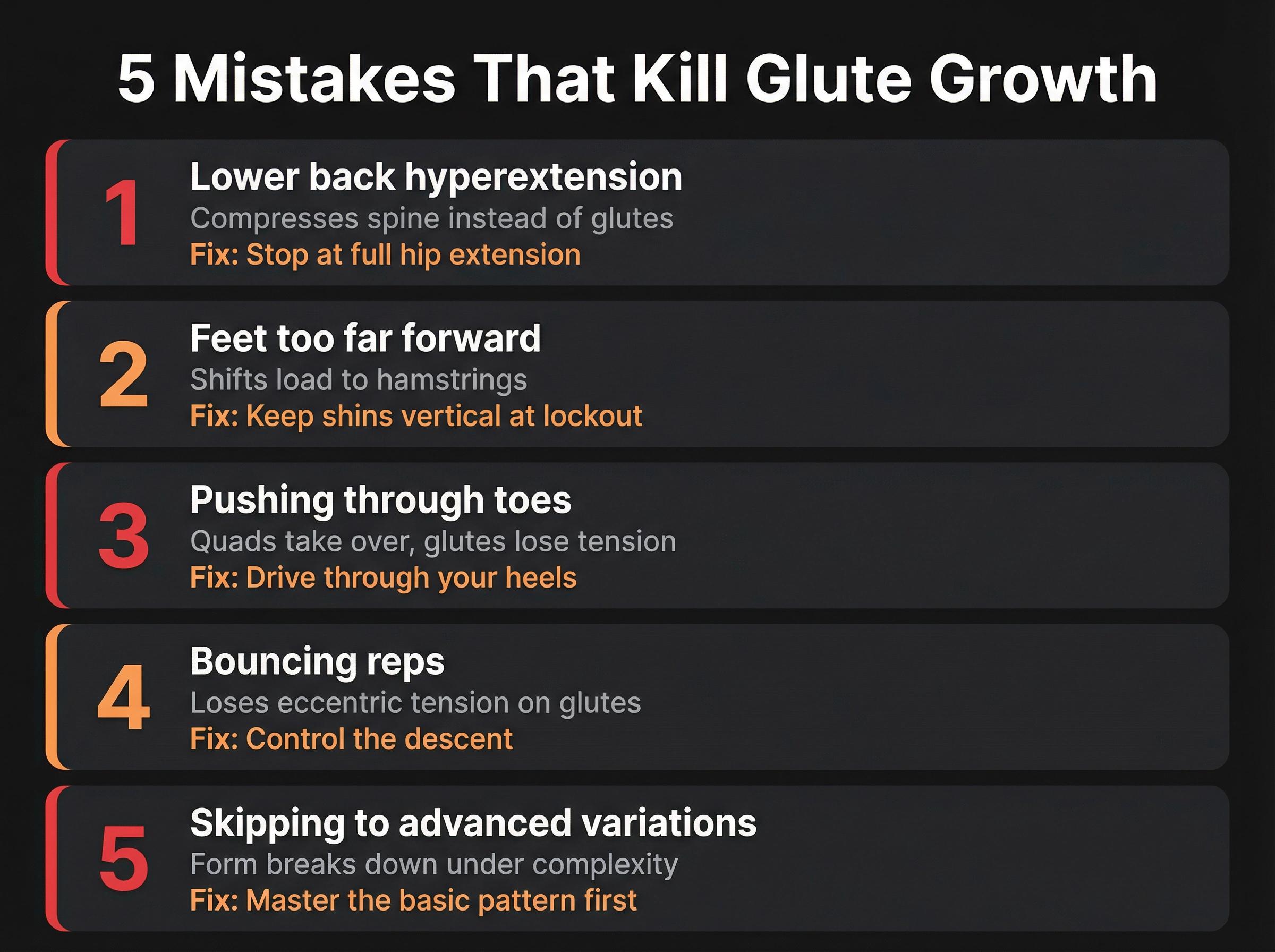
Common hip thrust mistakes that hurt glute growth
Even a perfect exercise selection falls apart when execution is off. These are the mistakes we see most often.
1. Turning the top of the rep into a lower-back backbend. Our hip thrust, dumbbell hip thrust, Smith machine hip thrust, bodyweight glute bridge, and KAS bridge pages all flag this in one form or another. If you have to arch hard to "finish" the rep, the load is too heavy or your pelvic control needs work. The rep is done when your hips are fully extended, not when your spine is bent backward.
2. Bad foot position. Too far away and the movement shifts toward your hamstrings. Too close and the rep feels cramped and quad-dominant. The consistent cue across our exercise pages is vertical shins at the top. Adjust your foot position until your shins are roughly perpendicular to the floor at lockout. That single correction usually fixes everything else.
3. Pushing through your toes instead of your heels. When you drive through the toes, your quads take over and the glutes lose their mechanical advantage. Plant your heels hard and think about pushing the floor away from you.
4. Bouncing reps and losing control on the way down. The lowering phase is not a rest period. Controlled eccentrics keep tension on the glutes and reduce injury risk. If you are dropping and bouncing at the bottom, you are either going too heavy or not paying attention.
5. Choosing a flashy variation before mastering a simple one. Banded, single-leg, tempo, 1.5-rep hip thrusts all have their place. But if your standard barbell hip thrust still looks shaky, adding complexity does not fix the problem. Master the basic pattern first, then branch out.
Ready to Get Stronger?
Join 2,000,000+ lifters tracking their workouts with Stronger. Available on iOS and Android.
Start tracking freeHow Stronger helps you track glute progress
Knowing the right exercises and the right programming is only half the equation. The other half is tracking your progress so you actually overload over time, not just repeat the same weights for months.
That is exactly what we built Stronger to do.
Every variation in this guide is in our exercise library. You can find detailed pages for the hip thrust, Smith machine hip thrust, dumbbell hip thrust, barbell glute bridge, KAS glute bridge, bodyweight glute bridge, and single-leg hip thrust, each with step-by-step instructions, muscle maps, and equipment guidance.
Progressive overload tracking.Stronger logs every set, rep, and weight you lift. It detects personal records automatically, shows your strength curves over time, and tracks volume by muscle group. When your hip thrust goes from 135 pounds for 8 reps to 185 pounds for 8 reps over three months, you will see that progression clearly instead of guessing whether you are actually getting stronger.
AI-generated routines. If you do not want to build your own program, our AI can create a glute-focused routine personalized to your goals, available equipment, and experience level. The routine adapts as you progress, adjusting weights, sets, and reps automatically.
Strength Score. Our proprietary benchmarking system rates your strength across 12 muscle groups and overall, adjusted for bodyweight and sex, on six levels from Beginner to World Class. It lets you see where you stand, track how you are improving, and compare with friends. It turns abstract "am I getting stronger?" into a concrete, trackable metric.
If you are serious about glute growth, having a system that makes progressive overload obvious instead of guesswork-based is the difference between programs that stall after month two and programs that compound for a year.
Get started with Stronger for free.
Frequently asked questions about hip thrusts
Are hip thrusts better than squats for glutes?
Not automatically. In the best head-to-head comparison available, hip thrusts and squats produced similar gluteus maximus hypertrophy over 9 weeks in novice lifters. Squats grew more quads and adductors. Hip thrusts were more glute-specific. So hip thrusts are not universally better, but they can be the better choice when you want a glute-biased result without extra thigh growth. Our squat guide covers proper form and programming if you want to include both.
Hip thrust vs glute bridge: which should I use?
The hip thrust gives you more range of motion and greater overall displacement. The glute bridge is simpler to set up and focuses more on the lockout portion of the movement. For most lifters, the hip thrust is the better main exercise and the glute bridge is the better simpler alternative or accessory.
Do bands make hip thrusts more effective?
Sometimes they change how the exercise feels, but that is not the same as making them objectively more effective. A 2023 study showed some increases in upper glute max sEMG with bands but did not find the glute medius boost many people expect. Use bands as one tool among many, not as a required upgrade.
Do hip thrusts grow the upper glutes?
They contribute, but they are not the whole answer. Hip thrusts are primarily a gluteus maximus exercise. If your upper-glute goal includes the gluteus medius and minimus, add targeted unilateral work and abduction exercises rather than relying on hip thrusts alone. Our glutes exercise guide lists every glute movement we have.
Why do I feel hip thrusts in my hamstrings more than my glutes?
Usually because of foot position, loss of pelvic control, or pushing through the toes. Set up so your shins are vertical at the top, drive through your heels, and stop arching your lower back to chase extra height. Those three fixes solve the problem for the vast majority of lifters.
How heavy should I hip thrust?
Heavy enough that your working sets are genuinely challenging in the 6 to 12 rep range. There is no universal number because it depends on your training history, body weight, and experience. Focus on progressive overload: beat your previous performance by adding weight, reps, or sets over time. That is what drives growth, not hitting a specific number.
How often should I do hip thrusts per week?
Two to three glute-focused sessions per week is a solid starting point for most intermediate lifters. You do not need to hip thrust in every session. Rotate between a main hip thrust variation, a glute bridge or KAS bridge, and unilateral work across the week. Total weekly volume matters more than any single session.
Can hip thrusts alone build glutes?
They can grow your glutes, but probably not to their maximum potential alone. The research and practical data both suggest that combining hip thrusts with lengthened-position exercises like RDLs, squats, or split squats produces better overall glute development than relying on any single movement.
Do I need a hip thrust pad?
You do not strictly need one, but a bar pad or thick folded towel makes heavy hip thrusts significantly more comfortable. Without padding, the barbell pressing into your hip bones becomes the limiting factor long before your glutes give out. Comfort matters for performance.
The bottom line on hip thrusts
Hip thrusts are a great glute exercise. They are not a magic glute program.
If you want maximum glute growth, pick a hip thrust variation you can load hard and perform cleanly. For most people, that means a barbell or Smith machine hip thrust as the main lift. Pair it with a lengthened-position exercise like an RDL, squat, split squat, or step-up. Use shortened-position accessories like KAS bridges or glute bridges intelligently. Train hard, rest long enough, and progress over months, not just one workout.
Then track it. The best hip thrust variation is the one that lets you beat your old numbers with honest form, week after week. Inside Stronger, you can already find step-by-step guides for every variation in this article, plus tools like progressive overload tracking, AI-generated routines, and our Strength Score system to keep your training measurable and moving forward.
Stop overthinking variations. Start overloading the basics. That is the formula.
Exercises in this guide
Stronger Editorial Team
Certified strength & conditioning specialists with 10+ years of coaching experience
The Stronger editorial team produces evidence-based training content for lifters of all levels.
Ready to Get Stronger?
Join 2,000,000+ lifters tracking their workouts with Stronger. Available on iOS and Android.
Start tracking free