
Powerbuilding Program: Build Strength and Size in 2026
You've been told to choose. Either you train like a powerlifter — heavy weight, low reps, focused on moving as much as possible on three lifts. Or you train like a bodybuilder — moderate weight, high volume, focused on the pump and the mirror. The gym culture insists these are separate paths. You pick strength or you pick size, and you live with the trade-off.
That's the wrong framing. And it's the reason so many intermediate lifters spend years spinning their wheels — getting stronger without looking it, or building an impressive physique that quietly struggles with compound lifts they should own by now.
A well-structured powerbuilding program dissolves that trade-off entirely. It gives you a complete system for building maximal strength and meaningful muscle simultaneously — because when you understand how both adaptations actually work, you realize they share the same biological machinery. You don't need to choose. You need to program smarter.
We've built Stronger for exactly this kind of training — lifters who want both, who take their programming seriously, and who need a tracking system that can hold the complexity of a dual-goal program. Below, you'll find the complete science behind why powerbuilding works, a full 4-day program you can start this week, and a practical system for making consistent progress.
What is a powerbuilding program?
Powerbuilding is a hybrid training methodology that combines the heavy compound movements of powerlifting with the volume and variety of bodybuilding. The result is a program that trains you for maximal strength expression while simultaneously accumulating the muscle-building volume your physique needs.
Here's the simplest way to think about it:
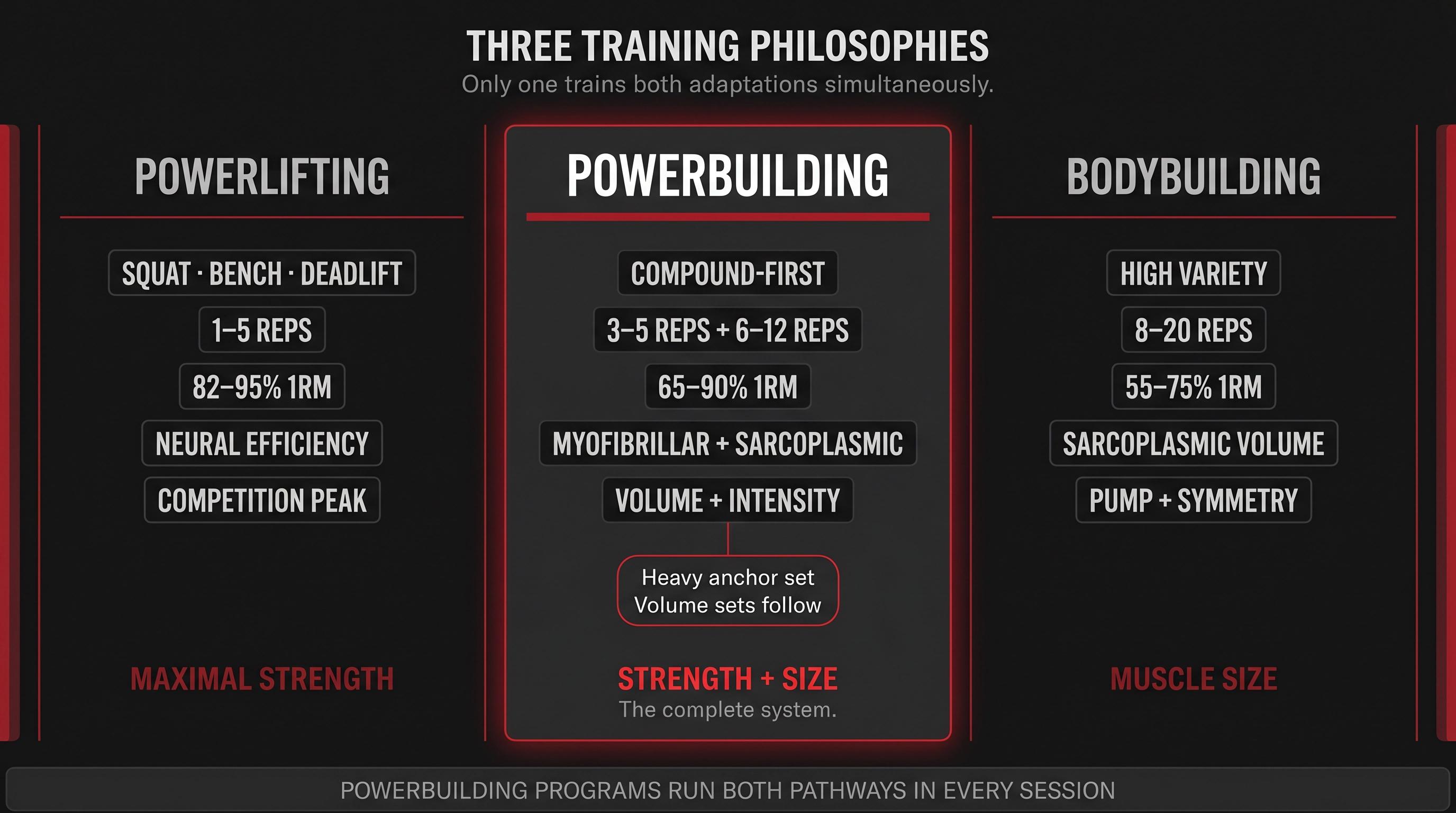
Powerlifting is a sport. It trains three specific lifts — squat, bench press, deadlift — with extreme precision, low reps, and the singular goal of lifting maximum weight in competition. Everything is in service of peak performance on those three lifts on meet day.
Bodybuilding is a physique discipline. It trains for muscular size, symmetry, and definition through high volume, a wide exercise selection, and very little concern for how much weight is on the bar. Numbers don't matter; the mirror does.
Powerbuilding is neither. It borrows the best elements of both: the heavy, compound-focused intensity that builds real strength, and the volume-driven approach that creates real muscle. A powerbuilding session looks like this — you walk in, do a heavy set of 4 at 87% of your squat max, then do three sets of 8 at 72%, then do some leg press and hamstring curls at higher reps. By the end, your nervous system has practiced moving heavy weight, and your muscles have accumulated enough volume to grow.
That structure — heavy compound anchor, moderate compound volume, targeted accessory work — is what makes powerbuilding work. It's not a compromise. It's a more complete way to train.
The reason it works isn't obvious on the surface. To understand it, you need to know a bit about what actually happens when muscles grow.
Can you build strength and size at the same time?
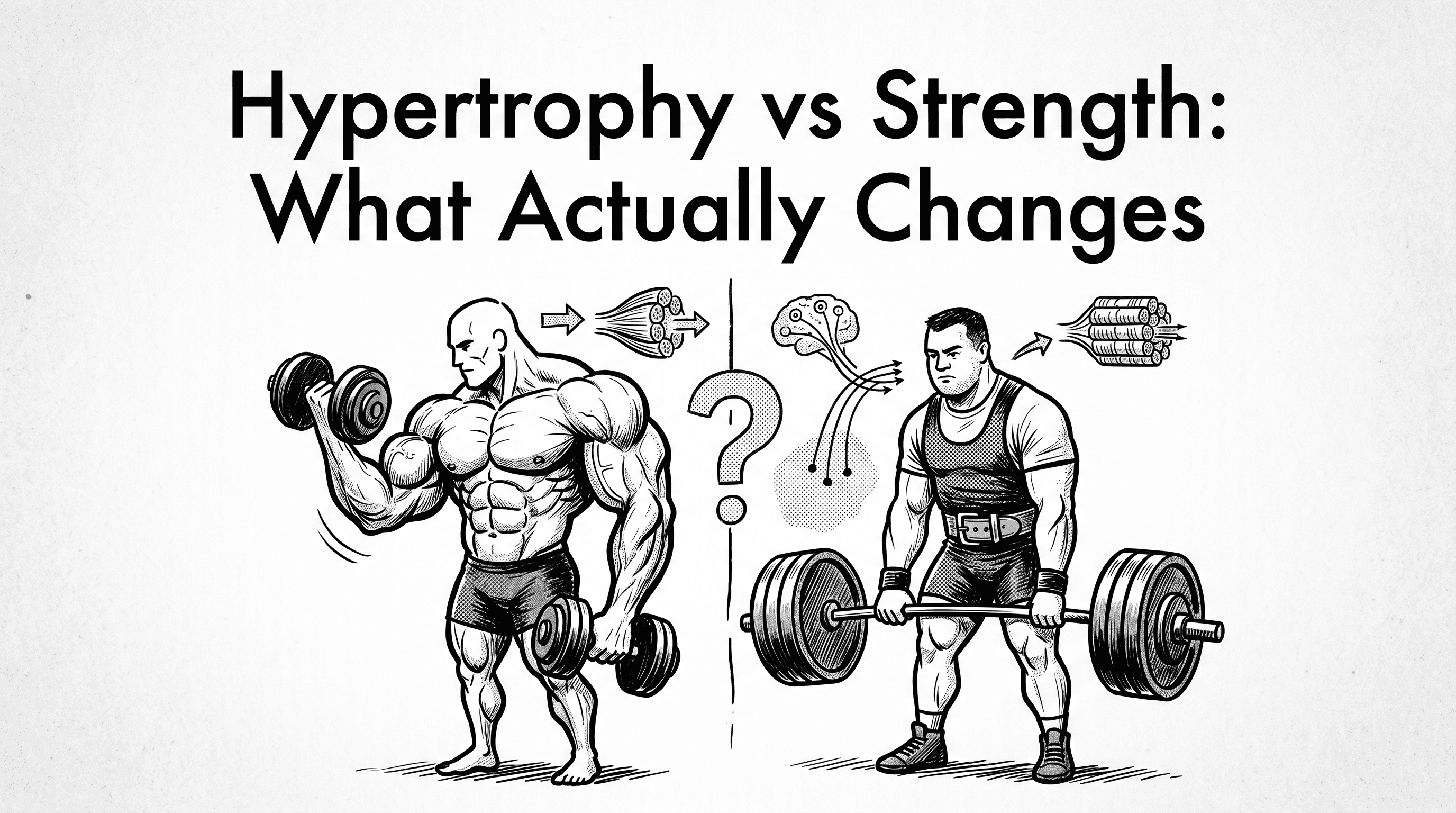
Your muscles are made of individual fibers bundled together. When you train, two distinct adaptations occur depending on how you train:
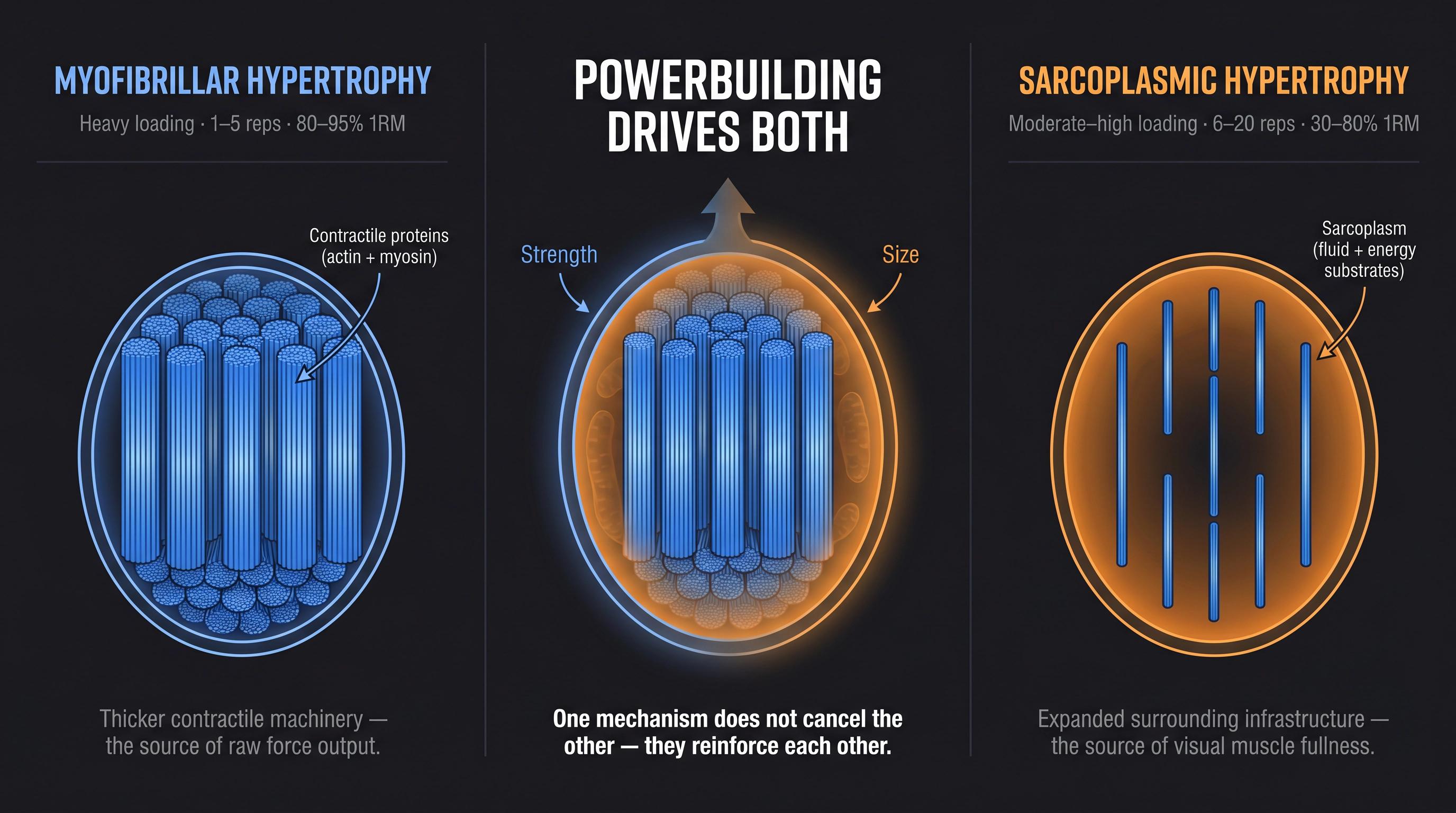
Myofibrillar hypertrophy is the growth of the contractile proteins inside muscle fibers — the actual machinery that generates force. Heavy training (think sets of 1-5 reps at 80-95% of your maximum) is particularly effective at driving myofibrillar adaptations. This is where raw strength comes from.
Sarcoplasmic hypertrophy is a proposed increase in the fluid and energy-substrate compartments around those contractile proteins. Some researchers think higher-volume, moderate-to-high rep training (sets of 6-20 reps) may favor it, but the evidence is still limited and debated. What is well established is that moderate-rep volume work is a highly effective way to build overall muscle size.
Here's the key insight: a complete powerbuilding program gives you both stimuli, which is why you get both stronger and bigger. The heavy sets build strength and skill on the main lifts; the volume sets add the extra hard sets that drive muscle growth. One doesn't interfere with the other — in fact, they reinforce each other.
This is backed by a substantial body of research. Work by Dr. Brad Schoenfeld and colleagues has shown that loads across a very wide range (from roughly 30% to 90% of 1RM) can produce comparable hypertrophy when sets are taken close to muscular failure — what matters is the total mechanical stress and metabolic stimulus, not an exact rep number. Research by James Krieger on training volume shows a roughly linear dose-response relationship between weekly sets per muscle group and hypertrophy up to about 10-20 sets per week. And studies on training frequency consistently show that hitting each muscle group at least twice per week produces superior muscle growth compared to once-per-week training.
Powerbuilding naturally satisfies all three of these principles:
- High-intensity work for neural adaptations and myofibrillar growth
- Sufficient volume to maximize muscle growth
- A well-structured 4-day split that hits each muscle group twice weekly
The science doesn't require you to choose between strength and size — it just requires you to program intelligently.
There's also a neurological component worth understanding. Heavy lifting recruits high-threshold motor units, the fast-twitch fibers that produce the most force, from the very first rep, and it teaches your nervous system to use them together. Lighter sets taken close to failure recruit these fibers too, just later in the set, so both styles build muscle while heavy work adds the skill of expressing maximal force.
Now that you understand why powerbuilding works, let's make sure it's the right choice for where you are right now.
Is powerbuilding right for you?
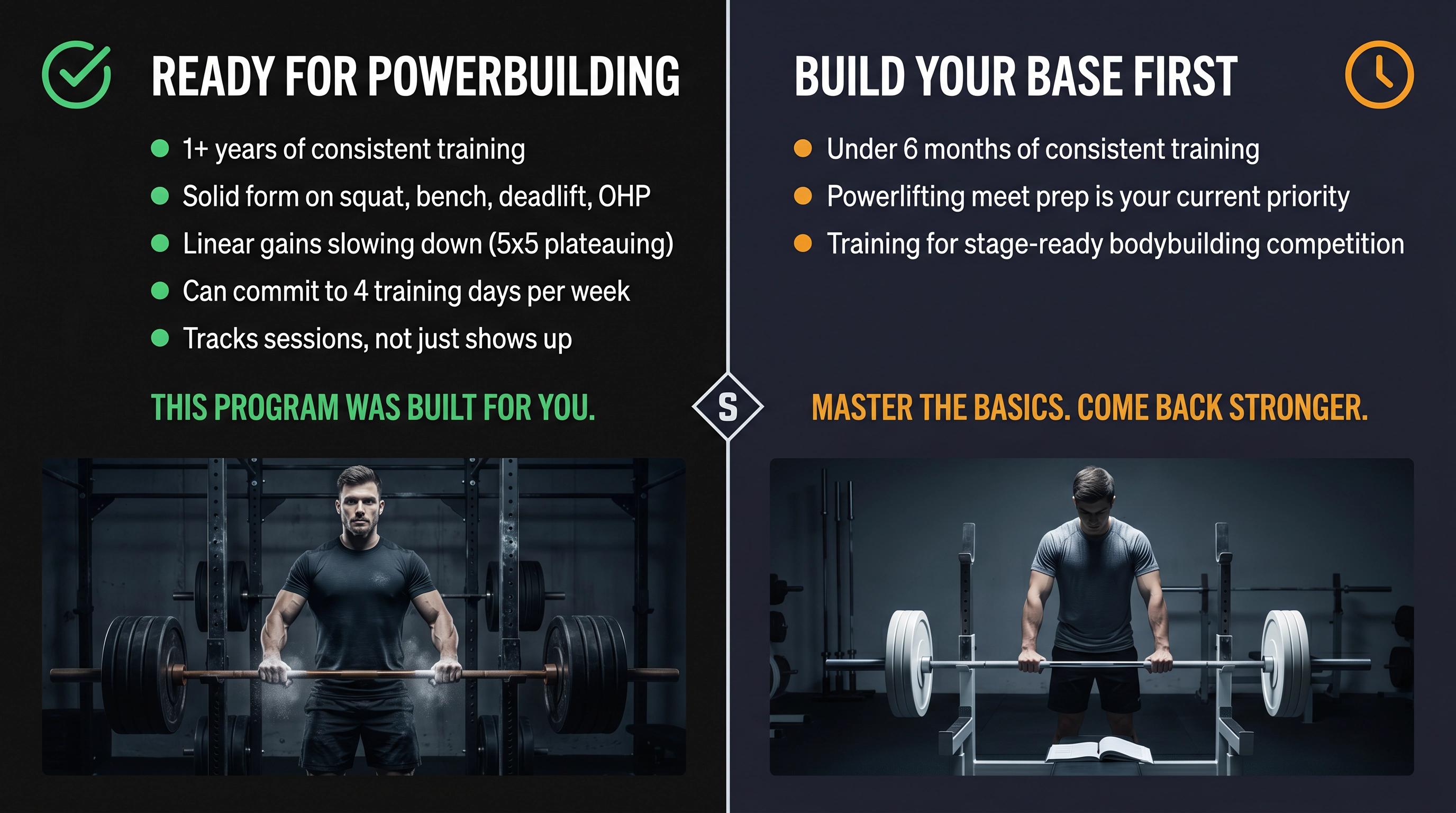
Powerbuilding is optimally suited for intermediate lifters — people who have 1-3 years of consistent, structured training behind them. That's not a gatekeeping rule; it's a practical one. The program assumes you can perform the main compound lifts with reasonable technical competence. If you're still in the first few months of learning to squat and deadlift, the heavy loading in a powerbuilding program could outpace your technique development.
Powerbuilding is a strong fit if:
- You've been lifting consistently for at least a year and have established decent form on the squat, bench press, deadlift, and overhead press
- You want to get stronger on the compound lifts AND build a more muscular physique — and you're frustrated by programs that only deliver one
- You've run a linear progression program (like 5x5 or Starting Strength) to diminishing returns and you're ready for something with more structure
- You can commit to 4 training days per week
- You're interested in tracking your training seriously — not just showing up, but progressing systematically
You might want to wait if:
- You're fewer than 6 months into consistent training — spend another few months building your foundation with a linear program first
- You have a specific powerlifting meet coming up, and meet-prep peaking should take priority
- You're pursuing stage-ready bodybuilding competition in the near term, where diet and exercise selection become highly specialized
If you're nodding at the "strong fit" list — the program below was designed for you.
Ready to Get Stronger?
Join 2,000,000+ lifters tracking their workouts with Stronger. Available on iOS and Android.


The 4-day powerbuilding program
How the 4-day powerbuilding split works
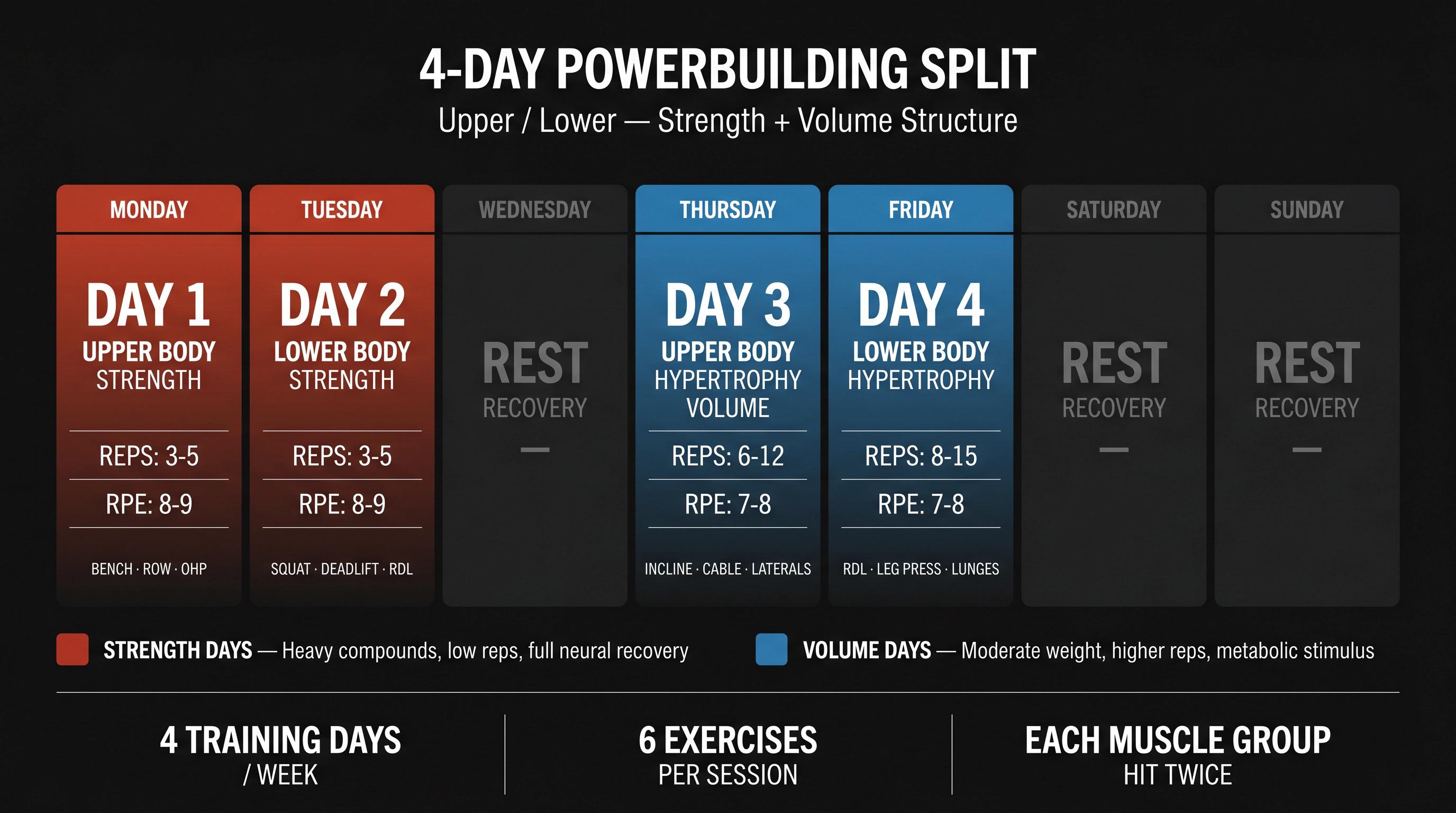
This is a 4-day upper/lower split, the most effective structure for intermediate powerbuilding. You train four days per week — typically Monday, Tuesday, Thursday, and Friday — with rest days on Wednesday and the weekend.
The split separates your upper and lower body across two types of days:
- Day 1 and Day 2 (Strength Focus): Heavy compound work in the 3-5 rep range at 82-90% of your 1RM. These are your main strength-building sessions. The weights are heavy enough to drive significant myofibrillar adaptations and neural efficiency.
- Day 3 and Day 4 (Volume Focus): Moderate weight in the 6-12 rep range at 65-78% of your 1RM, with higher total sets. These sessions drive hypertrophy volume. They should feel challenging but more metabolic than the strength days — the pump is a feature, not an accident.
Each session also includes accessory work in the 10-20 rep range, targeting specific muscle groups the main compounds don't fully isolate. This is where you address weak points, build muscle symmetry, and accumulate additional volume for lagging body parts.
A note on RPE: RPE (Rate of Perceived Exertion) is used throughout this program. RPE is a 1-10 scale that measures how close to muscular failure a set is. An RPE 8 means you completed the set with about 2 reps still in the tank (also written as RIR 2 — Reps in Reserve 2). An RPE 9 means 1 rep left. An RPE 10 means you gave everything you had. For heavy strength work, you'll typically target RPE 8-9. For volume work, RPE 7-8.
Week 1 schedule
| Day | Session | Focus |
|---|---|---|
| Monday | Day 1 — Upper A | Strength Focus |
| Tuesday | Day 2 — Lower A | Strength Focus |
| Wednesday | Rest | Recovery |
| Thursday | Day 3 — Upper B | Volume Focus |
| Friday | Day 4 — Lower B | Volume Focus |
| Saturday | Rest | Recovery |
| Sunday | Rest | Recovery |
Day 1: upper body strength workout
| Exercise | Sets | Reps | Intensity | Rest |
|---|---|---|---|---|
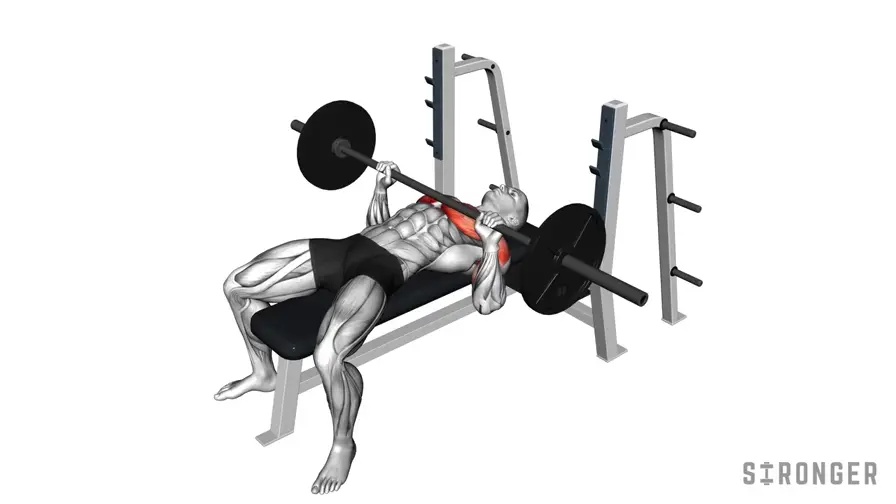
| Barbell Bench Press | 4 | 3-5 | RPE 8-9 | 3-4 min |
| Barbell Row (Pendlay or Bent-Over) | 4 | 3-5 | RPE 8 | 3 min |
| Overhead Press (Barbell) | 3 | 5 | RPE 8 | 2-3 min |
| Weighted Pull-Up or Lat Pulldown | 3 | 6-8 | RPE 8 | 2 min |
| Tricep Dips or Close-Grip Bench | 3 | 8-10 | RPE 7-8 | 90 sec |
| Face Pulls or Rear Delt Fly | 3 | 12-15 | RPE 7 | 60 sec |
Notes: The bench press and barbell row are your primary strength movements. Treat them like you'd treat a powerlifting session — warm up properly and don't rush the weight selection. Monitor your rest between sets carefully on these heavy movements; 3-4 minutes is a genuine minimum for full nervous system recovery between sets at RPE 8-9. Log your working weights carefully; progressive overload on these two lifts is your primary indicator of success on strength days.
Day 2: lower body strength workout
| Exercise | Sets | Reps | Intensity | Rest |
|---|---|---|---|---|
| Barbell Back Squat | 4 | 3-5 | RPE 8-9 | 4-5 min |
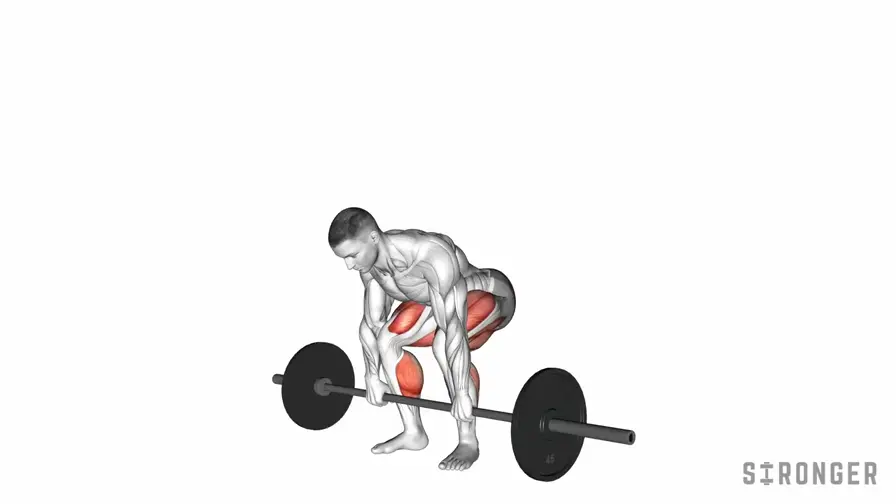
| Conventional Deadlift | 3 | 3 | RPE 8 | 4 min |
| Front Squat or Goblet Squat | 3 | 5 | RPE 7-8 | 2-3 min |
| Romanian Deadlift | 3 | 8 | RPE 7-8 | 2 min |
| Leg Press | 3 | 10-12 | RPE 7 | 90 sec |
| Standing Calf Raise | 3 | 12-15 | RPE 7 | 60 sec |
Notes: The squat is the true centerpiece of this day. If you can only invest energy in one thing, make it the squat. The deadlift on this day is heavy but kept to low volume (3 sets of 3) — deadlifts are taxing on the entire posterior chain and you'll be pulling again on Day 4 with Romanian deadlifts. The front squat or goblet squat is an optional assistance movement; it builds quad strength and reinforces squat mechanics. If you're not confident with front squats, the goblet squat serves the same purpose at lower risk.
Day 3: upper body hypertrophy workout
| Exercise | Sets | Reps | Intensity | Rest |
|---|---|---|---|---|
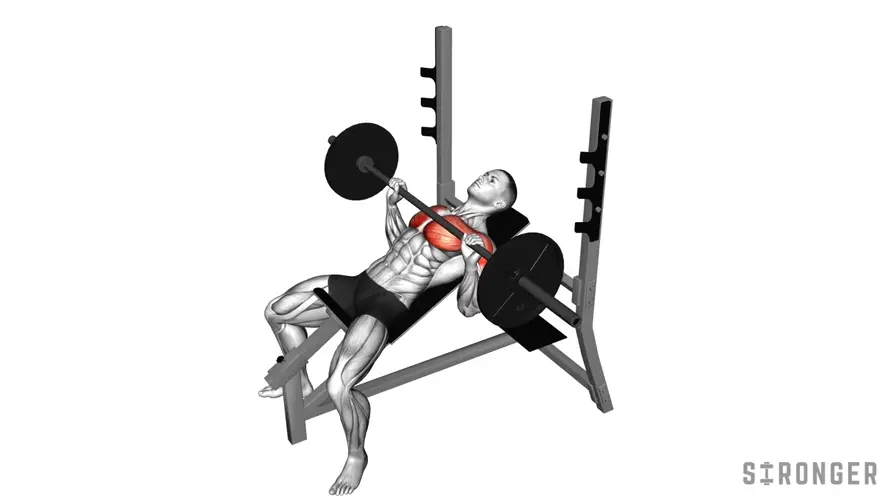
| Incline Barbell or Dumbbell Press | 4 | 6-8 | RPE 8 | 2-3 min |
| Cable Row or Seated Machine Row | 4 | 8-10 | RPE 8 | 2 min |
| Dumbbell Shoulder Press | 3 | 10-12 | RPE 7-8 | 90 sec |
| Lat Pulldown or Assisted Pull-Up | 4 | 10-12 | RPE 7-8 | 90 sec |
| Dumbbell Lateral Raise | 3 | 15-20 | RPE 8 | 60 sec |
| Cable Tricep Pushdown | 3 | 12-15 | RPE 7-8 | 60 sec |
| Dumbbell or Cable Bicep Curl | 3 | 12-15 | RPE 7-8 | 60 sec |
Notes: This is your hypertrophy day for the upper body. The intensity is lower, the rep ranges are higher, and the rest periods are shorter — you're accumulating volume and metabolic stress, not testing maximal strength. Use the incline press rather than flat bench here to hit a slightly different angle and reduce wear on the same movement pattern used on Day 1. The lat pulldown and row work should feel like a pump, not a grind. By the end of Day 3, your upper back should be fully fatigued.
Day 4: lower body hypertrophy workout
| Exercise | Sets | Reps | Intensity | Rest |
|---|---|---|---|---|
| Barbell Romanian Deadlift | 4 | 8-10 | RPE 8 | 2-3 min |
| Leg Press | 4 | 10-12 | RPE 8 | 2 min |
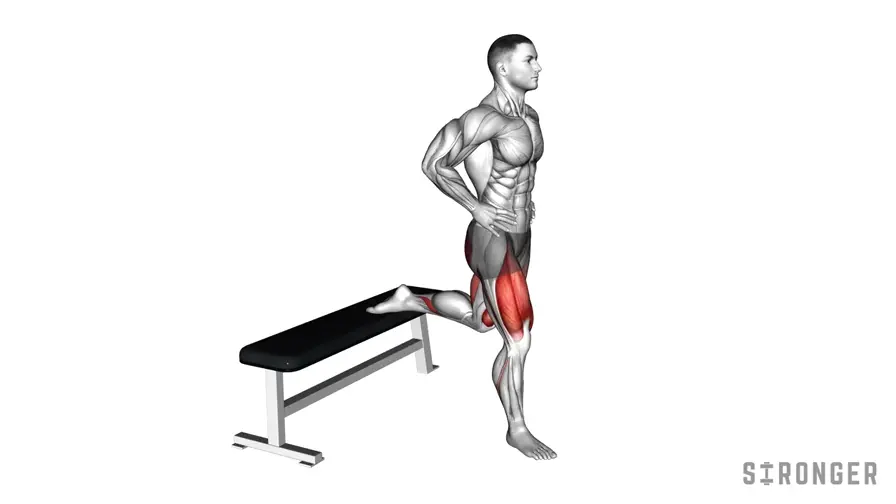
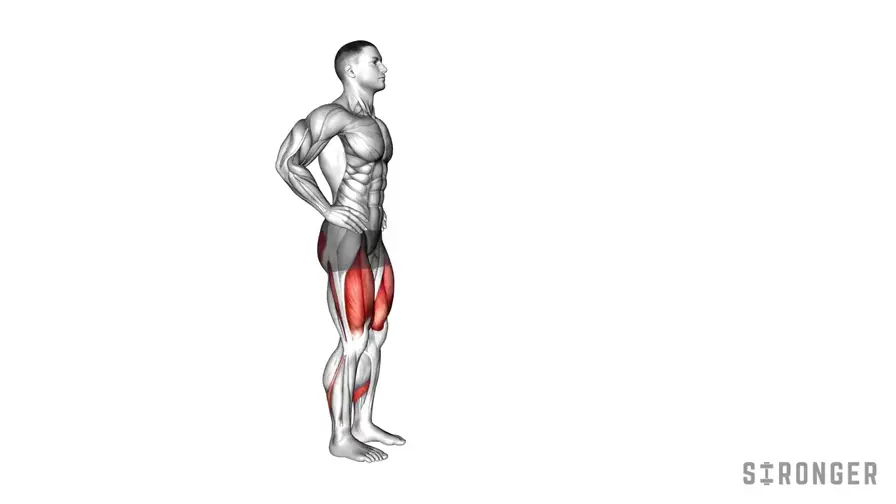
| Walking Lunges or Bulgarian Split Squat | 3 | 10-12/leg | RPE 7-8 | 90 sec |
| Leg Curl (Seated or Lying) | 3 | 12-15 | RPE 8 | 90 sec |
| Leg Extension | 3 | 12-15 | RPE 7-8 | 60 sec |
| Seated Calf Raise | 3 | 15-20 | RPE 7 | 60 sec |
Notes: Day 4 is posterior-chain and quad volume. The Romanian deadlift takes the place of the conventional deadlift here — same hip hinge pattern, much higher volume, more emphasis on hamstring and glute stretch-loading (which is one of the most potent hypertrophy stimuli for the posterior chain). The Bulgarian split squat or walking lunge is interchangeable depending on your gym setup and personal preference; both create high single-leg quad stimulus. If you're not doing Bulgarian split squats yet, start with walking lunges — they require less practice and less shoulder mobility.
Exercise substitutions for the powerbuilding program
Equipment varies. Here's how to adapt the program if you're missing something:
| Original | Substitute |
|---|---|
| Barbell Back Squat | Hack Squat or Safety Bar Squat |
| Conventional Deadlift | Trap Bar Deadlift or Sumo Deadlift |
| Barbell Row | Dumbbell Row or T-Bar Row |
| Overhead Press | Seated Dumbbell Press or Smith Machine Press |
| Pull-Up (weighted) | Lat Pulldown (heavy) |
| Bulgarian Split Squat | Leg Press (single leg) or Walking Lunge |
| Romanian Deadlift | Good Morning or Single-Leg RDL |
The substitutions work. What matters is the movement pattern and the mechanical tension applied, not the specific bar or machine. A heavy trap bar deadlift builds posterior chain strength just as well as a conventional deadlift — arguably better for some people's leverages.
How to progress on a powerbuilding program
The program above is the structure. Progressive overload is what makes it work. Without systematic progression, you'll be maintaining, not growing.
Powerbuilding has an important complication that simpler programs don't: you're managing two different kinds of progress at the same time. On strength days, you're tracking whether you can add weight to the bar on your heavy sets. On volume days, you're tracking whether you can do more total reps at the same weight, or the same reps at higher weight. These are related but distinct, and you need to track both.
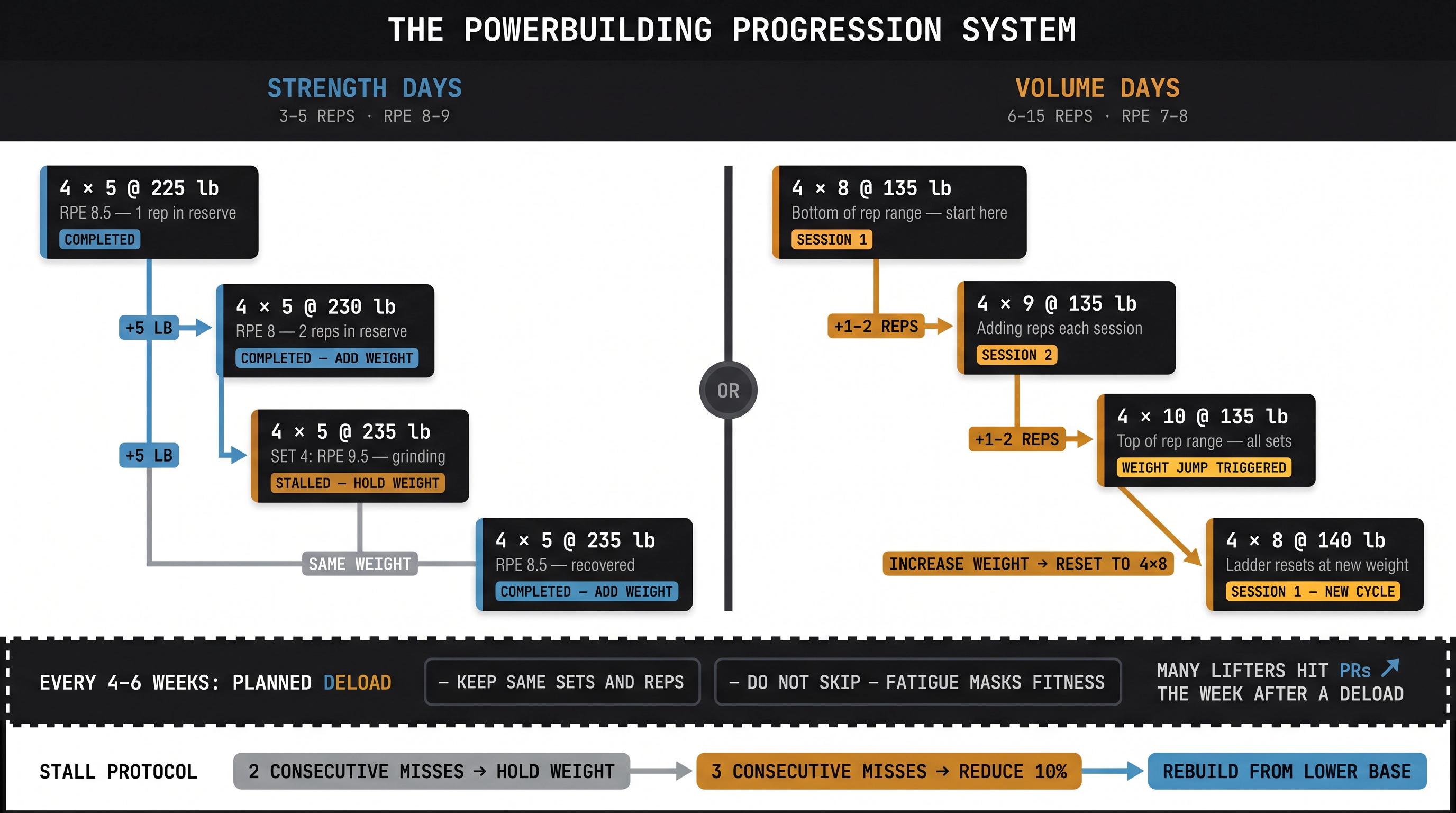
For strength days (RPE 8-9, 3-5 reps):
Add weight to the bar when you can complete all planned sets at the top of the rep range with an RPE below 9. So if your program calls for 4x5 at RPE 8-9, and you finish all four sets of 5 with reps left in reserve, you add 5 lbs (for upper body) or 10 lbs (for lower body) the next week. If you can only complete 3x5 and grind on the fourth set, hold the weight for another week.
The rule is: small, consistent jumps sustained over months. A 5 lb increase on bench press per week is 260 lbs of progress per year. Nobody does that — but 5 lbs every 2-3 weeks is realistic for intermediates and adds up to 80-130 lbs over a year. That's the game.
For volume days (RPE 7-8, 6-15 reps):
Use double progression. Pick a weight where you can complete the bottom of the rep range for all sets (e.g., 4x8 on incline press). Each session, try to add 1-2 reps per set. When you can complete all sets at the top of the rep range (e.g., 4x10), increase the weight by the smallest available increment and reset to the lower rep target. This slower, ladder-style progression builds more volume tolerance over time while preventing premature load increases that compromise form.
Deloads:
Every 4-6 weeks, take a planned deload week. Reduce your working weights by 40-50% and keep the same sets and reps. This is not optional at the intermediate level. Powerbuilding is genuinely taxing — you're training heavy AND accumulating volume, which creates significant cumulative fatigue over weeks. A deload week gives your nervous system and connective tissue time to recover and actually adapt to the stress you've applied.
Many lifters hit PRs the week after a deload — precisely because the fatigue that was masking their fitness has cleared.
When to stall:
If you miss a planned progression for two consecutive sessions on the same lift, hold the weight another week. If you stall for three consecutive sessions, reduce the working weight by 10% and rebuild. Stalls happen — they're a data point, not a failure. The question is whether you're stalling due to fatigue (fix: take an extra rest day or take the deload early) or an adaptation ceiling (fix: small weight reduction and rebuild from there).
Which brings us to the single biggest practical problem with running a powerbuilding program: tracking two entirely different kinds of progress at once — heavy strength work on some days, volume accumulation on others — is genuinely difficult without the right system.
How to track your powerbuilding program progress
Here's what a powerbuilding program demands of a tracking system: it needs to know whether your 4x4 bench at 225 lbs was better than last week's 4x4 at 225 lbs. It needs to see whether your 4x10 incline press volume increased. It needs to catch PRs across different rep ranges, not just your one-rep max. And over a 12-week program, it needs to give you a meaningful picture of whether you're actually getting stronger and bigger — or just maintaining.
We built Stronger to do exactly this.
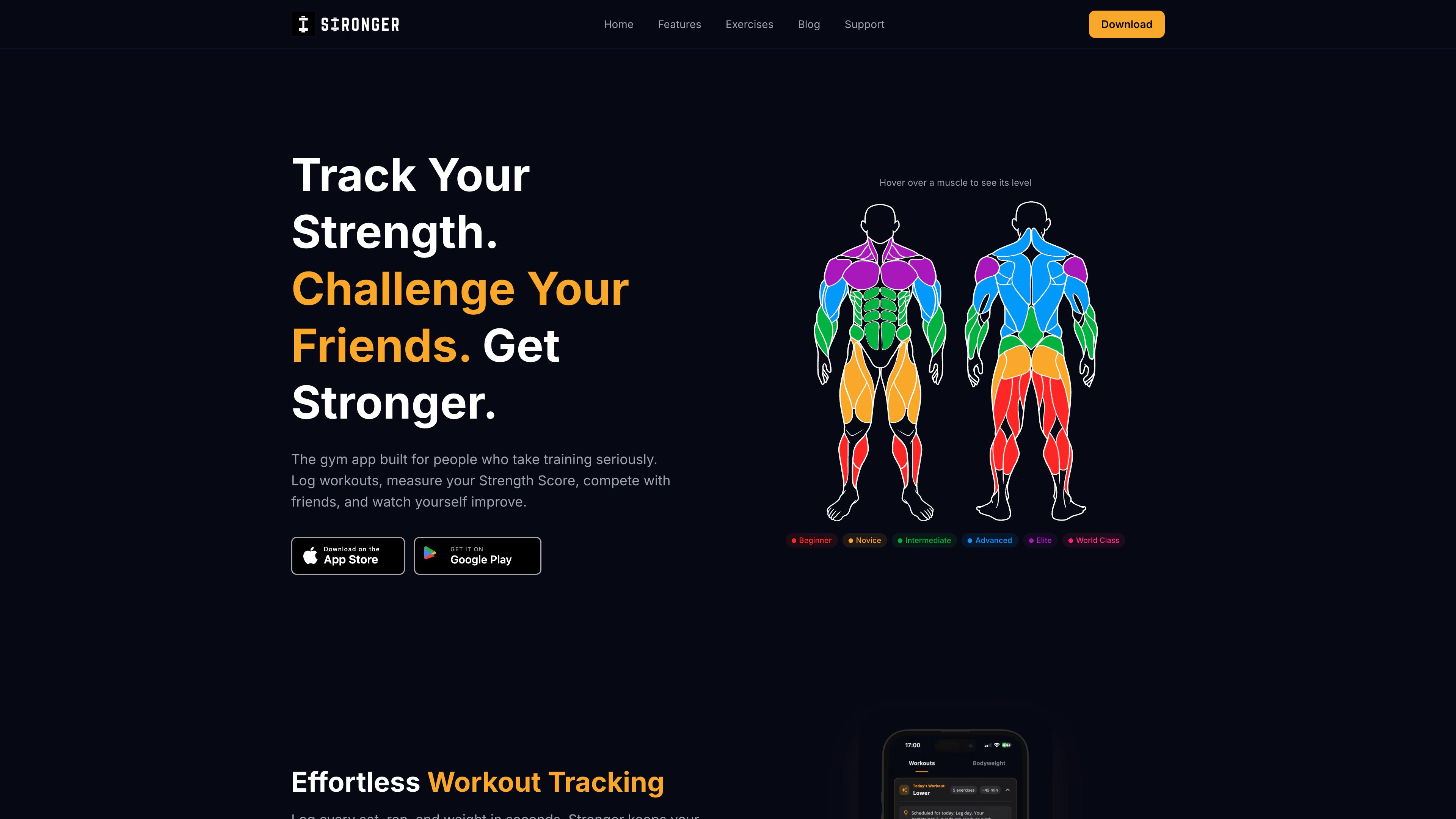
The Stronger homepage gives you a clear picture of what the app does before you download anything — strength tracking, Strength Score benchmarking, friend competition, and adaptive programming, all in one place.
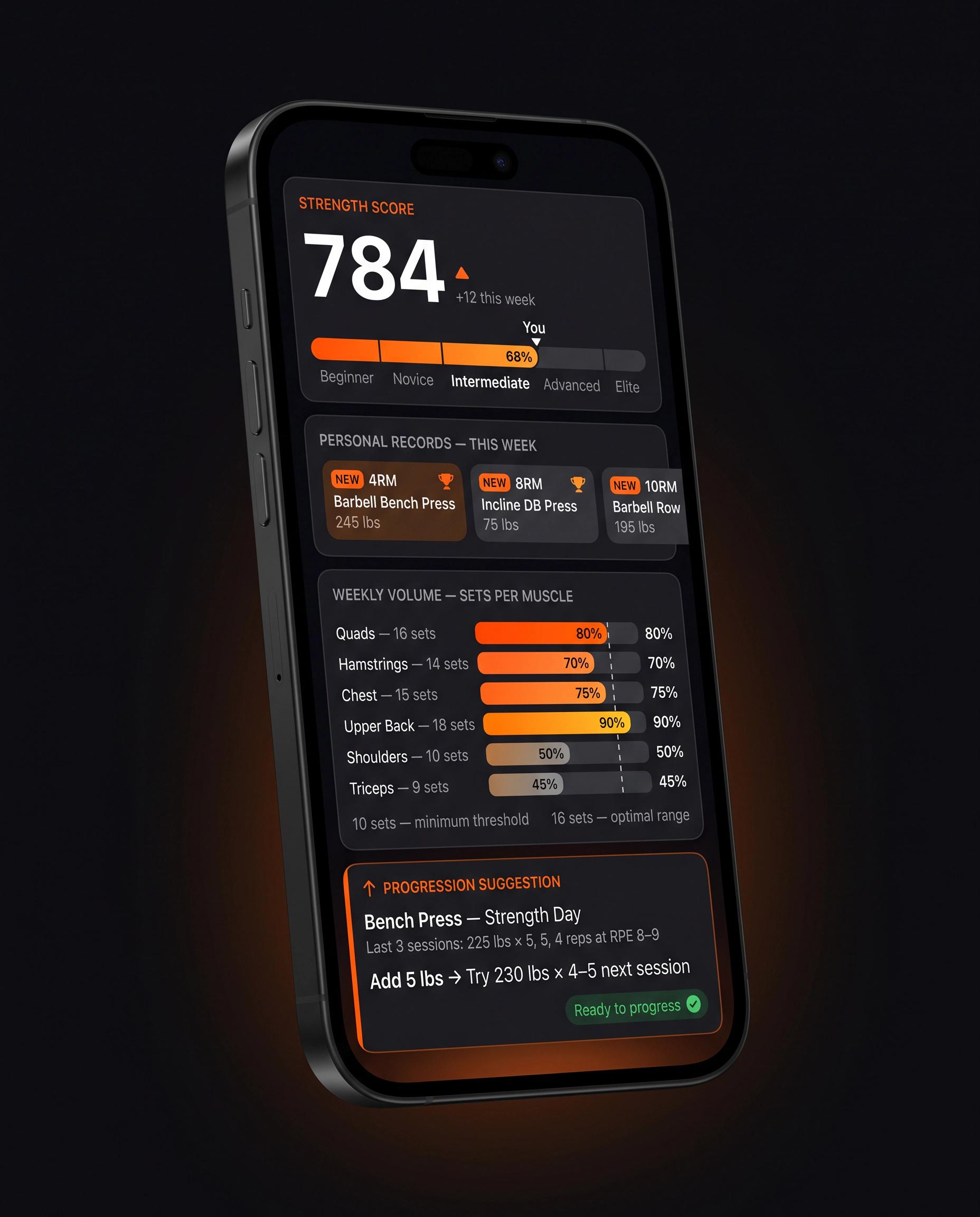
Strength Score for dual-goal benchmarking. Stronger's proprietary Strength Score tracks your overall strength across major compound lifts, adjusted for your bodyweight, gender, and training history. For powerbuilding specifically, this is invaluable: you can watch your Strength Score move from one tier to the next as both your heavy strength numbers and your overall training quality improve. It's not just a 1RM number — it's a comprehensive picture of where you stand, which is precisely what a dual-goal program needs.
PR detection across all rep ranges. When you hit a new 4-rep max on bench press, Stronger catches it automatically. When you complete your best-ever set of 10 on incline dumbbell press, that gets logged too. Powerbuilding creates PRs across the entire rep spectrum — not just the one-rep max that most simple trackers focus on. Seeing those PRs accumulate week after week is some of the most motivating data you can have.
Volume tracking by muscle group. Knowing your weekly volume per muscle group is essential for a powerbuilding program. The difference between 10 working sets per week on your quads (minimal for growth) and 16 working sets (solidly in the hypertrophy range) matters enormously over a 12-week block. Stronger's analytics break this down for you, so you're not guessing whether your legs are getting enough work.
Adaptive progression built in. Rather than manually calculating weights each week, Stronger's adaptive programming logic can suggest progressive overload targets based on your recent performance. This is especially useful for the volume days, where double progression can get complicated to track manually across 6-7 exercises.
Social accountability for the long game. Powerbuilding programs take time. The first four weeks often feel like you're just getting used to the workload. The real results — the strength PR that finally cracks a long-standing plateau, the visual changes that start to become undeniable — typically show up between weeks 8 and 16. That's a long time to stay consistent without external accountability. Stronger's friend challenges, leaderboards, and weekly activity feeds give you a social layer that most training logs lack. Competing with a friend on weekly volume or Strength Score improvements is legitimately useful for consistency.
You can download Stronger for free on iOS and Android. The free version covers basic logging; Premium unlocks the full Strength Score system, unlimited history, and adaptive programming features.
What to eat for powerbuilding: nutrition guide
Training is the stimulus. Nutrition is what the body uses to respond to it. A well-designed powerbuilding program running on poor nutrition will stall — not because the program is wrong, but because the body doesn't have the raw materials it needs to build muscle and recover for the next session.
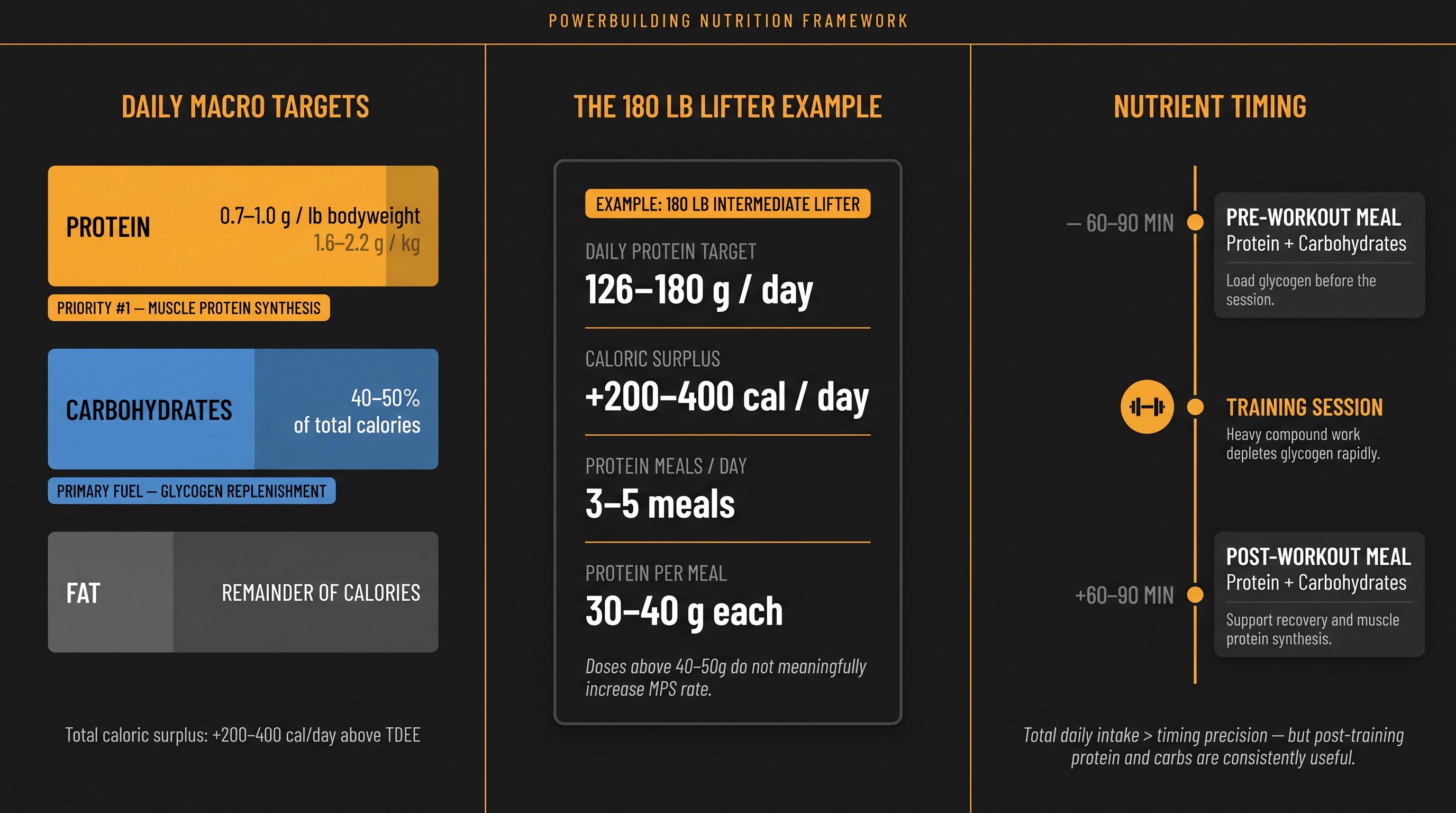
The core nutrition framework for powerbuilding is straightforward, even if execution requires consistency:
Eat in a modest caloric surplus. To build muscle, you need more energy than your body expends. For most intermediate lifters, a surplus of 200-400 calories per day above total daily energy expenditure is appropriate — large enough to support muscle growth, small enough to limit unnecessary fat gain. A "dirty bulk" (very large surplus) is not optimal for powerbuilding because excess fat gain slows you down and makes your strength-to-bodyweight ratio worse over time. Small, clean surpluses give you better body composition outcomes.
Prioritize protein above everything else. Research consistently shows that protein intake is the most important nutritional variable for muscle protein synthesis. A target of 0.7-1.0 grams of protein per pound of bodyweight (1.6-2.2 g/kg) is both well-supported by the literature and practically achievable. For a 180-pound lifter, that's 126-180 grams of protein per day. Lean meats, eggs, dairy, fish, and protein supplements are the most protein-dense options. Distribute protein across 3-5 meals. Older research suggested little benefit from more than 20-40 grams per meal, but newer work shows larger doses (up to 100 grams) extend muscle protein synthesis over a longer period, so total daily intake matters most.
Don't neglect carbohydrates. Carbohydrates are your primary fuel for heavy compound training. Muscle glycogen (stored carbohydrate) supplies much of the energy for hard sets lasting longer than a few seconds, which covers most of the work in a powerbuilding program. Low carbohydrate intake leads to chronically under-fueled training sessions, which impairs both strength performance and the volume work. Aim for at least 40-50% of your total calories from carbohydrates, with emphasis on higher-glycemic sources around your training sessions.
Time your nutrition around training. A pre-workout meal 60-90 minutes before training should contain protein and carbohydrates. A post-workout meal within 60-90 minutes after training supports recovery. The anabolic window isn't as narrow as gym culture once suggested — total daily intake matters more than timing — but having protein and carbs available post-training is straightforwardly useful.
A practical example: if you train in the afternoon, eat a protein-rich lunch 1-2 hours before training (chicken, rice, vegetables), train, then eat a larger post-workout dinner with a protein source and significant carbohydrates. Adjust the timing for morning or evening sessions.
All of this — the training, the nutrition, the tracking — compounds over time. The question is what to expect, and when.
Ready to Get Stronger?
Join 2,000,000+ lifters tracking their workouts with Stronger. Available on iOS and Android.
What results to expect from a powerbuilding program
Powerbuilding results don't arrive linearly. Understanding the rough timeline prevents the most common reason programs fail: quitting before the program has had time to work.
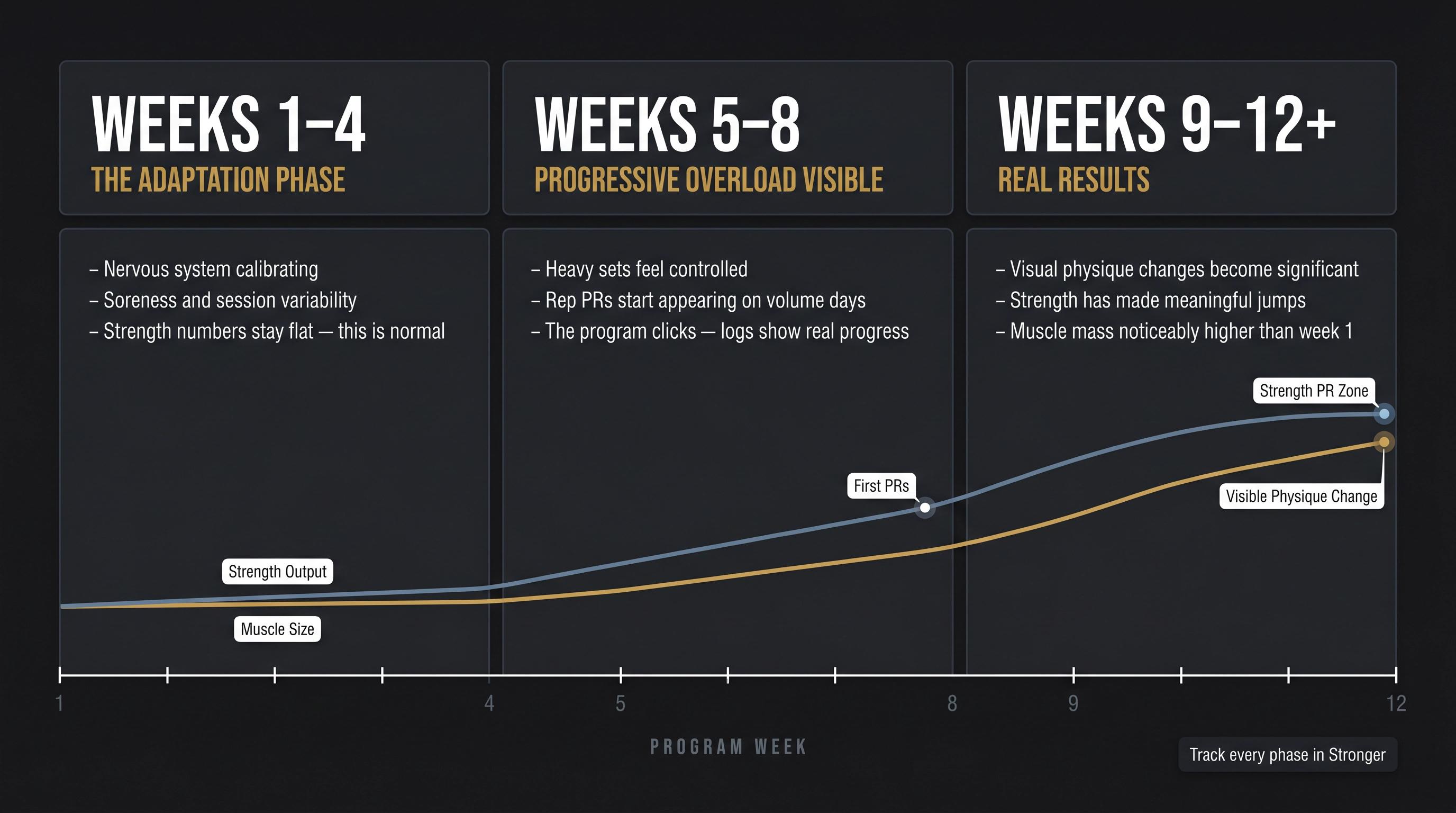
Weeks 1-4 — The Adaptation Phase
You're learning the program, calibrating your weights, and your body is adjusting to a new stimulus. Expect some soreness, some sessions that feel harder than expected, and some sessions that feel surprisingly easy as your nervous system adapts. Strength numbers might not move much in the first 3 weeks — this is normal and not a sign the program isn't working.
Weeks 5-8 — Progressive Overload Becomes Visible
Your heavy sets will feel more controlled at weights that felt heavy in week 1. You'll start hitting rep PRs on your volume days. This is the window where most lifters finally feel the program "clicking" — the weights going up, the sessions becoming more efficient, the log showing undeniable progress.
Weeks 9-12+ — Real Results
This is where the visual and strength changes become genuinely significant. Muscles that were responding to a new stimulus through weeks 4-8 start to look different. Strength numbers have had enough time to make meaningful jumps. If you've been eating in a modest surplus, your physique will have noticeably more muscle mass than when you started.
After 12 weeks, you have a choice: run the program again with higher starting weights (you'll be significantly stronger), or transition to a slightly different block with adjusted volume targets. Either way, what you've built, both the strength and the muscle, is real and durable. A two-week vacation won't erase a 12-week block, and any small losses from a longer break tend to come back quickly once you return to training.
One more thing: track everything. Not obsessively, but consistently. The lifters we've seen make the best progress on programs like this are the ones with a clear record of what they lifted last week, last month, and 12 weeks ago. The data is motivating when things are going well, and it's diagnostic when something stalls. A blank training log is just a collection of sessions. A complete training log is a progress curve you can act on.
How to start your powerbuilding program
Powerbuilding isn't a compromise between strength and size — it's what happens when you stop treating them as opposing goals and start programming for the mechanisms they share.
The program above gives you everything you need to start building strength and muscle simultaneously. Four days a week. Real compound lifting. Measured progression. The science is solid, the structure is tested, and the results are real.
The one thing that separates the lifters who finish a 12-week powerbuilding block from the ones who abandon it at week 5 is a tracking system that makes progress visible. When you can see your Strength Score moving up, your volume numbers increasing, and your PRs accumulating across all rep ranges — you stay engaged. When training feels like a series of disconnected sessions with no running score, staying motivated over three months is genuinely difficult.
Stronger was built for this. Download it, log Day 1, and start building.

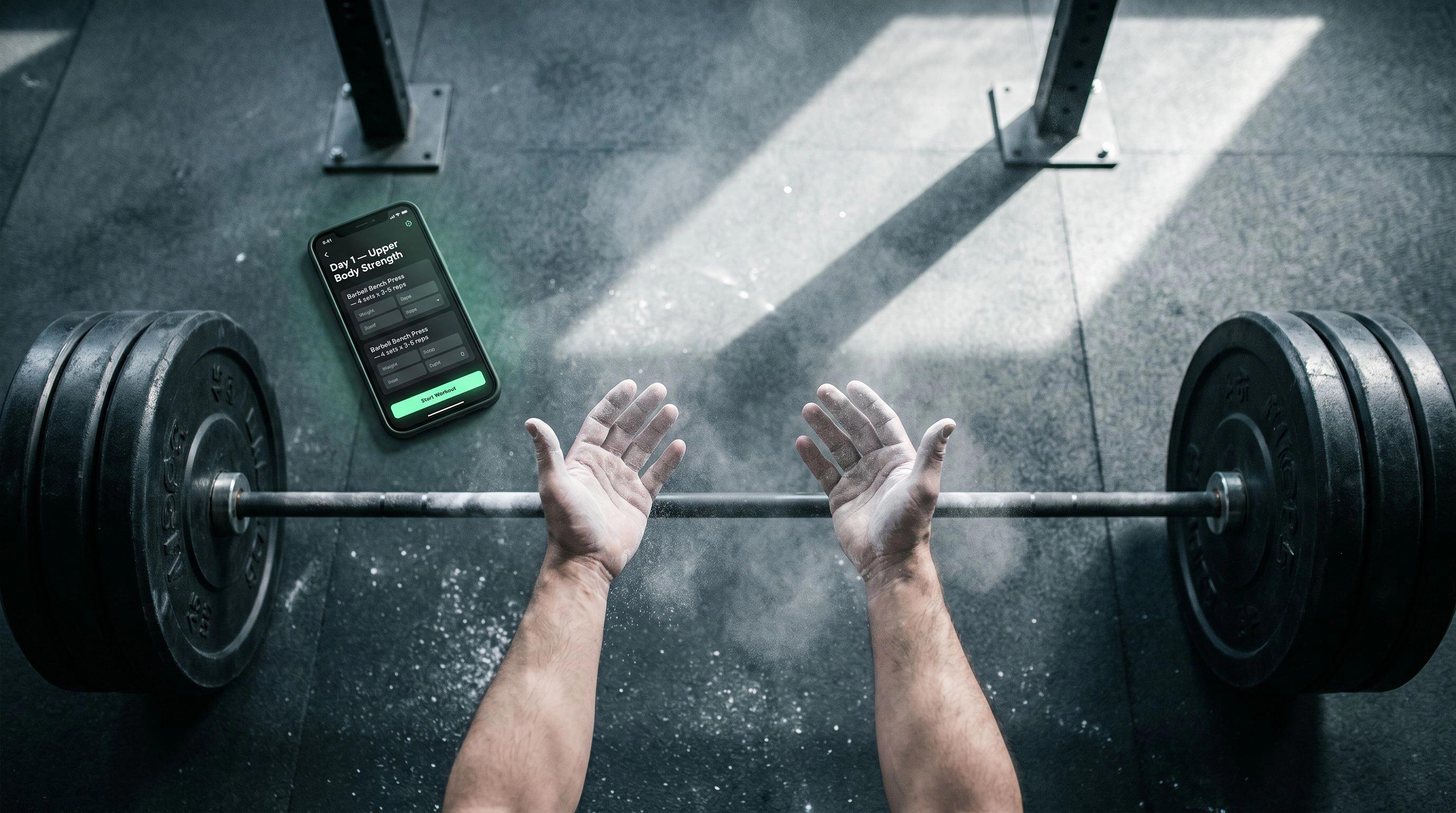
Get Stronger on iOS or Android — free to download, with a 7-day Premium trial.
Powerbuilding program FAQ
What's the difference between powerbuilding and powerlifting?
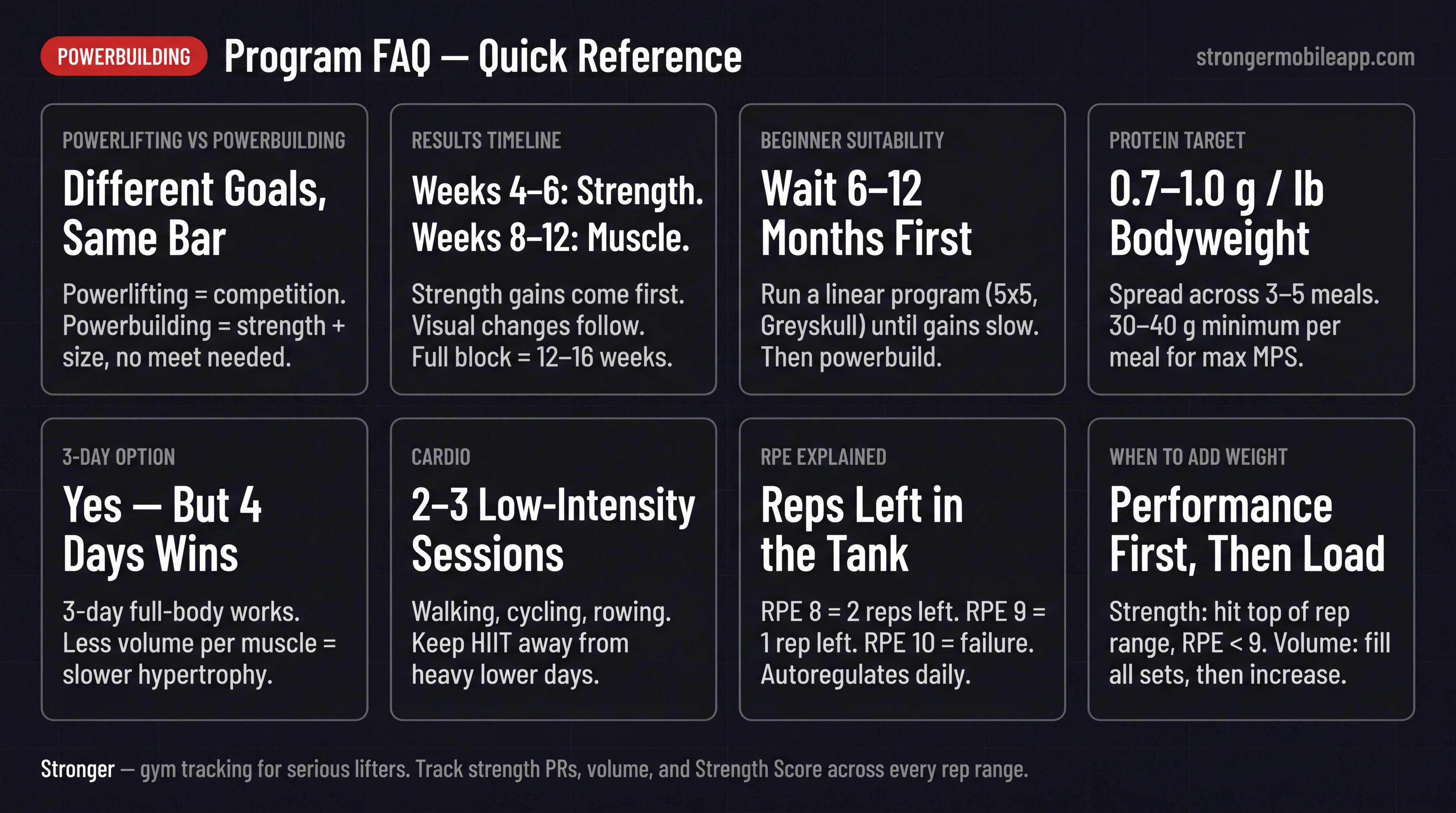
Powerlifting is a competitive sport focused on three specific lifts — the squat, bench press, and deadlift — with the goal of lifting maximum weight on meet day. Training is highly specialized, with long periods of peaking and deloading built around competition cycles. Powerbuilding borrows the heavy compound lifting from powerlifting but pairs it with higher-volume bodybuilding work, making it a general fitness methodology rather than a sport-specific training system. You're training for both strength and muscle size, not for a specific competition.
How long does it take to see results from a powerbuilding program?
Most lifters notice strength improvements — heavier working weights, more reps at previous loads — within 4-6 weeks. Visible physique changes typically become noticeable between weeks 8-12, assuming you're eating in a modest caloric surplus and training consistently. Strength adaptations happen faster than structural muscle changes, which is why your numbers improve before the mirror does. A full 12-16 week block is the minimum to see meaningful, lasting results from a powerbuilding program.
Can beginners do powerbuilding?
Beginners are better served by a simple linear progression program for their first stretch of training. Programs like 5x5 or Greyskull LP teach the main compound movements and deliver rapid initial strength gains through straightforward session-to-session weight increases. Once those easy linear gains slow down, usually somewhere around the one-year mark, a powerbuilding program is the natural next step. Jumping into a complex powerbuilding structure before you have solid technique on the main lifts risks both injury and programming inefficiency.
How much protein do I need for powerbuilding?
The research-supported range is 0.7-1.0 grams of protein per pound of bodyweight per day (1.6-2.2 grams per kilogram). For most intermediate lifters, landing somewhere in the middle of that range — roughly 0.8-0.9 g/lb — is practical and effective. A 180-pound lifter should aim for roughly 145-165 grams of protein per day. Spreading protein intake across 3-5 meals (each containing at least 30-40 grams of protein) maximizes muscle protein synthesis throughout the day.
Can I run a powerbuilding program 3 days a week instead of 4?
Yes, with some modification. A 3-day full-body powerbuilding variant is an effective alternative if 4 days isn't manageable. Each session would include one heavy compound movement (the strength anchor), one moderate-intensity compound variation, and 2-3 accessory exercises per session. The trade-off is less total weekly volume per muscle group, which will slow hypertrophy progress compared to the 4-day split. For most people, 4 days is optimal — but a well-structured 3-day program beats an inconsistently-followed 4-day program every time.
Should I do cardio while powerbuilding?
Light to moderate cardio — 2-3 sessions per week of 20-30 minutes of low-intensity steady-state work (walking, cycling, rowing) — is compatible with powerbuilding and supports cardiovascular health, recovery, and body composition. High-intensity cardio (HIIT, heavy conditioning work) is more problematic: it creates significant additional fatigue that can impair recovery from your strength sessions. If you're powerbuilding, prioritize your lifting sessions. Keep any cardio aerobic and low-impact, especially in the 12-24 hours after a heavy lower-body session.
What is RPE and do I need to track it for powerbuilding?
RPE stands for Rate of Perceived Exertion — a 1-10 scale where 10 represents absolute muscular failure and each point below represents roughly one additional rep in reserve. RPE 8 means you could have done 2 more reps. RPE 9 means 1 more rep. Using RPE for your working sets — rather than a fixed percentage of your 1RM — allows the program to autoregulate based on how you feel that day. Some sessions you'll handle more weight at RPE 8 than others; RPE accounts for that naturally. It takes a few weeks to calibrate your RPE accurately, but it's one of the most useful tools for intermediate programming.
How do I know when to increase weight on my lifts?
For strength-focused sets (3-5 reps, RPE 8-9): add weight when you've successfully completed all planned sets at the top of the rep range with at least 1 rep in reserve (RPE below 9). For volume-focused sets (6-15 reps): use double progression — add reps each session until you've hit the top of the rep range for all sets, then increase the weight by the smallest available increment and reset to the lower rep target. Never add weight just because a week has passed. Add weight because you've demonstrated you can handle the current load confidently, and you have room to grow.
Looking to track your powerbuilding progress with precision? Download Stronger — the gym app built for serious lifters who want to measure, benchmark, and compete on their progress.
Exercises in this guide
Deadlift
Barbell Bench Press
Bulgarian Split Squat
Lunge
Incline Bench Press
Stronger Editorial Team
Certified strength & conditioning specialists with 10+ years of coaching experience
The Stronger editorial team produces evidence-based training content for lifters of all levels.
Ready to Get Stronger?
Join 2,000,000+ lifters tracking their workouts with Stronger. Available on iOS and Android.