
How to Overhead Press: Complete Guide
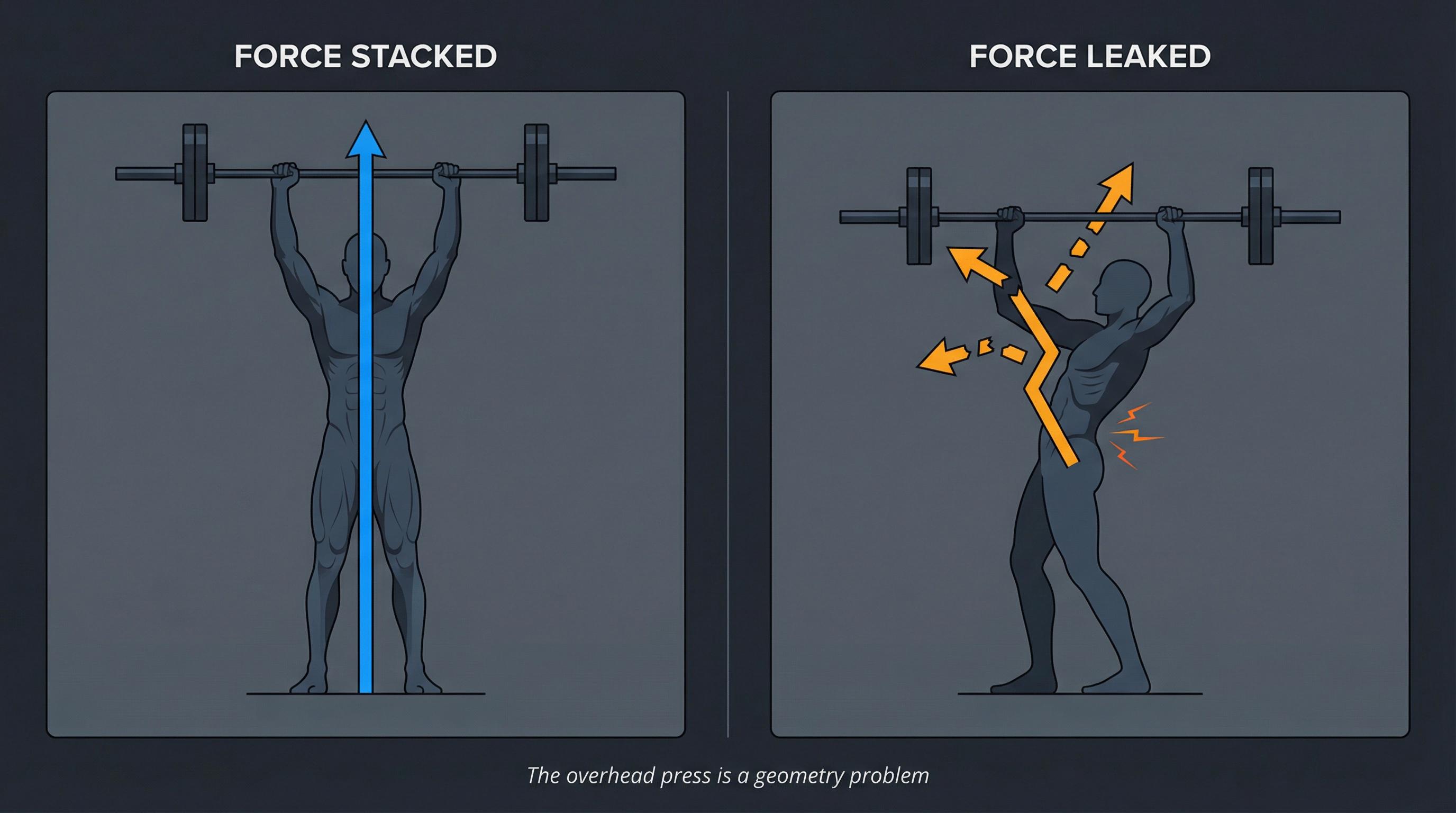
Most overhead presses do not fail because the lifter is weak. They fail because the lift leaks force.
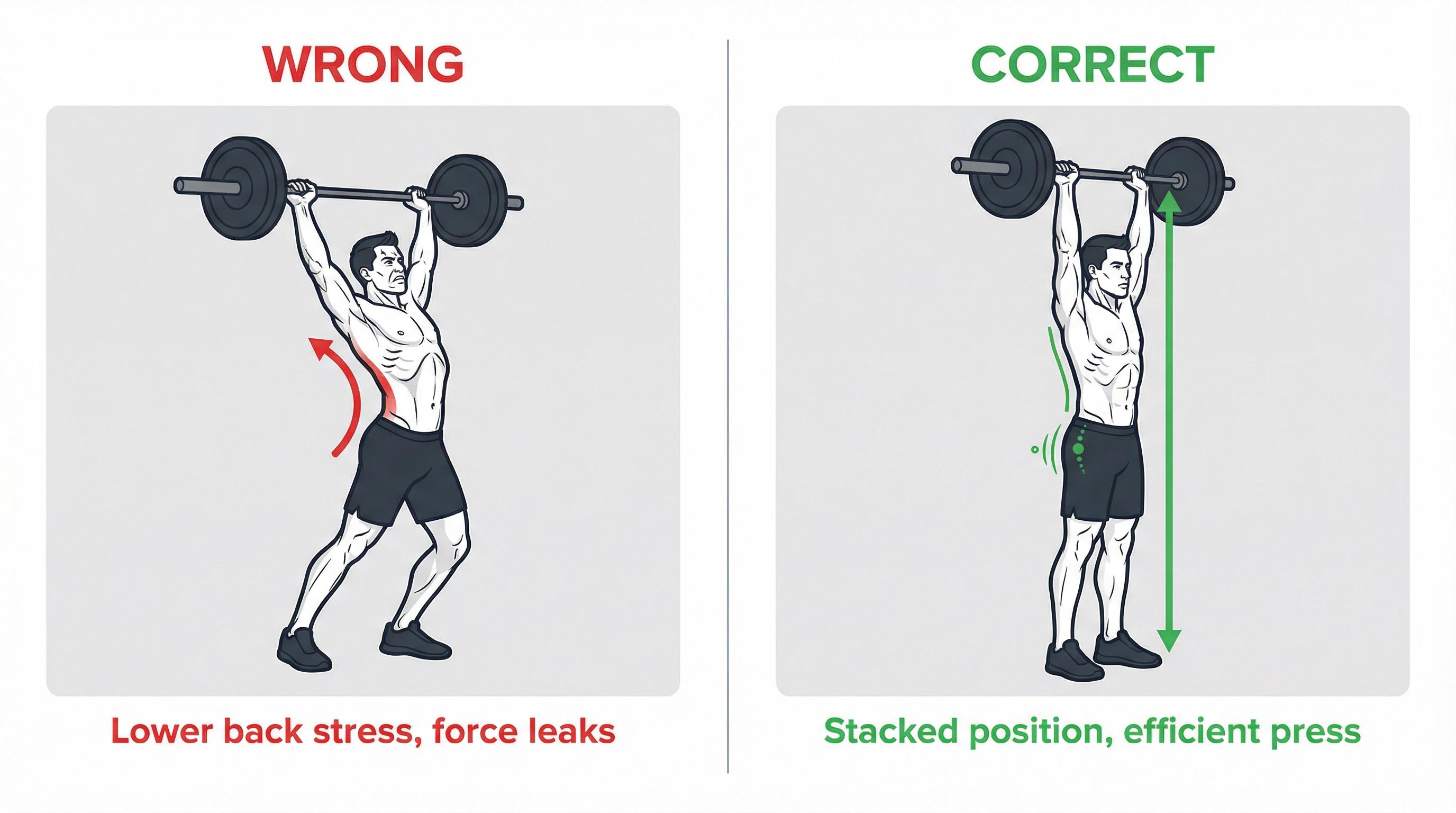
The bar drifts forward. The ribs flare. The glutes switch off. What started as a strict press quietly becomes a standing incline bench, and the lower back absorbs everything the shoulders were supposed to handle.
Here is the thing: the overhead press is a geometry problem before it is a strength problem. Once you understand the bar path, the stacking, and the handful of cues that actually matter, the lift gets significantly easier to learn and far easier to program. At Stronger, we have built exercise guides, progress tracking, and programming tools around this exact principle -- and the overhead press is one of the lifts where getting the details right pays off fastest.
In this guide, "overhead press" means the standing strict barbell press unless stated otherwise. You will learn how to set up and execute the lift properly, what muscles it actually trains (and which ones it misses), which variations solve specific problems, and how to program the press for strength, size, or power -- all backed by current evidence, including the 2026 ACSM resistance-training update that reviewed 137 systematic reviews covering more than 30,000 participants. (ACSM)
The press is the slowest lift to progress, so benchmarks help. Use our free strength standards calculator to see where your overhead press sits for your bodyweight.
What muscles does the overhead press work?
The overhead press is mainly a shoulders-and-triceps lift, but that label sells it short.
The prime movers are the anterior (front) deltoids and lateral (side) deltoids. They handle the heavy work from chest to roughly forehead height. The triceps take over from there, extending the elbows to finish the lockout. Below the obvious, your upper traps stabilize the shoulder girdle, your upper chest contributes off the bottom, and your entire midsection -- abs, obliques, glutes -- works hard to keep you from folding in half under load. Stronger exercise pages list traps, chest, and abs as meaningful secondary contributors across barbell, dumbbell, push-press, and landmine variations. (Stronger)
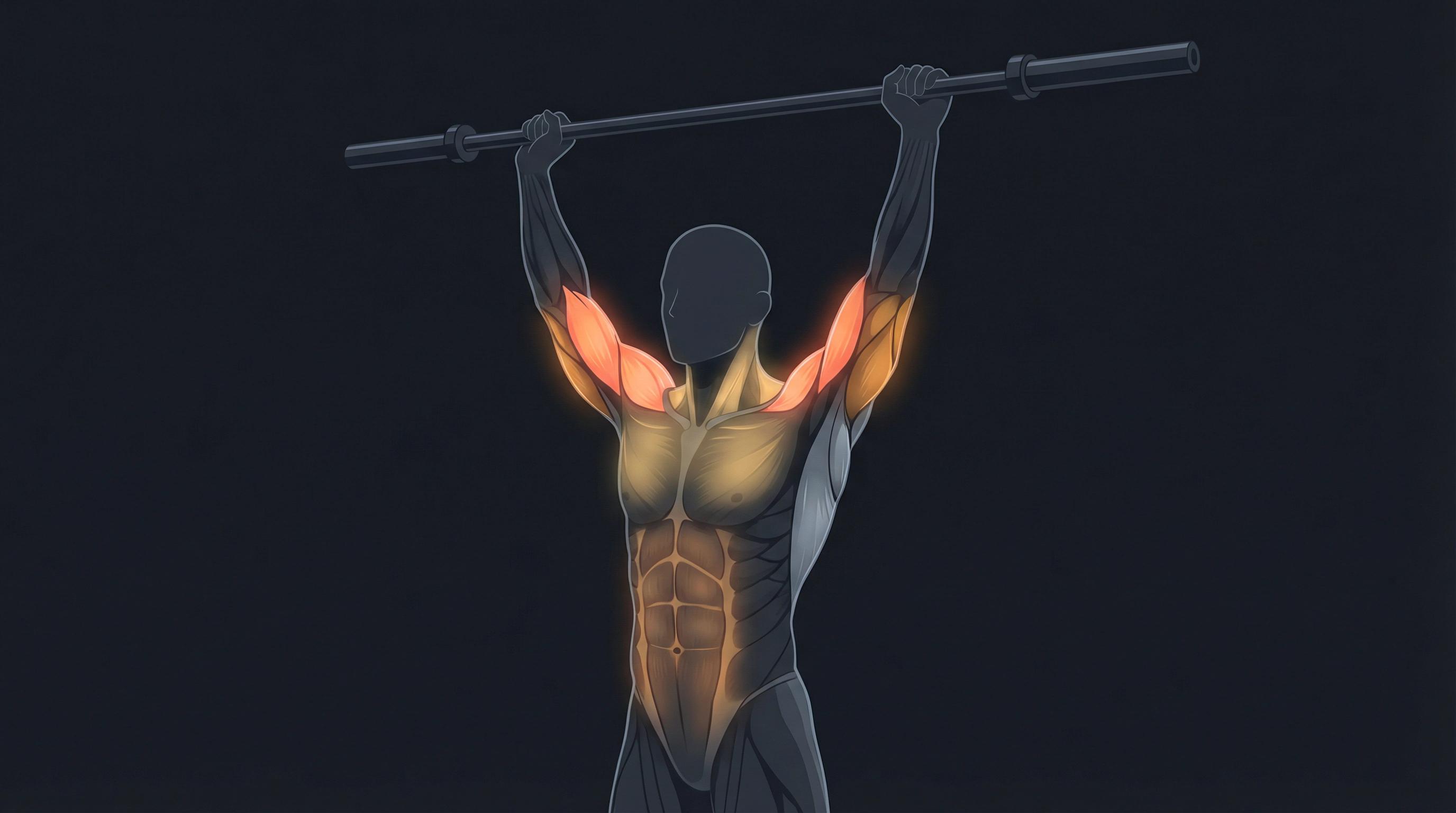
A 2020 electromyography (EMG) study -- a method that measures how hard muscles are firing during movement -- compared several shoulder exercises and found that the shoulder press produced the highest anterior-delt activation of the exercises tested, along with strong medial-delt activation. Lateral raises outperformed the press for posterior-delt work. (ResearchGate)
In plain English: the overhead press is excellent for building the front and side of the shoulder. It is not a complete shoulder program by itself.
That gap matters more than most lifters realize. If you bench press and overhead press but skip lateral raises and rear-delt work, your front delts end up overdeveloped relative to everything else. The result is not just an aesthetic imbalance -- it is a structural one that can affect how your shoulders track over time. Smart shoulder training keeps one main press in the program, then fills the gaps with lateral raises, rear-delt flys or face pulls, and enough upper-back work to keep the shoulder girdle moving well. (ResearchGate)
Overhead press form: how to do it correctly
A lot of coaching cues out there are noise. These are the ones that matter.
- Set the bar in a rack at roughly upper-chest height.
- Take a stance about hip to shoulder width apart.
- Grip the bar just outside shoulder width. From the front, your forearms should look close to vertical.
- Start with the bar resting on the upper chest or clavicle area.
- Stack wrists over elbows, with the elbows slightly in front of the bar -- not flared straight out to the sides.
- Squeeze your glutes, brace your abs, and actively pull your ribs down.
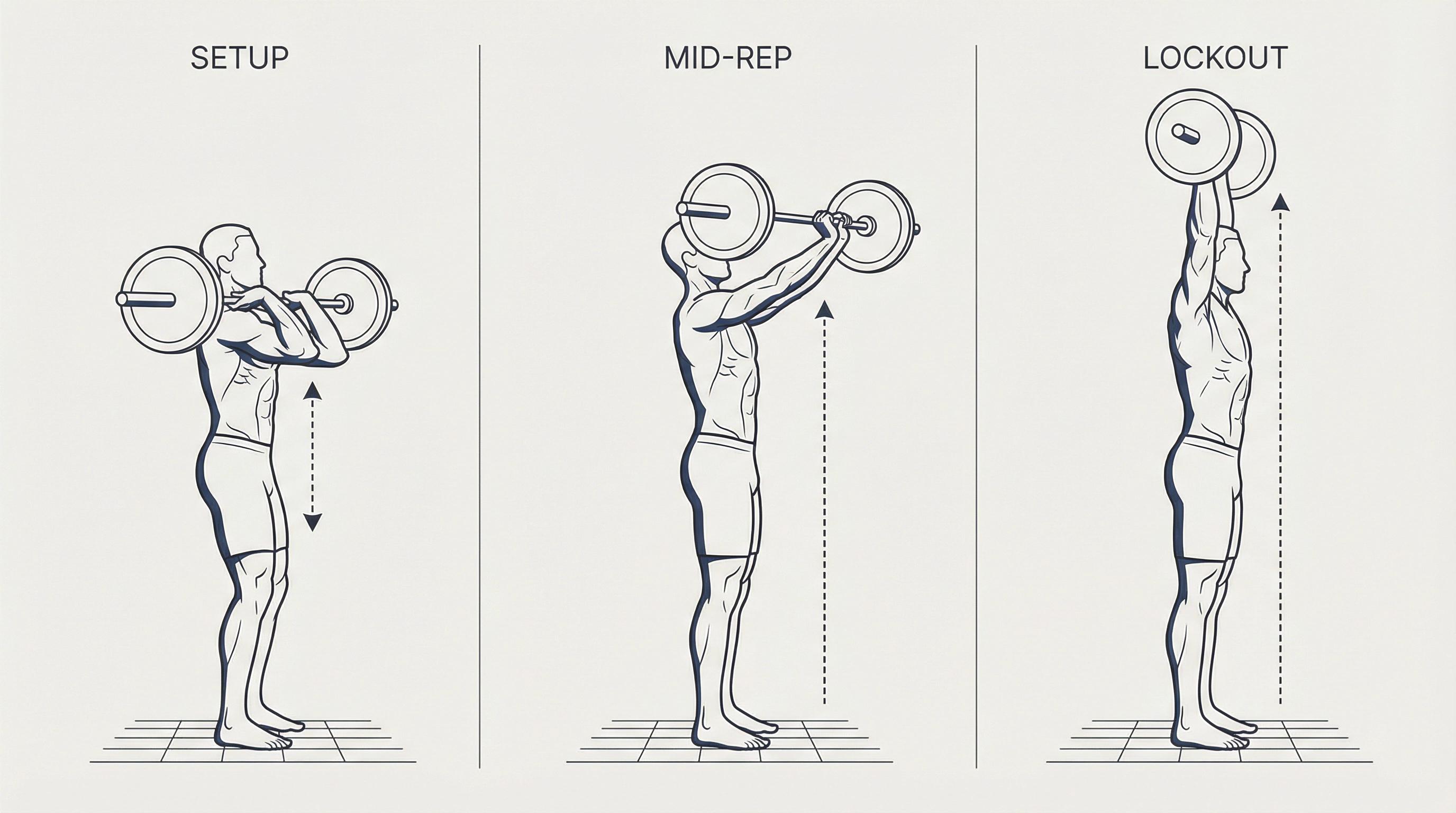
- Press the bar up and move your head slightly back -- just enough to let the bar travel in a straight vertical line.
- Once the bar clears your forehead, push your head through so the bar finishes directly over your midfoot, with your biceps close to your ears.
- Lower the bar under control back to the upper chest and reset your brace before the next rep.
Stronger exercise guides cue the same essentials: a vertical bar path, a slight head movement to clear the face, and elbows positioned slightly in front of the torso rather than flared to 90 degrees. (Stronger)
A 2025 biomechanics study adds one detail worth paying attention to: researchers found that medium and narrower grips increased range of motion and allowed trained lifters to move more load than a wide grip. That means there is rarely a good reason to go extra-wide on a strict overhead press -- a mistake many lifters make by borrowing bench-press logic.
The overhead press technique principle most lifters miss
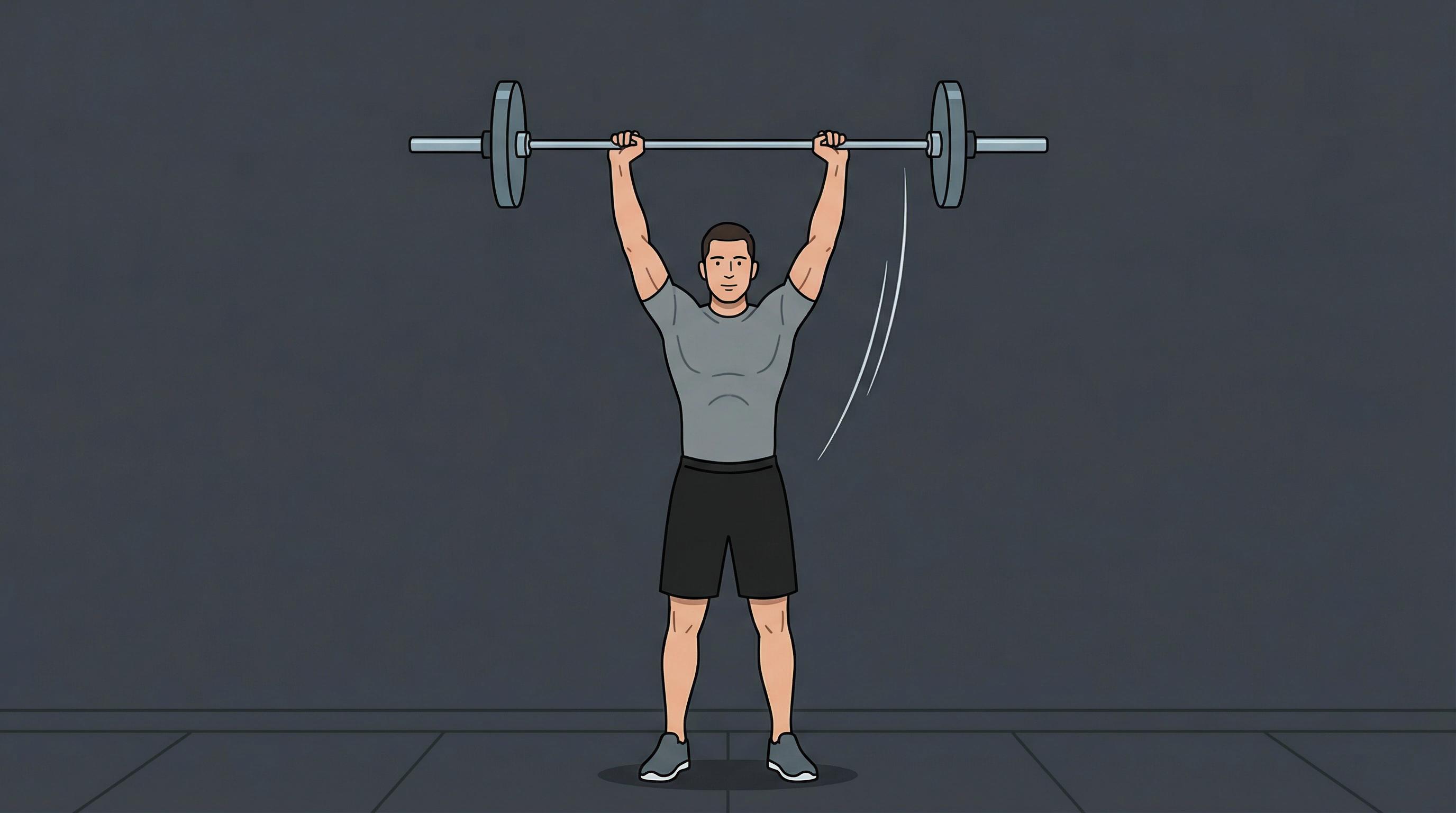
The overhead press is a stacking problem.
When the bar drifts forward even slightly, the distance between the barbell and your center of mass increases. In physics terms, that creates a longer moment arm -- and a longer moment arm means more torque at the shoulder joint and more pressure to hyperextend your lower back to compensate.
That is why a technically clean press often feels smoother than a sloppy one at the same load. You are fighting gravity, not fighting bad geometry.
Every cue in the list above exists to keep the bar stacked over your midfoot throughout the rep. When the bar is stacked, the lift is efficient. When the bar drifts, the lift leaks force -- and your lower back tells you about it before your shoulders do.
Overhead press cues for every working set
Use these during your work sets as internal reminders:
- Ribs down, glutes tight
- Move your head, not the bar
- Press up, then through
- Finish over midfoot
- Reach tall at lockout
For sets of 1 to 5, one strong breath and brace per rep usually works best. For longer sets (8+), reset your breath at the shoulders or at the top as needed. What matters is that every rep starts from a stacked position.
Once the form is clean, most of the remaining problems come from a few predictable mistakes.
Common overhead press mistakes to avoid
1. Arching your back instead of pressing strict
The problem: If your ribs flare and your lower back bends into a pronounced arch, you are not creating more pressing power. You are changing the lift and dumping stress into your lumbar spine. Fix it by squeezing your glutes harder, exhaling to pull the ribs down before each rep, and lowering the load until you can hold the stacked position throughout the set.
2. Letting the bar drift forward instead of going straight up
The problem: The bar should move almost straight up. Your head moves out of the way briefly, then comes back through once the bar passes your forehead. Stronger barbell press guides specifically cue a vertical path with a slight head move -- not a forward arc around the face. (Stronger)
3. Gripping too wide (the bench press mistake)
The problem: This is one of the biggest blind spots in pressing. Lifters often borrow bench-press logic and widen the grip to "shorten the range of motion." That logic does not transfer to overhead pressing. A 2025 biomechanics study found that wider grips increased shoulder joint moments and reduced the load participants could lift, while medium and narrow grips improved both ROM and performance.
If your current grip is wider than just outside shoulder width, try bringing it in. You will likely feel stronger immediately.
4. Flaring your elbows out to 90 degrees
The problem: Flaring the elbows to a perfect T-shape usually makes it harder to stack wrists over elbows and can increase shoulder discomfort. Stronger cues roughly 30 to 45 degrees in front of the torso on both dumbbell and barbell variations -- and that is where most lifters find the best balance of power and joint comfort. (Stronger)
5. Using leg drive when you mean to strict press
The problem: If the knees dip and rebound, you are not strict pressing anymore. That is fine when you are deliberately performing a push press. It is not fine when you are trying to measure strict overhead pressing strength. Keep these exercises separate in your training log so your progress data stays honest. If you use Stronger to track your workouts, logging strict press and push press as distinct exercises means your PR detection and estimated 1RM stay accurate for each lift.
6. Trying behind-the-neck press without the mobility for it
The problem: A 2014 biomechanics study found that both in-front and behind-the-head pressing can be safe in lifters with normal trunk stability and adequate shoulder range of motion. The limiting factor for many participants was external rotation. That makes behind-the-neck pressing a specialty variation for lifters with excellent mobility, not a default starting point for everyone.
Fixing these mistakes tells you what you actually need from the movement. The next question is which variation delivers it.
Ready to Get Stronger?
Join 2,000,000+ lifters tracking their workouts with Stronger. Available on iOS and Android.
Start tracking freeBest overhead press variations (and when to use each)
The best variation is not the one your favorite influencer does. It is the one that solves the problem in front of you right now.
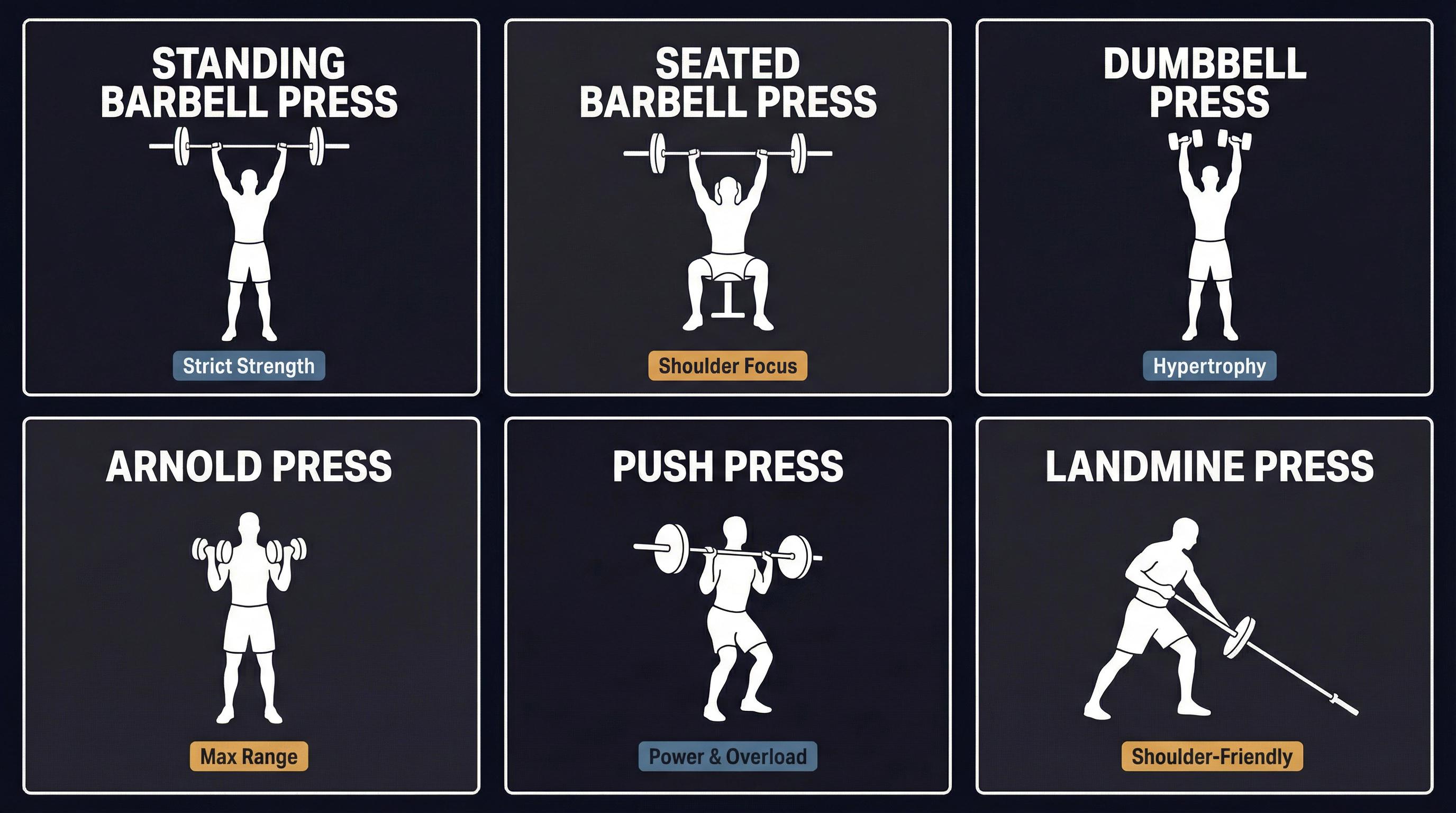
Standing barbell strict press: when to use it
This is the default version for building overhead skill and strict pressing strength. If your goal is simple -- get stronger at pressing a bar overhead without leg help -- this is where you start and where you stay. The military press exercise page in Stronger covers the same movement with detailed cues.
Seated barbell overhead press: benefits and when to use it
The seated version removes much of the balance and leg contribution, which makes it easier to bias the shoulders and maintain cleaner technique as fatigue accumulates. Stronger exercise guidance highlights the same benefits: more shoulder isolation with less momentum. A 2013 study on pressing stability found that more stable setups generally allowed lifters to handle more load, while less stable setups created higher neuromuscular demand. (Stronger) (PubMed)
Dumbbell shoulder press: why it's better for hypertrophy
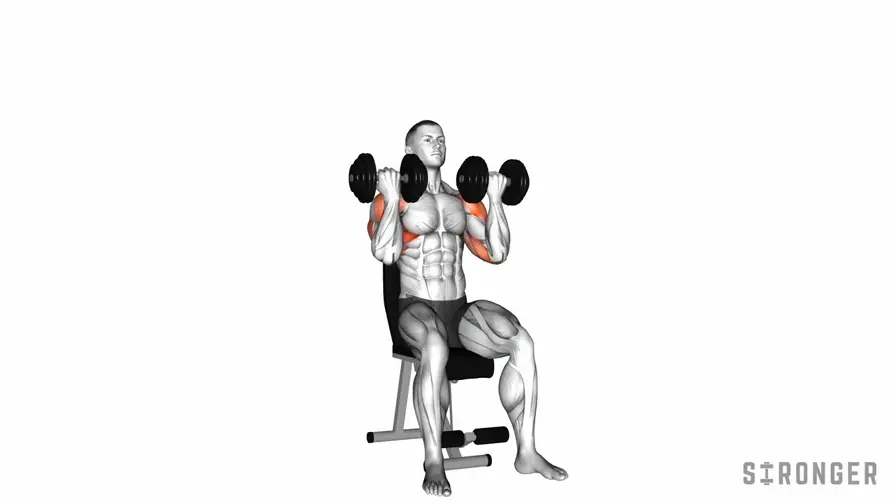
Dumbbells give each arm its own path, which is why many lifters find them friendlier on the shoulders. Stronger exercise pages point to the bigger range of motion, independent arm work, and higher stabilizer demand as key advantages. (Stronger)
That same 2013 comparison study found that the standing dumbbell version created the greatest stability demand and the highest deltoid EMG of the setups tested -- but it also produced the lowest 1RM load. Dumbbells are usually the better tool for hypertrophy, symmetry, and joint comfort. They are not the tool for expressing your absolute top pressing load. (PubMed)
Arnold press: how to use it for shoulder hypertrophy
The Arnold press is a hypertrophy accessory, not a strict-press replacement. The rotation through the movement creates a longer range of motion and more time under tension. Stronger recommends starting lighter than you think because the demand is substantially different from a standard press. Use it after your main pressing work, not instead of it. (Stronger)
Push press: how to overload the overhead press
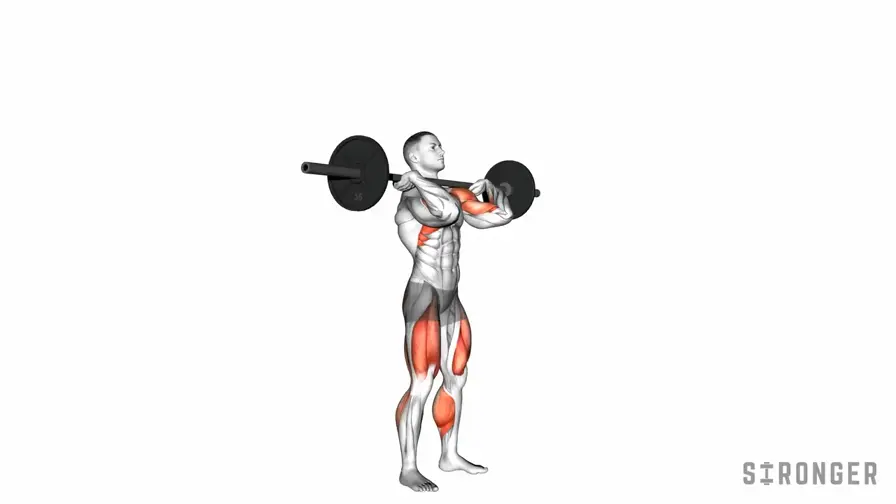
The push press adds a short dip and leg drive so you can overload the top half of the press and build explosive upper-body power. Stronger positions it as an excellent overload tool for building strict pressing strength, and the 2026 ACSM guidance supports power work using moderate loads (roughly 30 to 70 percent of 1RM) moved as fast as possible on the lifting portion. (Stronger) (ACSM)
Use the push press when the strict press is your main lift but you also want heavier overhead exposure or more explosiveness in your training.
Z press: what it is and who should use it
The Z press removes every escape hatch. No back support. No leg drive. No easy layback. You sit on the floor with your legs straight in front of you and press from there. Stronger describes it well: the Z press develops pure overhead pressing strength, exposes thoracic mobility limitations, and forces anti-extension control. (Stronger) You can also find the barbell Z press variation in the exercise library for a heavier loading option.
Use it as a diagnostic and developmental accessory. If your Z press is disproportionately weak compared to your standing press, that is useful information about where your bracing and mobility need work.
Landmine press: the best shoulder-friendly pressing option
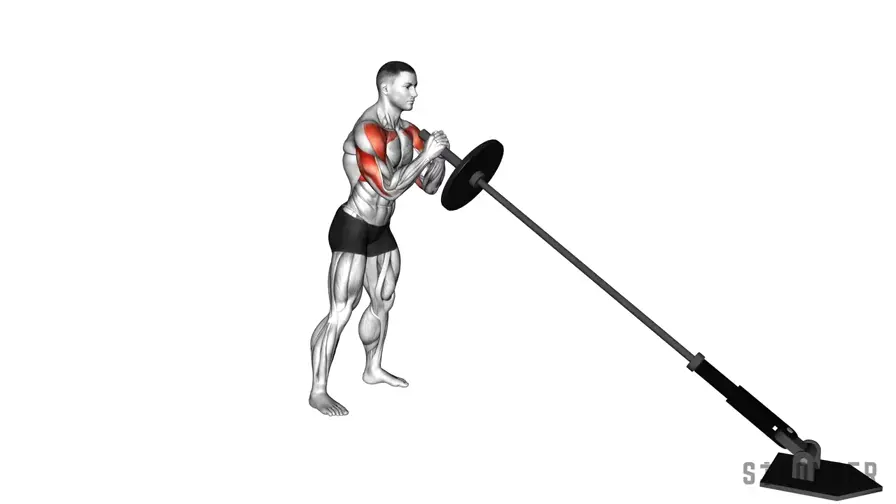
For lifters who do not tolerate fully vertical pressing well, the landmine press is one of the best regressions available. The angled bar path reduces how much true overhead position you need while still training the shoulder, upper chest, triceps, and core. Stronger explicitly positions it as a shoulder-friendlier press with lower impingement risk compared to strict overhead pressing. The single-arm landmine press adds a unilateral challenge if you want to address side-to-side imbalances. (Stronger)
Behind-the-neck press: is it safe?
This is the variation people argue about most -- and the answer is more nuanced than either camp admits. A 2022 EMG study found that behind-the-neck pressing increased medial and posterior deltoid activation compared with front pressing, while front pressing favored the pecs more. (Frontiers)
That does not make behind-the-neck pressing "better." It makes it different. Combined with the 2014 ROM study, the practical conclusion is straightforward: behind-the-neck pressing is an advanced option for lifters with excellent shoulder range of motion and trunk control. It is not a required exercise for shoulder growth.
Which overhead press variation is right for you?
Use this filter:
- Maximize strict strength: standing barbell press
- Bias shoulders more, reduce core demand: seated barbell press
- Train around cranky shoulders, improve symmetry, add hypertrophy: dumbbell shoulder press
- Add lighter, high-tension shoulder volume: Arnold press
- Build power or overload the strict press: push press
- Expose mobility and bracing weaknesses: Z press
- Need a more shoulder-friendly pressing angle: landmine press
- Have excellent mobility and a specific goal: behind-the-neck press
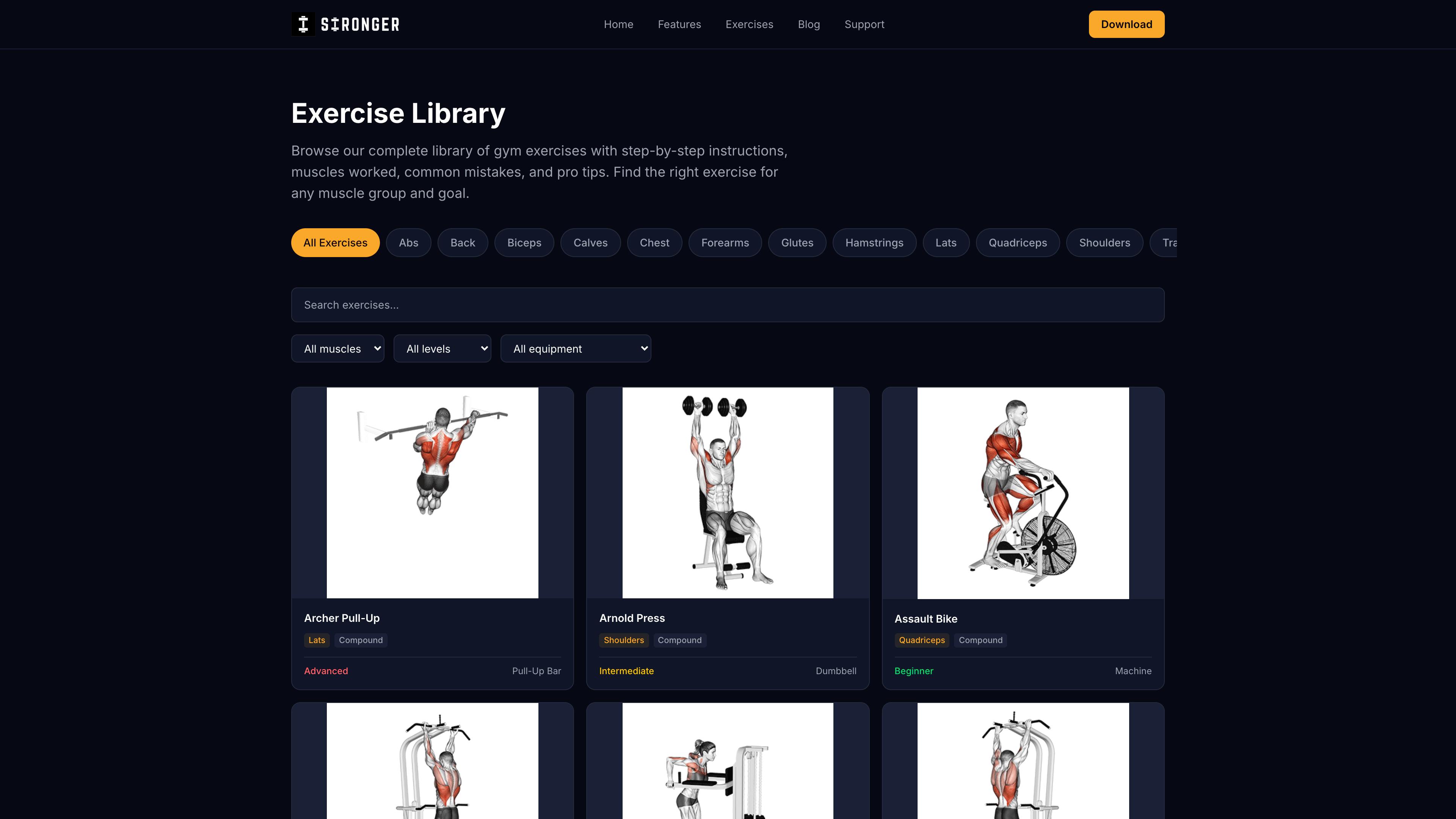
Browse the full exercise library in Stronger for detailed form cues, muscles worked, and tips on every pressing variation.
Choosing the variation is half the equation. The other half is how you program it.
How to program the overhead press for strength and size
Most lifters do not need a complicated press cycle. They need enough frequency to practice the lift, enough volume to grow the muscles that drive it, and enough recovery to let that strength show up. That lines up almost perfectly with the 2026 ACSM update: train major muscle groups at least twice per week, match load and volume to the goal, and stop obsessing over program complexity. (ACSM)
How to program the overhead press for strength
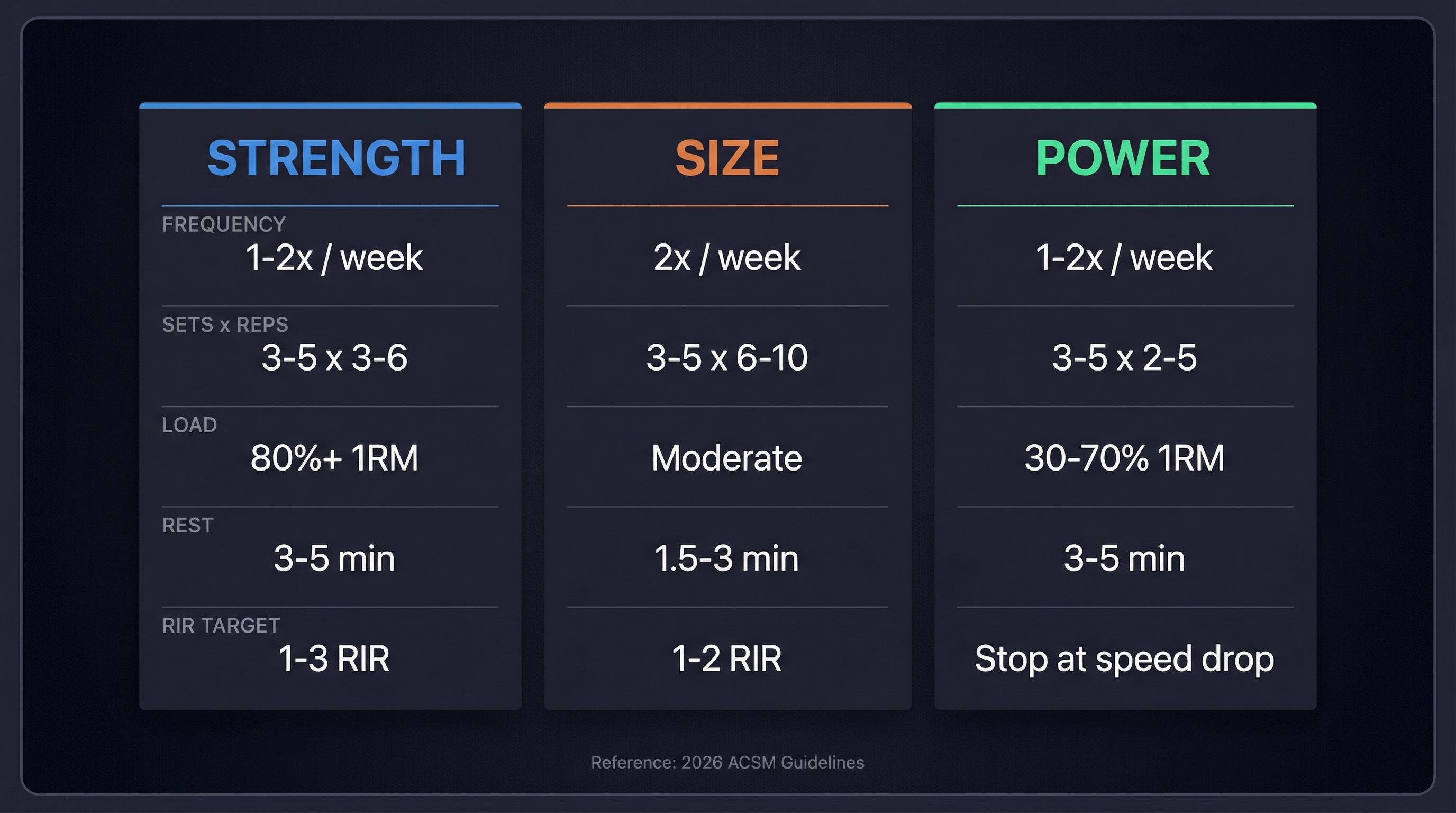
For pure pressing strength, use the strict overhead press one to two times per week -- two if the press is a real priority lift for you. A program like the 5x5 workout is one proven approach for building that kind of raw pressing strength.
A solid starting setup:
- Main day: 3 to 5 work sets of 3 to 6 reps at a heavy load (around 80 percent or higher of your estimated 1RM). Rest 3 to 5 minutes between sets.
- Secondary day: 3 to 4 sets of 5 to 8 reps using a lighter strict press, seated barbell press, or dumbbell press. Rest 2 to 3 minutes.
The 2026 ACSM guidance supports heavier loading for strength development, and Stronger rest-period recommendations align: 3 to 5 minutes for heavy compound work. (ACSM) (Stronger)
One thing the research is very clear about: you do not need to grind every strict press to failure to get stronger. A 2024 meta-regression published in Sports Medicine found that strength gains were similar across a wide range of reps in reserve (RIR -- the number of reps you could still complete before actual failure). Keep most main-lift sets at 1 to 3 RIR and save true max-effort grinders for occasional testing. (Southampton Solent University)
How to program the overhead press for muscle growth
For hypertrophy, think in total weekly sets, not just what happens in a single workout.
The 2026 ACSM update points to roughly 10 weekly sets per muscle group as a useful target for growth. In practice, that usually means 6 to 10 hard weekly sets of vertical pressing plus dedicated lateral-raise work, rear-delt work, and triceps accessories. (ACSM)
Rep ranges that work well for shoulder hypertrophy:
- Main presses: 6 to 10 reps
- Secondary presses (seated, dumbbell, Arnold): 8 to 15 reps
- Isolation work (lateral raises, rear-delt flys): 12 to 20 reps
Rest 1.5 to 3 minutes on compound presses so your load and rep quality stay high across sets.
Watch out for the front-delt trap. Bench press and incline press already deliver a lot of anterior-delt volume, so piling more heavy front-delt pressing on top is often wasted fatigue. A better shoulder-growth plan keeps one main press, then spends more accessory time on lateral and rear-delt work -- the muscles the press does not cover as effectively. That matches the 2020 EMG data showing the press works the front and side delts, while lateral raises hit the side delts about as hard without adding more heavy pressing. (ResearchGate)
For hypertrophy specifically, proximity to failure matters more than it does for pure strength. The same 2024 meta-regression found that muscle growth improved as sets finished closer to failure, while strength gains were relatively stable across a broader RIR range. That is a practical reason to push isolation exercises and lighter accessory presses harder (1 to 2 RIR or even to failure) while keeping heavy barbell strict presses in the 2 to 3 RIR range where technique stays cleaner. (Southampton Solent University)
How to program the overhead press for power
If the goal is explosive overhead power, use the push press.
Perform 3 to 5 sets of 2 to 5 reps with crisp technique, full intent on every rep, and long rest periods (3 to 5 minutes). The 2026 ACSM guidance for power work recommends moderate loads -- roughly 30 to 70 percent of 1RM -- moved as fast as possible on the concentric (lifting) phase. Once bar speed noticeably drops, the set is over, even if you had more reps "in the tank." Power training is about quality of movement, not grinding through fatigue. (ACSM)
Double progression: the simplest overhead press progression model
Use double progression. It is progressive overload in its most practical form.
- Pick a rep range (for example, 3 to 5 for strength, or 8 to 10 for hypertrophy).
- Stay with the same load until you hit the top of the range on all work sets with clean form.
- Add the smallest possible jump -- usually 1 to 2.5 kg total on a barbell press, or move up to the next dumbbell pair.
- If you stall for two to three weeks, reduce the load by 5 to 10 percent and build back up.
That is it. More reps, then more load, then more reps again. Over time, the total work capacity climbs steadily. (Stronger)
If you track your workouts in Stronger, the app handles this loop for you -- logging your sets and reps, detecting when you hit a new PR, tracking your estimated 1RM over time, and showing exactly when you are ready to add weight. It turns what could be a guessing game into a data-driven process.
Overhead press workout templates (strength and hypertrophy)
These are simple on purpose. Heavy work gets long rest, secondary compounds get moderate rest, and accessories get enough effort to matter. (Stronger)
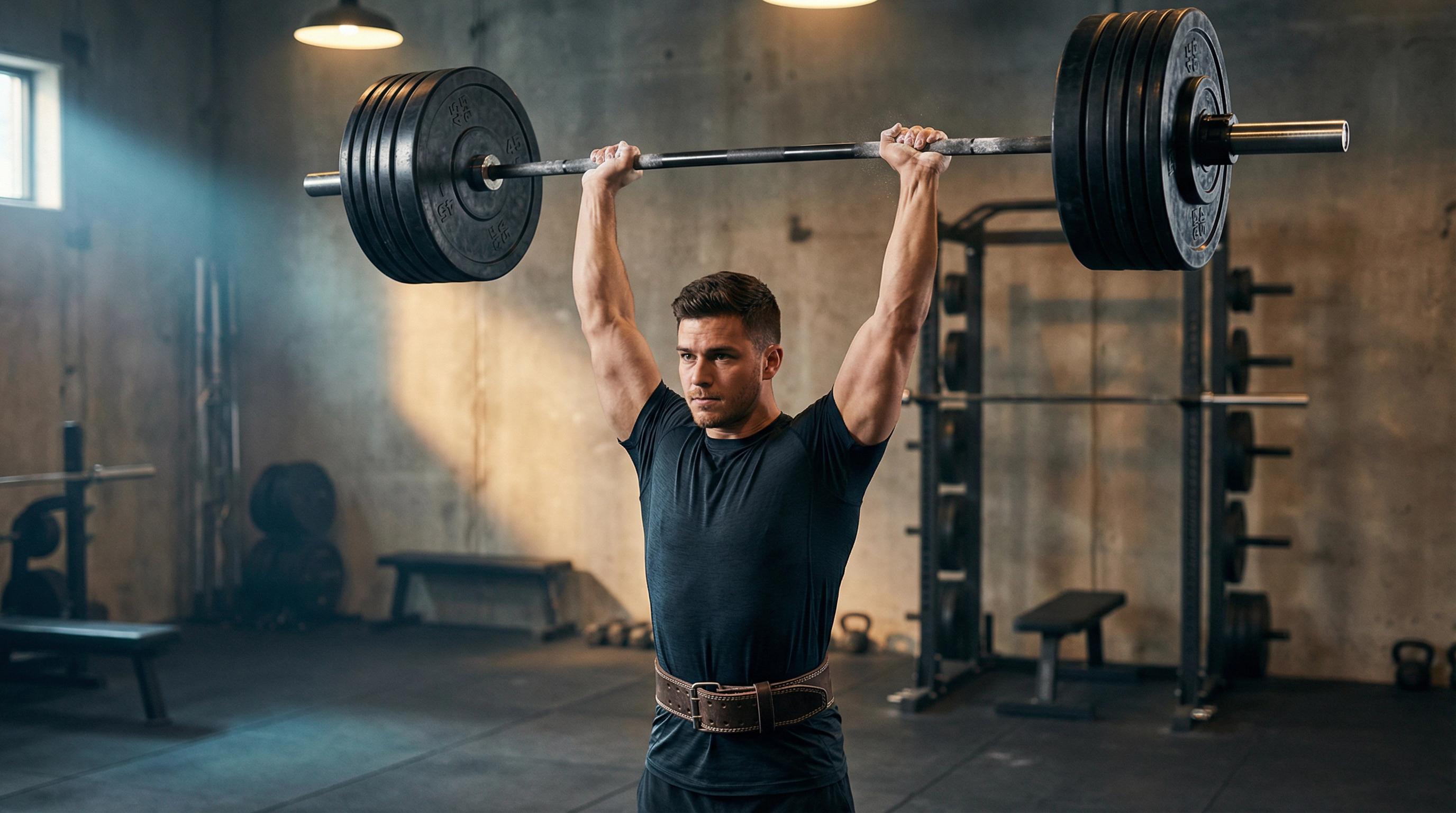
Template 1: strength-focused 2-day overhead press week
Day 1 -- Heavy Strict Press
| Exercise | Sets x Reps | Rest |
|---|---|---|
| Strict overhead press | 5 x 3-5 | 3-5 min |
| Pull-up or lat pulldown | 4 x 6-8 | 2-3 min |
| Lateral raise | 3 x 12-15 | 60-90 sec |
| Overhead tricep extension | 3 x 10-12 | 60-90 sec |
Day 2 -- Power + Volume
| Exercise | Sets x Reps | Rest |
|---|---|---|
| Push press | 4 x 3 | 3-5 min |
| Seated barbell or dumbbell press | 3 x 5-8 | 2-3 min |
| Chest-supported row | 4 x 8-10 | 2 min |
| Rear-delt fly or face pull | 3 x 15-20 | 60 sec |
| Ab wheel or plank | 3 sets | 60 sec |
Template 2: push-day shoulder growth plan
If you are running a push/pull/legs split, this template slots into your push day.
| Exercise | Sets x Reps | Rest |
|---|---|---|
| Standing or seated overhead press | 4 x 6-8 | 2-3 min |
| Dumbbell shoulder press | 3 x 8-12 | 2 min |
| Arnold press | 2-3 x 10-15 | 90 sec |
| Lateral raise | 4 x 12-20 | 60 sec |
| Rear-delt fly or face pull | 3 x 15-20 | 60 sec |
| Tricep pushdown or overhead extension | 3 x 10-15 | 60 sec |
Templates work until something stalls. When that happens, the issue is usually in one of four places.
Why your overhead press is not progressing (and how to fix it)
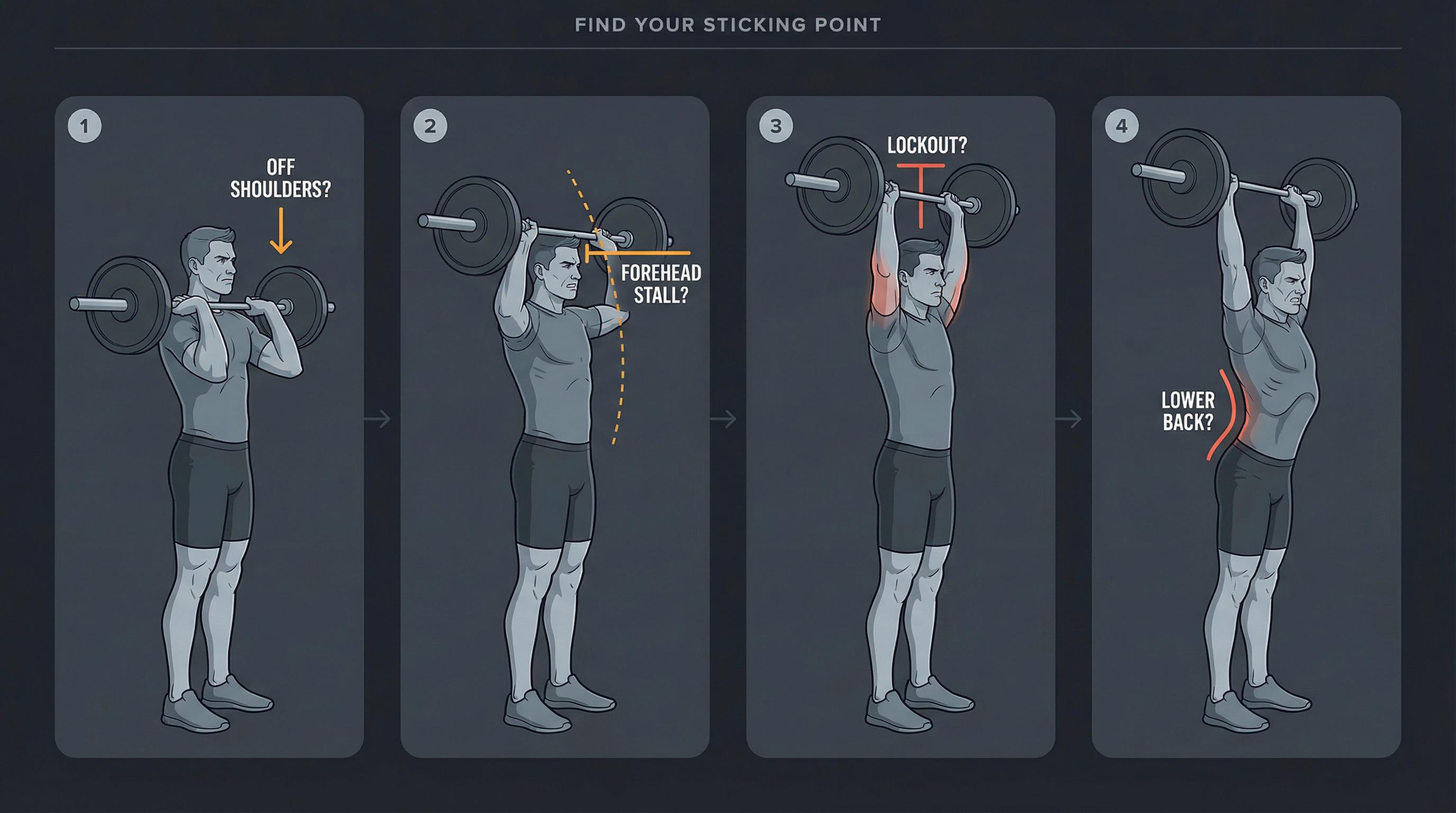
Can't get the bar off your shoulders? here's why
Diagnosis: This is usually a setup problem, a bracing problem, or a lack of starting strength in the position where the press begins.
Fix: Correct the brace first -- make sure your ribs are down and your glutes are engaged before every rep. Then add paused overhead presses (a two-second pause at the shoulders), seated presses to isolate shoulder strength, and more front and side-delt volume through accessory work.
Sticking point at forehead level: how to break through
Diagnosis: This is the most common true sticking point in the overhead press. The usual culprits are a looping bar path, losing upper-back position, or pressing with a grip that is too wide.
Fix: Medium-grip paused work, push presses (to build strength through the sticking point with leg assistance), and pin presses at eye level all help. The 2025 grip-width data is especially useful here: if you have been pressing wide, narrowing the grip may be the single fastest fix.
Can't lock out the overhead press? build your triceps
Diagnosis: That is almost always a triceps limitation.
Fix:Close-grip bench press, dips, overhead triceps extensions, and push presses are the most reliable fixes. The bottom of the overhead press is primarily shoulder-dominant. The top half is much more about finishing elbow extension -- and if your triceps cannot finish, no amount of delt work will fix the lockout.
Lower back taking over before your shoulders fatigue
Diagnosis: Your torso is the weak link, not your shoulders.
Fix: Lower the weight, clean up rib position, and use Z presses, planks, ab wheel rollouts, or seated presses until you can hold the stacked position under load without your lower back compensating.
Stalls are frustrating, but they are diagnosable and fixable. Pain is a different situation entirely.
What to do when overhead pressing hurts your shoulder
First: do not tough it out through sharp joint pain. Hard muscular effort is normal. A sharp pinch in the shoulder is not.
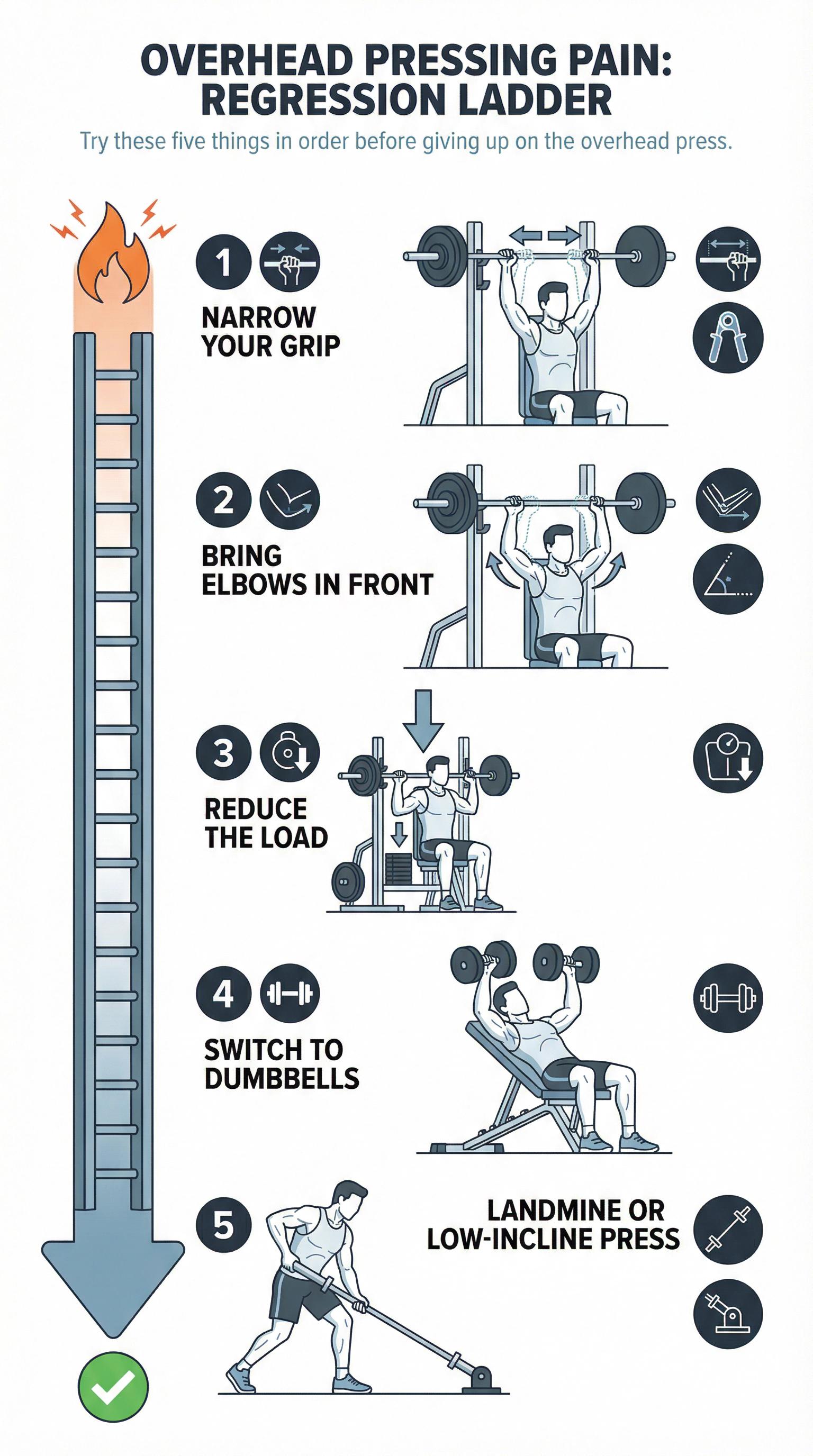
Second: change the variable, not your identity. A lot of lifters jump straight to "I guess I can never overhead press." That is almost always too dramatic. Before you abandon the movement, try this sequence in order:
- Bring the grip in to a medium width.
- Keep the elbows slightly in front of the body instead of flared out.
- Reduce the load and focus on cleaning up the bar path.
- Switch to dumbbells, which allow a freer arm path that many shoulders tolerate better.
- Switch to a landmine press or low-incline press while you rebuild tolerance.
This sequence is grounded in both the 2025 grip-width research and Stronger exercise guidance, which explicitly positions the landmine press as a shoulder-friendlier pressing option.
If pressing still hurts after adjusting grip, load, range of motion, and variation, get it assessed by a qualified professional instead of guessing.
Ready to Get Stronger?
Join 2,000,000+ lifters tracking their workouts with Stronger. Available on iOS and Android.
Start tracking freeHow to track your overhead press progress
The overhead press rewards patience more than any other upper-body lift. Progress is measured in months, not weeks -- and the lifters who consistently get stronger are the ones who track what they do, see the trend, and trust the process.
That is exactly what Stronger is built for.
Automatic PR detection. Every time you hit a new overhead press personal record -- whether it is a 1-rep max, a 5-rep max, or a rep range you have never hit before -- Stronger catches it and logs it. No more scrolling through old notes wondering if 60 kg for 5 was actually a PR.
Estimated 1RM tracking.Stronger calculates your estimated one-rep max based on your training sets, so you can watch your overhead press strength trend upward over weeks and months even when you are not testing heavy singles.
Rest timers built in. The programming recommendations in this guide call for 3 to 5 minutes rest on heavy pressing sets and 60 to 90 seconds on isolation work. Stronger has a built-in rest timer so you do not have to check your phone clock or guess.
RPE logging. If you are tracking reps in reserve or rate of perceived exertion on your pressing sets, Stronger lets you log RPE per set -- giving you a more complete picture of how hard your training actually is, not just how much weight moved.
Progressive overload tracking. The double-progression model in this guide is straightforward on paper but easy to lose track of in practice. Stronger shows your recent sets and reps for each exercise, so you know exactly when you have earned the right to add weight. (Stronger)
Strength Score. Beyond individual lift tracking, Stronger calculates a proprietary Strength Score that rates your strength across 12 muscle groups and overall, adjusted for bodyweight and sex, on six levels from Beginner to World Class. Watch it climb as your overhead press improves alongside your other lifts.
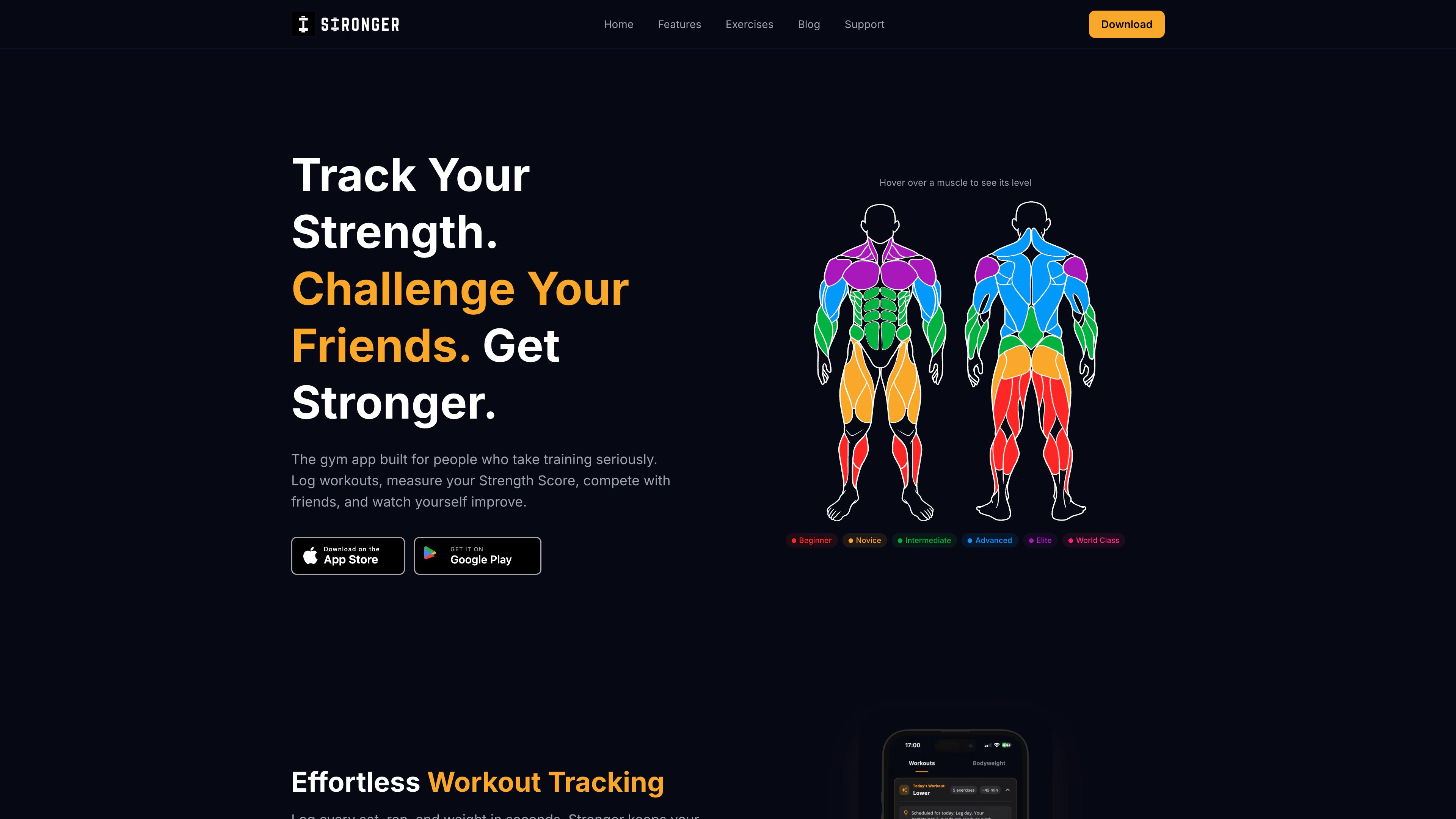
Explore all Stronger features to see how workout tracking, AI routines, and strength benchmarking work together.
If you are serious about getting your overhead press stronger, start tracking your workouts with Stronger and let the data do the guesswork for you.
Overhead press FAQ
Is overhead press the same as shoulder press?
Shoulder press is the umbrella term that covers any pressing movement targeting the shoulders -- including seated, dumbbell, machine, and barbell variations. In this guide, overhead press specifically means the standing strict barbell version. Push press, Arnold press, seated press, and machine shoulder press all belong to the same broader pressing family but are distinct exercises worth tracking separately.
Should I use a barbell or dumbbells for overhead pressing?
Use the barbell when you care most about maximal load, skill development, and clean linear progression. Use dumbbells when you care more about joint comfort, correcting side-to-side imbalances, and hypertrophy. A 2013 comparison study found that the standing dumbbell version created more stability demand and higher deltoid activation but allowed less total load than barbell variations. (PubMed)
Many lifters benefit from using both: barbell as the main strength movement and dumbbells as a secondary hypertrophy movement.
How often should I overhead press?
One to three times per week works for most lifters. One hard session is enough if the bench press is your primary upper-body lift and the overhead press is a supporting movement. Two sessions per week is better if the overhead press is a priority or if you are still building skill in the movement. This aligns with the 2026 ACSM guidance that major muscle groups should generally be trained at least twice per week for optimal results. (ACSM)
If you want to fit pressing into a structured training week, an upper/lower split gives you two natural upper-body days to distribute your pressing volume.
Do I still need lateral raises if I already overhead press?
Yes, in most cases. The overhead press is excellent for front delts and works the side delts well too. The 2020 EMG data found lateral raises activate the side delts about as much as the press, so pairing pressing work with lateral raises is an easy way to add side-delt volume for fuller shoulder development -- particularly if your goal includes shoulder width and a balanced look from all angles. (ResearchGate)
Should I press behind the neck?
Only if you have excellent shoulder mobility, zero pain symptoms, and a specific reason to do so. A 2022 EMG study suggests behind-the-neck pressing shifts deltoid emphasis toward the medial and posterior heads, while a 2014 ROM study found it is safest in lifters with ideal range of motion and trunk stability. For the majority of lifters, front pressing is the better and safer default. (Frontiers)
How much should I be able to overhead press?
There is no universal number because pressing strength depends heavily on bodyweight, training age, and individual leverages. As a rough benchmark on Stronger's scale, a man's strict press reaches Intermediate at 0.8x bodyweight, Advanced at 1.05x and Elite at 1.35x. Rather than chasing an arbitrary number, track your own trend over time. Stronger Strength Score benchmarks your pressing strength against global standards adjusted for your bodyweight and sex, giving you a more meaningful measure of progress than a single number ever could.
Key takeaways: getting stronger at the overhead press
The overhead press is not mysterious. It is a stacking problem.
Set the bar on the upper chest. Use a medium grip. Brace hard. Move your head so the bar can travel straight. Finish with the bar over midfoot.

Program it simply: heavy strict work for strength, moderate-volume pressing plus delt accessories for size, push presses for power, and enough weekly frequency to practice the skill without burying recovery.
Then track everything. The overhead press rewards patience more than ego -- and the lifters who get the strongest are the ones who can look at six months of data and see the line going up, even when individual sessions felt slow.
Start tracking your overhead press with Stronger.
Exercises in this guide
Stronger Editorial Team
Certified strength & conditioning specialists with 10+ years of coaching experience
The Stronger editorial team produces evidence-based training content for lifters of all levels.
Ready to Get Stronger?
Join 2,000,000+ lifters tracking their workouts with Stronger. Available on iOS and Android.
Start tracking free