

How to Do a Deload Week: The Complete 2026 Guide
You have built the habit. You show up consistently. You push hard. So when someone tells you to take it easy for a week — to cut your sets in half and leave weight on the bar — every instinct says that is backwards. That backing off means losing progress. That taking it easier is something other lifters need, not you.
Here is the thing: the lifters who make progress year after year are not the ones who never back off. They are the ones who understand how progressive overload and fatigue interact over time. After weeks of hard training, you can be genuinely stronger — and still perform worse, because accumulated fatigue is hiding the gains. The deload is what removes that fog.
A deload week is a short, intentional reduction in training stress so fatigue can drop before it starts masking your performance. In practice, that means roughly 5–7 easier days where you cut total set volume, reduce load, dial down intensity of effort, or some combination of the three. A 2025 practical review defines deloading as a planned reduction in training demand to reduce physiological and psychological fatigue and improve readiness for the next phase of training. A 2024 survey of 246 competitive strength and physique athletes found deloads typically lasted about 6.4 days and were most often used to manage energy and fatigue. (Springer)
This guide covers when you need a deload, exactly how to structure one for your training goal, what to watch out for, and how to return without wasting the recovery you just earned. At Stronger, we built our app for lifters who take this seriously — including RPE tracking per set, adaptive routines, and deload suggestions — because informed training decisions require real data from your log, not guesswork.

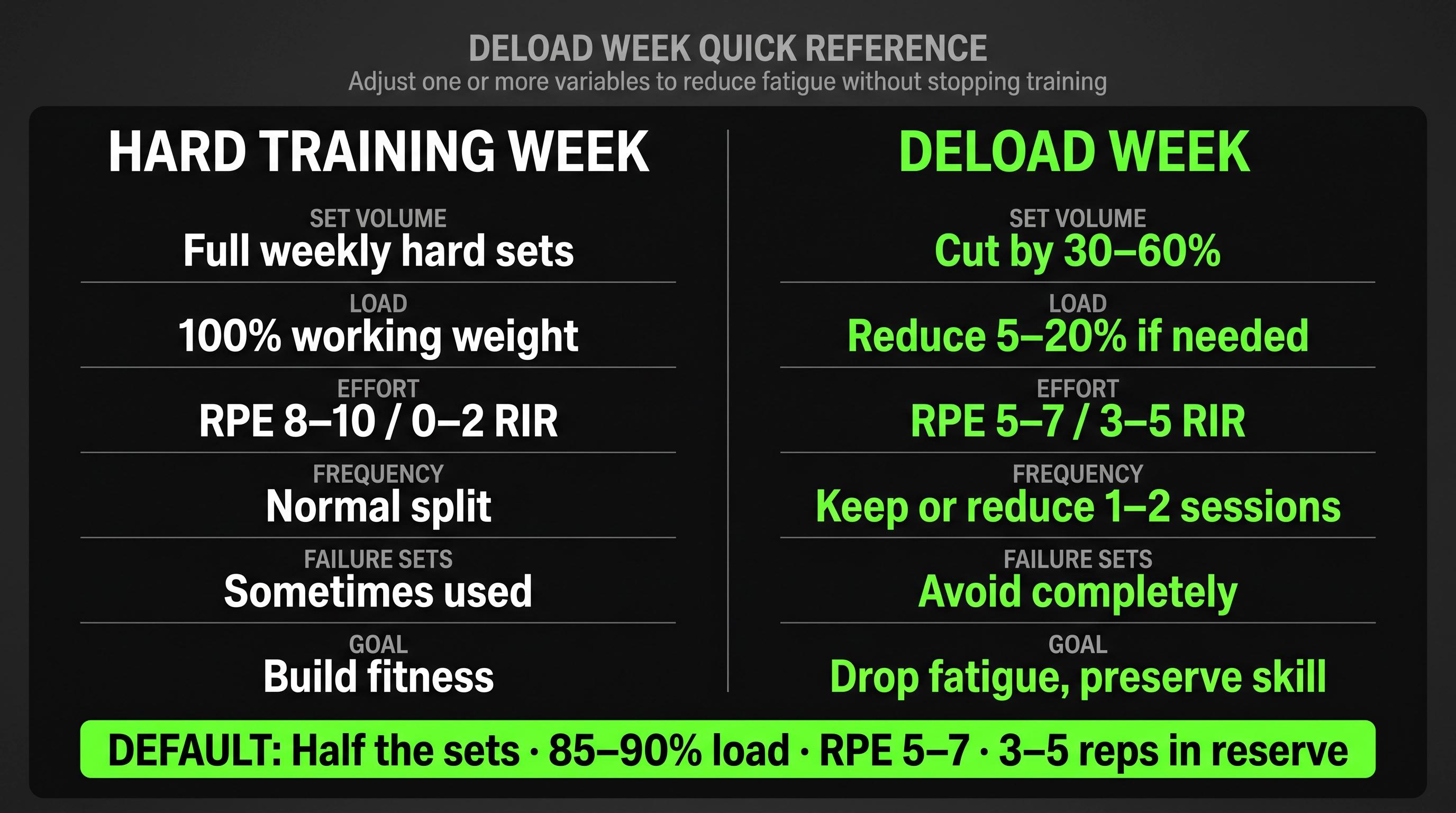
How to Deload This Week: Quick Reference
Use this if you already know a deload is overdue and want the prescription now.
| Training variable | Normal hard training | Deload week target |
|---|---|---|
| Set volume | Your usual weekly hard sets | Reduce by 30–60% |
| Load | Normal working weights | Reduce by 5–20% when needed |
| Effort | RPE 8–10 / 0–2 reps in reserve | RPE 5–7 / 3–5 reps in reserve |
| Frequency | Your normal split | Usually keep it, or reduce 1–2 sessions if very fatigued |
| Exercise selection | Normal lifts | Keep familiar lifts; remove high-fatigue extras |
| Failure training | Sometimes useful | Avoid completely |
| Goal | Build fitness | Reduce fatigue while preserving skill, rhythm, and momentum |
The practical default:
Do half your normal number of hard sets, use 85–90% of your usual working weight, and stop every set with at least 3–5 reps in reserve.
A concrete example:
- Normal squat day: 5 × 5 at 100 kg
- Deload squat day: 3 × 5 at 85–90 kg, all fast, clean reps, no grinders
You should leave the gym feeling better than when you walked in. If you want to understand why those numbers work and how to adapt them for your specific training goal — strength, hypertrophy, powerlifting, or a PPL split — keep reading.
What Is a Deload Week and What It Is Not
A deload week is a short period of deliberately easier training used to reduce accumulated fatigue.
It is different from missing workouts. A missed week is accidental. A deload is programmed. It is also different from quitting training or taking a full break. Some situations do call for complete rest — illness, injury, burnout, or extreme life stress. But for most healthy lifters dealing with normal training fatigue, the better option is an active deload: keep lifting, reduce the dose, and preserve your training rhythm.
The 2024 athlete survey found that competitive strength and physique athletes typically reduced volume by cutting reps per set and sets per week, often lowered load, reduced effort by leaving more reps in reserve on every set, and usually kept exercise selection similar. (Springer) That gives us a workable definition:
A deload is a temporary drop in training demand — not a break from being a lifter.
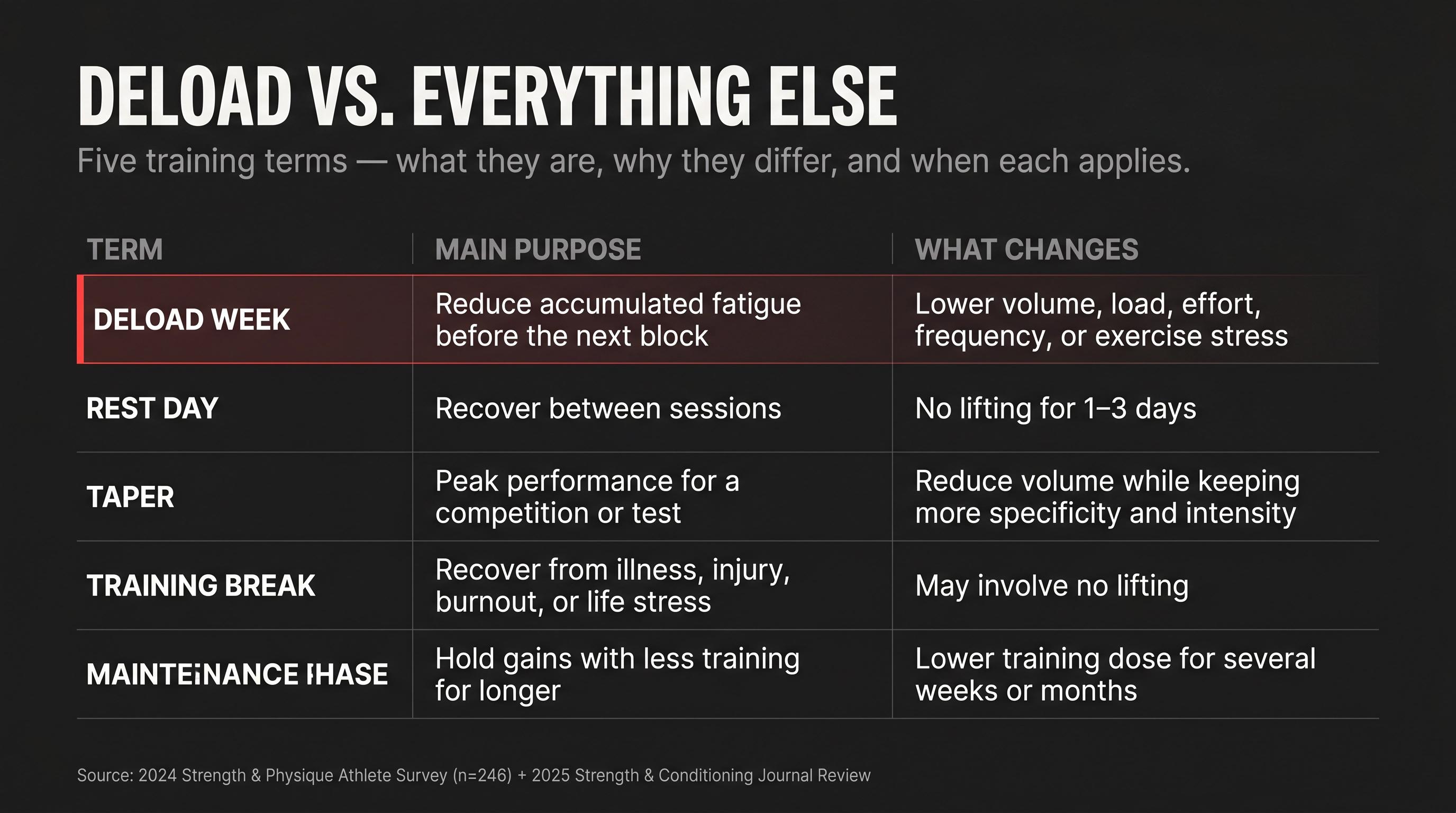
It also helps to know what it is not:
| Term | Main purpose | What changes |
|---|---|---|
| Rest day | Recover between sessions | No lifting for 1–3 days |
| Deload week | Reduce accumulated fatigue before the next block | Lower volume, load, effort, frequency, or exercise stress |
| Taper | Peak performance for a competition or test | Reduce volume while keeping more specificity and intensity |
| Training break | Recover from illness, injury, burnout, or life stress | May involve no lifting |
| Maintenance phase | Hold gains with less training for longer | Lower training dose for several weeks or months |
A deload is about being ready for more productive training. A taper is about expressing peak performance on a specific day. A 2025 practical review in the Strength and Conditioning Journal explicitly distinguishes deloading from tapering and training cessation based on their objective, structure, and placement in the training plan. (SHURA)
The reason deloads work goes deeper than "less training is good sometimes." That explanation is in the next section.
How Fatigue Masks Your Strength Gains
This is the concept that changes how most serious lifters think about training management.
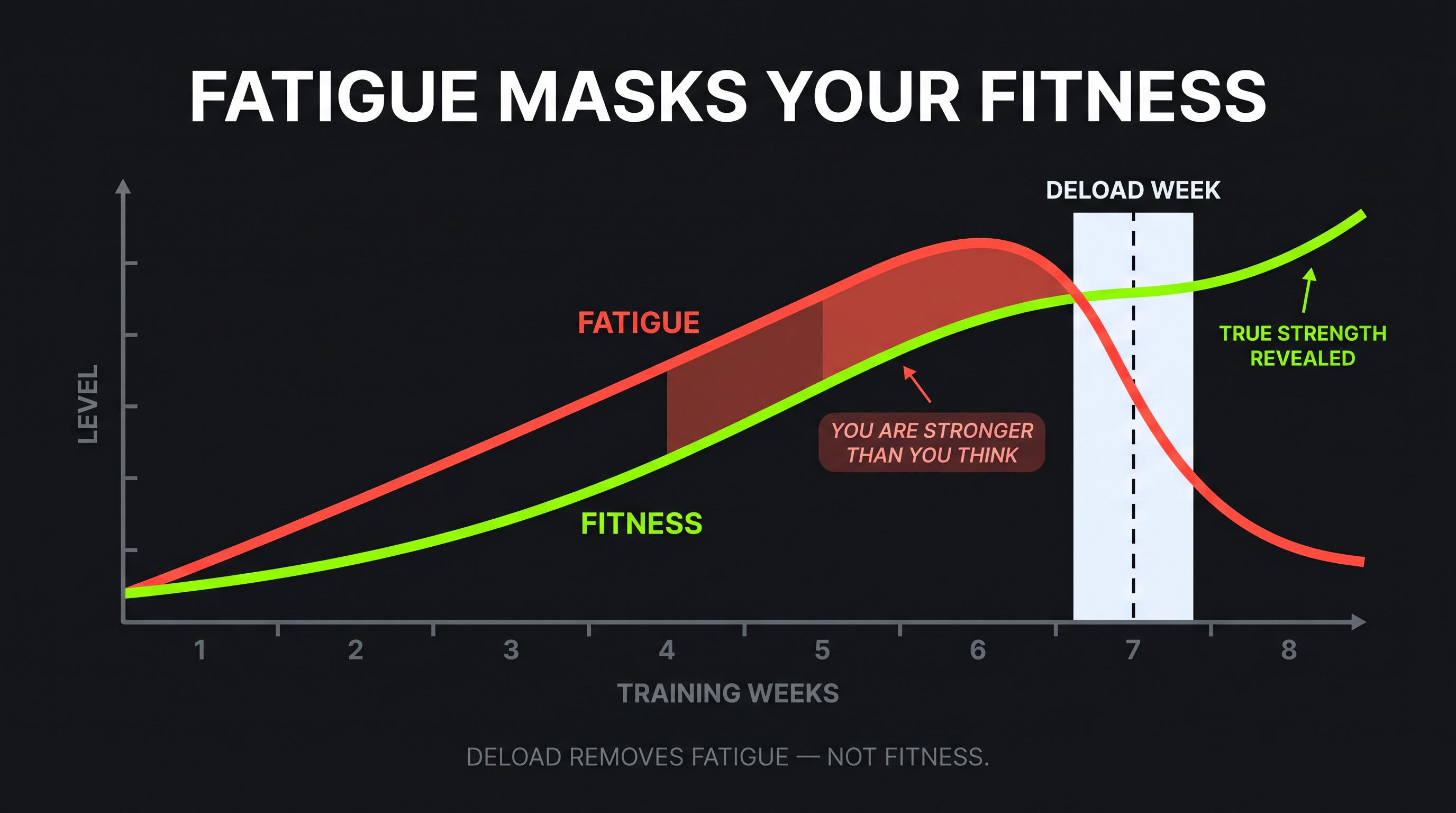
Training works through stress and recovery — the full cycle of stress, adaptation, and recovery that drives every strength gain. You create an adaptation signal by lifting hard enough, then recover and come back stronger. The problem is that fitness and fatigue rise together. When you are deep into a hard training block, your actual strength may be improving week over week — but your performance in the gym starts looking flat or even declining. The weights feel heavier. Your RPE at the same loads creeps up. Reps that were crisp become grinds.
That is not weakness. That is fatigue masking fitness. You are stronger than you are performing.
A deload reduces the fatigue without undoing the fitness. When you return to full training after a deload, the work you put in during the previous block reveals itself — weights feel lighter, your technique is sharper, and you can push harder than you could before backing off.
That is why more training is only better until it exceeds your ability to recover. Recent resistance-training research on the dose-response relationship confirms that more volume drives gains, but with diminishing returns — and that relationship assumes the lifter is actually recovering between sessions. (Springer)
What a Well-Timed Deload Week Does for You
- Recovery from accumulated fatigue — muscular fatigue, joint irritation, connective tissue stress, and psychological fatigue all accumulate during hard blocks. A deload reduces the input before those problems force a longer, unplanned break.
- Performance restoration — the weights that felt heavy often feel lighter after a deload, not because you got weaker but because fatigue stopped hiding what you built.
- Momentum through a longer program — consistent progress over months requires managing the relationship between stress and recovery, not just adding more of everything.
- Cleaner technique — easier loads let you practice crisper reps without the compensation patterns that creep in when you are exhausted.
- Reduced chance of accumulated-fatigue injuries — sloppy mechanics under load from persistent fatigue are a real injury mechanism. A deload does not make you injury-proof, but it reduces the likelihood of decisions you would not make when fresh.
- A better next block — the point of the deload is not the deload itself. It is the four to eight weeks that follow.
When Should You Take a Deload Week?
There are two ways to approach the timing: plan one in advance, or take one reactively when the signals accumulate. Both work. The best lifters use both.
How to Use Planned Deloads
A planned deload is built into the program before fatigue becomes a problem.
This works best when you:
- Train hard and consistently four to six days per week
- Use high volume or push sets close to failure regularly
- Are intermediate or advanced and accumulate fatigue faster than a beginner
- Run predictable training blocks with a defined structure
- Know you tend to push too long before acknowledging you need to back off
The type of training matters too — strength and hypertrophy training create different recovery demands, which affects how quickly fatigue accumulates and how frequently you may need to deload.
A common structure:
- 3–5 hard weeks + 1 deload week — advanced lifters or very high-volume blocks
- 4–8 hard weeks + 1 deload week — most intermediate lifters
- 8–12 weeks or as needed — many beginners on straightforward programs
The 2024 athlete survey found deloads occurring every 5.6 ± 2.3 weeks on average, which sits squarely within the commonly recommended 4–8 week range. (Springer)
How to Use Reactive Deloads
A reactive deload is based on evidence that fatigue is accumulating faster than you are recovering.
This works best when you:
- Have inconsistent sleep or life stress from week to week
- Are in a calorie deficit
- Use RPE and reps in reserve honestly to guide your training
- Are a beginner or early intermediate who does not yet accumulate fatigue at the same rate as advanced lifters
Reactive deloading is not random. It is a decision based on what your body and your training log are showing you.
Signs You Need a Deload Right Now
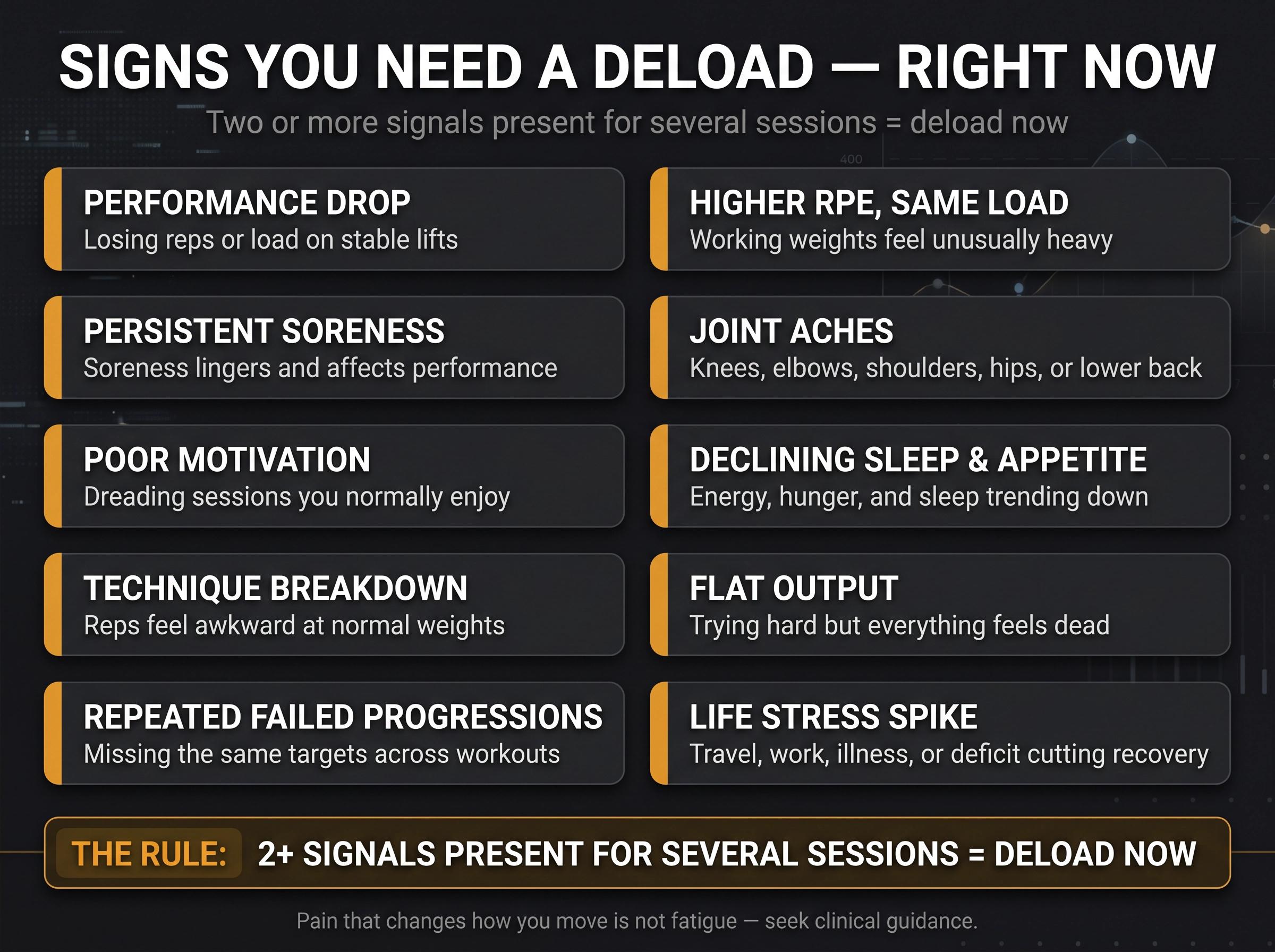
You probably need a deload if two or more of these signals have been present for at least several sessions:
| Signal | What it looks like |
|---|---|
| Performance drop | You lose reps or load on lifts that are usually stable |
| Higher RPE at the same load | Normal working weights feel unusually heavy |
| Persistent soreness | Soreness lasts longer than normal and starts affecting performance |
| Joint aches | Knees, elbows, shoulders, hips, or lower back feel increasingly irritated |
| Poor motivation | You dread sessions you normally enjoy |
| Declining sleep or appetite | Sleep quality, hunger, and energy are trending down |
| Technique breakdown | Reps feel awkward even at your normal working weights |
| Flat output | You are trying hard but everything feels dead |
| Repeated failed progressions | You miss the same targets across multiple workouts |
| Life stress spike | Work, travel, illness, exams, or dieting is reducing recovery capacity |
RPE is particularly useful here, but not in isolation. A 2025 meta-analysis in adolescent athletes found that session RPE (an effort rating for the whole workout) was meaningfully related to fatigue, soreness, and sleep-quality indicators, supporting the idea that RPE should be interpreted alongside recovery context rather than as a standalone metric. (Frontiers) If you are not yet familiar with the full RPE scale and what each number means, our complete RPE chart for lifting covers the 1–10 scale with RIR conversions and a load-selection system.
If you track your training consistently — logging your working weights, RPE per set, and session notes — these signals become patterns you can see. That rising RPE at the same load is visible in your history. Stronger's training log and strength curves let you see exactly when effort starts creeping up relative to load, so the deload decision becomes data-driven rather than gut-based.
A Simple Rule
| If this is happening | Do this |
|---|---|
| One bad workout | probably not a deload |
| One bad week | consider making sessions easier, a micro-deload, or one session off |
| Two bad weeks with worsening performance and recovery | deload now |
| Pain that changes how you move | stop treating it like normal fatigue |
Pain and fatigue are different things. Sharp pain, swelling, numbness, radiating symptoms, or pain that worsens as you warm up warrants medical or clinical guidance — not a lighter training week.
When You Don't Need a Deload Week
A deload is a useful tool. It is not the answer to every training problem.
You probably do not need a deload if:
- You are still progressing normally on the main lifts
- Your sleep, appetite, and motivation are solid
- You are a beginner training two to three days per week
- Your program is already relatively low volume
- You had one bad session after a rough night's sleep
- You are simply bored and want to change programs
- The issue is poor technique rather than fatigue
- You are not eating enough and hoping a deload will fix it
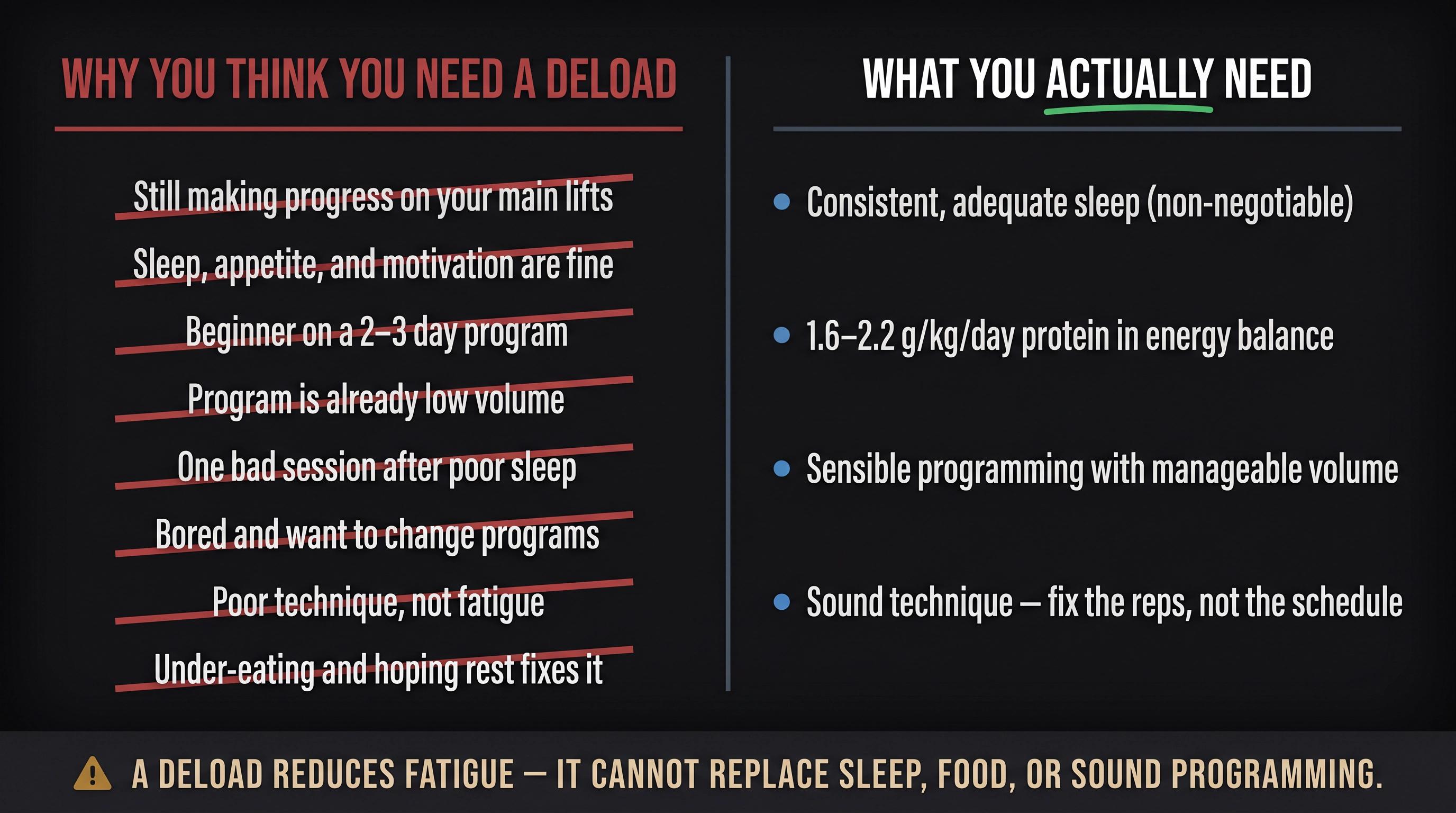
A deload can reduce training fatigue. It cannot replace adequate sleep, sufficient calories, sensible programming, or sound technique. Of these, sleep is especially non-negotiable: a 2025 systematic review found that acute and chronic sleep deprivation reduces muscle strength, power, and muscular endurance, with increased fatigue and impaired neuromuscular function consistently observed. (Springer) Adequate protein matters equally during hard training — resistance-trained athletes generally need around 1.6–2.2 g/kg/day in energy balance, with higher needs possible during caloric restriction. (MDPI) If you are under-eating and under-sleeping, the deload will not compensate.
Ready to Get Stronger?
Join 2,000,000+ lifters tracking their workouts with Stronger. Available on iOS and Android.


How to Structure a Deload Week: 4 Variables to Adjust
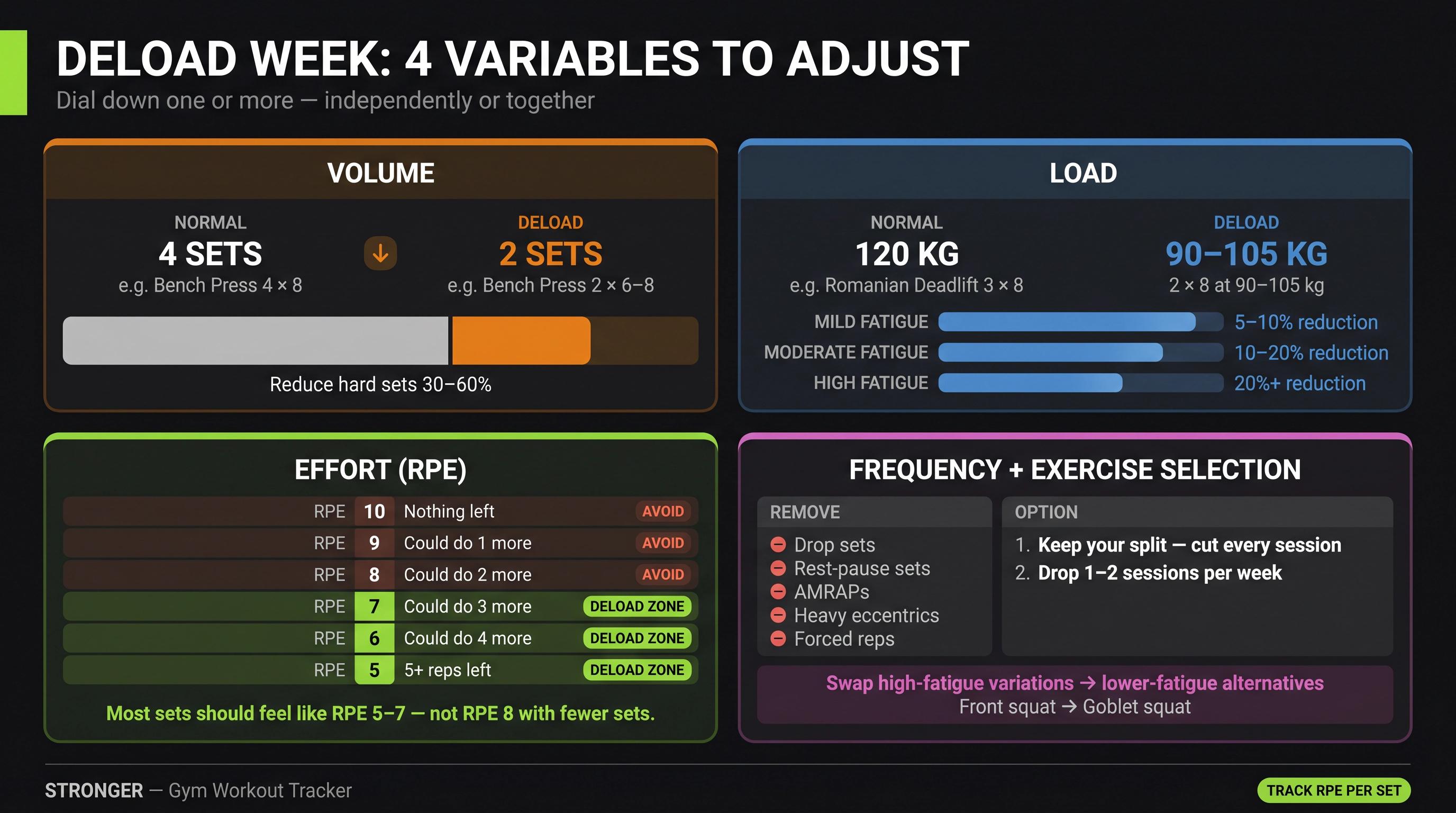
You do not need to change everything at once. A deload is built by adjusting one or more of four variables. Understanding them separately lets you calibrate the deload to your actual situation.
1. How to Reduce Volume During a Deload
Volume is the first lever to pull and, for most training styles, the most important one.
Reduce:
- Sets per exercise
- Hard sets per muscle group
- Reps per set
- Total weekly training work
Most lifters should start here before touching anything else.
Example:
- Normal: Bench press 4 × 8
- Deload: Bench press 2 × 6–8
You still practice the movement pattern. You just stop digging the fatigue hole deeper.
2. How Much to Reduce Load During a Deload
Load is the weight on the bar, machine, dumbbell, or cable.
How much to reduce depends on fatigue severity:
- 5–10% for mild fatigue — the deload is mostly about less volume
- 10–20% for moderate fatigue — especially relevant for heavy compound work
- 20%+ if you are very beat up, returning from illness, or dealing with technical breakdown
Example:
- Normal: Romanian deadlift 3 × 8 at 120 kg
- Deload: Romanian deadlift 2 × 8 at 90–105 kg
Heavy strength training usually benefits from a load reduction because the neural and joint stress from heavy loading specifically accumulates over a training block. Pure hypertrophy work can sometimes maintain closer to normal loads if you dramatically cut sets and stop far from failure.
3. How to Manage Effort (RPE) During a Deload
Effort is how close to failure each set goes — measured by the RPE scale (rating of perceived exertion) or RIR (reps in reserve).
The RPE scale:
| RPE | Meaning |
|---|---|
| RPE 10 | Maximum effort, nothing left |
| RPE 9 | Could have done 1 more rep |
| RPE 8 | Could have done 2 more reps |
| RPE 7 | Could have done 3 more reps |
| RPE 6 | Could have done 4 more reps |
| RPE 5 | Moderate effort, 5+ reps left |
During a deload, most sets should be at RPE 5–7. Not RPE 8 with fewer sets. The effort reduction is as important as the volume reduction.
This is the part most lifters get wrong. They cut the set count but still push each set close to failure. Two all-out sets can still generate substantial fatigue. Recent research on proximity to failure confirms that hypertrophy gains are particularly sensitive to training close to failure, while strength gains can occur across a wider range — which is part of how rep ranges and proximity to failure connect to recovery management. This supports the idea that temporarily backing away from failure during a deload reduces fatigue without meaningful fitness loss. (Springer)
If you use RPE in your training, Stronger logs RPE per set alongside load — so you can verify you are actually staying at RPE 5–7 during the deload rather than drifting toward RPE 8–9 out of habit.
4. Adjusting Frequency and Exercise Selection
Frequency is how often you train. Exercise selection is what you train.
Options:
- Keep your normal training split and make every session easier
- Drop from five or six sessions to three or four
- Replace high-fatigue variations with lower-fatigue alternatives (e.g., front squat → goblet squat)
- Remove intensifiers: drop sets, rest-pause sets, forced reps, AMRAPs, heavy eccentrics, and bands or chains
Most lifters should keep familiar movement patterns during a deload. Using your deload week to experiment with exercises you have not done in months creates new soreness from a different source — which defeats the purpose.
How to Deload Based on Your Training Goal
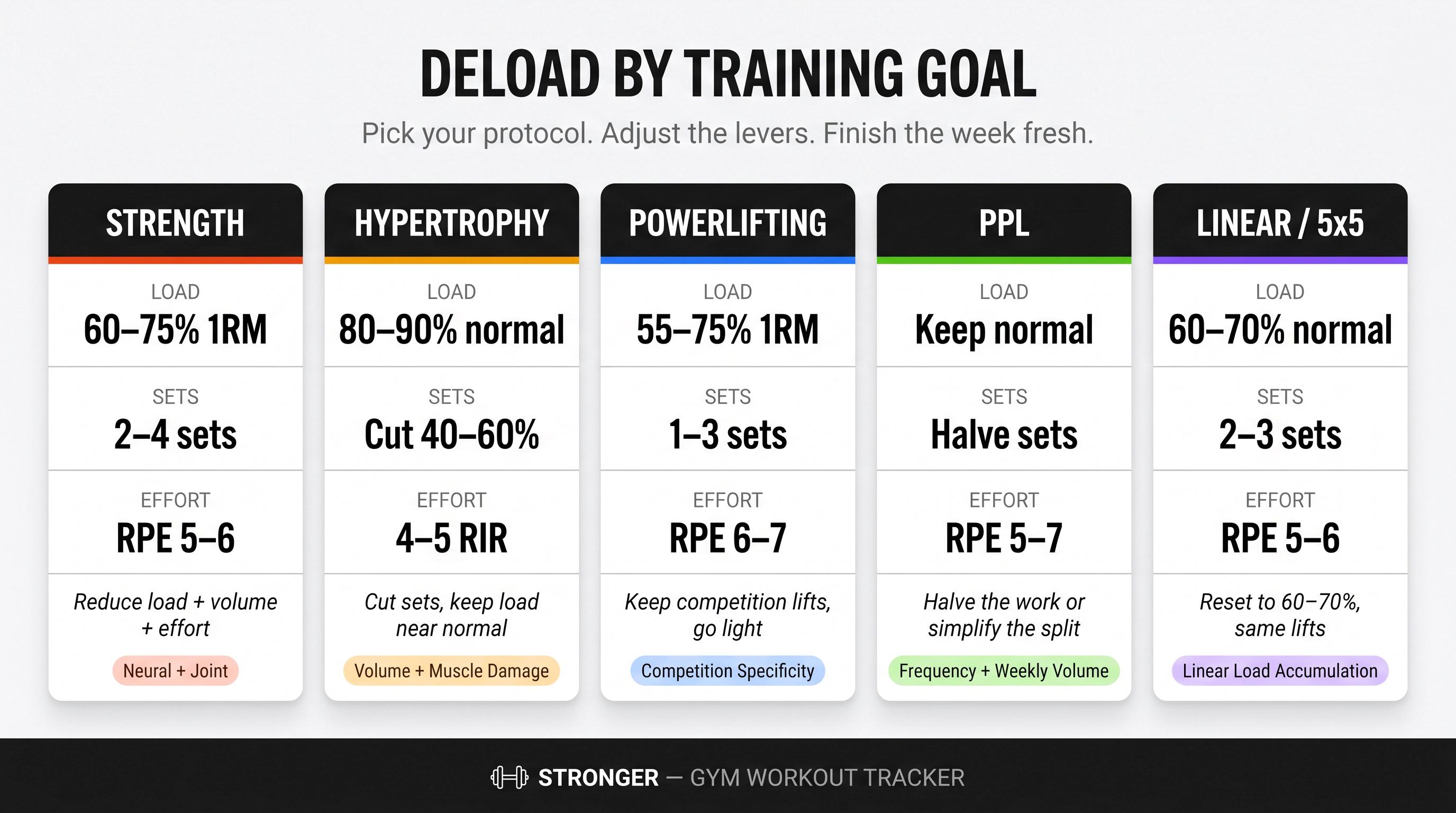
The right deload depends on what kind of fatigue your training creates — the difference between strength and hypertrophy training in how they create fatigue is worth understanding before you pick your protocol. Strength training creates different stress than bodybuilding volume work, and powerlifting creates different stress than a PPL split. Here is how to adapt the levers for your situation.
Strength Training Deload Week Protocol
Strength training accumulates neural fatigue, technical stress, and joint loading — particularly from heavy compound movements.
Use a load + volume + effort deload.
Default prescription:
- Main lifts: 2–4 sets of 2–5 reps
- Load: 60–75% of 1RM, or 10–20% below recent working loads
- Effort: RPE 5–6
- Accessories: 1–2 easy sets each
- No max singles, no AMRAP sets, no grinding reps
| Lift | Normal week | Deload week |
|---|---|---|
| Squat | 5 × 5 at 80% | 3 × 5 at 60–70% |
| Bench | 4 × 4 at 82% | 3 × 4 at 65–72% |
| Deadlift | 4 × 3 at 85% | 2 × 3 at 60–70% |
| Row | 4 × 8 hard | 2 × 8 easy |
The goal is to leave the gym feeling like you had a lot more in the tank.
Hypertrophy and Bodybuilding Deload Protocol
Hypertrophy training accumulates fatigue through high volume, proximity to failure, exercise variety, and local muscle damage.
Use a volume + effort deload.
Default prescription:
- Keep most exercises — familiarity reduces the soreness that comes with novelty
- Cut sets by 40–60%
- Use 80–90% of your normal working load
- Stop with 4–5 reps in reserve on every set
- Remove all failure work, drop sets, rest-pause sets, forced reps, and partials
- Keep reps smooth and controlled
| Exercise | Normal week | Deload week |
|---|---|---|
| Leg press | 4 × 10 near failure | 2 × 10, 4–5 RIR |
| Leg curl | 3 × 12 hard | 1–2 × 12 easy |
| Hack squat | 3 × 8 hard | 2 × 8 moderate |
| Calf raise | 4 × 12–15 | 2 × 12 easy |
If the session feels like a normal bodybuilding workout, you probably did too much.
Powerlifting Deload Week Protocol
Powerlifters should keep the compound movements that matter most — squat, bench, and deadlift patterns — in the week but reduce fatigue sharply. The specificity matters — staying connected to the competition movements is important — but load and volume both need to drop meaningfully.
Default prescription:
- Squat: 2–3 sets of 3–5 at 60–70%
- Bench: 2–4 sets of 3–5 at 60–75%
- Deadlift: 1–3 sets of 2–4 at 55–70%
- Accessories: 1–2 light movements per session
- No heavy singles, no RPE 8+ work
- Keep all reps fast and technical
Bench can generally tolerate slightly more volume and frequency than squat and deadlift during a deload. If you are peaking for a meet, this becomes a taper rather than a standard deload — which is a distinct programming structure with different goals.
Push Pull Legs (PPL) Deload Week
PPL programs — which build up significant training volume over the week through a combination of high frequency and specialization — accumulate fatigue from the combination of high frequency and high weekly volume. You have two practical options.
Option 1: Keep the split, halve the work
| Day | Deload approach |
|---|---|
| Push | 1–2 pressing movements, 1–2 easy sets each |
| Pull | 1–2 pulling movements, 1–2 easy sets each |
| Legs | 1 squat or press pattern, 1 hinge or curl, easy sets |
| Push 2 | Repeat with lighter variations |
| Pull 2 | Repeat with fewer sets |
| Legs 2 | Optional, or replace with walking and mobility |
Option 2: Switch to 3 full-body sessions
This works well when total weekly fatigue is the issue and you want to reduce gym time significantly:
- Monday: Squat 2 × 5, Bench 2 × 6, Row 2 × 8
- Wednesday: Deadlift 2 × 3, Overhead press 2 × 6, Pulldown 2 × 10
- Friday: Front squat 2 × 5, Incline press 2 × 8, RDL 2 × 8
Everything should feel easy.
5x5 and Linear Progression Deload Week
Linear progression programs — like the 5x5 method, which builds in regular weight increases on your main lifts — are simple by design, so the deload should be simple too.
Default prescription:
- Reduce load to 60–70% of recent working weight
- Do 2–3 sets of 5
- Keep the same main lifts
- Skip optional accessories or do one easy set each
- After the deload, return to 90–95% of the weight that stalled
Example:
- Normal: Squat 5 × 5 at 100 kg
- Deload: Squat 3 × 5 at 65–70 kg
- Return: Squat 5 × 5 at 90–95 kg
If you stalled because the load jumps were too aggressive, the deload alone is not enough. You also need smaller increments or a reset to a more sustainable progression model.
3 Deload Week Templates You Can Use Today
Template 1: Standard Deload for Most Lifters
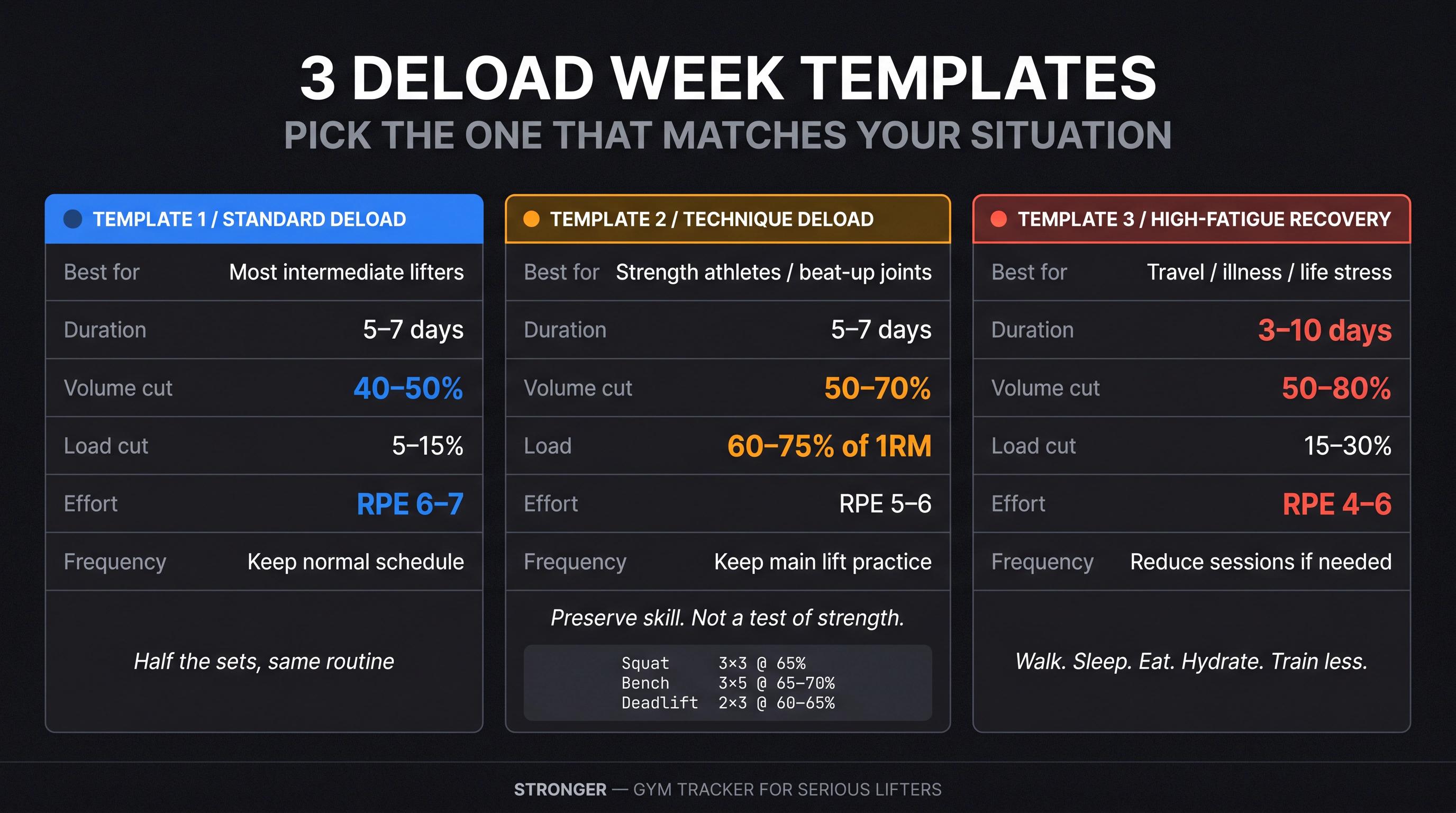
Best for most intermediate lifters dealing with normal accumulated training fatigue.
| Variable | Prescription |
|---|---|
| Duration | 5–7 days |
| Volume | Reduce hard sets by 40–50% |
| Load | Reduce 5–15% |
| Effort | RPE 6–7 |
| Frequency | Keep your normal schedule |
| Best for | Normal accumulated fatigue after a hard block |
Examples:
- If you normally do 4 sets, do 2
- If you normally do 3 sets, do 1–2
- If you normally stop at 1–2 RIR, stop at 3–4 RIR
This is the best default for most lifters because it keeps your routine intact while reducing the dose.
Template 2: Low-Volume Technique Deload
Best for strength athletes, heavy barbell work, and lifters whose joints feel beat up.
| Variable | Prescription |
|---|---|
| Duration | 5–7 days |
| Volume | Reduce 50–70% |
| Load | 60–75% of 1RM |
| Effort | RPE 5–6 |
| Frequency | Keep main lift practice |
| Best for | Heavy compound training blocks |
Example:
- Squat: 3 × 3 at 65%
- Bench: 3 × 5 at 65–70%
- Deadlift: 2 × 3 at 60–65%
- Accessories: minimal
This is not a workout to prove strength. It is a workout to preserve skill and let your system recover.
Template 3: High-Fatigue Recovery Deload
Best after travel, poor sleep blocks, calorie deficits, illness, or high life stress.
| Variable | Prescription |
|---|---|
| Duration | 3–10 days |
| Volume | Reduce 50–80% |
| Load | Reduce 15–30% |
| Effort | RPE 4–6 |
| Frequency | Reduce sessions if needed |
| Best for | High systemic fatigue from multiple sources |
This version:
- 2–3 short sessions for the week
- Simple full-body workouts that cover the major movement patterns without accumulating new fatigue
- Avoid heavy axial loading (squats and deadlifts go light or get temporarily replaced)
- Walk, sleep, eat, and hydrate
This is the version you use when training is only one part of the fatigue problem.
How Hard Should a Deload Feel?
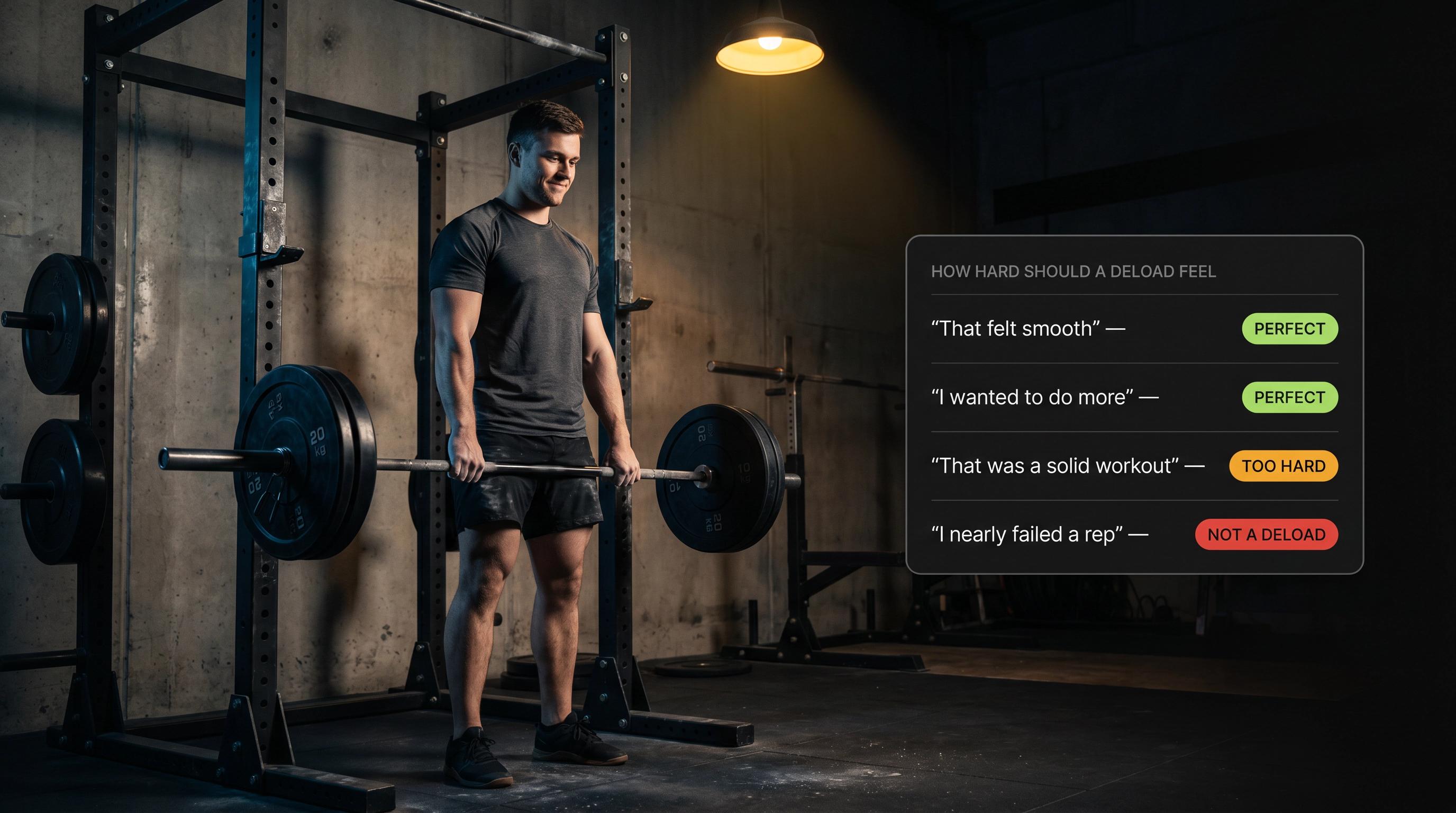
A deload should feel almost too easy. That is the point.
| Feeling | Meaning |
|---|---|
| "That was pointless" | Possibly too easy, but acceptable if fatigue was very high |
| "That felt smooth" | Perfect |
| "I wanted to do more" | Perfect |
| "Good pump, but not hard" | Acceptable for a hypertrophy deload |
| "That was a solid workout" | Probably too hard |
| "I nearly failed a rep" | Not a deload |
| "I hit a PR" | Definitely not a deload |
Most lifters ruin deloads by treating them as slightly easier normal workouts. They cut set count but keep pushing close to failure. They get restless by Wednesday and add back a few extra sets. They feel good by Thursday and test a heavy single.
All of those choices defeat the purpose. The goal is not to maintain your normal training stress. The goal is to reduce it enough that the next four to eight weeks become your most productive training period.
And if you feel great during the deload? Good. Do not end it early just because fatigue drops faster than expected. Connective tissue irritation, sleep debt, and psychological fatigue may need the full week even when your muscles feel recovered after two days. Finish the deload. Then train.
How Long Should a Deload Last and How Often Should You Take One?
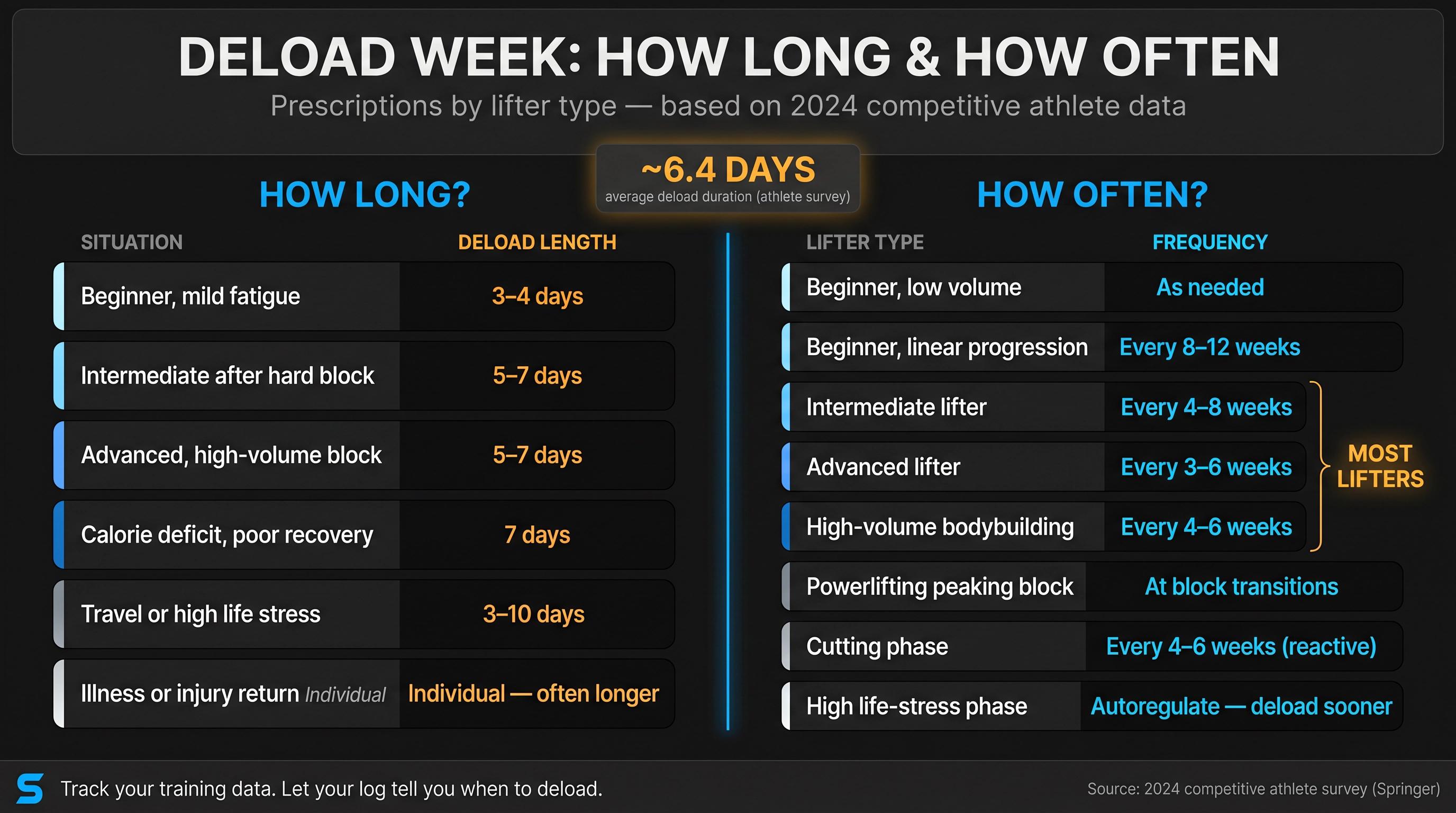
Most deloads should last one week. That does not mean exactly seven days in every situation.
| Situation | Deload length |
|---|---|
| Beginner with mild fatigue | 3–4 days or 1–2 easier sessions |
| Intermediate lifter after a hard block | 5–7 days |
| Advanced lifter after a high-volume block | 5–7 days |
| Calorie deficit with poor recovery | 7 days |
| Travel or a stressful life week | 3–10 days |
| Illness or injury return | Individual; often longer and more gradual |
The 2024 athlete survey found an average deload duration of about 6.4 days, which aligns with the practical "about a week" recommendation. (Springer)
How often to deload depends on your training level and recovery capacity:
| Lifter type | Typical deload frequency |
|---|---|
| Beginner, low-volume training | As needed |
| Beginner, hard linear progression | Every 8–12 weeks or after repeated stalls |
| Intermediate lifter | Every 4–8 weeks |
| Advanced lifter | Every 3–6 weeks |
| High-volume bodybuilding | Every 4–6 weeks |
| Powerlifting peaking block | Around block transitions; taper separately before competition |
| Cutting phase | More often — every 4–6 weeks or reactively |
| High life-stress phase | Autoregulate; deload sooner when needed |
If you always need an emergency deload by week three of a new block, your normal training is probably too aggressive. If you never deload but frequently stall, ache, or lose motivation, you are waiting too long.
Planned vs. Reactive Deloads: Which Is Better for You?
Neither is automatically better. They serve different lifters in different situations.
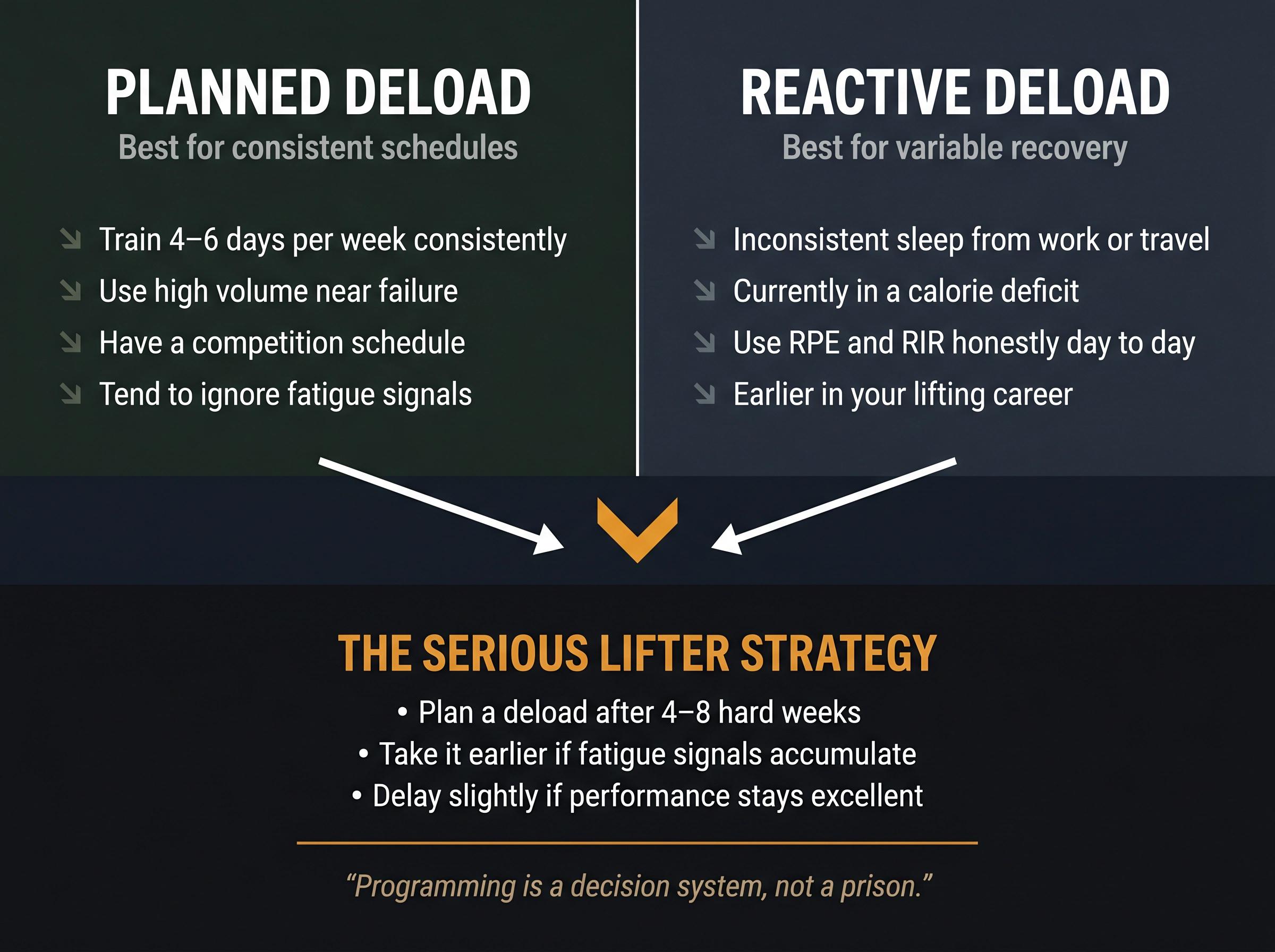
Planned Deloads: Best for Consistent Training Schedules
Use planned deloads if you:
- Train four to six days per week consistently
- Use high volume and push sets close to failure
- Have a competition or testing schedule that structures your training
- Know you tend to ignore fatigue signals until they become a problem
Planned deloads prevent bad decisions. When a deload is already in the calendar, you do not have to convince yourself to take it.
Reactive Deloads: Best for Variable Recovery
Use reactive deloads if you:
- Have inconsistent sleep due to work, family, or travel
- Are in a calorie deficit
- Use RPE and RIR honestly to guide your training day to day
- Are earlier in your lifting career and do not yet accumulate fatigue fast enough to need scheduled recovery weeks
Reactive deloads prevent unnecessary easy weeks. If your recovery is genuinely good, you keep training hard.
The Best Deload Strategy for Serious Lifters
For most intermediate and advanced lifters:
- Plan a deload after 4–8 hard weeks
- Take it earlier if fatigue signals accumulate in week three or four
- Delay it slightly if performance and recovery remain excellent at week eight
Programming is a decision system, not a prison. The planned deload gives you the default. Your log gives you the evidence to adjust.
5 Deload Mistakes That Waste Your Recovery Week
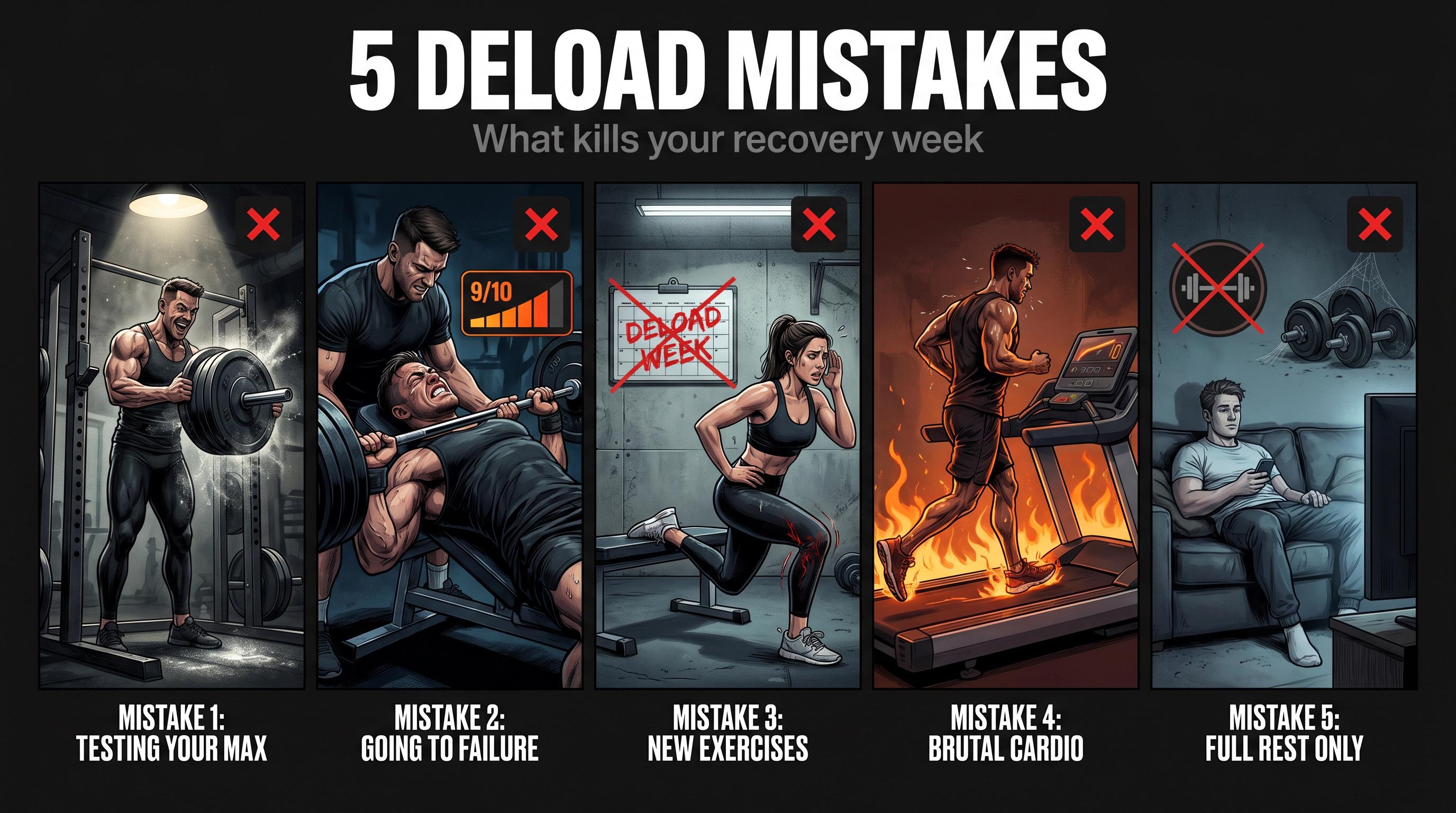
Mistake 1: Testing Your Max During a Deload
You start feeling better by Thursday. The weights feel lighter. You load up for a heavy single.
That defeats the purpose entirely. The weights feel light because fatigue is dropping — which is exactly the mechanism the deload is using. Maxing out now interrupts the recovery process and creates new fatigue. Unless your program specifically calls for a planned peak or test, avoid max attempts during deload week.
Mistake 2: Cutting Volume but Still Going to Failure
Two all-out sets to failure can still generate substantial fatigue. Reducing set count while keeping effort at RPE 9–10 is not a deload. Both volume AND effort need to come down simultaneously.
Mistake 3: Trying New Exercises During a Deload
New exercises create new soreness through novel movement patterns and unfamiliar loading. Your deload week is not the time to add Bulgarian split squats you have not done in six months. Stick with familiar movements that your body has already adapted to.
Mistake 4: Replacing Lifting With Brutal Cardio
Conditioning is training stress. If you reduce lifting volume but add hard intervals, hill sprints, and long conditioning circuits, you may not deload at all. Easy walking, light cycling, and relaxed zone-2 work are all fine and may support recovery — understanding how rest periods and recovery factor into your total training load can help you calibrate what "easy" actually means on your off days. Punishing yourself with cardio to compensate for less lifting is not.
Mistake 5: Taking a Full Week Off When You Only Needed Less
A full week off can be right after illness, injury, burnout, or genuine life crisis. But if you are managing ordinary accumulated training fatigue, an active deload — lifting at reduced volume and intensity — usually preserves skill and momentum better than total cessation. A 2026 study comparing continuous training with a reduced-volume, reduced-frequency deload approach found similar hypertrophy and strength-endurance outcomes, and the authors noted that reduced training may be a reasonable deload strategy while calling for more trained-lifter research. (Nature)
Ready to Get Stronger?
Join 2,000,000+ lifters tracking their workouts with Stronger. Available on iOS and Android.
How to Return to Training After a Deload Week
The week after a deload is where most lifters undo the recovery they just earned.
You feel fresh. The weights feel light. The instinct is to make up for lost time. That instinct leads to an overshoot — an artificially hard first week back, accumulated fatigue again by week two, and a faster return to the same plateau you just escaped.
The first week back should be productive, not reckless.
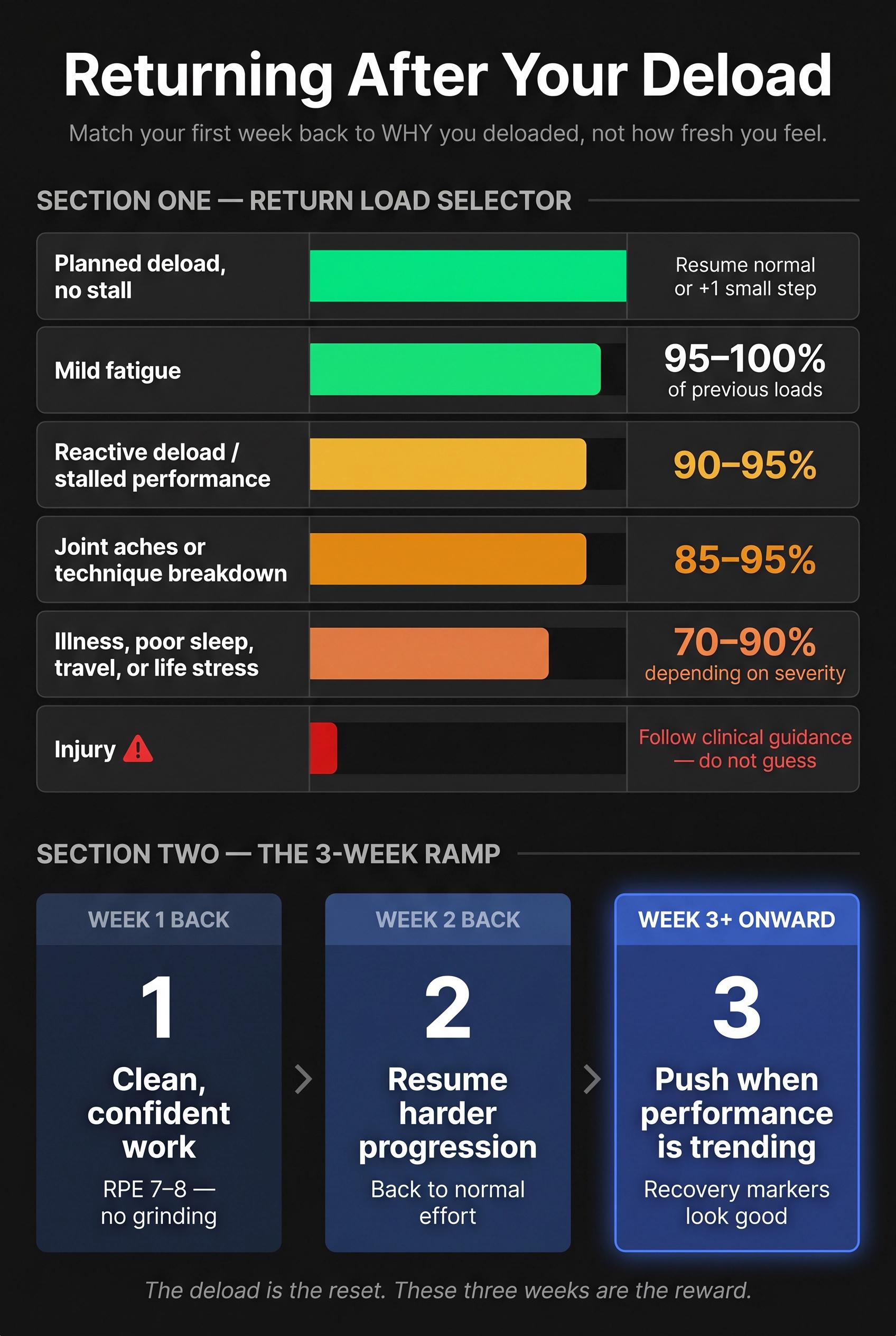
Use this return guideline:
| Why you deloaded | First week back |
|---|---|
| Planned deload, no stall | Resume normal plan or make a small progression |
| Mild fatigue | Resume at 95–100% of previous working loads |
| Reactive deload after stalled performance | Restart at 90–95% |
| Joint aches or technique breakdown | Restart at 85–95% and rebuild |
| Illness, poor sleep, travel, or major life stress | Restart at 70–90% depending on severity |
| Injury | Follow clinical guidance; do not guess |
A three-week return progression:
- Week 1 back: clean, confident work at RPE 7–8. No grinding.
- Week 2 back: resume harder progression at your normal effort — rebuilding your progressive overload cycle is the goal of the entire deload system.
- Week 3 onward: push when performance is trending well and recovery markers look good.
One important distinction: if you are preparing to test a max — and want to know where your lifts sit against real strength benchmarks — that is a taper rather than a normal deload return. A proper peak involves low volume, some heavier work close to competition or test day, and a specifically programmed return of intensity. Do not confuse the two.
How to Track Your Deload Progress in Stronger
A deload is only useful if you understand what you are recovering from and what happens after.
That requires data — and data requires tracking.
The questions that determine good deload timing and programming cannot be answered by intuition alone:
- What changed in the weeks before the deload? Did volume jump? Did you add failure sets? Did deadlifts get heavier every week? Did you add a sixth training day?
- Which lifts showed fatigue first? Squat and deadlift tend to show systemic fatigue before smaller isolation work.
- Was RPE rising at the same loads? Same weight, higher effort week over week is the clearest early fatigue signal.
- Did performance rebound after the deload? If yes, the timing was probably right. If no, adjust the programming or look at recovery factors outside the gym.
- Are you deloading too often? If you need a deload every three weeks, your normal training weeks are probably too aggressive.
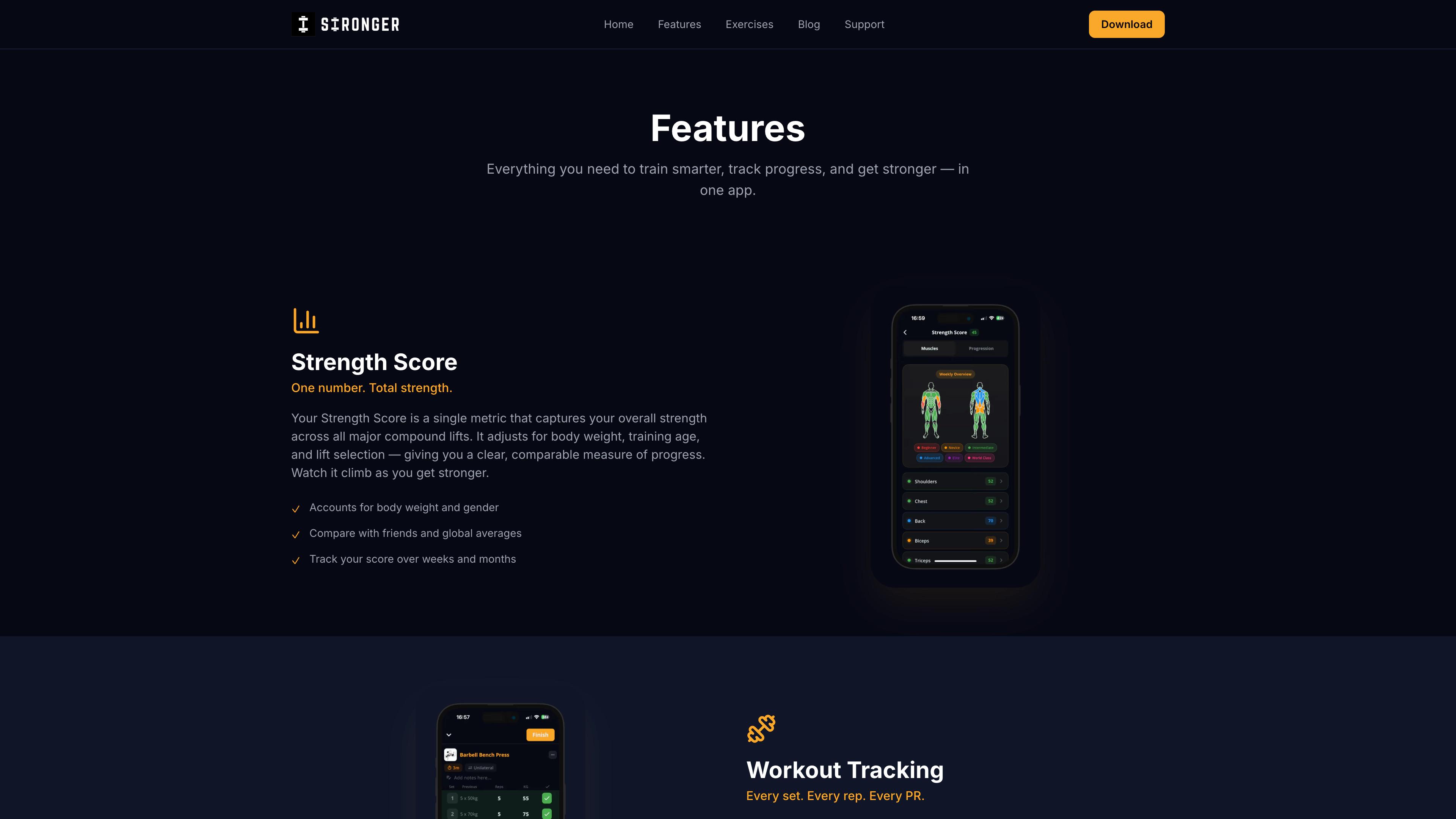
Stronger is built for exactly this kind of systematic training. We track RPE per set (added in v4.4), which means your training log captures not just what you lifted but how hard each set actually felt. Over time, that data shows you the fatigue signal — rising RPE at the same loads — before it becomes an urgent problem.
Our adaptive routines include built-in deload suggestions based on your training history, so you are not relying on gut feel to decide when to back off. Stronger's features include:
- RPE per set logging — track effort alongside load so your history shows both what you lifted and how hard it felt
- Adaptive routines with deload suggestions — programming that adjusts to your progress and flags recovery needs
- Progressive overload tracking — clear visibility into whether you are moving forward or accumulating fatigue debt
- Strength curves and estimated 1RM tracking — per-exercise trend lines, not just single data points
- Volume and frequency analytics — see how much work you are doing per muscle group per week, where most over-accumulation problems become visible first
- Full workout history — compare current sessions to historical baselines to spot when RPE is rising at the same loads over a training block
If you have been tracking training in a spreadsheet or a basic log, the difference is that Stronger surfaces the pattern — the four-week trend, the muscle-group breakdown, the effort curve — rather than just the most recent session.
Start tracking your training seriously. Download Stronger and try the adaptive routine system free. The 7-day Premium trial gives you full access to the analytics so you can see your own training patterns before committing. (Stronger)
How to Know If Your Deload Worked
A deload worked if, within the next one to two weeks:
- Normal working weights feel lighter than they did before the deload
- RPE drops at the same loads you struggled with before
- Reps become cleaner and more technical
- Motivation and enjoyment in training return
- Soreness returns to baseline levels
- Joint irritation decreases
- You can make a new progression on lifts that were stalling
A deload did not work if:
- You still feel exhausted after the first week back
- Performance keeps declining
- Sleep quality is still poor
- Pain is worsening or unchanged
- You dread training the way you did before the deload
- You need another deload after just two or three hard weeks
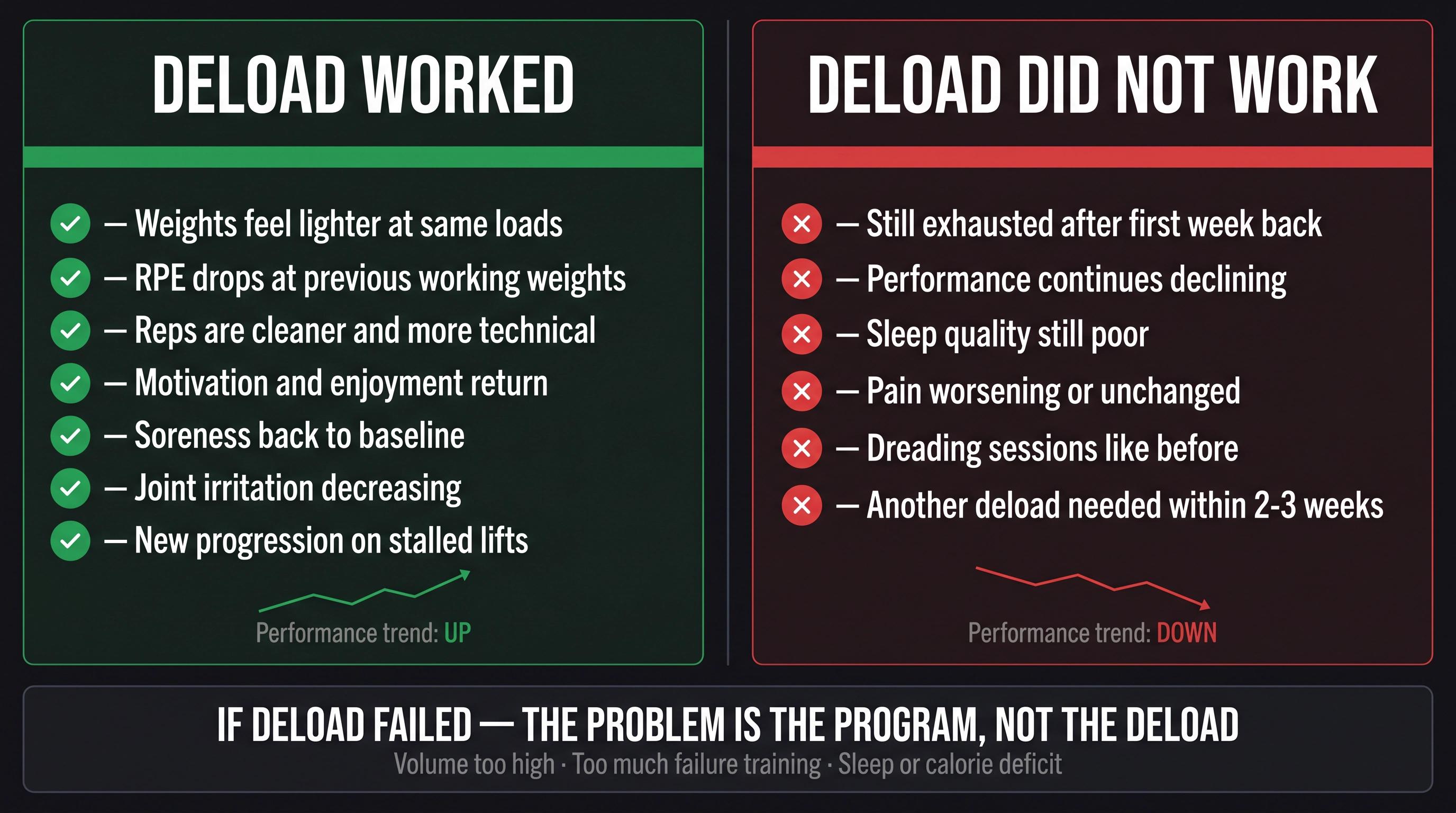
If the deload did not fix it, the problem is probably not the deload. The problem is the program.
Common causes worth examining:
- Total weekly volume is too high for your current recovery capacity
- Too much failure training, too often
- Too many heavy compounds too frequently
- Not enough rest days
- Persistent sleep deficits
- Not enough total calories or protein
- Life stress that genuinely exceeds recovery capacity
- Technique problems creating unnecessary joint stress on every rep
If those patterns persist, it may be worth revisiting the full framework for building strength sustainably rather than adjusting one variable at a time.
Deload Week: The Bottom Line
A deload week is programmed recovery — the planned drop in training stress that lets accumulated fatigue fall before it forces you to stop.
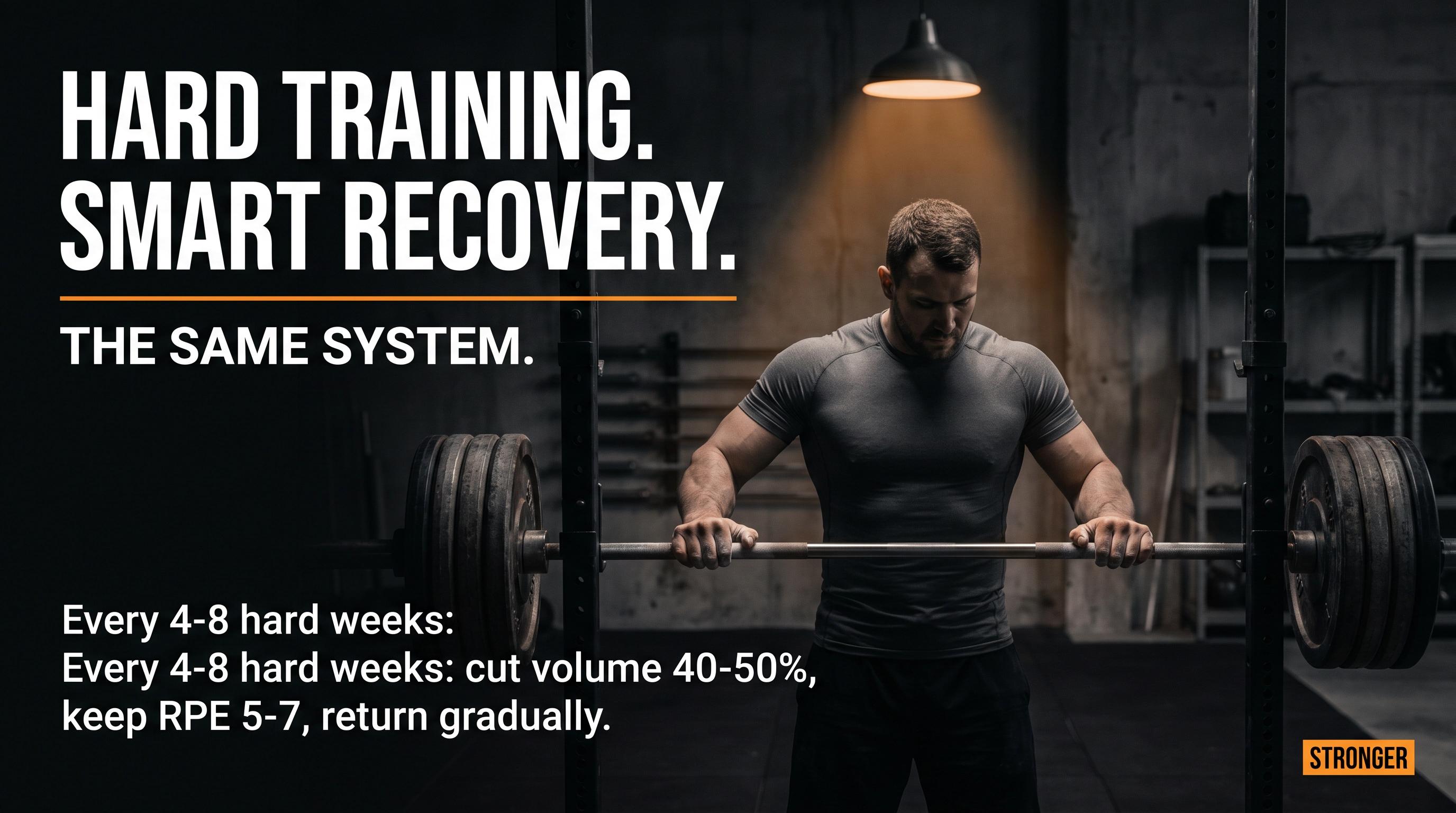
The lifters who progress year over year are not the ones who never back off. They are the ones who understand that hard training and smart recovery are the same system. A deload is not the opposite of training hard. It is part of training hard.
The default prescription:
Every 4–8 hard weeks — or whenever your log shows rising RPE, declining performance, or persistent soreness — take 5–7 days to reduce volume by 40–50%, reduce load by 5–15% if needed, and keep most sets at RPE 5–7. Then return gradually and make the next block your best.
Track the hard weeks. Track the light weeks. Track what happens next. That is how you stop guessing and start programming with confidence.
Stronger is built for lifters who want to do exactly that — log every set, monitor progress over time, follow adaptive routines, and understand whether their training is actually working. (Stronger)
Frequently Asked Questions About Deload Weeks
Will I Lose Muscle During a Deload Week?
Almost certainly not from one sensible deload week. Muscle loss does not happen because you trained easier for five to seven days. The bigger risk runs the other direction — pushing too long without backing off, accumulating fatigue that forces a longer unplanned break, and losing training quality and momentum. A 2026 study found that reduced-volume, reduced-frequency deload weeks did not appear to hinder hypertrophy or 10RM strength-endurance gains in untrained young men over the study period. (Nature) Direct evidence in trained lifters is limited, but the physiological logic is sound.
Should I Take a Full Week Off or Keep Lifting During a Deload?
Most lifters should keep lifting, at reduced volume and effort. Take a full week off if you are sick, injured, burned out, severely sleep-deprived, or in a situation where training is genuinely making things worse. Otherwise, an active deload — lighter training, not zero training — preserves skill, technique, and training momentum better than complete rest.
Should I Deload Every 4 Weeks?
Only if your training demands it. Advanced lifters, high-volume bodybuilding blocks, hard powerlifting peaking periods, and significant calorie deficits may justify deloading every four weeks. Many intermediate lifters do well deloading every five to eight weeks. Most beginners do not need scheduled deloads that frequently — their lighter absolute loads and faster recovery often mean they can train productively for longer before needing a reduction.
Can I Do Cardio During a Deload?
Yes, but keep it easy. Walking, relaxed cycling, and light zone-2 work are all fine and may support recovery. Hard intervals, long exhausting runs, and intense conditioning circuits add training stress that works against the deload's purpose. If your conditioning volume would normally count as a significant training session in your plan, it probably does not belong in your deload week.
Should I Reduce Weight or Sets First?
Usually reduce sets first. Volume — how many hard sets per week affects your recovery demands across different training goals — is the most direct fatigue lever for most training styles. If you are also experiencing joint stress, technical breakdown, or heavy systemic fatigue, reduce load too. For strength-focused training, load reduction is usually more important than it is for hypertrophy work.
Should I Keep Taking Creatine During a Deload?
Yes, if you already take it and tolerate it. Creatine does not need to be cycled around deloads. Keep your supplementation routine simple and consistent.
Can I Do a Mini-Deload for Just One Workout?
Yes. A micro-deload — one easier session for a specific lift or muscle group — is useful when fatigue is localized rather than systemic. If only your shoulders are beat up from heavy pressing, you do not necessarily need to reduce your entire lower-body training. You can cut pressing volume and intensity for a session or two, skip heavy shoulder work for a few days, and keep the rest of your training normal.
What If I Feel Weaker After a Deload?
A few possibilities: you took too much time completely off and some detraining occurred; you came back too heavy too fast; you were under-recovered from sleep, food, illness, or stress rather than from training itself; or your program is still too fatiguing and one deload week was not enough. Try an active deload next time, reload more gradually, and check the non-training recovery factors.
Should I Deload Before Testing My 1RM?
That is usually a taper rather than a standard deload. Before testing your lifts against genuine strength benchmarks, a max attempt preparation should reduce fatigue while preserving readiness to express peak strength — which typically means low volume, some work in the 80–90% range, and a specific return of intensity. That structure is different from a general recovery deload and should be programmed deliberately if you have a testing day or competition on the calendar.
How Can Stronger Help Me Manage Deloads?
Stronger tracks your RPE per set, so your training history shows you when effort is rising at the same loads — the clearest early deload signal. The adaptive routine system includes deload suggestions based on your training data. Volume and frequency analytics show how much weekly work you are accumulating per muscle group. Your full workout history lets you compare current sessions to previous baselines. Together, those tools replace the guesswork in deload timing with data from your own training. (Stronger)
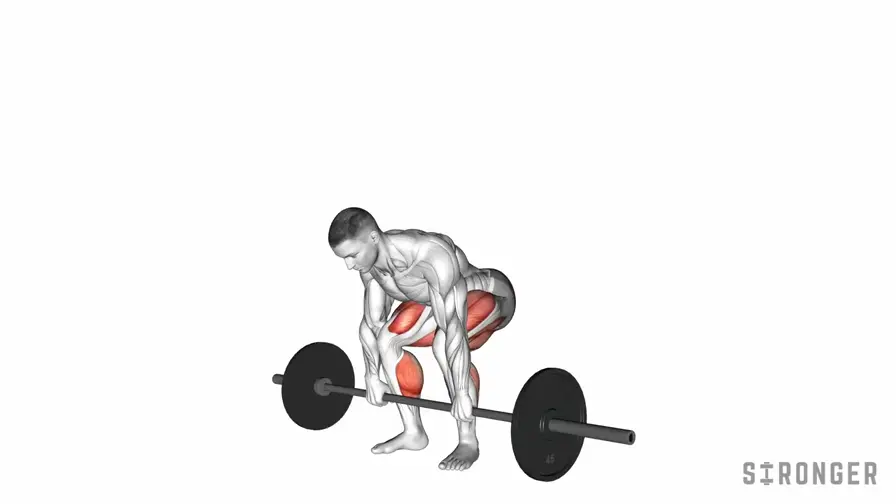
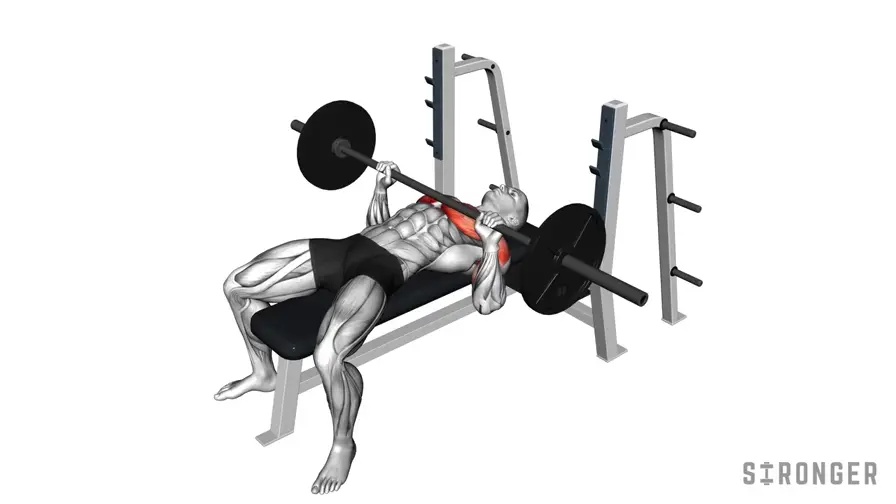
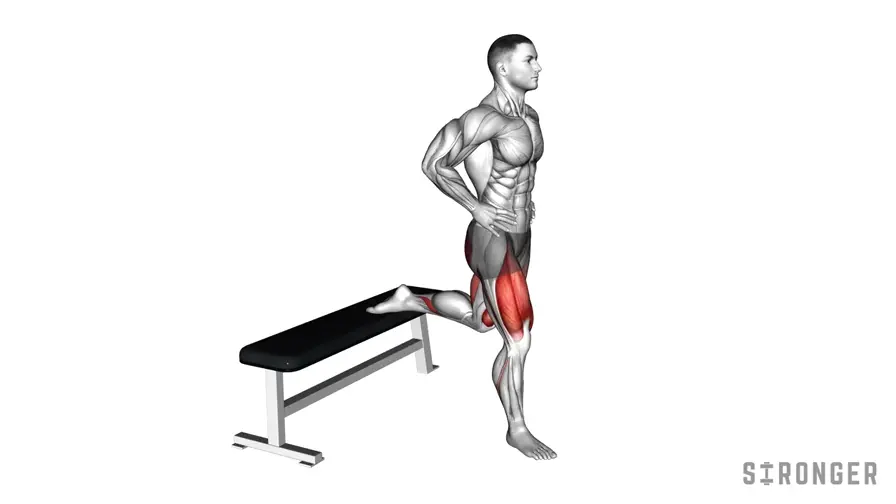
Exercises in this guide
Stronger Editorial Team
Certified strength & conditioning specialists with 10+ years of coaching experience
The Stronger editorial team produces evidence-based training content for lifters of all levels.
Ready to Get Stronger?
Join 2,000,000+ lifters tracking their workouts with Stronger. Available on iOS and Android.