

Best Workout Splits for Women (By Goal & Schedule)
Every trainer on social media has a different answer. One says push/pull/legs is the only serious option. Another swears by full body. A third posts a glute-focused split with eight exercises and no explanation of why it works. If you have searched "best workout splits for women" and walked away more confused than when you started, you are not alone.
Here is what the noise gets wrong: the split itself is not the secret. A workout split is just the way you organize training across the week. The real drivers of results are enough quality work, enough recovery, and enough consistency to let adaptation happen. ACSM's 2026 resistance-training update, which synthesized 137 systematic reviews and more than 30,000 participants, put it plainly: consistency matters more than complexity, and training all major muscle groups at least twice per week is a strong default. A 2025 meta-analysis confirmed that women have similar potential to build muscle as men, and a separate 2025 review on resistance training in women concluded that the broad programming rules are largely the same, even if individual priorities differ.
At Stronger, we have helped over two million lifters structure their training. The pattern we see again and again is that the best workout split for any woman is the one that fits her actual week, matches her goal, and is simple enough that she will still be doing it three months from now.
So instead of ranking splits like a top-ten list, we are going to do something more useful. We will walk you through each split option by the number of days you can realistically train, show you how to tune it for your specific goal, and give you the principles that make any split work. By the end, you will know exactly which structure fits your life and how to start running it this week.
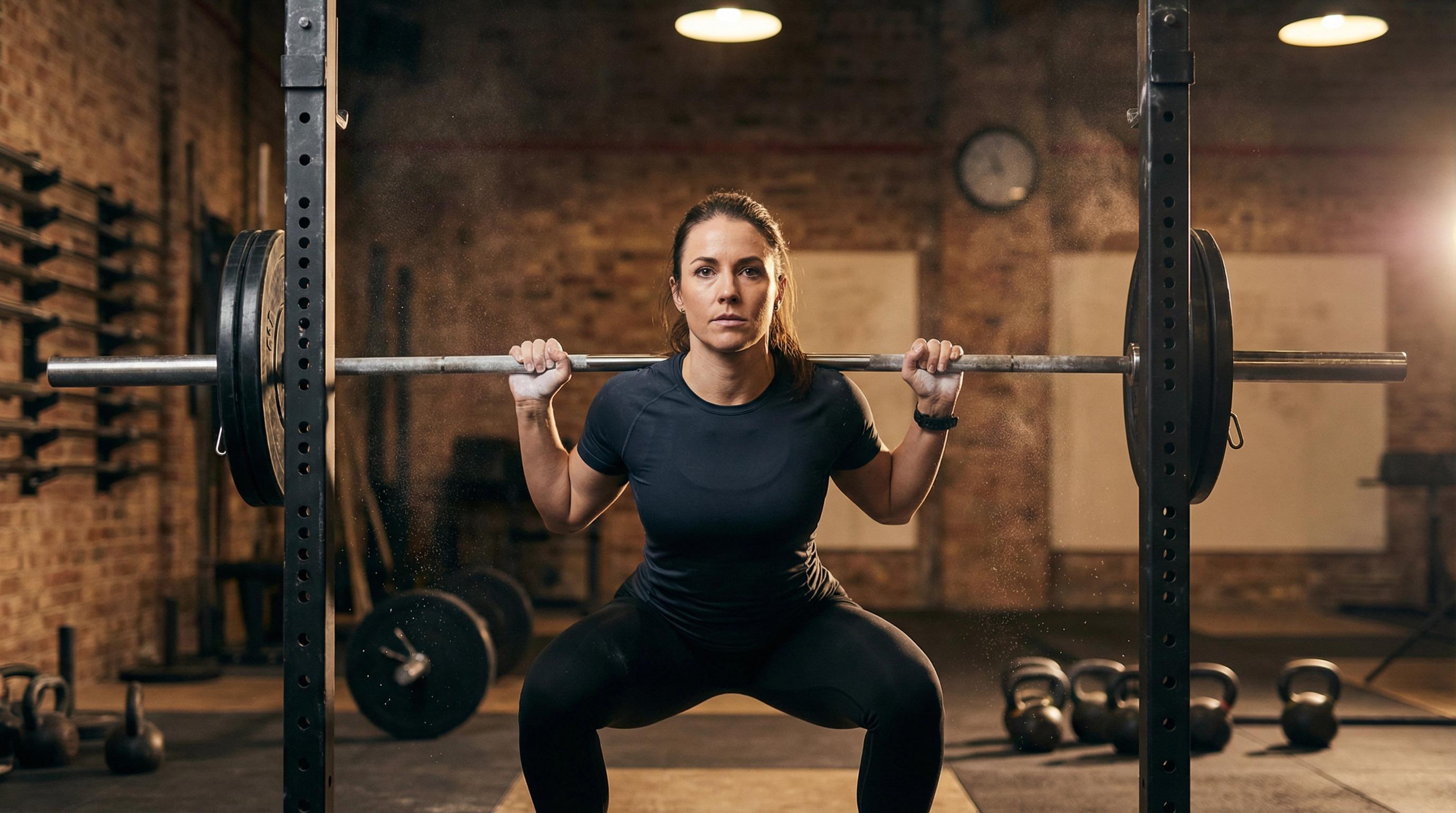
How to Choose a Workout Split Based on Your Schedule
A workout split is just the way you divide your weekly training into separate sessions. It does not build muscle on its own. Your weekly volume (the total number of hard sets per muscle group), exercise quality, recovery, and ability to keep showing up are what actually produce results. A 2024 umbrella review on resistance-training prescription variables supports this directly: for muscle growth, training frequency is mostly a tool for distributing enough weekly work so that individual sessions stay productive and recoverable, not a magic ingredient on its own.
That is why we recommend starting from your schedule, not from an ideal split name you found on social media. Ask yourself one question: how many days per week can you genuinely get to the gym — not in a perfect week, but in a realistic one? Your answer determines which split structures are even viable for you.
Your goal still matters, but mostly because it changes where you place extra work within the structure. A woman training for glute growth and a woman training for general strength might both use a 4-day upper/lower split. The difference is that the glute-focused lifter will push more lower-body volume, prioritize hip-hinge movements (like Romanian deadlifts and hip thrusts) and squat patterns earlier in the week, and possibly add a fifth day once the base plan stops producing results. (ACSM)
Schedule first. Goal second. That is the framework we will use from here on.
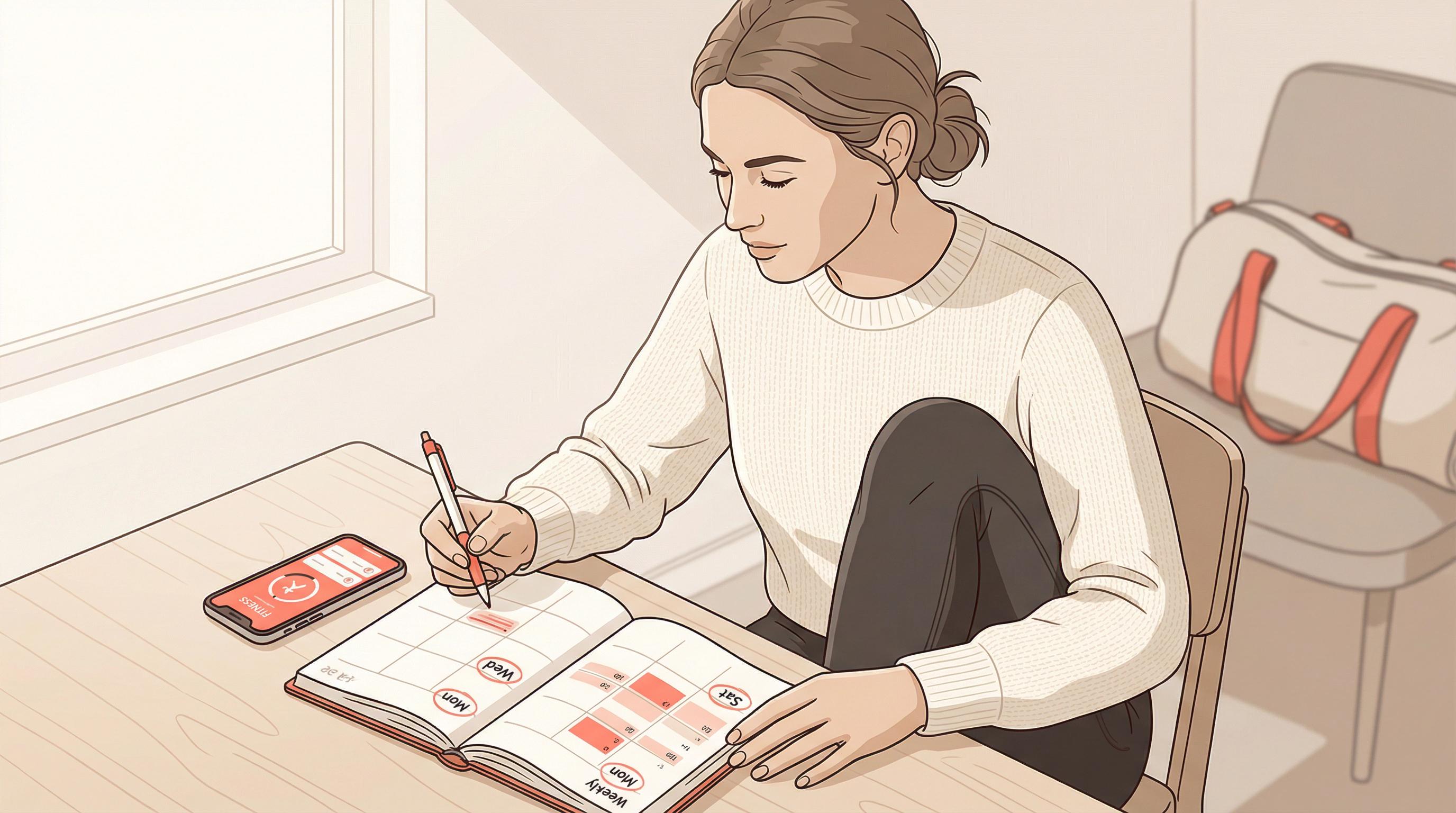
Best 2-Day Workout Split for Women: Full Body
If you only have two days per week for lifting, do not spend them on body-part splits. Two full-body sessions are the clear winner. You hit every major muscle group twice, align with CDC guidance to do muscle-strengthening work at least two days per week, and benefit from what 2024 research confirmed: even minimal-dose resistance training improves strength and other fitness outcomes compared with doing nothing.
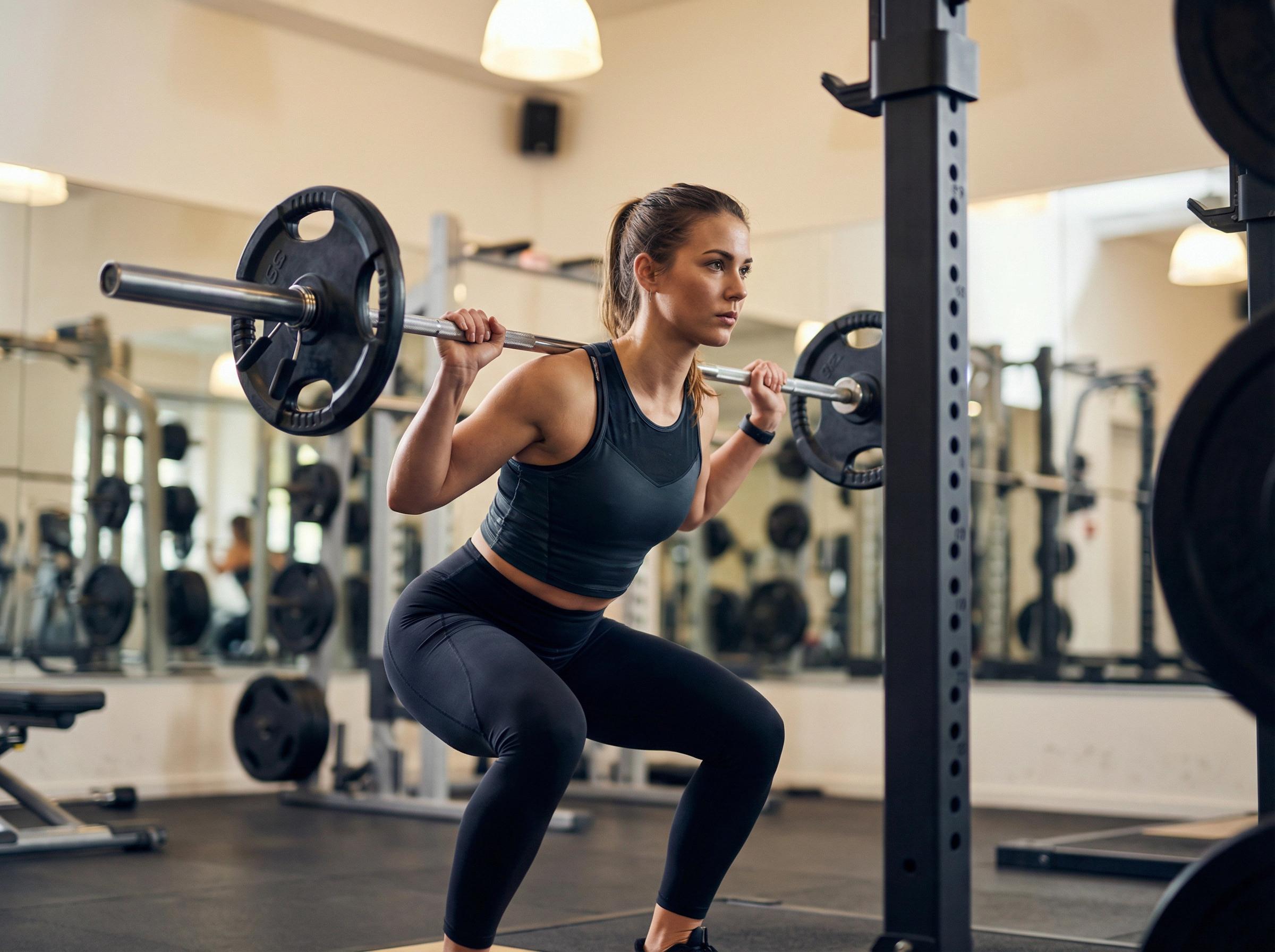
A simple week looks like this:
Day 1 (Monday) — Full Body A
- Squat pattern (goblet squat, barbell back squat)
- Horizontal press (bench press, dumbbell press)
- Row (cable row, dumbbell row)
- Hip hinge (conventional deadlift, kettlebell swing)
- Core (pallof press, plank variation)
Day 2 (Thursday) — Full Body B
- Hip thrust or Romanian deadlift
- Vertical pull (lat pulldown, pull-up)
- Overhead press (dumbbell or barbell)
- Split squat or lunge
- Hamstring or glute accessory (leg curl, cable kickback)
If glutes are your priority, start both days with a lower-body compound and keep at least one hip-extension movement in each session.
This split is the best fit for:
- Women who are genuine beginners
- Anyone in a busy work or life season
- Lifters trying to maintain muscle while everything else is chaotic
- Anyone in a fat-loss phase where gym time needs to stay realistic
Our full-body workout guide makes the same case: full-body training is especially strong for beginners and busy lifters training two to three days per week.
Two days per week is the minimum effective dose. But most women who are serious about their results can get to the gym three times a week, and that third day opens up significantly better options.
Best 3-Day Workout Split for Women: Full Body
For most women, the best 3-day split is still full body. You get frequent practice on the main lifts, you train every muscle group multiple times per week, and individual sessions stay efficient instead of turning into two-hour body-part marathons. The classic Monday/Wednesday/Friday structure has survived for decades for exactly this reason, and our full-body training guide recommends it as the best starting point for beginners and busy lifters. For a more detailed look at programming and exercise selection for three training days, see our complete 3-day split guide.
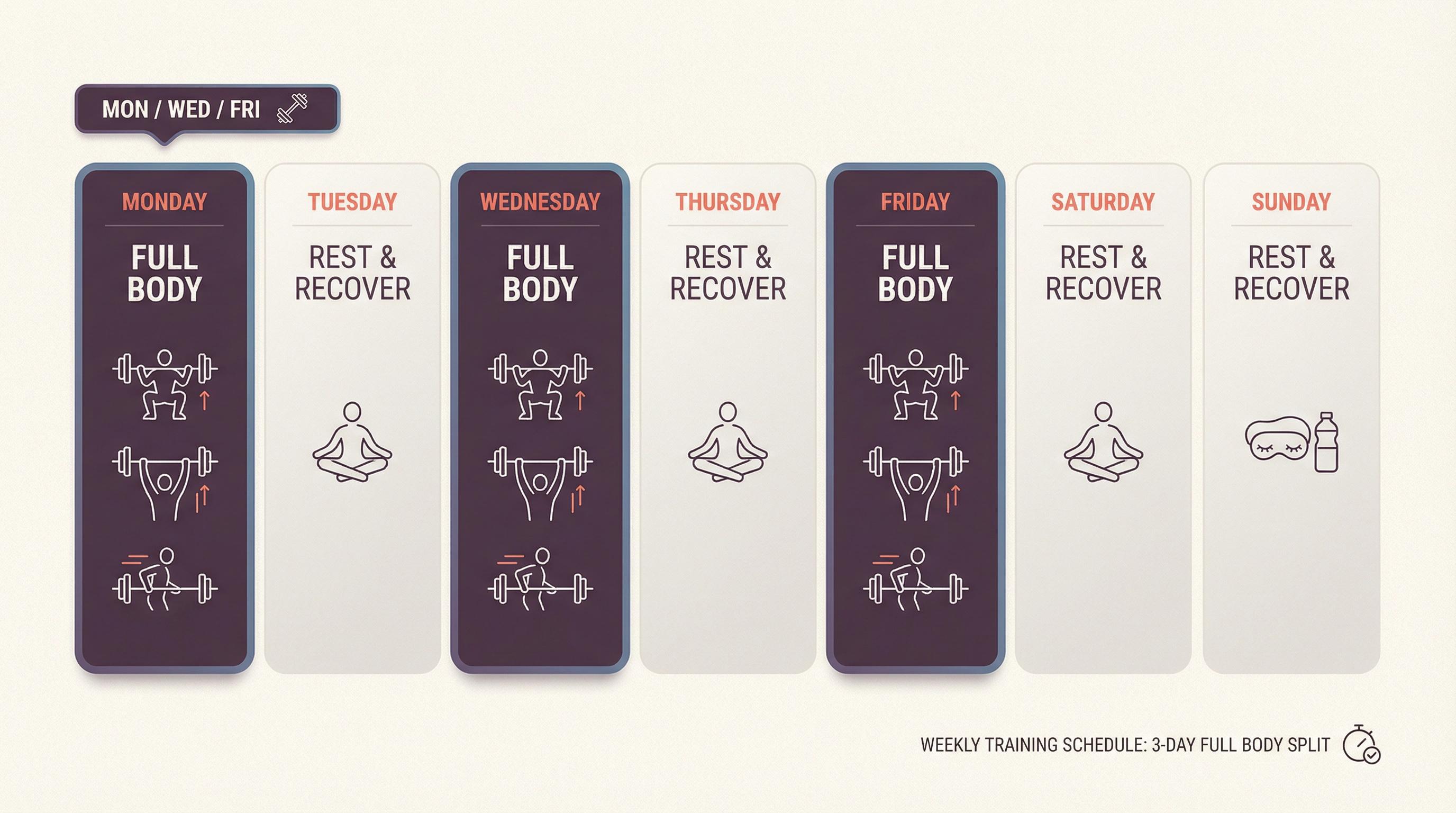
The one smart exception: when lower-body growth is clearly the priority and you already have solid form on the basics. In that case, a lower/upper/lower setup works extremely well. A 2023 meta-analysis in resistance-trained healthy young women looked at strength gains and suggested the lower body should generally be trained about twice per week, while the upper body can do well with two to three exposures. Research on muscle growth in women is thinner, but the same logic makes lower/upper/lower a smart option when glutes or legs matter more than perfect upper-body balance.
What about a 3-day push/pull/legs split? We do not recommend it for most women. It sounds organized, but it usually gives each movement pattern only one direct exposure per week. For most beginners and intermediates, that is thinner than it needs to be. (ACSM)
Three days is great. But four days is where the real sweet spot lives for most women beyond the beginner stage.
Ready to Get Stronger?
Join 2,000,000+ lifters tracking their workouts with Stronger. Available on iOS and Android.
Start tracking freeBest 4-Day Workout Split for Women: Upper/Lower
If you can reliably train four days per week, upper/lower is the best overall workout split for most women. It hits the twice-weekly frequency sweet spot for every muscle group, gives you two real lower-body sessions without stuffing them into giant workouts, and still leaves enough upper-body work to build a balanced physique. Our upper/lower split guide makes the same point: this structure sits in the sweet spot between full-body training and higher-frequency splits like PPL (push/pull/legs). You can also check out our 4-day workout split guide for alternative layouts and full sample programs.
A great weekly layout:
| Day | Focus | Examples |
|---|---|---|
| Monday | Upper A (horizontal emphasis) | Bench press, barbell row, lateral raise, tricep pushdown, bicep curl |
| Tuesday | Lower A (squat-dominant) | Back squat, Bulgarian split squat, leg press, leg curl, calf raise |
| Thursday | Upper B (vertical emphasis) | Overhead press, lat pulldown, face pull, incline dumbbell press, hammer curl |
| Friday | Lower B (hinge-dominant) | Romanian deadlift, hip thrust, walking lunge, leg extension, cable kickback |
Make one lower day squat-dominant and the other hinge-dominant. Make one upper day more horizontal (bench press and rows) and the other more vertical (overhead press and pulldowns). That small bit of structure keeps fatigue manageable while covering the whole body thoroughly.
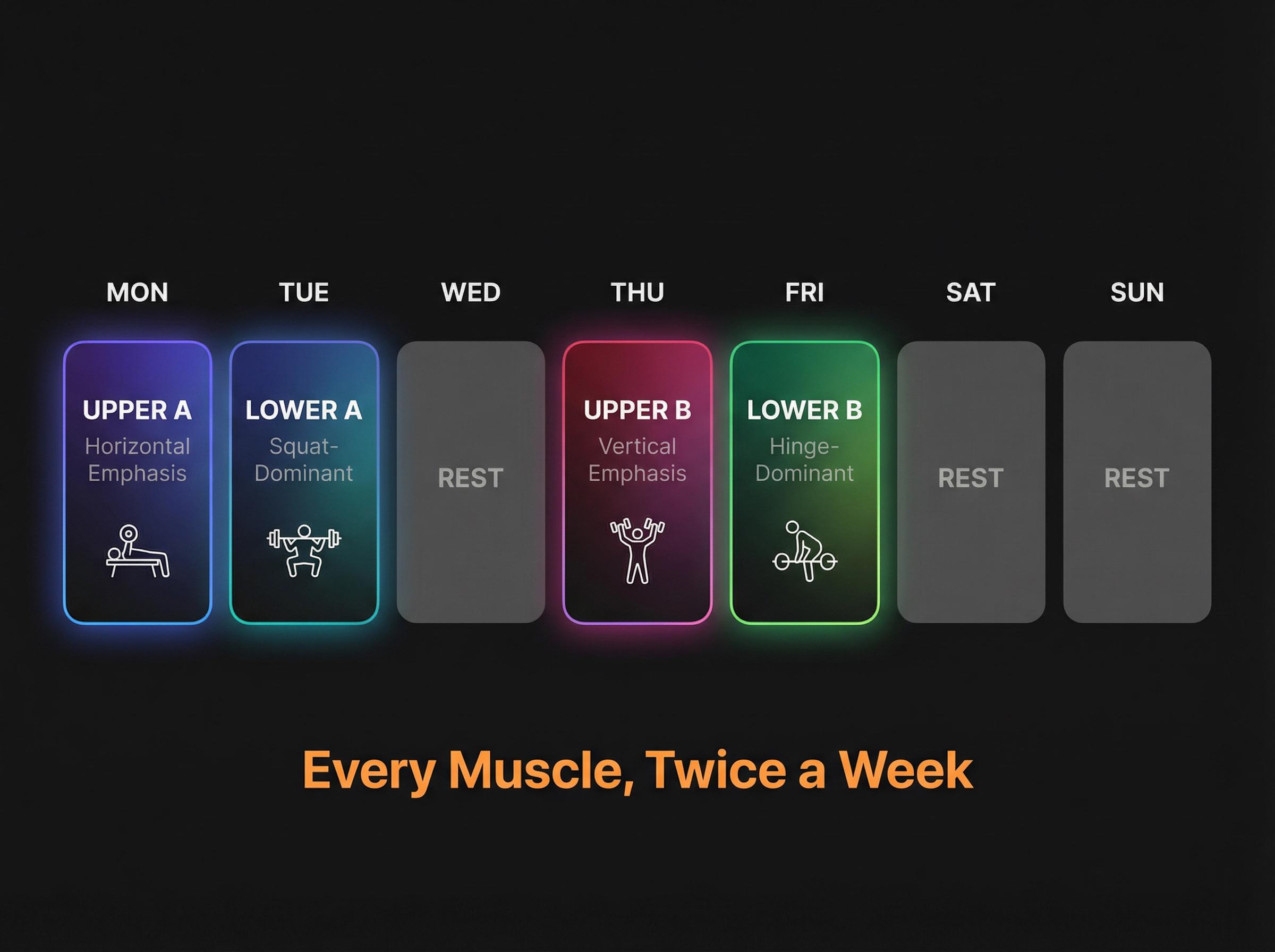
This is the best default for overall muscle gain, body recomposition (building muscle while losing fat), balanced strength development, and most glute-focused programs that do not yet need a fifth training day. If we had to choose one split for the broadest number of women, this is it.
For most women, four days is all you need. But if you genuinely love training, have solid recovery habits, and want to specialize, five days opens the door to something more targeted.
Best 5-Day Workout Split for Women: Hybrid (Not a Bro Split)
Five days per week is where specialization starts to make sense. It is also where a lot of people make a bad trade: they jump into a classic bro split (chest day, back day, shoulder day, leg day, arm day) that drops training frequency too low. For most women, that is not the best move because each muscle group only gets hit once per week. A 5-day hybrid usually works better because it keeps most muscles near twice-weekly exposure while letting you pour more work into a priority area. (ACSM)
Two versions work especially well:
For balanced hypertrophy: Push / Pull / Legs / Upper / Lower
This gives you broad coverage with slightly more total volume than a 4-day split. Every muscle gets trained at least twice, and you can spread your sets more evenly across the week. Our 5-day workout split guide walks through both of these structures with full sample programs.
For glute specialization: Lower / Upper / Lower / Upper / Glutes
This is built for women whose lower body is the obvious priority and whose upper body only needs enough work to keep progressing. The dedicated glute day lets you hit hip thrusts, cable work, and accessory movements that would not fit into a standard lower-body session without making it three hours long.
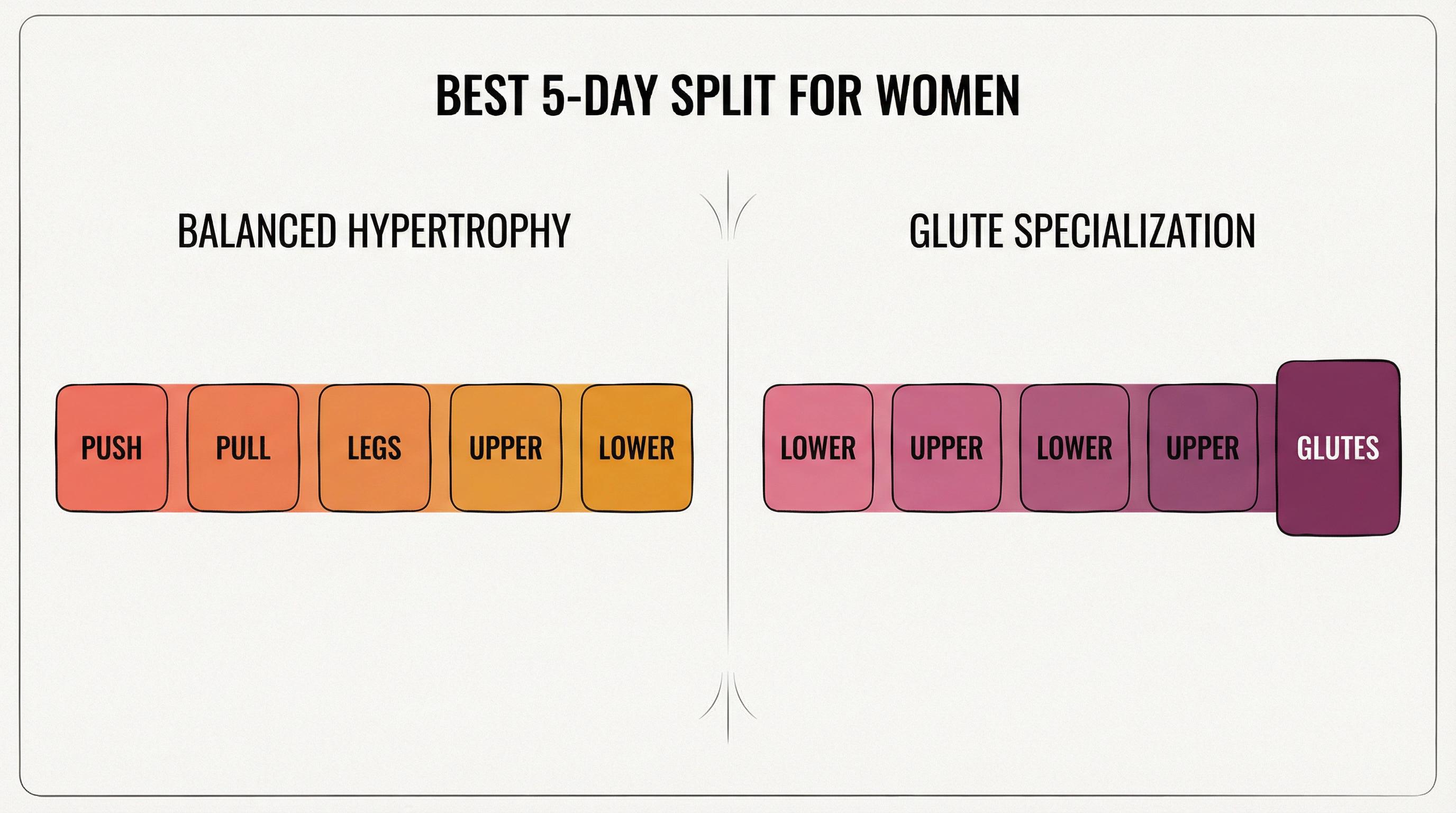
This split is a good fit for intermediate to advanced lifters who genuinely enjoy training often and recover well. If your weekly schedule is unpredictable, a 4-day upper/lower split will almost always beat a 5-day plan that you only half-complete. (ACSM)
And if you want to push to six days? It works. But only under conditions that most people do not actually have.
Best 6-Day Workout Split for Women: Push/Pull/Legs (PPL)
Classic push/pull/legs repeated twice per week can work very well. It gives every movement pattern two weekly exposures and plenty of room for volume. Our PPL guide is right to frame it as a scalable structure for lifters who train more often.
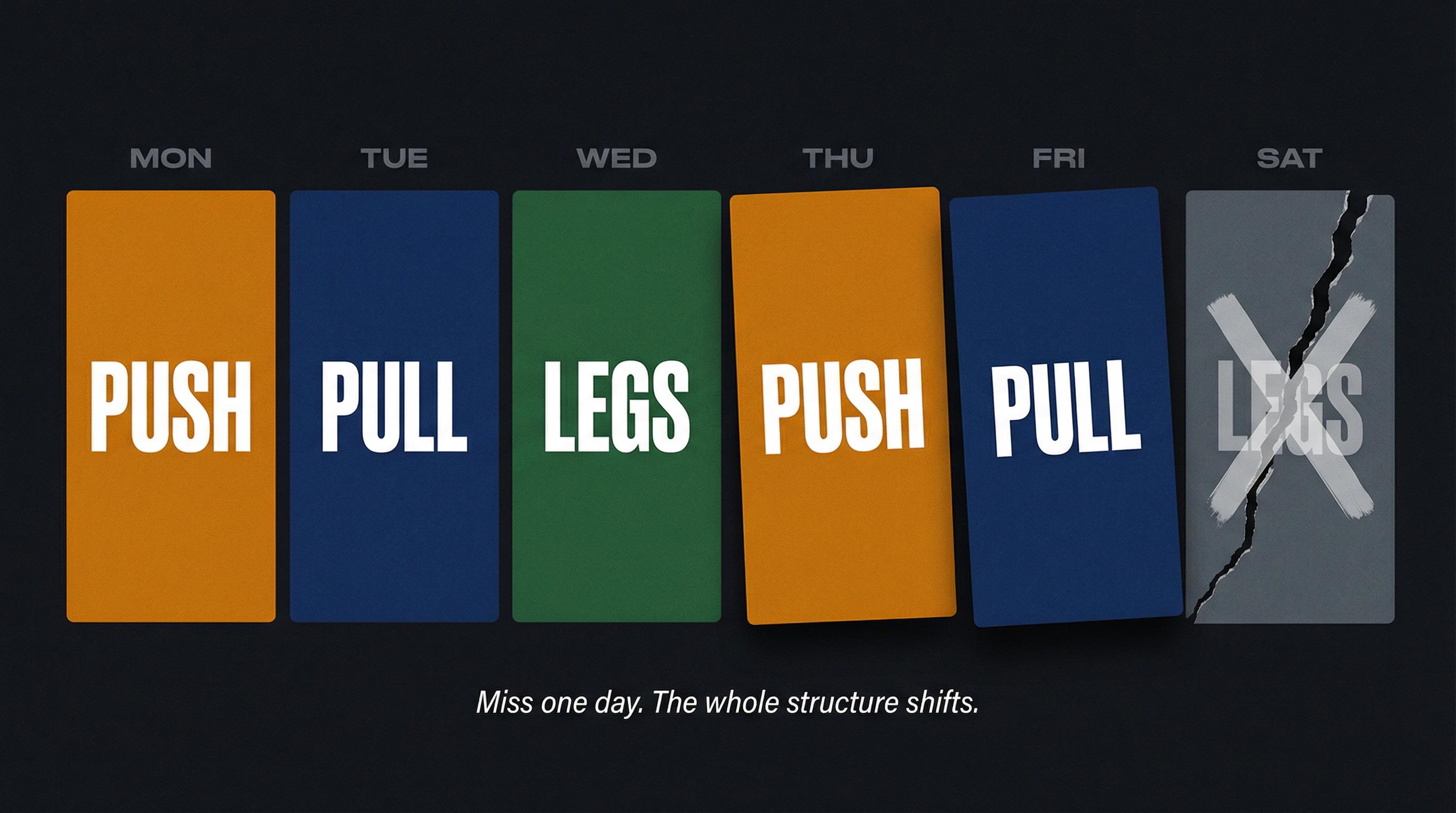
But here is the blind spot most people miss: a 6-day split is only great if you actually do all six days. Miss one or two sessions every week, and the entire structure breaks down. Your "twice-weekly" legs day becomes once-weekly. Your carefully planned volume distribution gets lopsided. That is why we rarely call 6-day PPL the best workout split for women in general. (ACSM)
It is the best split for a specific type of lifter: advanced, with excellent recovery, a genuinely stable schedule, and a real appetite for high-frequency training. If that sounds like you, PPL can be outstanding. If you are not sure whether it sounds like you, it probably does not — and a 4 or 5-day split will deliver better results in practice.
Now that you know which split fits your schedule, the next step is matching it to your specific goal.
Best Workout Split by Goal: Beginner, Strength, Glutes & Fat Loss
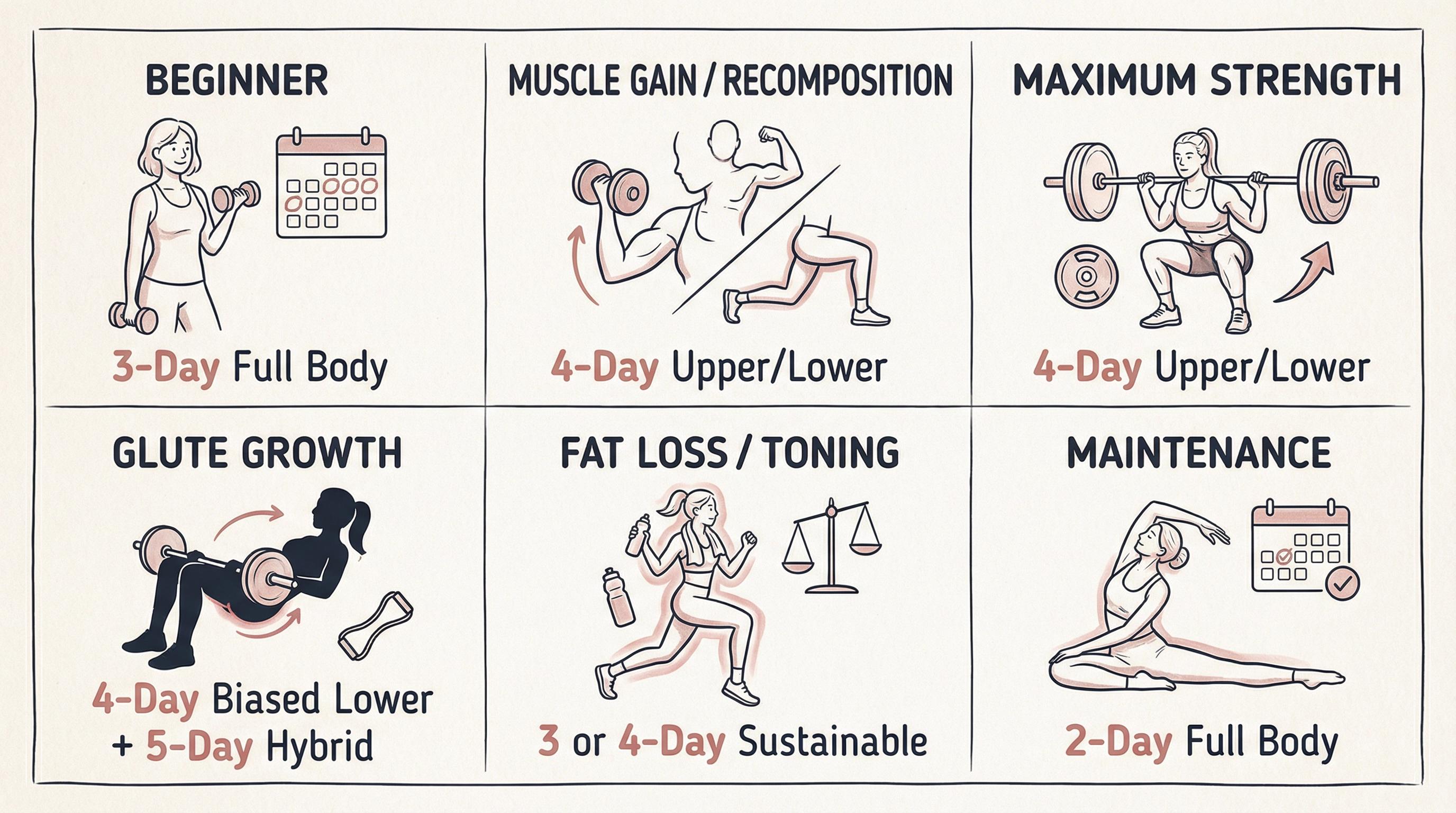
If you are a beginner: start with 3-day full body. You need practice with the movement patterns more than you need volume optimization. Full body gives you that practice three times per week. (Stronger)
If you want overall muscle gain or body recomposition: 4-day upper/lower. It is the most efficient way to train every muscle group twice per week with enough volume to grow. (ACSM)
If glute growth is the clear priority: keep the 4-day upper/lower structure but bias it harder toward the lower body. Add an extra set or two to hip thrusts, RDLs, and squat variations on your lower days. Our glute exercise library has every variation you need to keep programming fresh. When the 4-day plan stops producing results, move to the 5-day lower/upper/lower/upper/glutes hybrid. (Stronger)
If you want maximum strength: 4-day upper/lower, or 3-day full body if you are still early in your lifting career. ACSM's 2026 update still supports heavier loads, roughly above 80 percent of your one-rep max (meaning a weight you could only lift for a few clean reps), and 2 to 3 work sets per exercise for strength-focused goals. Our guide to building strength covers the programming details, and a structured program like the 5x5 method is a proven starting point.
If your goal is fat loss or "toning": use the 3 or 4-day option you can actually sustain. This is important to understand: "toning" is not a special training adaptation. It means building enough muscle and reducing enough body fat for that muscle to become visible. A 2022 systematic review and meta-analysis found that resistance training reduces body fat percentage, fat mass, and visceral fat in healthy adults, but the fat-loss side of the equation still comes mostly from nutrition and total daily activity. The best split for fat loss is the one that keeps you lifting consistently while you manage your nutrition separately.
If you just need to maintain during a busy season: 2-day full body. Simple, sustainable, surprisingly effective at holding onto what you have built.
How to Make Any Workout Split Actually Work
The split is the scaffolding. These principles are what you build on top of it.
Train each major muscle group often enough. Current guidance still favors hitting major muscle groups about twice per week when practical. That does not mean exactly twice is mandatory in every context. It means once-per-week body-part training usually should not be your default. (ACSM)
Get enough weekly volume. For muscle growth, ACSM's 2026 update points to roughly 10 hard sets per muscle group per week as a very solid baseline. "Hard sets" means work sets that are challenging enough to create a real training stimulus, not warm-ups. If glutes are your priority, let them have more weekly sets than smaller or lower-priority muscle groups. Stronger tracks your volume by muscle group automatically, so you can see at a glance whether you are hitting your targets or leaving gains on the table. For a deeper look at how to match your sets and reps to your goals, see our rep ranges guide.
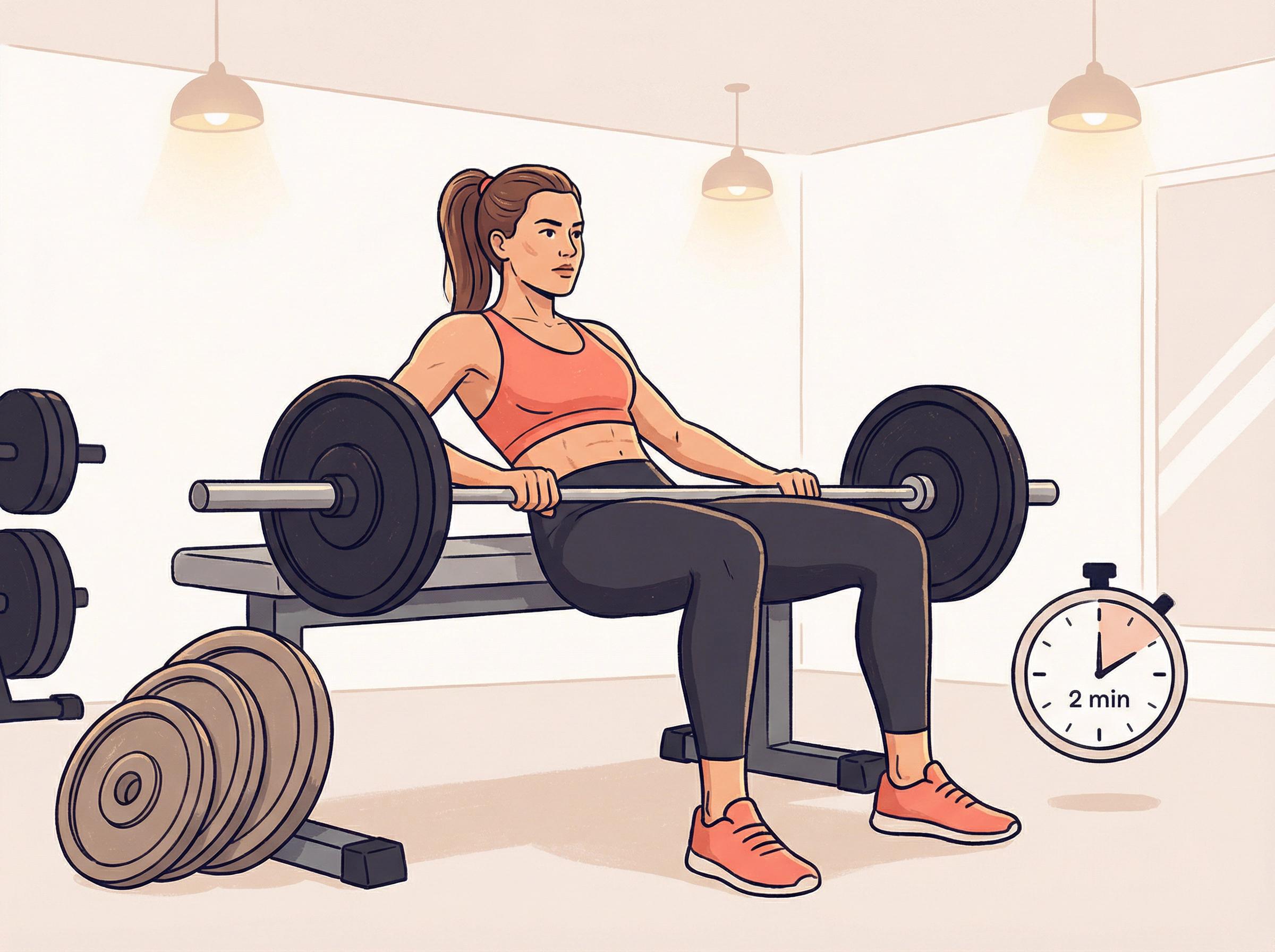
Rest longer than you think. A 2024 meta-analysis on rest intervals found a small hypertrophy benefit to resting more than 60 seconds between sets, with no clear extra benefit beyond about 90 seconds for most situations. In practice, 2 to 3 minutes for compound lifts and 60 to 90 seconds for smaller isolation exercises is a great default. Our rest period guide breaks down the science in full. Stronger's built-in rest timer takes the guesswork out of this.
Do not obsess over fancy methods.ACSM's 2026 update found that training to failure, complex periodization schemes, and the machine-versus-free-weight debate are often optional for the average healthy adult. You do not need exotic programming to get great results. You need consistency, progressive overload (gradually increasing the demands on your muscles over time), and patience.
If glutes are your priority, add lower-body volume — do not delete upper body. Two upper-body exposures per week is still a smart default if you want balanced development and a program you can maintain for months. Cutting upper body entirely in favor of more glute work is a common mistake that leads to imbalances and eventually stalls.
One more principle — and this one has nothing to do with programming: if you miss a workout, do not try to cram the entire week into the remaining days. Just continue the rotation with the next scheduled session. The goal is not to preserve the calendar. The goal is to preserve the training trend.
Ready to Get Stronger?
Join 2,000,000+ lifters tracking their workouts with Stronger. Available on iOS and Android.
Start tracking freeShould Women Adjust Their Workout Split With Their Menstrual Cycle?
Usually, no.
A 2023 umbrella review found low-quality and inconsistent evidence of meaningful differences in strength, performance, and hypertrophy across menstrual cycle phases. The review also pointed out how variable real cycles and ovulation timing are from one woman to another, and sometimes from one month to the next. That makes rigid phase-based split planning much less useful than social media often suggests.
A better approach is auto-regulation: let how you actually feel on a given day guide your adjustments. If any of these apply, it is fine to adapt:
- Cramps, sleep disruption, or low energy make a hard lower-body session a bad idea
- Pain is present that makes your planned session risky or ineffective
- You feel noticeably off from your baseline
In those cases: reduce the load, cut a set or two, or swap the session order for that week. If you feel normal, train as planned. Your symptoms on that specific day are a better guide than a textbook 28-day calendar.
If you are in perimenopause or menopause, the same split rules still apply. A 2025 review found that resistance training in women is associated with improvements in strength, body composition, bone health, cardiovascular function, mental health, self-esteem, and body image. Consistency with your chosen split matters far more than hunting for a special "menopause workout plan."
The principles are straightforward. Now let's talk about how to put them into practice without overthinking it.
How to Run and Track Your Workout Split With Stronger
Choosing the right split is step one. Actually executing it, tracking your progress, and knowing when to adjust is where most people fall off. That is exactly what Stronger is built for.
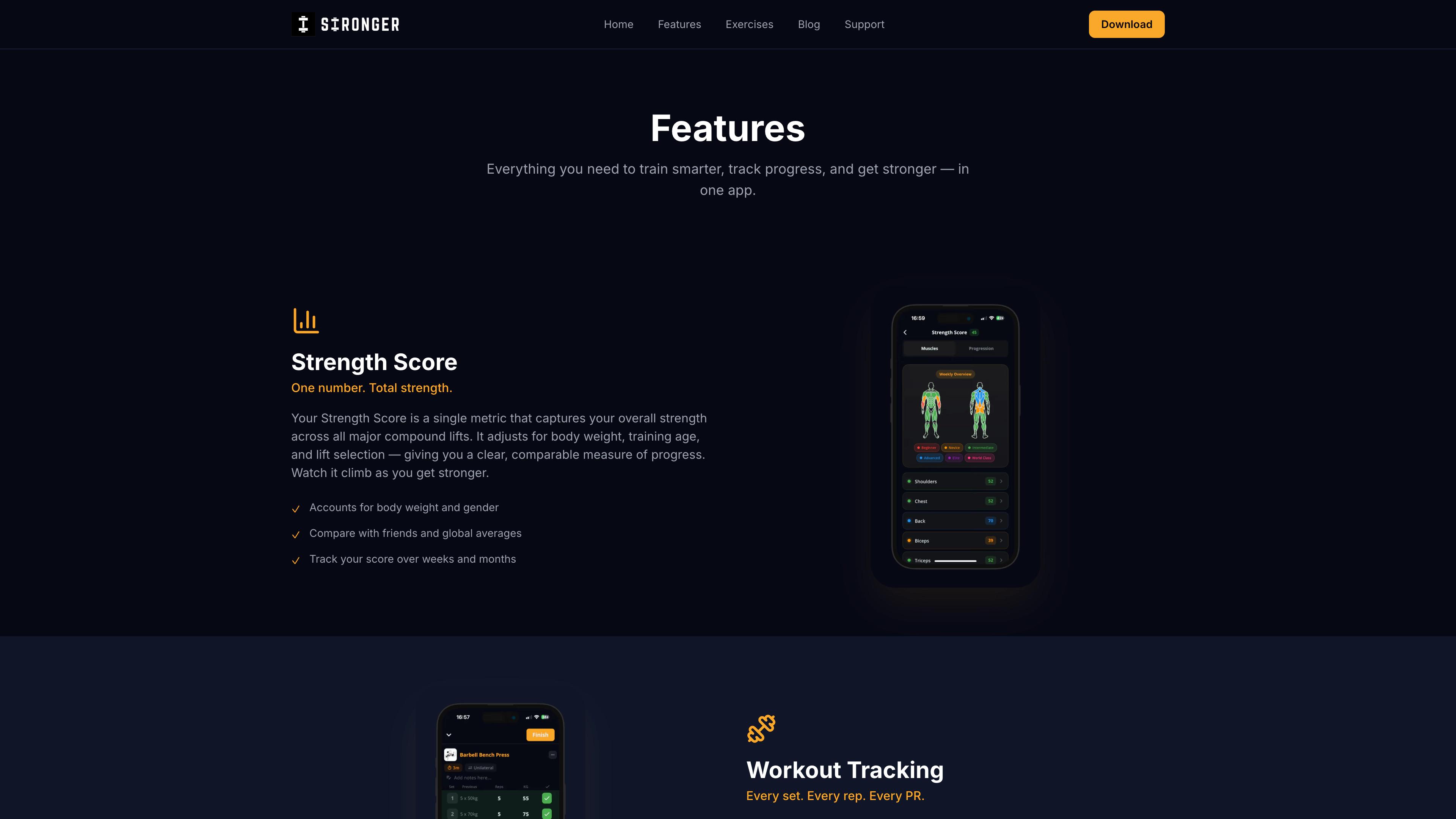
The features page shows what you get: a single Strength Score across all your major lifts, full workout tracking down to every set and rep, and an exercise library with 400+ movements filtered by muscle group and equipment.
Build your split in minutes.Stronger's AI-generated routines create a personalized program based on your goals, available equipment, and training experience. Pick a 3-day full body, 4-day upper/lower, or any structure you prefer, and the app builds the sessions for you. If you outgrow the program, the adaptive routines adjust weights, sets, and reps automatically so you keep progressing without constantly redesigning your plan.
Fill every session with the right exercises. With 400+ exercises including instructions, muscle-targeting maps, and equipment filters, you never have to wonder what movement fits a given slot. Need a hinge-dominant exercise for your Lower B day? Browse the exercise library, filter by muscle group, pick from the options, and go.
Track what actually matters.Stronger logs every set, rep, and weight. It tracks your volume by muscle group so you can see whether you are hitting the 10-set weekly baseline or falling short. It detects personal records automatically and shows your strength curves over time. You do not need a spreadsheet.
Know whether it is working. Our proprietary Strength Score benchmarks your overall strength against global standards, adjusted for bodyweight and gender. It is the clearest answer to "am I actually getting stronger?" that you will find in any training app. Watch it rise over weeks and months, and you have hard proof that your split is doing its job.
Stay accountable. Friend challenges, leaderboards, and group competitions keep training social. Share your post-workout stats, compete on weekly volume, and use the accountability loop to stay consistent through the months when motivation dips.
If you want to go deeper on individual split structures before you start, we have detailed guides on full-body training, upper/lower splits, push/pull/legs, and the fundamentals of progressive overload. And when you are ready to stop reading and start lifting, Stronger is the simplest way to turn the plan into action.
Workout Split FAQ: Women's Most Common Questions Answered
Is push/pull/legs good for women?
Yes, but usually only if you train five or six days per week, or you run it as a rolling split that repeats over more than seven days. For most women training three or four days, full body or upper/lower is easier to recover from and easier to do consistently. Our PPL guide breaks down how to structure push/pull/legs when your training frequency supports it.
What is the best 3-day workout split for women?
Full body for most women. If glute or lower-body growth is the clear priority and you already have solid form on the basics, lower/upper/lower is the best alternative. It gives the lower body two training exposures while keeping the upper body progressing with one focused session. Our full-body workout guide has a complete sample program, and our 3-day split guide covers additional layouts including lower/upper/lower.
What is the best workout split for fat loss and toning?
Usually 3-day full body or 4-day upper/lower. Fat loss is driven mostly by energy balance, meaning you need to burn more calories than you consume over time. Lifting helps preserve or build muscle, which is what gives your body visible definition. The best split for fat loss is the one you can actually stick with while managing your nutrition separately. (PubMed)
Should women lift heavy?
Yes, when technique is solid and the load matches the goal. For strength development, heavier loading is still strongly supported by ACSM's latest guidance. "Heavy" does not mean reckless. It means appropriately challenging for your current level. If you can comfortably complete 15 reps, the weight is probably too light for building strength. Lighter loads can still build muscle, but only if you take those sets close to failure.
How long should a workout take on each split?
It depends on the split and how many exercises you include, but a good general range is 45 to 75 minutes. Full-body sessions with five to six exercises typically take 50 to 65 minutes. Upper or lower sessions with five to seven exercises run 45 to 60 minutes. If your workouts are consistently over 90 minutes, you are probably doing too much volume in a single session and would benefit from spreading it across more training days.
Can you build glutes training only 3 days a week?
Absolutely. Three days is enough to train the glutes twice per week with a full-body or lower/upper/lower setup, and twice-weekly frequency is the range current evidence supports for muscle growth. The key is making sure you include enough weekly sets of hip-dominant and squat-pattern movements. If you eventually need more glute volume than three days can hold, that is when you move to a 4 or 5-day split.
What is the best workout split for a complete beginner?
Three-day full body. You need frequent practice with the core movement patterns (squat, hinge, push, pull) more than you need advanced volume optimization. Full body gives you that practice three times per week while keeping individual sessions short enough to be sustainable. Start there, build a base of strength and movement quality, and transition to upper/lower when you are ready for more volume.
How often should you change your workout split?
Less often than you think. A common mistake is switching programs every four to six weeks because progress "stalls." Real progress on a well-designed split takes months, not weeks. Stay with your current split until one of three things changes: your schedule changes and the split no longer fits, your goal changes and the split no longer matches, or you have genuinely plateaued after consistent effort for at least eight to twelve weeks. Program hopping is one of the most reliable ways to ensure you never make meaningful progress.
The final answer is simple. Pick the split that fits your real week, not your fantasy week. For most beginners, that means 3-day full body. For most women beyond the beginner stage, that means 4-day upper/lower. Stay there long enough to actually progress, and only change when your schedule or your goal changes. The best workout split for women is the one you will still be running three months from now. (ACSM)
Stronger can help you build it, track it, and prove it is working. Get started here.
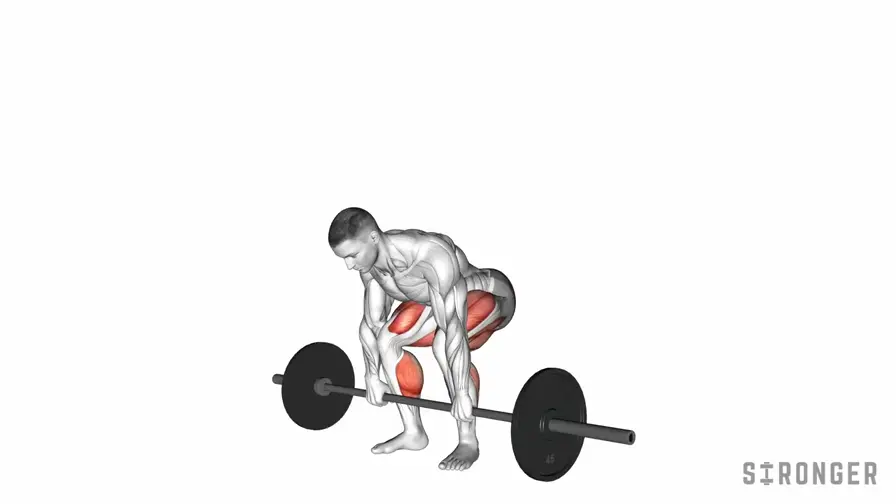
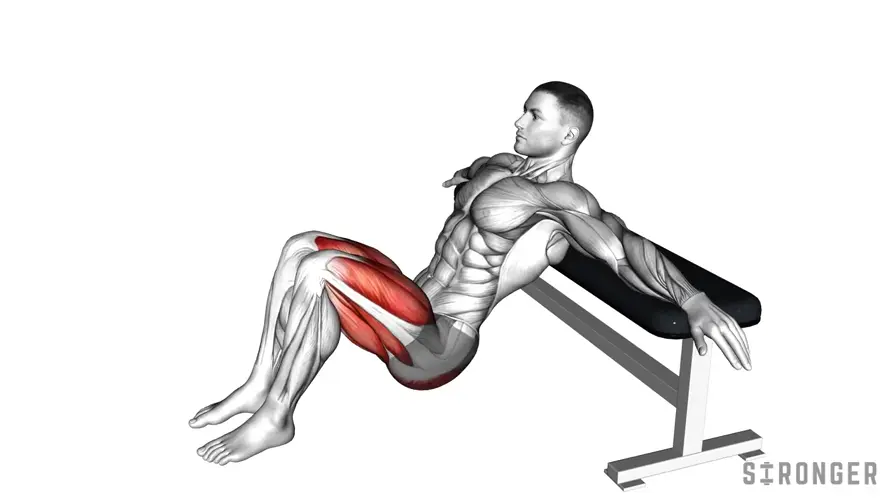
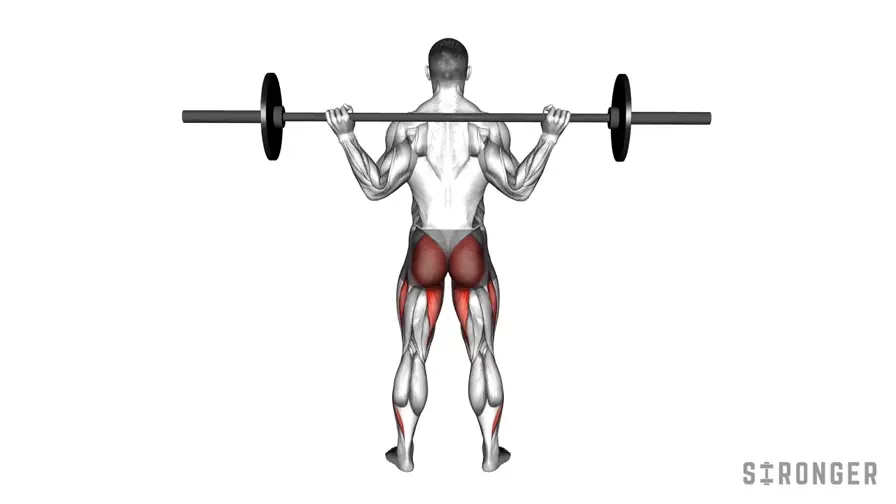
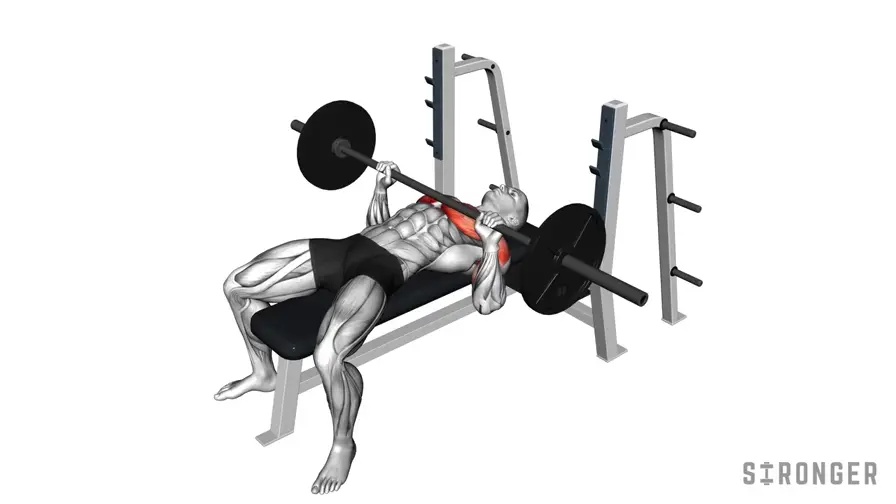
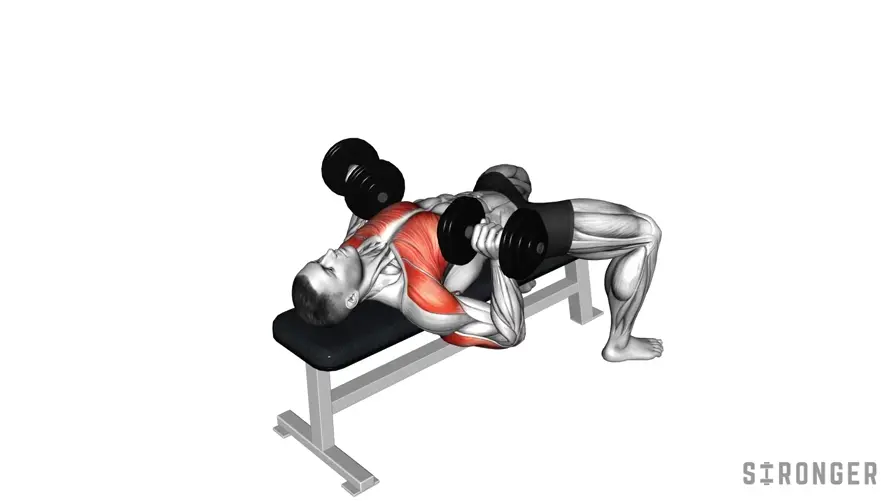
Exercises in this guide
Stronger Editorial Team
Certified strength & conditioning specialists with 10+ years of coaching experience
The Stronger editorial team produces evidence-based training content for lifters of all levels.
Ready to Get Stronger?
Join 2,000,000+ lifters tracking their workouts with Stronger. Available on iOS and Android.
Start tracking free